Categories
Business Technology

Nissan raises global EV targets; to boost U.S. input

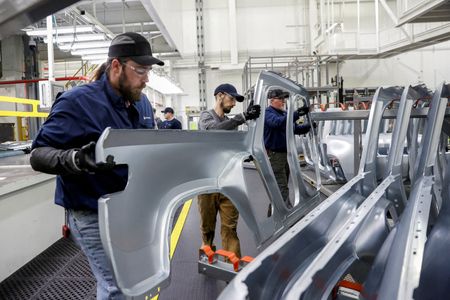
TOKYO (Reuters) -Nissan Motor Co Ltd on Monday raised its electrified car sales goals and said it would boost power train production in the United States, as it looks to catch up in a segment dominated by newer automakers such as Tesla Inc.

The Japanese automaker was a pioneer in electric vehicles (EVs) with its all-battery-powered Leaf but has struggled alongside many legacy automakers in the face of increasing competition from nimbler new entrants.

Nissan now aims to have electrified vehicles – which include its advanced hybrid e-power cars – make up over 55% of global sales by fiscal 2030, up from a previous goal of 50%, it said.

The EV mix will increase to 44% by fiscal 2026 from an earlier target of 40%, Nissan said.

The automaker plans 27 new electrified vehicles by that year, 19 of which will be all-battery EVs, it said in a statement. That compared with its previous plan of 23 electrified vehicles including 15 all-battery EVs.

In addition to EV production at its Smyrna, Tennessee plant, Nissan plans to build electric power trains at its Decherd plant in the same state to help it meet requirements for the Inflation Reduction Act, Chief Operating Officer Ashwani Gupta said on Monday.

The company is looking into adding a second source of batteries produced in the U.S., he said, which would contribute towards existing supply from Envision AESC. Nissan is confident it will be in compliance with the Act due to the localisation of battery production starting from 2026.

“IRA is challenging, but on the other side, it’s an opportunity to accelerate the competitive electrification,” he said in an online briefing.

(Reporting by Maki Shiraki, Rocky Swift; Editing by David Dolan and Christopher Cushing and Bernadette Baum)

tagreuters.com2023binary_LYNXMPEJ1Q01N-VIEWIMAGE

Categories
Asia Business Economy Environment Europe Politics and Trading Resource Stocks Technology US

Yellen says EV battery mineral trade pacts can likely bypass Congress

By David Lawder

BENGALURU (Reuters) – U.S. Treasury Secretary Yellen said on Friday that she expects that future limited free trade agreements focused on battery minerals with the European Union and other trusted allies would not need approval from Congress.

Yellen told reporters on the sidelines of a G20 finance meeting in India that such agreements, which would be aimed at granting automakers based in Europe, Japan and other countries access to new U.S. tax credits for electric vehicles, would also likely include high labor standards and export control provisions to ensure secure supply chains.

Such mineral pacts are one potential way to address European Union’s complaints that its automakers are shut out of the $7,500 per vehicle tax credits in the climate-focused Inflation Reduction Act, which it argues will suck electric vehicle investments away from Europe.

The law specified that the tax credits were only available to North American-assembled vehicles that meet certain local battery production and mineral extraction processing standards.

Countries with U.S. free trade agreements can also access the credits, and this is a provision that the Biden administration hopes to exploit by negotiating limited trade deals focused on battery minerals.

The Treasury already is allowing leased electric vehicles to qualify under commercial EV tax credit rules, a move that Yellen said would cover most vehicles for now. Over time, she said she hoped that trade agreements would allow more sold vehicles to qualify over time.

“It would be an agreement that we think would not require the agreement of Congress,” she said adding that Congress intended “a kind of friend-shoring approach” for critical minerals to reduce reliance on China.

“I think the word ‘free trade areas’ was meant to mean reliable friends and partners with whom we can feel we have secure supply chains so we feel this is fully the intent of Congress and we’ll be able to negotiate such agreements,” Yellen said.

The Treasury in March is due to put out guidance on the sourcing of battery minerals and Yellen said this will include guidance on free trade areas that can qualify.

The Treasury already has said that it will qualify existing comprehensive free trade pacts Australia, Bahrain, Canada, Chile, Colombia, Costa Rica, Dominican Republic, El Salvador, Guatemala, Honduras, Israel, Jordan, South Korea, Mexico, Morocco, Nicaragua, Oman, Panama, Peru and Singapore.

Yellen said that the United States and Europe were getting closer to reaching understandings over the U.S. green energy subsidies, and said Washington will not try to stop Europe from enacting competing subsidies.

“We’ve been very clear with Europe that this is not a subsidy war,” Yellen said. “We’re not trying to steal jobs. This is our climate plan.”

(Reporting by David Lawder. Editing by Jane Merriman and Tomasz Janowski)

tagreuters.com2023binary_LYNXMPEJ1N0IF-VIEWIMAGE

Categories
Asia Australia Business Economy Europe Technology Top News US

Stocks, crude oil advances despite higher interest rate expectations

By Chibuike Oguh

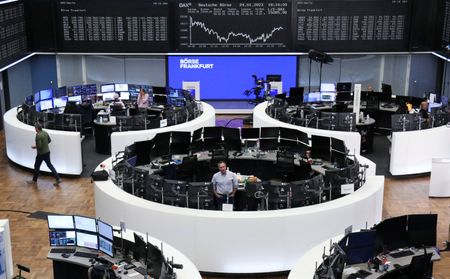
NEW YORK (Reuters) -Global equities and crude oil rebounded from earlier losses on Thursday even as economic data continued to show the strength of the U.S. economy and validated the Federal Reserve’s tight monetary policy stance.

A U.S. Labor Department report on Thursday showed that new claims for unemployment benefits unexpectedly fell last week, pointing to a persistently tight labor market.

The readings for the fourth-quarter personal consumption expenditures (PCE) price index, the Fed’s preferred inflation measure, were revised upward to 3.7%, indicating inflation was much stronger than initially thought and weighed on sentiment earlier in the day.

Minutes of the Federal Reserve’s last meeting released on Wednesday showed that officials favored a moderation in the pace of rate hikes although they indicated that containing high inflation would be key in how much further rates need to rise.

“The Fed minutes yesterday were a bit hawkish and they said ongoing rate hikes would be necessary and that should obviously be negative for the market,” said Sandy Villere, portfolio manager at Villere & Co in New Orleans.

“But it seems the market is starting to discount that we’re getting into the eighth or ninth inning of these rate hikes even though the Fed is saying ongoing rate hikes would be necessary,” Villere said.

The MSCI world equity index, which tracks shares in 50 countries, was down 0.27%. European stocks were up at just 0.06%.

On Wall Street, the Nasdaq regained earlier losses from better-than-expected revenue at chipmaker Nvidia Corp. The results drove the company’s shares up 14%, along with shares of other semiconductor manufacturers.

The Dow Jones Industrial Average rose 0.33% to 33,153.91, the S&P 500 gained 0.53% to 4,012.32 and the Nasdaq Composite added 0.72% to 11,590.40.

“When you see strong numbers at certain companies, it could be market moving and that’s what we’re seeing today – a bit of a relief rally,” Villere added.

Oil prices firmed more than 1% before paring some gains, with Russian supply curbs partially offsetting an expected rise in U.S. inventories.

Brent crude futures settled up 2% to $82.21 a barrel, while West Texas Intermediate crude futures (WTI) advanced 2% to $75.39 after six sessions of losses.

U.S. Treasury yields edged lower in choppy trading, with those on the 10-year pulling back from three-month highs, as investors have priced in strong economic data.

Benchmark 10-year Treasury notes were down at 3.8865%, while the yield curve measuring the gap between the two- and 10-year Treasury notes was still inverted at minus 77.90 basis points, indicating a looming recession.

The dollar retained its strength against its major peers. The dollar index rose 0.077%, with the euro down 0.07% to $1.0594.

Safe-haven gold prices slipped to their lowest in about two months as the U.S. dollar climbed. Spot gold dropped 0.03% to $1,822.09 an ounce, while U.S. gold futures fell 0.55% to $1,822.00 an ounce.

(Reporting by Chibuike Oguh in New York, editing by Anna Driver, Bernadette Baum and Diane Craft)

tagreuters.com2023binary_LYNXMPEJ1M09K-VIEWIMAGE

tagreuters.com2023binary_LYNXMPEJ1M02B-VIEWIMAGE

tagreuters.com2023binary_LYNXMPEJ1M02A-VIEWIMAGE

Categories
Asia Business Economy Energy Europe Middle East UK US

Oil drops 3% as high inflation risks stoke demand worries

By Shariq Khan

BENGALURU (Reuters) – Oil prices fell by $2 per barrel to their lowest in two weeks on Wednesday, as investors became more concerned that recent data will prompt more aggressive interest rate increases by central banks, pressuring economic growth and fuel demand.

Brent crude futures settled $2.45, or 3%, lower at $80.60 per barrel. West Texas Intermediate crude futures (WTI) dropped $2.41, or 3%, to end at $74.05 a barrel.

The settlement levels were the lowest for both benchmarks since Feb. 3.

Minutes from the latest U.S. Federal Reserve meeting showed a majority of Fed officials agreed the risks of high inflation remained a “key factor” shaping monetary policy and warranted continued rate hikes until it was controlled.

“While better U.S. economic data should mean better oil demand, the concern is that this forces the Fed to overtighten monetary policy to bring inflation under control,” said UBS analyst Giovanni Staunovo.

“This is also supporting the U.S. dollar, which is not of help for oil.”

The U.S. dollar Index gained for a second straight session, making greenback-denominated oil more expensive for holders of other currencies. [USD/]

Other U.S. economic reports, however, showed some troubling signs for the world’s biggest oil consumer. Sales of existing homes fell in January to their lowest since October 2010.

U.S. crude stockpiles rose by 9.9 million barrels last week, according to market sources citing American Petroleum Institute figures on Wednesday. U.S. oil inventories have climbed every week since mid-December, worrying investors about demand in the country. [API/S]

A Reuters poll had forecast a 2.1 million barrels increase in crude stockpiles last week. Official data from the Energy Information Administration is due Thursday at 11:00 a.m. EST. [EIA/S]

The American Petroleum Institute, an industry group, releases its inventory report at 4:30 p.m. ET (2130 GMT).

Demand for crude oil is seasonally lower with major U.S. refineries deep in maintenance season, said Price Group analyst Phil Flynn.

Some 1.44 million barrels per day of U.S. refining capacity is expected to be offline in the week ending March 3, according to research company IIR energy.

A massive snowstorm in the U.S. Northern Plains and Upper Midwest has also hit fuel demand, with 3,500 flights delayed or cancelled across the country so far, according to FlightAware.com.

U.S. gasoline futures slid almost 4% to their lowest in two weeks.

(Reporting by Shariq Khan, additional reporting by Rowena Edwards and Trixie Yap; Editing by Marguerita Choy, David Gregorio and Lincoln Feast.)

tagreuters.com2023binary_LYNXMPEJ1L02V-VIEWIMAGE

Categories
Business Crypto Economy Technology US

Cryptoverse: Tether tightens grip on wobbling world of stablecoins

By Medha Singh and Lisa Pauline Mattackal

(Reuters) – The world of stablecoins is suddenly looking shaky.

Seismic shifts may be afoot in the $137 billion market after New York-based Paxos Trust Company, which mints Binance’s stablecoin, said it would cease issuing new BUSD tokens after U.S. regulators labeled the asset an unregistered security.

The U.S. move has left investors questioning the future shape of the market for stablecoins, tokens that are usually backed by traditional assets like dollars and U.S. Treasuries to tame the wild swings that characterize cryptocurrencies.

The immediate impact hasn’t been negative for the stablecoin market as a whole, though; it’s actually seen its total value grow by $2 billion since the Paxos announcement on Feb. 13.

“There’s way too much demand for dollar-based stablecoins for them to go away,” said Alex Miller, CEO at bitcoin developer network Hiro.

Instead rivals are vying to cash in on the woes of BUSD, the world’s third-biggest stablecoin, whose market value has shrunk to $12.9 billion from $16.1 billion, with its market share narrowing to 9.4% from 12.1%, according to CoinGecko.com.

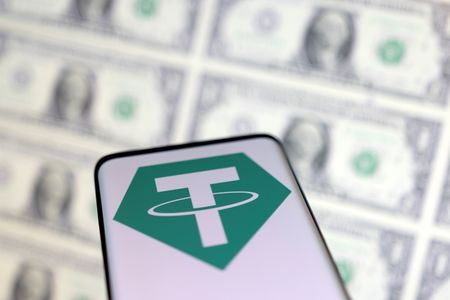
Market leader tether (USDT) has been a big beneficiary, adding $1.9 billion to its market capitalization to hit $70.3 billion since the news. It now commands 52.6% of the stablecoin market, up from just over 51%.

Circle’s USD Coin, the second-biggest stablecoin, edged up over $700 million to $42 billion, lifting its market share to 31.3% from 30.9%.

Graphic: Unstable stablecoin https://www.reuters.com/graphics/FINTECH-CRYPTO/WEEKLY/lgpdknrdovo/chart.png

AND THE WINNER IS.. TETHER

Stablecoins are a key part of the cryptosphere, with their steadier value meaning they’re used as to facilitate transfers between cryptocurrencies or into regular cash. Traders also use these tokens to hedge their positions, and hence dwindling market value is associated with falling liquidity and leverage in the broader crypto market.

Markus Thielen, head of research and strategy at crypto firm Matrixport, said the Paxos announcement and subsequent slump in BUSD had caused a big shift in the stablecoin market.

“And tether wins.”

Broader crypto market impact also seems to have been contained with bitcoin rising 14% over the past week to $24,902, shrugging off worries that central banks will keep raising rates.

Among the reasons for the sanguine reaction is that BUSD is largely used to trade on Binance, the world’s largest crypto trading platform, while its usage is limited in other parts of the crypto world, according to analytics firm Kaiko. 

“While BUSD is used in DeFi, it is not systemically important to the ecosystem,” Kaiko’s Riyad Carey said.

BETTING ON FUTURE PRICES

The developments around Binance’s stablecoin have also boosted trading on competing platforms; since Feb. 1, Binance’s bitcoin liquidity is down almost 30% while U.S.-based Coinbase’s is up nearly 15%, according to Kaiko.

Daily open interest for bitcoin to BUSD perpetual swaps has dropped from over 17,000 bitcoin at the beginning of February to 13,726 bitcoin, Binance data showed, pointing to traders withdrawing bets on future prices for BUSD.

While some uncertainty remains on the impact of the U.S. Securities and Exchange Commission ruling on other stablecoins, the market appears to have adjusted, according to some crypto players.

“This is unlikely to represent a critical large structural change to the market, for now,” said Vetle Lunde, analyst at Arcane Research. He added: “Enforcement against USDC or the non-U.S. domiciled USDT, could have more dramatic implications.”

(Reporting by Medha Singh and Lisa Pauline Mattackal in Bengaluru; Editing by Tom Wilson and Pravin Char)

tagreuters.com2023binary_LYNXMPEJ1K0AY-VIEWIMAGE

tagreuters.com2023binary_LYNXMPEJ1K061-VIEWIMAGE

tagreuters.com2023binary_LYNXMPEJ1K05U-VIEWIMAGE

tagreuters.com2023binary_LYNXMPEJ1K05V-VIEWIMAGE

Categories
Business Crypto Economy Europe Technology

EU calls for fast-track crypto capital rules for banks

By Huw Jones

LONDON (Reuters) – Tough capital rules for banks holding cryptoassets must be fast-tracked in the European Union’s pending banking law if Europe wants to avoid missing a globally-agreed deadline, the bloc’s executive has said.

The global Basel Committee of banking regulators from the world’s main financial centers has set a January 2025 deadline for implementing capital requirements for banks’ exposures to cryptoassets such as stablecoins and bitcoin.

“For the time being, banks have very low crypto-asset exposures and only a limited involvement in providing crypto-asset-related services,” the European Commission said in an informal discussion paper seen by Reuters.

“Banks have expressed interest in trading crypto-assets on behalf of their clients and to provide crypto-assets-related services.”

Basel’s standards are applied in the EU with a law, and a delay could mean that banks have to wait longer to enter the cryptomarket as separate EU rules for trading cryptoassets come into force in 2024.

To enforce Basel’s crypto rules, the EU could either propose a new law, or expand the banking law it is now finalizing as called for by the European Parliament.

Parliament and EU states have equal say on the banking law and are due to start negotiating the final text, which could include the provisions on cryptoassets, the paper said.

This would give banks clarity on their requirements for crypto-asset exposures and would ensure that risks stemming from these are adequately addressed, the Commission paper said.

“From an international perspective, it would also allow the EU to fully align itself with the implementation deadline agreed on at Basel level.”

A separate draft law would not be forthcoming until the end of 2023 at the earliest, the paper said. Parliament goes to the polls mid-2024, making it harder to approve a new law in time for 2025.

The Commission paper also suggests that the bloc’s European Banking Authority (EBA) could coordinate with the EU’s securities watchdog ESMA to ensure that cryptoassets are properly categorised.

Basel has set punitive capital charges on unbacked crypto currencies like bitcoin, and less conservative charges on stablecoins, which are backed by an asset or fiat currency.

It could also be useful to mandate EBA, in cooperation with ESMA, to maintain a list of how existing cryptoassets are categorized, the paper said.


(Reporting by Huw Jones, Editing by Louise Heavens)


Categories
Business Economy Energy Europe Middle East UK US

Oil settles down $2/bbl, ends week lower on Fed worries, ample supply

By Laura Sanicola

(Reuters) -Oil settled down $2 a barrel on Friday and ended the week markedly lower, as traders worried that future U.S. interest rate hikes could weigh on demand and got nervous about mounting signs of ample crude and fuel supply.

On Thursday, two Fed officials warned additional hikes in borrowing costs are essential to curb inflation. The sentiments lifted the U.S. dollar, making oil more expensive for holders of other currencies.

Brent crude futures settled down $2.14 or 2.5%, to $83.00 a barrel, falling 3.9% week on week. West Texas Intermediate (WTI) U.S. crude settled down $2.15, or 2.7%, to $76.34, falling 4.2% from last Friday’s settlement.

“Rate hike jitters have returned with a vengeance,” said Stephen Brennock of oil broker PVM.

Various signs of ample supply also weighed on the market.

Russian oil producers expect to maintain current volumes of crude oil exports, despite the government’s plan to cut oil output in March, the Vedomosti newspaper said on Friday, citing sources familiar with companies’ plans.

The latest snapshot of U.S. supplies, released on Wednesday, showed crude inventories in the week to Feb. 10 rose by 16.3 million barrels to 471.4 million barrels, their highest level since June 2021.

“Because oil storage is at a 19 month high, refiners are going to stretch out turnaround season for as long as they can,” said Bob Yawger, director of energy futures at Mizuho.

Heating oil cracks fell 5% on Friday as warm weather sapped demand for the fuel in mid-February.

The oil and gas rig count, an early indicator of future output, fell by one to 760 in the week to Feb. 17, energy services firm Baker Hughes Co said on Friday.

Despite this week’s rig decline, Baker Hughes said the total count was still up 115, or 18%, over this time last year.

Some support came from moves this week by the International Energy Agency and the Organization of the Petroleum Exporting Countries to raise their forecasts for global oil demand growth this year, citing expectations for more Chinese demand.

And Saudi Arabia’s energy minister said the current deal by OPEC+, which groups OPEC producers with Russia and others, to cut oil output targets by 2 million barrels per day, would be locked in until the end of the year, adding he remained cautious on Chinese demand.

(Additional reporting by Alex Lawder, Yuka Obayashi and Sudarshan Varadhan; editing by Jason Neely, Kirsten Donovan and David Gregorio)

tagreuters.com2023binary_LYNXMPEJ1H01P-VIEWIMAGE

tagreuters.com2023binary_LYNXMPEJ1G03Q-VIEWIMAGE

Categories
Technology

Explainer-What’s Known About Tesla’s “Project Highland”?

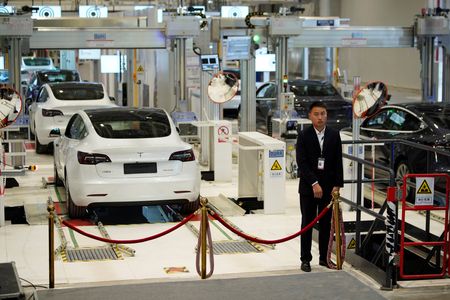
SHANGHAI (Reuters) – Tesla plans to slow production at its Shanghai plant in the last week of February to prepare for building a revamped version of its Model 3 sedan, according to a person with knowledge of the matter and a planning memo seen by Reuters.

The move was first reported by Bloomberg News.

The automaker has not commented on the new version, codenamed Highland. CEO Elon Musk has said Tesla will talk about strategy and its product roadmap at its March 1 investor day.

Here’s what is known about the car:

PRODUCTION TIMING AND AIMS

The new version is expected to go into production in Shanghai in September, said the person with knowledge of the matter, who declined to be named as the matter was private.

With the new model, Tesla is aiming to cut production costs and boost the appeal of the five-year-old electric sedan, Reuters reported in November.

One focus will be reducing the number of components and complexity in its interior. There will also be changes to the exterior and powertrain performance with a focus on production efficiency.

The revamped model will also be assembled at its plant in Fremont, California. Building permits filed with the city of Fremont concerning changes to its factory have referenced “Highland” since last June.

Apart from the Cybertruck, it is the only new model that Tesla is retooling assembly lines for this year.

Tesla prototypes have been spotted in the United States in recent months which many believe are early versions.

The pre-production cars have all had their front and rear covered in tarp, prompting speculation that Tesla has changed the design and possibly added sensors or other features.

WHY DOES IT MATTER?

Tesla only has two main models globally. The Model 3 has been overtaken in sales by the Model Y crossover and analysts say it is due for a revamp.

The automaker’s global price cuts have boosted sales across the board, but the bump for the Model 3 in China shows signs of diminishing.

Sales of the Model 3 quadrupled in January after its base price was cut by almost 14%. But for the first week of February, sales were down by more than two-thirds from the end of January, data from China Merchants Bank International showed. In contrast, Model Y sales held steady.

Analysts say Tesla needs to up its game to avoid losing share to fast-moving rivals in China. Its approach of offering two main models has kept costs down but Chinese competitors have successfully wooed car shoppers with newer offerings.

WHAT DOES THE NAME MEAN?

No one really knows but many are guessing.

Tesla fans and armchair analysts speculate that “Highland” could be a reference to Ford Motor Co’s Highland Park plant, where Henry Ford launched his moving assembly line.

That could suggest Tesla sees the new model as a chance to introduce its own game-changing production technology.

Others, noting Musk is partial to movie references, see the name as a nod to the 1986 film “Highlander,” depicting a battle between immortals and known for the line: “there can only be one.”

(Reporting by Zhang Yan and Brenda Goh; Editing by Edwina Gibbs)


Categories
Asia Australia Business Economy Energy Environment Technology US

New Biden EV charger rules stress Made In America, force Tesla changes

By Jarrett Renshaw and Hyunjoo Jin

(Reuters) -The Biden administration on Wednesday issued long-awaited final rules on its national electric vehicle charger network that require the chargers to be built in the United States immediately, and with 55% of their cost coming from U.S.-made components by 2024.

The White House hopes the new rules, issued after nearly eight months of debate, will jump-start the biggest transformation of the U.S. driving landscape in generations. It seeks to give consumers unfettered access to a growing coast-to-coast network of EV charging stations, including Tesla Inc’s Superchargers.

Companies that hope to tap $7.5 billion in federal funding for this network must also adopt the dominant U.S. standard for charging connectors, known as “Combined Charging System” or CCS; use standardized payment options; a single method of identification that works across all chargers; and work 97% of the time.

Tesla, the nation’s largest EV maker and charging company, plans to incorporate the CCS standard and expand beyond its proprietary connectors, the administration said.

“No matter what EV you drive, we want to make sure that you will be able to plug in, know the price you’re going to be paying and charge up in a predictable, user-friendly experience,” Transportation Secretary Pete Buttigieg told reporters in a preview of the rules.

The first tranche of the billions in federal funds will now be rolled out to states in upcoming weeks, forcing companies like Tesla, EVgo Inc and ChargePoint Holdings Inc to jockey for their share of the funds from state governments.

The network is a central part of President Joe Biden’s plan to tackle climate change by converting 50% of all new U.S. vehicle sales to electric by 2030. A dearth of chargers on Ameriocan roads has slowed the growth of EV sales and the positive environmental impact, advocates say.

Manufacturers warned before the rules were released that imposing a domestic components quota too soon in the program rule would slow the rollout. The new rules extend the Made in America deadlines to help give those companies more time to onshore their supply chain.

EV charger manufacturer Tritium announced on Wednesday that it will add more than 250 jobs to its Tennessee manufacturing facility, bringing the total to more than 750 jobs at the site. White House National Climate Adviser Ali Zaidi said that under Biden’s leadership the number of EV models being offered to consumers has doubled, along with the number of charging stations and EV sales.

“So this is not pie in the sky. It’s literally steel in the ground. We are seeing the Biden climate vision on wheels,” Zaidi said.

‘BUILD AMERICA, BUY AMERICA’

Under the 2021 bipartisan infrastructure law, federal infrastructure projects like EV chargers must obtain at least 55% of construction materials, including iron and steel, from domestic sources and have all manufacturing done in the United States starting immediately.

However, the Department of Transportation requested a waiver for EV charging stations and initially proposed that at least 25% of the chargers’ overall cost come from American-made components starting in July of this year and then 55% by Jan. 1, 2024.

The new rules ditch the two-step process and start imposing the component cost provision in July 2024 at 55%. The chargers must be assembled at a U.S. factory, and any iron or steel charger enclosures or housing must be made in the United States, starting immediately.

The United States and its allies Mexico and the European Union have clashed over protectionist policies implemented by Biden. The United States and the EU set up a task force last year to look at American laws that Europeans fear will discriminate against foreign electric car makers.

EV chargers require iron and steel for some of their most crucial parts, including the internal structural frame, heating and cooling fans and the power transformer. Chargers with cabinets that house the product require even more steel, making up to 50% of the total cost of the chargers in some cases.

Global demand for EV chargers is putting strain on the supply chain that makes it difficult, if not impossible, to meet the made-in-America standards and expedite construction of new chargers, states and companies warned in comments to the Department of Transportation.

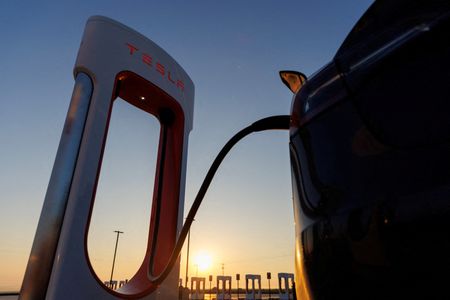
The new rules would allow Tesla to keep its unique connectors, but it will have to add a permanently attached CCS connector or adapter that charges a CCS-compliant vehicle, similar to a gas pump that has a separate handle for gas versus diesel.

Tesla told the DOT that the plan was “aggressive” and “could lead to a shortfall in the number of compliant charging stations available given the pace and scale of deployment,” records show.

However, labor advocates argue that delaying or skirting the requirements undercuts congressional intent and punishes companies that moved early to comply with the rules.

“This is a once-in-a-lifetime shot to get this right,” said Scott Paul, president of the Alliance for American Manufacturing. “The challenge with extensions is it becomes habit-forming and the herd will always fight and delay.”

(Reporting by Jarrett Renshaw in Philadelphia and Hyunjoo Jin in San Francisco; additional reporting by David Sherpardson; editing by Heather Timmons, Matthew Lewis and Jonathan Oatis)

tagreuters.com2023binary_LYNXMPEJ1E0DB-VIEWIMAGE

tagreuters.com2023binary_LYNXMPEJ1E0DC-VIEWIMAGE

tagreuters.com2023binary_LYNXMPEJ1E0DG-VIEWIMAGE

tagreuters.com2023binary_LYNXMPEJ1E0DE-VIEWIMAGE

Categories
Business Economy Energy Environment US

U.S. Gas Producers Skimped on Price Hedges and Now Face a Reckoning

By Arathy Somasekhar

HOUSTON (Reuters) – A rout in natural gas prices will hurt first-quarter earnings and cash flows at gas producers as hedges – the industry’s version of price insurance – were inadequate to offset the expected losses, analysts and industry experts said.

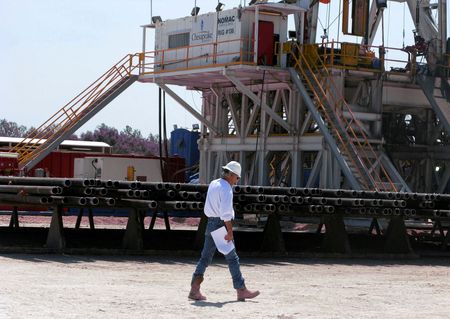
Producers starting the year with fewer hedges than historically will have to sell more gas at the market rate of about $2.45 per million British thermal units (mmBtu), below the breakeven prices for producing gas in some regions, and that may force some companies to reduce drilling and put off completing wells.

Hedges, or contracts that lock in prices for future output, help producers protect cash flows against price swings, helping them drill and complete wells – crucial at a time when Europe has looked to the United States for gas.

U.S. prices for the heating fuel traded as low as $2.34 per mmBtu this month, down 76% from last year’s August peak and the lowest level since April 2021, on mild winter weather in North America and on weaker exports.

The low levels of hedging would drain cash flow as market selling prices are low, said Matt Hagerty, senior energy strategist at FactSet’s BTU Analytics.

About 36% of 2023 gas production was hedged at the end of September, according to consultancy Energy Aspects, which tracked 40 publicly traded gas producers. That percentage was down from 52% a year earlier.

Producers entered in to only two to three swap deals per month from April to October last year, said David Seduski, natural gas analyst at Energy Aspects, referring to a type of hedge. He called that amount “incredibly minimal” and said it compared with 30 to 50 such trades per month in 2021.

A rally in prices in 2022 after Russia’s invasion of Ukraine forced a lot of producers already hedged at lower prices to take on hedging losses. That may have encouraged them to hedge less.

“Last year was pretty jarring for folks, who weren’t ready for the uptick in price. A lot of folks probably sold off those hedges and wanted to be exposed to the upside and might see themselves in the predicament they’re in now,” said Trisha Curtis, chief executive of energy consultancy PetroNerds added.

EQT Corp, the top U.S. producer of natural gas, last month said it expects a $4.6 billion loss on derivatives for 2022, and net cash settlements of $5.9 billion. No. 2 producer Southwestern Energy Co posted a $6.71 billion loss on derivatives for the first nine months of 2022.

RISKY STRATEGIES

Some companies have let their hedges expire, increasing exposure to current prices. Antero Resources Corp said in October that the vast majority of its hedges would roll off by Jan 1.

Another type of hedge, known as a three-way collar, could backfire because of the extent of the fall in prices, analysts said. These transactions have a producer buy an agreement to sell natural gas at one price, called a put, while also selling a put at a lower price in hopes of pocketing the premium from its buyer.

Effectively, this is a calculated bet that gas will fall to a certain level and no further. But when it falls below the predicted lower price, it takes away some of the benefits of the hedge.

Chesapeake Energy Corp, for example, bought puts for 900 million cubic feet at $3.40 per million cubic feet (mmcf), while also selling puts for $2.50 mmcf for the first quarter, according to a November presentation.

Were gas prices to average $2.36 per mmcf, the company would pay out 14 cents per mmcf, reducing the gains from the hedge.

Antero and Chesapeake did not respond to a request for a comment.

Denver-based Ovintiv Inc, previously Encana, also said it had sold puts for 400 mmcfpd at $2.75 per mmcf for the first quarter of 2023, according to a November press release. That would erode the gains from the hedges by about 39 cents per mmcf.

On the other hand, companies that locked in higher prices on average during the run-up in prices late last year could see gains, Rystad Energy senior analyst Matthew Bernstein said.

While overall hedging was lower, the average $3.16 per mmBtu was higher than a year earlier, he added. EQT, for example, has hedged about 58% of its total production at an average of about $3.40 per mmBtu, higher than current market prices.

Ovintiv and EQT did not immediately respond to a request for a comment.

(Reporting by Arathy Somasekhar in Houston; Editing by Matthew Lewis)