Categories
Asia Latest Market News Market Movers

David Tepper’s Strategic Pivot: From Tech Titans to Alibaba’s Promise

David Tepper’s hedge fund, Appaloosa Management, has made a significant shift in its investment strategy, now focusing heavily on Alibaba Group Holdings (BABA) (HK:9988), signaling a major pivot towards Chinese equity markets. Recent filings with the Securities and Exchange Commission reveal that Appaloosa’s stake in Alibaba, valued at $814 million as of the end of March, now stands as its largest position. This move comes as Alibaba’s shares have seen a substantial 25.2% increase since mid-April, contributing to a 15.2% rise year-to-date.

The transition in Appaloosa’s investment focus is underscored by a reduction in its holdings in what Tepper once termed the “Magnificent 7,” a cluster of dominant U.S. tech companies. Notably, the fund has scaled back its shares in Amazon.com (AMZN), now valued at $690 million, and other tech giants including Alphabet (GOOGL), Meta Platforms (META), Microsoft (MSFT), and Nvidia (NVDA). These adjustments reflect a broader reallocation from traditional tech heavyweights towards more promising prospects in the Chinese market.

Tepper’s strategy appears to bank on the continuity of the rally in Chinese stocks, which historically have experienced surges up to 60%. The fund’s growing interest in Chinese tech extends beyond Alibaba; it includes increasing stakes in PDD Holdings (PDD), known for its group-buying platform Pinduoduo and its new international venture, Temu. Furthermore, Appaloosa has ventured into other significant Chinese tech firms, acquiring new positions in JD.com (JD) (HK:9618) and expanding its holdings in Baidu (BIDU) (HK:9888).

However, not all bets have been equally successful. Baidu’s recent earnings report showed only a modest revenue increase, leading to a 9.1% drop in its stock price after a 19.4% run-up. This suggests a cautious advertising environment amid China’s tepid economic growth. The mixed outcomes highlight the nuanced approach required when navigating the volatile Chinese market.

Appaloosa’s adjustments are not limited to tech; the fund has also made moves in the real estate sector by investing in KE Holdings (BEKE) (HK:2423) and previously, JD.com, indicating a tactical trading strategy. Moreover, a significant reduction in shares of Taiwan Semiconductor Manufacturing Co. (TSM) (TW:2330) in late 2023, which in hindsight might have been premature given its impressive year-to-date performance, further emphasizes the complexity of timing and sector selection in Asian markets.

Key Takeaways

  1. Strategic Rebalancing: Appaloosa’s pivot from established U.S. tech giants to burgeoning Chinese companies highlights a strategic rebalancing, driven by the perceived growth potential in the Chinese market.
  2. Alibaba’s Central Role: Alibaba has become the centerpiece of Appaloosa’s portfolio, reflecting Tepper’s confidence in its continued market performance and its pivotal role in the fund’s strategy.
  3. Sector Diversification: The fund’s investment extends beyond e-commerce giants to include technology and real estate, underscoring a diversification strategy within the Chinese market.
  4. Navigating Volatility: The adjustments in Appaloosa’s portfolio reflect a response to both market opportunities and the inherent risks within China’s tech and real estate sectors.

Conclusion

David Tepper’s Appaloosa Management is navigating a delicate balance between opportunity and risk in the Chinese market. By reallocating resources from traditional tech stalwarts to more dynamic Chinese firms, Appaloosa is betting on the growth trajectory of China’s tech sector despite ongoing geopolitical tensions and market volatility. This strategic shift not only underscores the hedge fund’s adaptability but also highlights the broader trends influencing global investment strategies. As these Chinese holdings continue to play a crucial role in Appaloosa’s portfolio, the fund’s performance will offer valuable insights into the feasibility and profitability of betting big on China’s evolving market landscape.


Categories
Asia Technology

Alibaba and Tencent: Unprecedented Cash Reserves Signal a Turn to Value

The landscape for Chinese technology stocks has undergone a significant transformation, transitioning from their once dazzling growth prospects to what are now considered value investments. This shift presents both opportunities and challenges for investors. Companies like Alibaba and Tencent, once the darlings of the stock market, have adjusted their strategies towards increasing dividends, enhancing buyback programs, and maintaining substantial cash reserves, amidst their affordable valuation metrics. Despite these efforts, the reduction in growth rates and the surge in regulatory and competitive pressures have led these stocks to trade at notably lower multiples than their historical averages. For instance, Alibaba’s forward earnings multiple has dipped to 8.6, a stark contrast to its five-year average of 18.1, reflecting a broader market recalibration.

The decline in investor enthusiasm for these tech giants is evident in the performance of indexes like the KraneShares CSI China Internet ETF, which has seen a significant depreciation in value. However, the silver lining for potential investors lies in the current valuation of these stocks, which, by some measures, suggests they are undervalued. Alibaba and Tencent, for example, not only continue to generate substantial cash flow but also hold considerable cash and short-term investments on their balance sheets, indicating strong underlying financial health despite the market’s pessimism.

The pivot towards becoming more investor-friendly through increased dividends and buybacks is a testament to the companies’ adaptability. Tencent’s commitment to doubling its share repurchases to nearly $13 billion, alongside a 42% dividend hike, exemplifies this strategic shift. Similarly, Alibaba’s initiation of dividends and the expansion of its buyback program to $35.3 billion underline a significant return of capital to shareholders. This approach is not limited to Alibaba and Tencent; other competitors like JD.com and NetEase have also amplified their shareholder returns.

As the allure of Chinese tech stocks evolves, the market’s skepticism could potentially harbor opportunities for patient investors. The current valuation levels offer an attractive entry point, particularly for those seeking diversification outside the U.S. market at a lower cost. Although the path to regaining their former growth momentum remains uncertain, the prudent financial management and shareholder-friendly policies of these companies might offer a cushion against further downside risks.

In conclusion, while the golden era of explosive growth for Chinese tech giants appears to be in the rearview mirror, the sector’s transformation into a haven for value-seeking investors could spell a new beginning. The recalibration of expectations towards more sustainable, albeit slower, growth trajectories, coupled with attractive valuations and enhanced shareholder returns, presents a nuanced landscape. Investors willing to navigate this transition with a long-term perspective may find value in a market segment that has, until recently, been synonymous with volatility and regulatory headwinds.

Categories
Asia

Grab’s Strategic Pivot Yields Profit, Sets Positive Revenue Outlook for 2024

Grab Achieves Landmark Profitability in Q4

In a significant financial milestone, Grab, the dominant force in Southeast Asia’s ride-hailing sector, reported its first quarterly profit. The company’s earnings for the fourth quarter revealed an $11 million profit, a dramatic turnaround from the $391 million loss recorded in the same period the previous year. This profitability signals a pivotal shift for Grab, which had previously faced years of operational losses since its inception in 2012.

Revenue Surpass Analysts’ Expectations

The company’s revenue for the quarter reached $653 million, exceeding the forecasts made by analysts from the London Stock Exchange Group (LSEG), who had anticipated $634.86 million. This performance underscores Grab’s strong market presence and its ability to exceed financial expectations amidst a challenging economic landscape.

Annual Financial Overview and Business Diversification

Despite the quarterly profit, Grab’s annual figures reflect the hurdles it still faces, with full-year losses totaling $485 million. However, this represents a significant reduction of 72% from the previous year’s losses of $1.74 billion. Grab’s business model extends beyond ride-hailing, including financial services like payments and insurance, as well as delivery services for food, groceries, and packages. This diversification has played a crucial role in the company’s path to recovery and growth.

Strategic Shift Towards Profitability

Grab’s journey to this quarter’s profitability marks a crucial strategic pivot. The tech startup landscape typically sees companies prioritizing growth over immediate profitability, often leading to substantial cash burn. However, global economic uncertainties have prompted Grab to refocus on profitability and cost efficiency. This shift is evident in the company’s operational tactics, such as the reduction of total incentives to 7.3% of the total value of goods sold, down from 8.2% the previous year. This strategy aims to enhance marketplace health while maintaining competitive leverage in attracting drivers and passengers.

Share Buyback Program and Future Revenue Projections

In a move to further bolster investor confidence, Grab announced its first-ever share buyback program, committing to repurchase up to $500 million worth of class A ordinary shares. Looking forward, the company has set its revenue expectations for 2024 between $2.70 billion and $2.75 billion, slightly below the LSEG analysts’ consensus of $2.8 billion. This projection reflects a cautiously optimistic outlook, balancing ambitious growth with the realities of market conditions.

Market Response and Share Price Dynamics

Following the announcement of its financial achievements, Grab’s shares experienced an 8.41% decline, continuing a downward trend from its Nasdaq listing price in December 2021, which has seen a substantial 75.8% decrease. This market response underscores the volatile nature of investor confidence and the challenges tech companies face in maintaining stock value amidst shifting economic indicators.

Conclusion: Grab’s Path Forward

Grab’s report of profitability in the fourth quarter is a testament to the company’s resilience and strategic adaptability. By diversifying its service offerings and refining its approach to profitability, Grab has positioned itself as a formidable player in Southeast Asia’s digital economy. The introduction of a share buyback program and the careful management of incentives reflect a mature approach to growth, emphasizing long-term sustainability over short-term gains. As Grab navigates the complexities of the market, its focus on operational efficiency and strategic investments will be crucial in sustaining momentum and enhancing shareholder value in the years to come.

Categories
Asia Business Economy Technology US

AI stocks surge as investors bet on growth prospects

(Reuters) -Shares of artificial intelligence-based (AI) product makers zoomed on Friday, as a strong forecast from retail darling C3.ai Inc amplified an ongoing euphoria in the segment driven by the launch of OpenAI’s ChatGPT.

C3.a1 forecast better-than-expected revenue and profit for both the fourth quarter and fiscal year 2023, after its third-quarter results topped Wall Street estimates.

Shares of the AI software provider were up 16% at $24.80, and were one of the top five trending stocks on StockTwits. If the gains hold, the stock is set to notch its strongest one-day gain in a month.

“The company is starting to gain momentum in building significant enterprise opportunities in its pipeline with its suite of innovative enterprise AI solutions,” said Wedbush analyst Daniel Ives.

The firm’s aim to turn cash positive and adjusted profitable by the end of fiscal year 2024 also boosted the stock, but Ives believes the execution of these ambitions is key to regain the Street’s confidence heading into 2023.

Retail investors have flocked to small-cap firms building AI tools as companies such as Google-parent Alphabet Inc and Microsoft Corp have locked horns to make AI the next big growth driver.

Microsoft’s investment in OpenAI’s ChatGPT boosted AI firms’ popularity further. Chatbots like the ChatGPT are software applications that aim to mimic human conversation using artificial intelligence.

Other major AI stocks also surged on Friday with BigBear.ai, conversation intelligence firm SoundHound AI, and Thailand’s security firm Guardforce AI jumping between 5% and 20%.

So far this year, these stocks, including C3.ai, have surged 33.9%-321.6%, as of the previous day’s close.

“AI could become the new gold rush on Wall Street,” said Adam Sarhan, chief executive officer of 50 Park Investments in Florida.

“But it still needs some more time to mature a bit, better price action, and prove that it can generate profits for investors.”

(Reporting by Ankika Biswas in Bengaluru; editing by Uttaresh Venkateshwaran)

tagreuters.com2023binary_LYNXMPEJ220G4-VIEWIMAGE

tagreuters.com2023binary_LYNXMPEJ220G3-VIEWIMAGE

Categories
Asia Business Crypto Economy Technology US

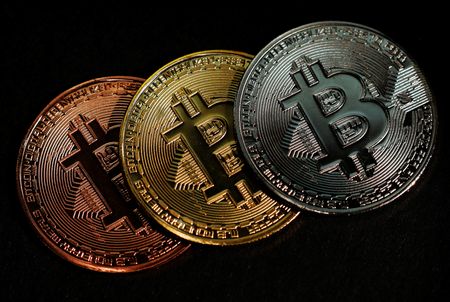
Cryptoverse: Bitcoin moves towards Satoshi’s payment dream

By Medha Singh and Lisa Pauline Mattackal

(Reuters) – Satoshi Nakamoto would be proud. Adolescent bitcoin may finally be repaying its creator’s faith.

The 15-year-old cryptocurrency has filled many roles – from source of speculation to hedge against inflation – but has struggled to find a clear identity. Now there are growing signs it’s edging towards its intended purpose: payments.

“The development in terms of building out crypto payments has continued apace, even if it’s gone somewhat unnoticed because of the volatility in the broader market,” said Richard Mico, U.S. CEO of Banxa, a payment-and-compliance infrastructure provider.

The amount of bitcoin stored on the Lightning Network – a payment protocol layered on top of the blockchain – has jumped by two-thirds over the past year to hit an all-time high of 5,580 coin, according to crypto data firm The Block.

Crypto payment specialists have also seen strong volumes.

U.S.-based BitPay said transaction volumes jumped 18% last year versus 2021. CoinsPaid said volumes in the fourth quarter of 2022 rose 32% compared with a year before.

BITCOIN AND BRAZILIAN REAL

So why has crypto failed to fulfill pseudonymous inventor Nakamoto’s dream, spelt out in a famed 2008 white paper titled “Bitcoin: A Peer-to-Peer Electronic Cash System”?

Price volatility, slow processing speeds and persistent regulatory uncertainty are among the factors that have rendered cryptocurrencies unwieldy as a means of payment. Few merchants price good or services in crypto.

Nonetheless, proponents say bitcoin offers lower transaction costs and quicker speeds than traditional cash, especially for cross-border transfers.

Aside from bitcoin, other cryptocurrencies including stablecoins, which are pegged to the value of traditional currencies, have emerged as popular options, particularly for cross-border payments, remittances, plus in emerging markets where the value of local currencies have been hit by inflation.

Stellar, a blockchain that enables cross-border payments, saw the number of trades on its platform increase to 103.4 million last month from 50.6 million in January 2022.

Volumes for trades across exchanges between bitcoin and Turkey’s lira and Brazil’s real increased by 232% and 72%, respectively, CryptoCompare data showed.

CAN YOU HANDLE THE STRESS?

It’s not all smooth sailing for the widespread adoption of crypto for payments; for one thing, there’s the question of whether blockchains are ready to handle the stress of processing thousands of transactions at a time, especially without a simultaneous jump in transaction fees.

Efforts by some of the world’s largest economies, including Japan, China and India, to create their own digital currencies (CBDCs) could also choke crypto payments growth, say some market players. For others, though, growing interest in CBDCs is evidence that blockchain payments tech is here to stay.

Traditional finance firms looking to embrace crypto payments have also shrugged off recent market volatility. One, Visa inking a deal this month with crypto firm WireX to directly issue crypto-enabled debit and prepaid cards.

“Crypto is evolving into a viable alternative for more and more people around the world,” said Mico at Banxa.


(Reporting by Lisa Pauline Mattackal and Medha Singh in Bengaluru; Editing by Tom Wilson and Pravin Char)


Categories
Asia Business Economy Environment Europe Politics and Trading Resource Stocks Technology US

Yellen says EV battery mineral trade pacts can likely bypass Congress

By David Lawder

BENGALURU (Reuters) – U.S. Treasury Secretary Yellen said on Friday that she expects that future limited free trade agreements focused on battery minerals with the European Union and other trusted allies would not need approval from Congress.

Yellen told reporters on the sidelines of a G20 finance meeting in India that such agreements, which would be aimed at granting automakers based in Europe, Japan and other countries access to new U.S. tax credits for electric vehicles, would also likely include high labor standards and export control provisions to ensure secure supply chains.

Such mineral pacts are one potential way to address European Union’s complaints that its automakers are shut out of the $7,500 per vehicle tax credits in the climate-focused Inflation Reduction Act, which it argues will suck electric vehicle investments away from Europe.

The law specified that the tax credits were only available to North American-assembled vehicles that meet certain local battery production and mineral extraction processing standards.

Countries with U.S. free trade agreements can also access the credits, and this is a provision that the Biden administration hopes to exploit by negotiating limited trade deals focused on battery minerals.

The Treasury already is allowing leased electric vehicles to qualify under commercial EV tax credit rules, a move that Yellen said would cover most vehicles for now. Over time, she said she hoped that trade agreements would allow more sold vehicles to qualify over time.

“It would be an agreement that we think would not require the agreement of Congress,” she said adding that Congress intended “a kind of friend-shoring approach” for critical minerals to reduce reliance on China.

“I think the word ‘free trade areas’ was meant to mean reliable friends and partners with whom we can feel we have secure supply chains so we feel this is fully the intent of Congress and we’ll be able to negotiate such agreements,” Yellen said.

The Treasury in March is due to put out guidance on the sourcing of battery minerals and Yellen said this will include guidance on free trade areas that can qualify.

The Treasury already has said that it will qualify existing comprehensive free trade pacts Australia, Bahrain, Canada, Chile, Colombia, Costa Rica, Dominican Republic, El Salvador, Guatemala, Honduras, Israel, Jordan, South Korea, Mexico, Morocco, Nicaragua, Oman, Panama, Peru and Singapore.

Yellen said that the United States and Europe were getting closer to reaching understandings over the U.S. green energy subsidies, and said Washington will not try to stop Europe from enacting competing subsidies.

“We’ve been very clear with Europe that this is not a subsidy war,” Yellen said. “We’re not trying to steal jobs. This is our climate plan.”

(Reporting by David Lawder. Editing by Jane Merriman and Tomasz Janowski)

tagreuters.com2023binary_LYNXMPEJ1N0IF-VIEWIMAGE

Categories
Asia Australia Business Economy Europe Technology Top News US

Stocks, crude oil advances despite higher interest rate expectations

By Chibuike Oguh

NEW YORK (Reuters) -Global equities and crude oil rebounded from earlier losses on Thursday even as economic data continued to show the strength of the U.S. economy and validated the Federal Reserve’s tight monetary policy stance.

A U.S. Labor Department report on Thursday showed that new claims for unemployment benefits unexpectedly fell last week, pointing to a persistently tight labor market.

The readings for the fourth-quarter personal consumption expenditures (PCE) price index, the Fed’s preferred inflation measure, were revised upward to 3.7%, indicating inflation was much stronger than initially thought and weighed on sentiment earlier in the day.

Minutes of the Federal Reserve’s last meeting released on Wednesday showed that officials favored a moderation in the pace of rate hikes although they indicated that containing high inflation would be key in how much further rates need to rise.

“The Fed minutes yesterday were a bit hawkish and they said ongoing rate hikes would be necessary and that should obviously be negative for the market,” said Sandy Villere, portfolio manager at Villere & Co in New Orleans.

“But it seems the market is starting to discount that we’re getting into the eighth or ninth inning of these rate hikes even though the Fed is saying ongoing rate hikes would be necessary,” Villere said.

The MSCI world equity index, which tracks shares in 50 countries, was down 0.27%. European stocks were up at just 0.06%.

On Wall Street, the Nasdaq regained earlier losses from better-than-expected revenue at chipmaker Nvidia Corp. The results drove the company’s shares up 14%, along with shares of other semiconductor manufacturers.

The Dow Jones Industrial Average rose 0.33% to 33,153.91, the S&P 500 gained 0.53% to 4,012.32 and the Nasdaq Composite added 0.72% to 11,590.40.

“When you see strong numbers at certain companies, it could be market moving and that’s what we’re seeing today – a bit of a relief rally,” Villere added.

Oil prices firmed more than 1% before paring some gains, with Russian supply curbs partially offsetting an expected rise in U.S. inventories.

Brent crude futures settled up 2% to $82.21 a barrel, while West Texas Intermediate crude futures (WTI) advanced 2% to $75.39 after six sessions of losses.

U.S. Treasury yields edged lower in choppy trading, with those on the 10-year pulling back from three-month highs, as investors have priced in strong economic data.

Benchmark 10-year Treasury notes were down at 3.8865%, while the yield curve measuring the gap between the two- and 10-year Treasury notes was still inverted at minus 77.90 basis points, indicating a looming recession.

The dollar retained its strength against its major peers. The dollar index rose 0.077%, with the euro down 0.07% to $1.0594.

Safe-haven gold prices slipped to their lowest in about two months as the U.S. dollar climbed. Spot gold dropped 0.03% to $1,822.09 an ounce, while U.S. gold futures fell 0.55% to $1,822.00 an ounce.

(Reporting by Chibuike Oguh in New York, editing by Anna Driver, Bernadette Baum and Diane Craft)

tagreuters.com2023binary_LYNXMPEJ1M09K-VIEWIMAGE

tagreuters.com2023binary_LYNXMPEJ1M02B-VIEWIMAGE

tagreuters.com2023binary_LYNXMPEJ1M02A-VIEWIMAGE

Categories
Asia Business Economy Energy Europe Middle East UK US

Oil drops 3% as high inflation risks stoke demand worries

By Shariq Khan

BENGALURU (Reuters) – Oil prices fell by $2 per barrel to their lowest in two weeks on Wednesday, as investors became more concerned that recent data will prompt more aggressive interest rate increases by central banks, pressuring economic growth and fuel demand.

Brent crude futures settled $2.45, or 3%, lower at $80.60 per barrel. West Texas Intermediate crude futures (WTI) dropped $2.41, or 3%, to end at $74.05 a barrel.

The settlement levels were the lowest for both benchmarks since Feb. 3.

Minutes from the latest U.S. Federal Reserve meeting showed a majority of Fed officials agreed the risks of high inflation remained a “key factor” shaping monetary policy and warranted continued rate hikes until it was controlled.

“While better U.S. economic data should mean better oil demand, the concern is that this forces the Fed to overtighten monetary policy to bring inflation under control,” said UBS analyst Giovanni Staunovo.

“This is also supporting the U.S. dollar, which is not of help for oil.”

The U.S. dollar Index gained for a second straight session, making greenback-denominated oil more expensive for holders of other currencies. [USD/]

Other U.S. economic reports, however, showed some troubling signs for the world’s biggest oil consumer. Sales of existing homes fell in January to their lowest since October 2010.

U.S. crude stockpiles rose by 9.9 million barrels last week, according to market sources citing American Petroleum Institute figures on Wednesday. U.S. oil inventories have climbed every week since mid-December, worrying investors about demand in the country. [API/S]

A Reuters poll had forecast a 2.1 million barrels increase in crude stockpiles last week. Official data from the Energy Information Administration is due Thursday at 11:00 a.m. EST. [EIA/S]

The American Petroleum Institute, an industry group, releases its inventory report at 4:30 p.m. ET (2130 GMT).

Demand for crude oil is seasonally lower with major U.S. refineries deep in maintenance season, said Price Group analyst Phil Flynn.

Some 1.44 million barrels per day of U.S. refining capacity is expected to be offline in the week ending March 3, according to research company IIR energy.

A massive snowstorm in the U.S. Northern Plains and Upper Midwest has also hit fuel demand, with 3,500 flights delayed or cancelled across the country so far, according to FlightAware.com.

U.S. gasoline futures slid almost 4% to their lowest in two weeks.

(Reporting by Shariq Khan, additional reporting by Rowena Edwards and Trixie Yap; Editing by Marguerita Choy, David Gregorio and Lincoln Feast.)

tagreuters.com2023binary_LYNXMPEJ1L02V-VIEWIMAGE

Categories
Asia Australia Business Economy Energy Environment Technology US

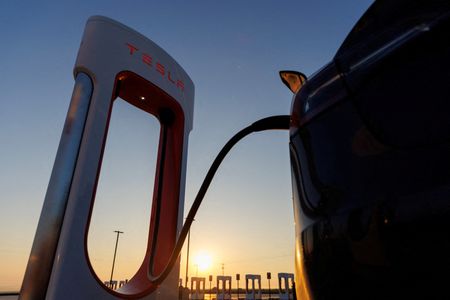
New Biden EV charger rules stress Made In America, force Tesla changes

By Jarrett Renshaw and Hyunjoo Jin

(Reuters) -The Biden administration on Wednesday issued long-awaited final rules on its national electric vehicle charger network that require the chargers to be built in the United States immediately, and with 55% of their cost coming from U.S.-made components by 2024.

The White House hopes the new rules, issued after nearly eight months of debate, will jump-start the biggest transformation of the U.S. driving landscape in generations. It seeks to give consumers unfettered access to a growing coast-to-coast network of EV charging stations, including Tesla Inc’s Superchargers.

Companies that hope to tap $7.5 billion in federal funding for this network must also adopt the dominant U.S. standard for charging connectors, known as “Combined Charging System” or CCS; use standardized payment options; a single method of identification that works across all chargers; and work 97% of the time.

Tesla, the nation’s largest EV maker and charging company, plans to incorporate the CCS standard and expand beyond its proprietary connectors, the administration said.

“No matter what EV you drive, we want to make sure that you will be able to plug in, know the price you’re going to be paying and charge up in a predictable, user-friendly experience,” Transportation Secretary Pete Buttigieg told reporters in a preview of the rules.

The first tranche of the billions in federal funds will now be rolled out to states in upcoming weeks, forcing companies like Tesla, EVgo Inc and ChargePoint Holdings Inc to jockey for their share of the funds from state governments.

The network is a central part of President Joe Biden’s plan to tackle climate change by converting 50% of all new U.S. vehicle sales to electric by 2030. A dearth of chargers on Ameriocan roads has slowed the growth of EV sales and the positive environmental impact, advocates say.

Manufacturers warned before the rules were released that imposing a domestic components quota too soon in the program rule would slow the rollout. The new rules extend the Made in America deadlines to help give those companies more time to onshore their supply chain.

EV charger manufacturer Tritium announced on Wednesday that it will add more than 250 jobs to its Tennessee manufacturing facility, bringing the total to more than 750 jobs at the site. White House National Climate Adviser Ali Zaidi said that under Biden’s leadership the number of EV models being offered to consumers has doubled, along with the number of charging stations and EV sales.

“So this is not pie in the sky. It’s literally steel in the ground. We are seeing the Biden climate vision on wheels,” Zaidi said.

‘BUILD AMERICA, BUY AMERICA’

Under the 2021 bipartisan infrastructure law, federal infrastructure projects like EV chargers must obtain at least 55% of construction materials, including iron and steel, from domestic sources and have all manufacturing done in the United States starting immediately.

However, the Department of Transportation requested a waiver for EV charging stations and initially proposed that at least 25% of the chargers’ overall cost come from American-made components starting in July of this year and then 55% by Jan. 1, 2024.

The new rules ditch the two-step process and start imposing the component cost provision in July 2024 at 55%. The chargers must be assembled at a U.S. factory, and any iron or steel charger enclosures or housing must be made in the United States, starting immediately.

The United States and its allies Mexico and the European Union have clashed over protectionist policies implemented by Biden. The United States and the EU set up a task force last year to look at American laws that Europeans fear will discriminate against foreign electric car makers.

EV chargers require iron and steel for some of their most crucial parts, including the internal structural frame, heating and cooling fans and the power transformer. Chargers with cabinets that house the product require even more steel, making up to 50% of the total cost of the chargers in some cases.

Global demand for EV chargers is putting strain on the supply chain that makes it difficult, if not impossible, to meet the made-in-America standards and expedite construction of new chargers, states and companies warned in comments to the Department of Transportation.

The new rules would allow Tesla to keep its unique connectors, but it will have to add a permanently attached CCS connector or adapter that charges a CCS-compliant vehicle, similar to a gas pump that has a separate handle for gas versus diesel.

Tesla told the DOT that the plan was “aggressive” and “could lead to a shortfall in the number of compliant charging stations available given the pace and scale of deployment,” records show.

However, labor advocates argue that delaying or skirting the requirements undercuts congressional intent and punishes companies that moved early to comply with the rules.

“This is a once-in-a-lifetime shot to get this right,” said Scott Paul, president of the Alliance for American Manufacturing. “The challenge with extensions is it becomes habit-forming and the herd will always fight and delay.”

(Reporting by Jarrett Renshaw in Philadelphia and Hyunjoo Jin in San Francisco; additional reporting by David Sherpardson; editing by Heather Timmons, Matthew Lewis and Jonathan Oatis)

tagreuters.com2023binary_LYNXMPEJ1E0DB-VIEWIMAGE

tagreuters.com2023binary_LYNXMPEJ1E0DC-VIEWIMAGE

tagreuters.com2023binary_LYNXMPEJ1E0DG-VIEWIMAGE

tagreuters.com2023binary_LYNXMPEJ1E0DE-VIEWIMAGE

Categories
Asia Business Crypto Economy Europe Technology UK US

Binance stablecoin backer says U.S. SEC has labeled token an unregistered security

By Hannah Lang, Tom Wilson and Elizabeth Howcroft

WASHINGTON/LONDON (Reuters) – The firm behind Binance’s stablecoin, Paxos Trust Company, said the U.S. Securities and Exchange Commission (SEC) has told the company it should have registered the product as a security and is considering taking action against the platform.

In a statement on Monday, Paxos said it disagreed with the SEC’s allegations that Binance USD is a security and is “prepared to vigorously litigate if necessary.”

The move represents one of the SEC’s first actions on stablecoins, though Chair Gary Gensler has previously said he believes some stablecoins to be securities.

The announcement comes hours after the New York Department of Financial Services (NYDFS) said in a consumer alert it has ordered Paxos to stop minting Binance USD, citing “unresolved issues” in Paxos’ oversight of its relationship with Binance.

An NYDFS spokesperson later told Reuters via email that Paxos violated its obligations for “tailored, periodic risk assessments” and due diligence checks on Binance and Binance USD customers needed to stop “bad actors from using the platform.”

Paxos said in a statement that it would stop issuing new Binance USD, which is backed by traditional cash and U.S. Treasury bills, from Feb. 21, but would continue to support and redeem the tokens until at least February 2024.

In a subsequent statement on Monday confirming that the SEC had put the firm on notice, Paxos said “there are unequivocally no other allegations” against the company.

“Paxos has always prioritized the safety of its customers’ assets,” the company said in the statement.

An SEC spokesperson said the agency does not comment on the existence or nonexistence of a possible investigation.

Stablecoins, digital tokens typically backed by traditional assets that are designed to hold a steady value, have emerged as one of the key cogs in the crypto economy. They are used for trading between volatile tokens like bitcoin and, in some emerging economies, as a means to protect savings against inflation.

The NYDFS move represents a setback to Binance’s efforts to gain market share from larger stablecoin rivals such as Tether and USD Coin, analysts said. The loss the New York-regulated status offered by Paxos may also hurt Binance’s appeal to larger investors, they said.

“It is a big setback for Binance,” said Ivan Kachkovski, FX and crypto strategist at UBS. “It remains to be seen whether (and when) Binance will be able to find a U.S.-based partner for its stablecoin. The latter appears crucial in the wake of U.S. regulation on stablecoins that is coming sooner rather than later.”

RACE FOR THE ‘DOLLAR OF CRYPTO’

Binance USD is the third-biggest stablecoin behind market leader Tether and USD Coin, with about $16 billion in circulation, and is the seventh-biggest cryptocurrency, according to market tracker CoinGecko.

The token “in theory had the potential to replace both as a de jure dollar of crypto,” said Joseph Edwards, investment adviser at crypto firm Enigma Securities.

“What’s being seen on the desks today is a significant flight from BUSD to USDT (Tether),” he said.

Binance Coin, the platform’s native token, was last down 9.7%, according to CoinGecko.

Binance CEO Changpeng Zhao wrote in a series of tweets on Monday that the regulator’s decision meant that “BUSD market cap will only decrease over time,” adding that Paxos has assured Binance the funds were fully covered by Paxos’ bank reserves.

Binance would “continue to support BUSD for the foreseeable future,” Zhao said, predicting that users would shift to “other stablecoins over time.”

The NYDFS move, first reported by the Wall Street Journal, comes amid a wider crackdown on cryptocurrencies and Binance by U.S. regulators. The Justice Department is investigating Binance for suspected money laundering and sanctions violations, Reuters has previously reported. Binance has previously said it regularly works with regulatory agencies to address questions they may have.

(Reporting by Hannah Lang in Washington and Tom Wilson and Elizabeth Howcroft in London; Editing by Caitlin Webber and Matthew Lewis)

tagreuters.com2023binary_LYNXMPEJ1C0HN-VIEWIMAGE

tagreuters.com2023binary_LYNXMPEJ1C0H2-VIEWIMAGE