Categories
Business Economy Energy Europe Middle East UK US

Oil settles down $2/bbl, ends week lower on Fed worries, ample supply

By Laura Sanicola

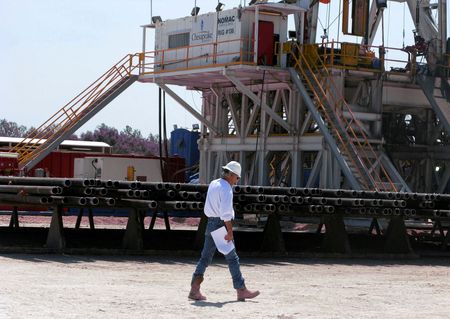
(Reuters) -Oil settled down $2 a barrel on Friday and ended the week markedly lower, as traders worried that future U.S. interest rate hikes could weigh on demand and got nervous about mounting signs of ample crude and fuel supply.

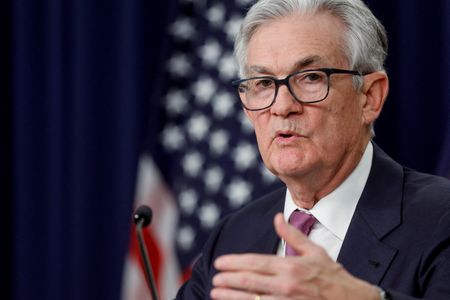
On Thursday, two Fed officials warned additional hikes in borrowing costs are essential to curb inflation. The sentiments lifted the U.S. dollar, making oil more expensive for holders of other currencies.

Brent crude futures settled down $2.14 or 2.5%, to $83.00 a barrel, falling 3.9% week on week. West Texas Intermediate (WTI) U.S. crude settled down $2.15, or 2.7%, to $76.34, falling 4.2% from last Friday’s settlement.

“Rate hike jitters have returned with a vengeance,” said Stephen Brennock of oil broker PVM.

Various signs of ample supply also weighed on the market.

Russian oil producers expect to maintain current volumes of crude oil exports, despite the government’s plan to cut oil output in March, the Vedomosti newspaper said on Friday, citing sources familiar with companies’ plans.

The latest snapshot of U.S. supplies, released on Wednesday, showed crude inventories in the week to Feb. 10 rose by 16.3 million barrels to 471.4 million barrels, their highest level since June 2021.

“Because oil storage is at a 19 month high, refiners are going to stretch out turnaround season for as long as they can,” said Bob Yawger, director of energy futures at Mizuho.

Heating oil cracks fell 5% on Friday as warm weather sapped demand for the fuel in mid-February.

The oil and gas rig count, an early indicator of future output, fell by one to 760 in the week to Feb. 17, energy services firm Baker Hughes Co said on Friday.

Despite this week’s rig decline, Baker Hughes said the total count was still up 115, or 18%, over this time last year.

Some support came from moves this week by the International Energy Agency and the Organization of the Petroleum Exporting Countries to raise their forecasts for global oil demand growth this year, citing expectations for more Chinese demand.

And Saudi Arabia’s energy minister said the current deal by OPEC+, which groups OPEC producers with Russia and others, to cut oil output targets by 2 million barrels per day, would be locked in until the end of the year, adding he remained cautious on Chinese demand.

(Additional reporting by Alex Lawder, Yuka Obayashi and Sudarshan Varadhan; editing by Jason Neely, Kirsten Donovan and David Gregorio)

tagreuters.com2023binary_LYNXMPEJ1H01P-VIEWIMAGE

tagreuters.com2023binary_LYNXMPEJ1G03Q-VIEWIMAGE

Categories
Asia Australia Business Economy Energy Environment Technology US

New Biden EV charger rules stress Made In America, force Tesla changes

By Jarrett Renshaw and Hyunjoo Jin

(Reuters) -The Biden administration on Wednesday issued long-awaited final rules on its national electric vehicle charger network that require the chargers to be built in the United States immediately, and with 55% of their cost coming from U.S.-made components by 2024.

The White House hopes the new rules, issued after nearly eight months of debate, will jump-start the biggest transformation of the U.S. driving landscape in generations. It seeks to give consumers unfettered access to a growing coast-to-coast network of EV charging stations, including Tesla Inc’s Superchargers.

Companies that hope to tap $7.5 billion in federal funding for this network must also adopt the dominant U.S. standard for charging connectors, known as “Combined Charging System” or CCS; use standardized payment options; a single method of identification that works across all chargers; and work 97% of the time.

Tesla, the nation’s largest EV maker and charging company, plans to incorporate the CCS standard and expand beyond its proprietary connectors, the administration said.

“No matter what EV you drive, we want to make sure that you will be able to plug in, know the price you’re going to be paying and charge up in a predictable, user-friendly experience,” Transportation Secretary Pete Buttigieg told reporters in a preview of the rules.

The first tranche of the billions in federal funds will now be rolled out to states in upcoming weeks, forcing companies like Tesla, EVgo Inc and ChargePoint Holdings Inc to jockey for their share of the funds from state governments.

The network is a central part of President Joe Biden’s plan to tackle climate change by converting 50% of all new U.S. vehicle sales to electric by 2030. A dearth of chargers on Ameriocan roads has slowed the growth of EV sales and the positive environmental impact, advocates say.

Manufacturers warned before the rules were released that imposing a domestic components quota too soon in the program rule would slow the rollout. The new rules extend the Made in America deadlines to help give those companies more time to onshore their supply chain.

EV charger manufacturer Tritium announced on Wednesday that it will add more than 250 jobs to its Tennessee manufacturing facility, bringing the total to more than 750 jobs at the site. White House National Climate Adviser Ali Zaidi said that under Biden’s leadership the number of EV models being offered to consumers has doubled, along with the number of charging stations and EV sales.

“So this is not pie in the sky. It’s literally steel in the ground. We are seeing the Biden climate vision on wheels,” Zaidi said.

‘BUILD AMERICA, BUY AMERICA’

Under the 2021 bipartisan infrastructure law, federal infrastructure projects like EV chargers must obtain at least 55% of construction materials, including iron and steel, from domestic sources and have all manufacturing done in the United States starting immediately.

However, the Department of Transportation requested a waiver for EV charging stations and initially proposed that at least 25% of the chargers’ overall cost come from American-made components starting in July of this year and then 55% by Jan. 1, 2024.

The new rules ditch the two-step process and start imposing the component cost provision in July 2024 at 55%. The chargers must be assembled at a U.S. factory, and any iron or steel charger enclosures or housing must be made in the United States, starting immediately.

The United States and its allies Mexico and the European Union have clashed over protectionist policies implemented by Biden. The United States and the EU set up a task force last year to look at American laws that Europeans fear will discriminate against foreign electric car makers.

EV chargers require iron and steel for some of their most crucial parts, including the internal structural frame, heating and cooling fans and the power transformer. Chargers with cabinets that house the product require even more steel, making up to 50% of the total cost of the chargers in some cases.

Global demand for EV chargers is putting strain on the supply chain that makes it difficult, if not impossible, to meet the made-in-America standards and expedite construction of new chargers, states and companies warned in comments to the Department of Transportation.

The new rules would allow Tesla to keep its unique connectors, but it will have to add a permanently attached CCS connector or adapter that charges a CCS-compliant vehicle, similar to a gas pump that has a separate handle for gas versus diesel.

Tesla told the DOT that the plan was “aggressive” and “could lead to a shortfall in the number of compliant charging stations available given the pace and scale of deployment,” records show.

However, labor advocates argue that delaying or skirting the requirements undercuts congressional intent and punishes companies that moved early to comply with the rules.

“This is a once-in-a-lifetime shot to get this right,” said Scott Paul, president of the Alliance for American Manufacturing. “The challenge with extensions is it becomes habit-forming and the herd will always fight and delay.”

(Reporting by Jarrett Renshaw in Philadelphia and Hyunjoo Jin in San Francisco; additional reporting by David Sherpardson; editing by Heather Timmons, Matthew Lewis and Jonathan Oatis)

tagreuters.com2023binary_LYNXMPEJ1E0DB-VIEWIMAGE

tagreuters.com2023binary_LYNXMPEJ1E0DC-VIEWIMAGE

tagreuters.com2023binary_LYNXMPEJ1E0DG-VIEWIMAGE

tagreuters.com2023binary_LYNXMPEJ1E0DE-VIEWIMAGE

Categories
Business Economy Energy Environment US

U.S. Gas Producers Skimped on Price Hedges and Now Face a Reckoning

By Arathy Somasekhar

HOUSTON (Reuters) – A rout in natural gas prices will hurt first-quarter earnings and cash flows at gas producers as hedges – the industry’s version of price insurance – were inadequate to offset the expected losses, analysts and industry experts said.

Producers starting the year with fewer hedges than historically will have to sell more gas at the market rate of about $2.45 per million British thermal units (mmBtu), below the breakeven prices for producing gas in some regions, and that may force some companies to reduce drilling and put off completing wells.

Hedges, or contracts that lock in prices for future output, help producers protect cash flows against price swings, helping them drill and complete wells – crucial at a time when Europe has looked to the United States for gas.

U.S. prices for the heating fuel traded as low as $2.34 per mmBtu this month, down 76% from last year’s August peak and the lowest level since April 2021, on mild winter weather in North America and on weaker exports.

The low levels of hedging would drain cash flow as market selling prices are low, said Matt Hagerty, senior energy strategist at FactSet’s BTU Analytics.

About 36% of 2023 gas production was hedged at the end of September, according to consultancy Energy Aspects, which tracked 40 publicly traded gas producers. That percentage was down from 52% a year earlier.

Producers entered in to only two to three swap deals per month from April to October last year, said David Seduski, natural gas analyst at Energy Aspects, referring to a type of hedge. He called that amount “incredibly minimal” and said it compared with 30 to 50 such trades per month in 2021.

A rally in prices in 2022 after Russia’s invasion of Ukraine forced a lot of producers already hedged at lower prices to take on hedging losses. That may have encouraged them to hedge less.

“Last year was pretty jarring for folks, who weren’t ready for the uptick in price. A lot of folks probably sold off those hedges and wanted to be exposed to the upside and might see themselves in the predicament they’re in now,” said Trisha Curtis, chief executive of energy consultancy PetroNerds added.

EQT Corp, the top U.S. producer of natural gas, last month said it expects a $4.6 billion loss on derivatives for 2022, and net cash settlements of $5.9 billion. No. 2 producer Southwestern Energy Co posted a $6.71 billion loss on derivatives for the first nine months of 2022.

RISKY STRATEGIES

Some companies have let their hedges expire, increasing exposure to current prices. Antero Resources Corp said in October that the vast majority of its hedges would roll off by Jan 1.

Another type of hedge, known as a three-way collar, could backfire because of the extent of the fall in prices, analysts said. These transactions have a producer buy an agreement to sell natural gas at one price, called a put, while also selling a put at a lower price in hopes of pocketing the premium from its buyer.

Effectively, this is a calculated bet that gas will fall to a certain level and no further. But when it falls below the predicted lower price, it takes away some of the benefits of the hedge.

Chesapeake Energy Corp, for example, bought puts for 900 million cubic feet at $3.40 per million cubic feet (mmcf), while also selling puts for $2.50 mmcf for the first quarter, according to a November presentation.

Were gas prices to average $2.36 per mmcf, the company would pay out 14 cents per mmcf, reducing the gains from the hedge.

Antero and Chesapeake did not respond to a request for a comment.

Denver-based Ovintiv Inc, previously Encana, also said it had sold puts for 400 mmcfpd at $2.75 per mmcf for the first quarter of 2023, according to a November press release. That would erode the gains from the hedges by about 39 cents per mmcf.

On the other hand, companies that locked in higher prices on average during the run-up in prices late last year could see gains, Rystad Energy senior analyst Matthew Bernstein said.

While overall hedging was lower, the average $3.16 per mmBtu was higher than a year earlier, he added. EQT, for example, has hedged about 58% of its total production at an average of about $3.40 per mmBtu, higher than current market prices.

Ovintiv and EQT did not immediately respond to a request for a comment.

(Reporting by Arathy Somasekhar in Houston; Editing by Matthew Lewis)


Categories
Asia Business Crypto Economy Europe Technology UK US

Binance stablecoin backer says U.S. SEC has labeled token an unregistered security

By Hannah Lang, Tom Wilson and Elizabeth Howcroft

WASHINGTON/LONDON (Reuters) – The firm behind Binance’s stablecoin, Paxos Trust Company, said the U.S. Securities and Exchange Commission (SEC) has told the company it should have registered the product as a security and is considering taking action against the platform.

In a statement on Monday, Paxos said it disagreed with the SEC’s allegations that Binance USD is a security and is “prepared to vigorously litigate if necessary.”

The move represents one of the SEC’s first actions on stablecoins, though Chair Gary Gensler has previously said he believes some stablecoins to be securities.

The announcement comes hours after the New York Department of Financial Services (NYDFS) said in a consumer alert it has ordered Paxos to stop minting Binance USD, citing “unresolved issues” in Paxos’ oversight of its relationship with Binance.

An NYDFS spokesperson later told Reuters via email that Paxos violated its obligations for “tailored, periodic risk assessments” and due diligence checks on Binance and Binance USD customers needed to stop “bad actors from using the platform.”

Paxos said in a statement that it would stop issuing new Binance USD, which is backed by traditional cash and U.S. Treasury bills, from Feb. 21, but would continue to support and redeem the tokens until at least February 2024.

In a subsequent statement on Monday confirming that the SEC had put the firm on notice, Paxos said “there are unequivocally no other allegations” against the company.

“Paxos has always prioritized the safety of its customers’ assets,” the company said in the statement.

An SEC spokesperson said the agency does not comment on the existence or nonexistence of a possible investigation.

Stablecoins, digital tokens typically backed by traditional assets that are designed to hold a steady value, have emerged as one of the key cogs in the crypto economy. They are used for trading between volatile tokens like bitcoin and, in some emerging economies, as a means to protect savings against inflation.

The NYDFS move represents a setback to Binance’s efforts to gain market share from larger stablecoin rivals such as Tether and USD Coin, analysts said. The loss the New York-regulated status offered by Paxos may also hurt Binance’s appeal to larger investors, they said.

“It is a big setback for Binance,” said Ivan Kachkovski, FX and crypto strategist at UBS. “It remains to be seen whether (and when) Binance will be able to find a U.S.-based partner for its stablecoin. The latter appears crucial in the wake of U.S. regulation on stablecoins that is coming sooner rather than later.”

RACE FOR THE ‘DOLLAR OF CRYPTO’

Binance USD is the third-biggest stablecoin behind market leader Tether and USD Coin, with about $16 billion in circulation, and is the seventh-biggest cryptocurrency, according to market tracker CoinGecko.

The token “in theory had the potential to replace both as a de jure dollar of crypto,” said Joseph Edwards, investment adviser at crypto firm Enigma Securities.

“What’s being seen on the desks today is a significant flight from BUSD to USDT (Tether),” he said.

Binance Coin, the platform’s native token, was last down 9.7%, according to CoinGecko.

Binance CEO Changpeng Zhao wrote in a series of tweets on Monday that the regulator’s decision meant that “BUSD market cap will only decrease over time,” adding that Paxos has assured Binance the funds were fully covered by Paxos’ bank reserves.

Binance would “continue to support BUSD for the foreseeable future,” Zhao said, predicting that users would shift to “other stablecoins over time.”

The NYDFS move, first reported by the Wall Street Journal, comes amid a wider crackdown on cryptocurrencies and Binance by U.S. regulators. The Justice Department is investigating Binance for suspected money laundering and sanctions violations, Reuters has previously reported. Binance has previously said it regularly works with regulatory agencies to address questions they may have.

(Reporting by Hannah Lang in Washington and Tom Wilson and Elizabeth Howcroft in London; Editing by Caitlin Webber and Matthew Lewis)

tagreuters.com2023binary_LYNXMPEJ1C0HN-VIEWIMAGE

tagreuters.com2023binary_LYNXMPEJ1C0H2-VIEWIMAGE

Categories
Business Canada Cannabis

Canopy Growth sheds 35% of Work Force in Canada

By Ankit Kumar

(Reuters) -Canopy Growth Corp said on Thursday it would shed assets in Canada and cut 800 job positions as part of the pot producer’s efforts to reduce costs and turn profitable.

Shares of the company, which reported a bigger quarterly loss, plunged 16.6% to C$3.06 at the closing of trade.

The company has been cutting costs through layoffs, exit from some international markets, store closures and divestiture of its retail business across Canada.

The company expects to save C$140 million ($104.10 million)to C$160 million over the next 12 months.

Its streamlining efforts in Canada include exiting cannabis flower cultivation in its Smiths Falls, Ontario facility, ceasing the sourcing of cannabis flower from the Quebec facility, and moving to a third-party sourcing model for cannabis beverages, edibles, vapes and extracts.

The company expects to complete the operational changes in the second quarter of fiscal 2024 and record restructuring-related pretax charges of C$425 million to C$525 million in the current quarter and the first half of fiscal 2024.

Canopy Growth’s current headcount was 2,250, out of which 1,450 employees will remain after the reductions announced on Thursday, the company said.

“Canopy is now in a position where its success will largely depend on investor enthusiasm amid an environment where cannabis sentiment is at best apathetic,” Stifel analyst Andrew Carter said in a note.

The company’s adjusted core loss widened to C$87.5 million in the quarter ended Dec. 31, from C$67.4 million a year earlier.

Smaller rival Aurora Cannabis Inc, however, reported an adjusted core profit of C$1.4 million, compared to a loss of C$7.1 million in the year-ago quarter, helped by higher revenue and reduction in expenses.

($1 = 1.3449 Canadian dollars)

(Reporting by Ankit Kumar, additional reporting by Sourasis Bose; Editing by Maju Samuel and Shailesh Kuber)

tagreuters.com2023binary_LYNXMPEJ180KT-VIEWIMAGE

Categories
Business Economy Energy Latest Market News Politics US

U.S. weekly jobless claims increase, labor market still tight

WASHINGTON (Reuters) – The number of Americans filing new claims for unemployment benefits increased more than expected last week, but remained at levels consistent with a tight labor market.

Initial claims for state unemployment benefits rose 13,000 to a seasonally adjusted 196,000 for the week ended Feb. 4, the Labor Department said on Thursday. Economists polled by Reuters had forecast 190,000 claims for the latest week.

Claims have remained low despite high-profile layoffs in the technology industry as well as the interest rate-sensitive finance and housing sectors. There is anecdotal evidence that companies are generally reluctant to lay off workers after experiencing difficulties recruiting during the pandemic.

Workers remain scarce in some industries. There were 1.9 job openings for every unemployed person in December, government data showed last week. According to an Institute for Supply Management survey last Friday, some services businesses in January reported they were “unable to hire qualified labor,” saying that “supply is thin.”

Economists speculate that severance packages were delaying the filing of unemployment benefits claims while the abundance of job openings made it easier for laid off workers to find new jobs. They also believed that seasonal factors, the model the government uses to strip out seasonal fluctuations from the data, were keeping claims lower.

“We do, however, expect the reported level of claims to be revised up when the annual seasonal factor revisions are published this spring,” said Lou Crandall, chief economist at Wrightson ICAP.

The claims report also showed the number of people receiving benefits after an initial week of aid, a proxy for hiring, increased 38,000 to 1.688 million during the week ending Jan. 28.

Lower layoffs have been a major contributor to strong job gains. The government reported last Friday that nonfarm payrolls surged by 517,000 jobs in January, the most in six months, after rising 260,000 in December. The unemployment rate fell to more than a 53-1/2 year low of 3.4% from 3.5% in December.

Federal Reserve Chair Jerome Powell said on Tuesday that the U.S. central bank’s fight to tame inflation could last “quite a bit of time,” in a nod to January’s blowout job gains. Since March, the Fed has hiked its policy rate by 450 basis points from near zero to a 4.50%-to-4.75% range.

(Reporting by Lucia Mutikani; Editing by Chizu Nomiyama)

tagreuters.com2023binary_LYNXMPEJ180MZ-VIEWIMAGE

tagreuters.com2023binary_LYNXMPEJ180RK-VIEWIMAGE

Categories
Business Europe Latest Market News Other News Science Technology Top News UK US

Alphabet shares dive after Google AI chatbot Bard flubs answer in ad

By Martin Coulter and Greg Bensinger

LONDON (Reuters) – Alphabet Inc lost $100 billion in market value on Wednesday after its new chatbot shared inaccurate information in a promotional video and a company event failed to dazzle, feeding worries that the Google parent is losing ground to rival Microsoft Corp.

Alphabet shares slid as much as 9% during regular trading with volumes nearly three times the 50-day moving average. They pared losses after hours and were roughly flat. The stock had lost 40% of its value last year but rallied 15% since the beginning of this year, excluding Wednesday’s losses.

Reuters was first to point out an error in Google’s advertisement for chatbot Bard, which debuted on Monday, about which satellite first took pictures of a planet outside the Earth’s solar system.

Google has been on its heels after OpenAI, a startup Microsoft is backing with around $10 billion, introduced software in November that has wowed consumers and become a fixation in Silicon Valley circles for its surprisingly accurate and well-written answers to simple prompts.

Google’s live-streamed presentation on Wednesday morning did not include details about how and when it would integrate Bard into its core search function. A day earlier, Microsoft held an event touting that it had already released to the public a version of its Bing search with ChatGPT functions integrated.

Bard’s error was discovered just before the presentation by Google, based in Mountain View, California.

“While Google has been a leader in AI innovation over the last several years, they seemed to have fallen asleep on implementing this technology into their search product,” said Gil Luria, senior software analyst at D.A. Davidson. “Google has been scrambling over the last few weeks to catch up on Search and that caused the announcement yesterday (Tuesday) to be rushed and the embarrassing mess up of posting a wrong answer during their demo.”

Microsoft shares rose around 3% on Wednesday, and were flat in post-market trading.

Alphabet posted a short GIF video of Bard in action via Twitter, promising it would help simplify complex topics, but it instead delivered an inaccurate answer.

In the advertisement, Bard is given the prompt: “What new discoveries from the James Webb Space Telescope (JWST) can I tell my 9-year old about?” Bard responds with a number of answers, including one suggesting the JWST was used to take the very first pictures of a planet outside the Earth’s solar system, or exoplanets. The first pictures of exoplanets were, however, taken by the European Southern Observatory’s Very Large Telescope (VLT) in 2004, as confirmed by NASA.

“This highlights the importance of a rigorous testing process, something that we’re kicking off this week with our Trusted Tester program,” a Google spokesperson said. “We’ll combine external feedback with our own internal testing to make sure Bard’s responses meet a high bar for quality, safety and groundedness in real-world information.”

FORMIDABLE COMPETITOR

Alphabet is coming off a disappointing fourth quarter as advertisers cut spending.

The search and advertising giant is moving quickly to keep pace with OpenAI and rivals, reportedly bringing in founders Sergey Brin and Larry Page to accelerate its efforts.

“People are starting to question is Microsoft going to be a formidable competitor now against Google’s really bread-and-butter business,” said King Lip, chief strategist at Baker Avenue Wealth Management, which owns Alphabet and Microsoft shares.

Lip cautioned, though, that concerns about Alphabet may be overblown, saying: “I think still Bing is a far, far cry away from Google’s search capabilities.”

The new ChatGPT software has injected excitement into technology firms after tens of thousands of job cuts in recent weeks and executive pledges to pare back on so-called moonshot projects. AI has become a fixation for tech executives who have mentioned it as much as six times more often on recent earnings calls than in prior quarters, Reuters found.

The appeal of AI-driven search is that it could spit out results in plain language, rather than in a list of links, which could make browsing faster and more efficient. It remains unclear what impact that might have on targeted advertising, the backbone of search engines like Google.

Chatbot AI systems also carry risks for corporations because of inherent biases in their algorithms that can skew results, sexualize images or even plagiarize, as consumers testing the service have discovered. Microsoft, for instance, released a chatbot on Twitter in 2016 that quickly began generating racist content before being shut down. And an AI used by news site CNET was found to produce factually incorrect or plagiarized stories.

At the time of writing, the Bard ad had been viewed on Twitter more than a million times.

(Reporting by Martin Coulter; Additional reporting by Johann Cherian, Eva Mathews, Lewis Krauskopf; Editing by David Gregorio and Christopher Cushing)

tagreuters.com2023binary_LYNXMPEJ1710T-VIEWIMAGE

tagreuters.com2023binary_LYNXMPEJ170VU-VIEWIMAGE

tagreuters.com2023binary_LYNXMPEJ170RM-VIEWIMAGE

Categories
Business Economy Europe Politics Top News

Ukraine’s parliament amends 2023 budget, raises spending

KYIV (Reuters) – Ukraine’s parliament approved changes to the 2023 state budget on Tuesday, raising state spending to support small businesses and channel more funds into reconstruction and recovery projects following Russia’s invasion.

Roksolana Pidlasa, the head of the parliamentary budget committee, said spending had been increased by 5.5 billion hryvnias ($150 million).

The increase included funds to finance and modernise hospitals in the capital Kyiv and the western city of Lviv, and to rebuild bridges damaged in Russia’s war on Ukraine.

The amended budget also plans for 1.28 billion hryvnias in additional support for small businesses in the processing industry and state guarantees for loans in the agriculture sector.

Almost a year of war has ravaged Ukraine’s public finances, leading to double-digit inflation, higher unemployment, a sharp fall in exports and big losses in revenue and tax income.

Ukraine’s budget deficit this year is expected to be about $38 billion. The government plans to cover the deficit with Western foreign aid.

The finance ministry has said the budget received 35.8 billion hryvnias from tax revenues and 31.5 billion hryvnias from customs in January. The government also received 155.24 billion hryvnias in foreign aid last month.

($1 = 36.5686 hryvnias)


(Reporting by Olena Harmash, Editing by Timothy Heritage)

tagreuters.com2023binary_LYNXMPEJ160LO-VIEWIMAGE

Categories
Business Economy Latest Market News Top News

Global airline traffic last year rebounds to over half of pre-pandemic levels

By Joanna Plucinska

LONDON (Reuters) -Global airline traffic recovered to 68.5% of pre-pandemic levels last year and surged 64.4% from 2021, according to figures published by global aviation body IATA on Monday.

Airlines lost tens of billions of dollars in 2020 and 2021 due to the COVID-19 pandemic and saw the first signs of relief as travel started to return in 2022, particularly during the summer months.

With China’s recent reopening, that recovery is set to go on, the head of IATA said.

“This momentum is expected to continue in the new year, despite some governments’ overreactions to China’s reopening,” said Willie Walsh, IATA’s director-general.

China previously said it would resume overseas group tours organized by tour agencies and online travel companies for Chinese citizens starting from Monday.

European carriers saw full-year traffic jump 132.2% compared to 2021, while North American airlines saw a 130.2% rise year-on-year, according to the data.

But analysts and executives have long said that recovery to full pre-pandemic levels depends on how quickly travel to and from China can bounce back.

“It is vital that governments learn the lesson that travel restrictions and border closures have little positive impact in terms of slowing the spread of infectious diseases in our globally inter-connected world,” Walsh added.

Many countries, like France, introduced mandatory COVID testing for those flying from China, sparking protests from the aviation sector.

TENTATIVE RECOVERY

Current schedules show there could still be substantially fewer flights between Asia and Europe in 2023 compared to 2019, data from Cirium showed, but more routes are being announced.

Some airline groups have said they would reopen some routes to China in the coming months, but with flights being less frequent than prior to the pandemic.

Air France-KLM <AIRF.PA> said earlier this month it would start running daily flights to Hong Kong, Shanghai and Beijing starting in July while British Airways <ICAG.L> said it would start flights between London and Shanghai from April 23.

Growth in flights from other regions might have to pick up more to compensate for a lag in Chinese flights in order for full global traffic recovery to 2019 levels, some analysts have said.

“I don’t think that China’s recovery will probably get back to 2019 levels until next or the following year to Europe,” James Halstead, managing partner at consultancy Aviation Strategy said.

“For short-haul flights, you’ll probably see better recovery, but it’s still going to be tentative and it’ll depend on border controls within Asia.”

(Reporting by Joanna Plucinska, Additional reporting by Jamie Freed, Ilona WissenbachEditing by David Goodman and Bernadette Baum)

tagreuters.com2023binary_LYNXMPEJ150P7-VIEWIMAGE

Categories
Business Economy US

Explainer-The Fed says disinflation is welcome. What is that, exactly?

By Ann Saphir

WASHINGTON (Reuters) – Financial markets this week latched on to what U.S. Federal Reserve Chair Jerome Powell called “most welcome” disinflation, betting it signals the central bank’s war on high inflation is nearing an end.

Powell in fact used the word 15 times during his 45-minute press conference Wednesday – an explosion of attention after just one mention in other press conferences going back to the start of Fed rate hikes last March.

But what, exactly, is disinflation, and why is it welcome?

INFLATION

To understand disinflation, it is helpful to first understand what central bankers mean by inflation: increases in prices across a broad range of goods and services.

Central banks globally tend to target 2% annual inflation (the Fed formally adopted a 2% target in 2012). That doesn’t mean that the price of everything rises 2% – some items may increase more sharply, and others might even drop in price.

But if overall a typical household is consuming about the same as last year and paying just 2% more for it, that’s thought to be low enough that they will not have to worry much about it in their day-to-day planning, but high enough to give central bankers wiggle room to fight economic downturns with interest-rate cuts.

When inflation runs higher than that, it is a big problem for the economy, not just because people and businesses hate paying more for everyday items, but because it can turn into a vicious cycle. Workers find that with higher prices, their paychecks do not go as far, so they demand higher wages, which businesses pay for by raising their prices, which then further strains paychecks.

To head that off, the central bank raises interest rates, which makes borrowing more expensive, and restrains spending and, eventually, inflation. That is what the Fed — and most central banks around the world – are doing right now.

DISINFLATION = SLOWING INFLATION

Currently inflation by the Fed’s preferred measure – the personal consumption expenditures (PCE) price index – is running at about 5%. That is far above the Fed’s 2% target, though down from its peak of 7% last June.

A drop in the rate of inflation like that is called disinflation. Powell on Wednesday called it a “gratifying” progress and one sign that the Fed’s sharp interest-rate increases are working as they should.

(Prices still rising, but more slowly https://www.reuters.com/graphics/USA-FED/lgvdknnbxpo/chart.png)

DISINFLATION ISN’T EVERYWHERE

To be sure, some prices are still soaring. Eggs rose 254% last month, annualized, as avian flu disrupted the global supply of chickens. Jewelry rose 54%.

But in general the price of goods is on the decline – musical instruments fell 12% annualized in January, compared with December, a breakdown published by the Dallas Fed shows; used cars fell 27%. Goods make up about a quarter of the Fed’s preferred inflation gauge.

The price of housing, which makes up about another quarter of the PCE price index, is still on the rise, but the Fed’s higher interest rates are hitting demand, and people signing new leases are getting better and better deals. Economists expect those softer new leases to start showing up in official measures in coming months – another part of the “good story” of disinflation, Powell said.

Still, disinflation in what the Fed calls core services excluding housing – accounting for just over half of overall inflation – has not yet begun, Powell said, noting it is running at a steady 4%, putting a floor under the overall rate of disinflation. Airline tickets, for example, more than doubled in January.

This part of inflation is driven largely by wages, though Powell said it is not yet clear how much the labor market will need to soften – and how many people may need to lose their jobs – for disinflation to take hold there.

Some economists, like Nobel laureate Joseph Stiglitz, argue U.S. inflation is supply-side driven and say that the Fed’s rate hikes will push a fragile global economy into a recession that would affect the world’s most vulnerable.

Many economists are forecasting a recession this year, along with a rise in the unemployment rate, now at 3.5%, though how sharp either would be remains a question. 

“My base case is that the economy can return to 2 percent inflation without a really significant downturn or a really big increase in unemployment,” Powell said Wednesday. “It is a good thing that the disinflation that we have seen so far has not come at the expense of a weaker labor market.”

(U.S. goods prices are leading disinflation https://www.reuters.com/graphics/USA-FED/gdpzqddlyvw/chart.png)

DISINFLATION HASN’T ALWAYS BEEN WELCOME

Disinflation is not always a positive development.

Former Fed Chair Alan Greenspan famously warned in 2003 that with inflation low, at 1.8%, “substantial further disinflation would be an unwelcome development.” Soon after the Fed cut rates to stop it from becoming what could become an even bigger problem – deflation, or an outright decline in overall prices, which haunted Japan for decades.

Falling prices tend to sap economic strength, as households for instance put off purchases knowing they could get a better deal if they wait, which eats at spending and can in turn deepen price declines further.

But for today, with inflation high, it’s what the Fed wants. “We can now say, I think, for the first time, that the disinflationary process has started,” Powell said Wednesday. “It’s most welcome to be able to say that we are now in disinflation.”

(Reporting by Ann Saphir; Editing by Dan Burns and Aurora Ellis)

tagreuters.com2023binary_LYNXMPEJ110XM-VIEWIMAGE