Categories
Business Economy US

Recession fears pose challenge to energy shares after stellar year

By Lewis Krauskopf

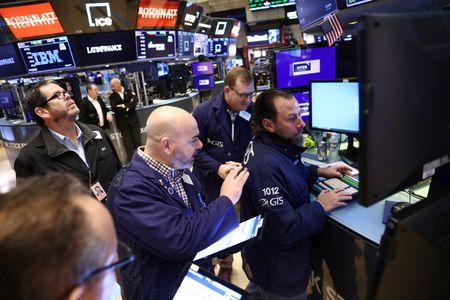
NEW YORK (Reuters) -A potential U.S. recession and tough comparisons to a stellar 2022 are weighing on the prospects of energy stocks delivering an encore to last year’s stunning run, despite valuations that are seen as still comparatively cheap.

The S&P 500 energy sector is up 4.2% year-to-date, slightly lagging the rise for the broader index. The sector logged a 59% jump in 2022, an otherwise brutal year for stocks that saw the S&P 500 drop 19.4%.

Energy bulls argue the sector’s valuations bolster the case for a third-straight year of gains, which would be the first such feat for the group since 2013. Goldman Sachs, RBC Capital Markets and UBS Global Wealth Management are among the Wall Street firms recommending energy stocks.

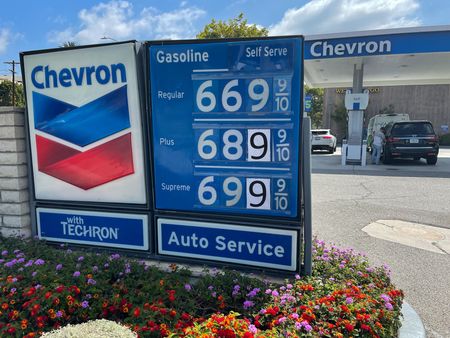
Despite last year’s run, the sector trades at a 10 times forward price-to-earnings ratio, compared to 17 times for the broad market, and many of its stocks offer robust dividend yields. The potential returns for shareholders were highlighted this week when Chevron shares rose almost 5% after announcing plans to buy $75 billion worth of its stock.

Some investors worry, however, that energy companies may find it hard to increase profits after huge jumps in 2022, especially if a widely expected U.S. economic downturn hits commodity prices.

“The group appears to be holding up well, but there is some trepidation due to the fact that investors are concerned about an economic slowdown and what that will do to demand,” said Robert Pavlik, senior portfolio manager at Dakota Wealth.

He said he is slightly overweight the energy sector, including shares of Chevron and Pioneer Natural Resources.

Economists and analysts in a Reuters survey forecast U.S. crude would average $84.84 per barrel in 2023, compared to an average price of $94.33 last year, citing expectations of global economic weakness. U.S. crude prices recently stood at around $80 per barrel.

At the same time, many investors beefed up their holdings of energy stocks in 2022 after years of avoiding the sector, which had often underperformed the broader market amid concerns such as poor capital allocation by companies and uncertainties over the future of fossil fuel. The sector’s weight in the S&P 500 roughly doubled last year to 5.2%.

However, that dynamic may be petering out, said Aaron Dunn, co-head of the value equity team at Eaton Vance.

“People have come back to energy in a big way,” he said. “We had that tailwind the last couple of years, which was that everyone was under-invested in energy. I don’t think that’s the case anymore.”

And while energy companies are expected to deliver strong quarterly reports over the coming weeks after a roaring 2022, those numbers may have set a high bar for this year.

With 30% of the sector’s 23 companies reported so far, energy’s fourth-quarter earnings are expected to have climbed 60% from a year earlier, and 155% for full-year 2022, according to Refintiv IBES. But earnings are expected to decline 15% this year, the biggest drop among the 11 S&P 500 sectors.

Exxon Mobil and ConocoPhillips are among the reports due next week, when investors also will focus on the Federal Reserve’s latest policy meeting.

“Last year was a banner year,” said Matthew Miskin, co-chief investment strategist at John Hancock Investment Management. “Now they have got to try to beat that to show growth, and I think that is going to be a challenge.”

In the meantime, bullish investors point to shareholder-friendly uses of cash by the companies.

The energy sector’s 3.43% dividend yield as of year-end 2022 was nearly twice the level of the index overall, according to Howard Silverblatt, senior index analyst at S&P Dow Jones Indices. Energy companies executed $22 billion in share buybacks in the third quarter, just over 10% of all S&P 500 buybacks.

“From a total return perspective, that is where I think energy can still continue to differentiate itself versus the broader market,” said Noah Barrett, energy and utilities sector research lead at Janus Henderson Investors.

Others, however, believe more value may exist in areas of the market that were beaten down last year. Dunn, of Eaton Vance, said stocks in areas such as consumer discretionary and industrials may appear more attractive.

“Energy probably does OK this year, but I think you have got a lot of areas in the market that have done extremely poorly where we’re finding excellent opportunity,” he said.

(Reporting by Lewis Krauskopf; Editing by Ira Iosebashvili)

tagreuters.com2023binary_LYNXMPEJ0Q0VK-VIEWIMAGE

Categories
Business US

White House blasts Big Oil stock buybacks again as Chevron profits double

By Nandita Bose and Jarrett Renshaw

WASHINGTON (Reuters) – The White House on Friday launched a fresh attack against U.S. oil companies, accusing them of using profits to pay shareholders instead of boosting supply, after Chevron Corp said its annual profit doubled for 2022.

Chevron posted a record $36.5 billion profit for 2022 that was more than double year-earlier earnings, kicking off what analysts expect to be a bumper earnings season for global energy suppliers.

Earlier this week, Chevron said it would triple its spending on share repurchases to $75 billion over five years at current guidance. Other oil companies are expected to follow suit.

“Companies clearly have everything they need – record profits and thousands of approved permits – to increase production,” White House spokesperson Abdullah Hasan said in a statement.

“The only thing getting in the way is their own decision to keep plowing windfall profits into the pockets of executives and shareholders instead of using them to boost supply.”

Under former President Donald Trump, Congress passed big, retroactive tax breaks for Big Oil, as fuel demand dropped during COVID lockdowns. After oil prices soared following Russia’s invasion of Ukraine, European governments imposed windfall taxes on their oil industries, but U.S. lawmakers are unlikely to do the same.

Chevron and Exxon Mobil  – the nation’s two largest oil producers – are poised to post record annual profits for 2022 of nearly $100 billion combined, analysts forecast.

Chevron did not immediately respond to a request from comment, Exxon declined to comment.

Hasan’s comments mark the latest set of attacks from the White House lambasting oil companies for funneling a windfall of profits to investors. President Joe Biden’s administration tried several times last year without success to convince oil companies to boost output as gasoline prices rose, and Biden ultimately decided to tap the U.S. Strategic Petroleum Reserve (SPR).

Last week, Energy Secretary Jennifer Granholm said Biden will veto a bill by U.S. House of Representatives Republicans that limits the president’s authority to tap the oil reserves if it passes Congress.

U.S. oil producers overall are increasing their budgets for new energy projects this year, but the expenditures will be dwarfed by the amounts paid to shareholders.

The energy industry last year was one of the top sectors in the S&P 500 index after trailing the broader market for years.

(Reporting by Nandita Bose and Jarrett Renshaw in Washington; Editing by Heather Timmons and David Gregorio)

tagreuters.com2023binary_LYNXMPEJ0Q0UY-VIEWIMAGE

Categories
Business

Boeing pleads not guilty to fraud charge in 737 MAX arraignment

By Sheila Dang and David Shepardson

FORT WORTH, Texas/WASHINGTON (Reuters) -Boeing Co pleaded not guilty on Thursday to a 737 MAX fraud conspiracy felony charge after families objected to a 2021 Justice Department agreement to resolve the investigation into the plane’s flawed design.

Boeing’s chief safety officer, Mike Delaney, entered the not-guilty plea on behalf of the planemaker at a three-hour hearing. A not-guilty plea is standard in deferred prosecution agreements.

U.S. District Judge Reed O’Connor last week ordered Boeing to appear to be arraigned after he ruled that people killed in the two Boeing 737 MAX crashes in 2018 and 2019 are legally considered “crime victims.”

The crashes in Indonesia and Ethiopia killed 346 people. They cost Boeing more than $20 billion, led to a 20-month grounding of the best-selling plane and prompted lawmakers to pass sweeping legislation reforming airplane certification.

Boeing in a statement said it had “made broad and deep changes across our company, and made changes to the design of the 737 MAX to ensure that accidents like these never happen again. We also are committed to continuing to comply scrupulously with all of our obligations under the agreement we entered into with the Justice Department two years ago.”

O’Connor imposed a standard condition that Boeing commit no new crimes but did not rule on other conditions sought by the victims, including a request he name an independent monitor to oversee Boeing’s compliance and disclose publicly as much as possible of the substance of Boeing’s corporate compliance efforts adopted since 2021.

O’Connor asked the Justice Department to follow up with an answer to his question about whether there were instances of the government pushing back on something Boeing did that “wasn’t up to snuff.”

The Justice Department in 2021 agreed to seek dismissal of the charge after the three-year agreement if Boeing complies with all terms. Boeing admitted in court documents that two of its technical pilots deceived U.S. regulators about a key flight control system linked to both fatal crashes.

Relatives of people who were killed in the crashes spoke on Thursday at the arraignment.

Naoise Connolly Ryan, who lost her husband in the Ethiopia crash, said she wanted justice for her children who had lost their father. “The deal between Boeing and the Department of Justice is not justice,” she said.

The relatives said in a filing that Boeing had “committed the deadliest corporate crime in U.S. history.”

Boeing and the Justice Department oppose reopening the $2.5 billion agreement, which included $500 million in victim compensation, a $243.6 million fine and $1.7 billion in compensation to airlines.

(Reporting by Sheila Dang and David Shepardson; Editing by Jonathan Oatis and Bernadette Baum)

tagreuters.com2023binary_LYNXMPEJ0P0VD-VIEWIMAGE

tagreuters.com2023binary_LYNXMPEJ0P0VM-VIEWIMAGE