Categories
Economy Environment Latest Market News Market Movers

Uncharted Waters: The Surprising Surge of the Maritime Shipping Sector

As investors scour the market for the next big opportunity, one sector is making waves for its unexpected gains: global maritime shipping. Typically overshadowed by the flashier tech sector, which saw the Nasdaq 100 soar by 55% last year, shipping is quietly charting a course toward significant financial growth. While the tech-heavy Nasdaq Composite has already posted a notable 13.97% increase this year, maritime shipping presents a promising frontier for those looking for value beyond Silicon Valley.

Danish shipping behemoth Maersk recently highlighted the burgeoning potential in this sector. Following disruptions in the Red Sea and increased container demand, Maersk has revised its financial outlook upwards, anticipating stronger results in the latter half of 2024 due to sustained port congestions. This optimistic projection underscores a broader trend in the sector, where recent gains are starting to draw attention.

However, investing in shipping stocks comes with its unique considerations. The recent performance, while impressive, is not typical for this industry, which often experiences significant fluctuations. Furthermore, many companies within this sector are small-caps, which suggests that investors might consider partitioning their investments into smaller amounts to mitigate risk. Additionally, the structure of many firms as limited partnerships means potential investors should consult tax professionals due to the distinct tax implications of these investments.

Several companies exemplify the sector’s lucrative trajectory. ZIM Integrated Shipping Services (ZIM), a $2.5 billion cargo shipper, recently reported a 66.54% surge in its stock price over the past month, despite missing earnings estimates but surpassing revenue expectations. Similarly, Frontline PLC (FRO), a prominent oil tanker firm, has seen its value increase by 38.64% year-to-date, buoyed by a recent 13% spike. Knot Investment Partners (KNOP), though smaller with a market cap of $238 million, has also made significant strides, soaring by 29.21% over the past month and reaching a new 52-week high.

This upswing in the maritime sector offers a compelling case for portfolio diversification, especially for investors whose holdings have become disproportionately tech-centric. By venturing into less familiar territory, such as maritime shipping, investors not only hedge against the volatility of tech stocks but also tap into the growth potential of an industry poised for resurgence.

In conclusion, while the tech sector continues to dominate headlines with its robust performance, maritime shipping is emerging as a potent area for investment, driven by global disruptions and a surge in demand. With strategic considerations and informed decisions, this traditionally overlooked sector might just provide the portfolio diversity and growth investors are seeking in a market ripe with opportunities.

Categories
Energy Environment Latest Market News

Deciphering the Complex Landscape of Energy Investments Amidst Grid Expansion

As global energy needs expand, the need for a robust and efficient power grid becomes more apparent. This necessity sets the stage for a strategic review of which industries and companies stand to benefit from such a transformation. This analysis delves into the potential gains for traditional energy suppliers alongside the burgeoning sectors of Bitcoin mining and nuclear energy.

Energy Sector Dynamics: The Challenge of Choosing Winners

Selecting the most promising stocks within the power grid landscape is a complex endeavor. Short-term capital movements often mirror prevailing narratives rather than underlying economic realities, leading to potentially skewed valuations. Over the long haul, profitability tends to drive performance, emphasizing the importance of a forward-looking investment approach.

The Impact of Bitcoin Mining on Energy Consumption

The role of Bitcoin mining in energy consumption is significant yet not as dominant when compared to other technologies like AI data centers and electric vehicles. According to a report by Paul Hoffman of Best Brokers, Bitcoin mining utilizes a massive 384,481,670 kWh daily. Even though this is substantial, it represents a smaller fraction (1.34%) of total U.S. power usage. This level of consumption, though noteworthy, does not alone justify massive grid expansions but underscores the increasing energy demands of modern technology.

Natural Gas: A Keystone in the Current Energy Framework

Natural Gas remains a linchpin in the U.S. energy landscape, accounting for 43.1% of domestic utility-scale electricity generation in 2023, as noted by the Energy Information Administration (EIA). The affordability and environmental efficiency of natural gas make it a preferred choice for utility companies. With an expected demand increase by 10 billion cubic feet daily by 2030, natural gas production, especially from shale via fracking, is poised to play a crucial role in meeting these growing energy needs.

Navigating the Midstream and Upstream Sectors

The midstream sector, which involves the transportation of natural gas, benefits directly from increased volume rather than price fluctuations. Companies like Kinder Morgan, which owns the largest natural gas network in the nation, are strategically positioned to capitalize on this trend. Conversely, upstream companies, which include major natural gas producers like EQT and Southwestern Energy, are more susceptible to price movements of natural gas.

The Resurgence of Nuclear Energy

Nuclear power is experiencing a revival as concerns over safety and efficiency are addressed and the urgency for clean energy sources intensifies. With 60 reactors currently under construction globally and more planned, the sector is on the brink of significant expansion. The U.S. remains a vital player with substantial developments, such as the upcoming completion of Unit four of the Nuclear Plant Vogtle in Georgia, which represents a major milestone in domestic energy capacity enhancement.

Investment Opportunities in Nuclear Power

The nuclear sector presents a range of investment opportunities, from uranium mining to the construction and maintenance of nuclear facilities. Companies like Cameco have seen their stock soar as uranium prices increase, reflecting a renewed interest in nuclear technology. Meanwhile, companies involved in the construction and maintenance of nuclear facilities, such as GE Vernova and Quanta Services, offer promising prospects given their expertise and operational capacity in this renewed energy frontier.

Conclusion: Strategic Investment Amidst Evolving Energy Demands

Investors looking to navigate the complex energy market must consider a blend of traditional and emerging sectors. While natural gas continues to be a cornerstone of the U.S. energy matrix, the growing significance of renewable and nuclear sources cannot be overlooked. Each segment presents distinct challenges and opportunities, requiring a nuanced understanding of market dynamics and future trends. As the global push for efficient and sustainable energy solutions intensifies, strategic investments in these key energy sectors could yield substantial long-term benefits.

Categories
Asia Business Economy Environment Europe Politics and Trading Resource Stocks Technology US

Yellen says EV battery mineral trade pacts can likely bypass Congress

By David Lawder

BENGALURU (Reuters) – U.S. Treasury Secretary Yellen said on Friday that she expects that future limited free trade agreements focused on battery minerals with the European Union and other trusted allies would not need approval from Congress.

Yellen told reporters on the sidelines of a G20 finance meeting in India that such agreements, which would be aimed at granting automakers based in Europe, Japan and other countries access to new U.S. tax credits for electric vehicles, would also likely include high labor standards and export control provisions to ensure secure supply chains.

Such mineral pacts are one potential way to address European Union’s complaints that its automakers are shut out of the $7,500 per vehicle tax credits in the climate-focused Inflation Reduction Act, which it argues will suck electric vehicle investments away from Europe.

The law specified that the tax credits were only available to North American-assembled vehicles that meet certain local battery production and mineral extraction processing standards.

Countries with U.S. free trade agreements can also access the credits, and this is a provision that the Biden administration hopes to exploit by negotiating limited trade deals focused on battery minerals.

The Treasury already is allowing leased electric vehicles to qualify under commercial EV tax credit rules, a move that Yellen said would cover most vehicles for now. Over time, she said she hoped that trade agreements would allow more sold vehicles to qualify over time.

“It would be an agreement that we think would not require the agreement of Congress,” she said adding that Congress intended “a kind of friend-shoring approach” for critical minerals to reduce reliance on China.

“I think the word ‘free trade areas’ was meant to mean reliable friends and partners with whom we can feel we have secure supply chains so we feel this is fully the intent of Congress and we’ll be able to negotiate such agreements,” Yellen said.

The Treasury in March is due to put out guidance on the sourcing of battery minerals and Yellen said this will include guidance on free trade areas that can qualify.

The Treasury already has said that it will qualify existing comprehensive free trade pacts Australia, Bahrain, Canada, Chile, Colombia, Costa Rica, Dominican Republic, El Salvador, Guatemala, Honduras, Israel, Jordan, South Korea, Mexico, Morocco, Nicaragua, Oman, Panama, Peru and Singapore.

Yellen said that the United States and Europe were getting closer to reaching understandings over the U.S. green energy subsidies, and said Washington will not try to stop Europe from enacting competing subsidies.

“We’ve been very clear with Europe that this is not a subsidy war,” Yellen said. “We’re not trying to steal jobs. This is our climate plan.”

(Reporting by David Lawder. Editing by Jane Merriman and Tomasz Janowski)

tagreuters.com2023binary_LYNXMPEJ1N0IF-VIEWIMAGE

Categories
Asia Australia Business Economy Energy Environment Technology US

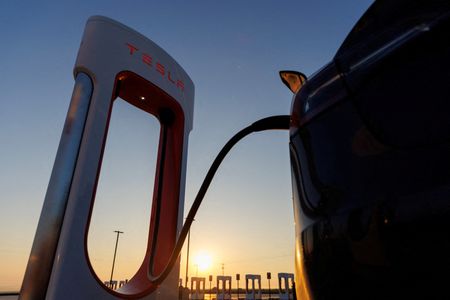
New Biden EV charger rules stress Made In America, force Tesla changes

By Jarrett Renshaw and Hyunjoo Jin

(Reuters) -The Biden administration on Wednesday issued long-awaited final rules on its national electric vehicle charger network that require the chargers to be built in the United States immediately, and with 55% of their cost coming from U.S.-made components by 2024.

The White House hopes the new rules, issued after nearly eight months of debate, will jump-start the biggest transformation of the U.S. driving landscape in generations. It seeks to give consumers unfettered access to a growing coast-to-coast network of EV charging stations, including Tesla Inc’s Superchargers.

Companies that hope to tap $7.5 billion in federal funding for this network must also adopt the dominant U.S. standard for charging connectors, known as “Combined Charging System” or CCS; use standardized payment options; a single method of identification that works across all chargers; and work 97% of the time.

Tesla, the nation’s largest EV maker and charging company, plans to incorporate the CCS standard and expand beyond its proprietary connectors, the administration said.

“No matter what EV you drive, we want to make sure that you will be able to plug in, know the price you’re going to be paying and charge up in a predictable, user-friendly experience,” Transportation Secretary Pete Buttigieg told reporters in a preview of the rules.

The first tranche of the billions in federal funds will now be rolled out to states in upcoming weeks, forcing companies like Tesla, EVgo Inc and ChargePoint Holdings Inc to jockey for their share of the funds from state governments.

The network is a central part of President Joe Biden’s plan to tackle climate change by converting 50% of all new U.S. vehicle sales to electric by 2030. A dearth of chargers on Ameriocan roads has slowed the growth of EV sales and the positive environmental impact, advocates say.

Manufacturers warned before the rules were released that imposing a domestic components quota too soon in the program rule would slow the rollout. The new rules extend the Made in America deadlines to help give those companies more time to onshore their supply chain.

EV charger manufacturer Tritium announced on Wednesday that it will add more than 250 jobs to its Tennessee manufacturing facility, bringing the total to more than 750 jobs at the site. White House National Climate Adviser Ali Zaidi said that under Biden’s leadership the number of EV models being offered to consumers has doubled, along with the number of charging stations and EV sales.

“So this is not pie in the sky. It’s literally steel in the ground. We are seeing the Biden climate vision on wheels,” Zaidi said.

‘BUILD AMERICA, BUY AMERICA’

Under the 2021 bipartisan infrastructure law, federal infrastructure projects like EV chargers must obtain at least 55% of construction materials, including iron and steel, from domestic sources and have all manufacturing done in the United States starting immediately.

However, the Department of Transportation requested a waiver for EV charging stations and initially proposed that at least 25% of the chargers’ overall cost come from American-made components starting in July of this year and then 55% by Jan. 1, 2024.

The new rules ditch the two-step process and start imposing the component cost provision in July 2024 at 55%. The chargers must be assembled at a U.S. factory, and any iron or steel charger enclosures or housing must be made in the United States, starting immediately.

The United States and its allies Mexico and the European Union have clashed over protectionist policies implemented by Biden. The United States and the EU set up a task force last year to look at American laws that Europeans fear will discriminate against foreign electric car makers.

EV chargers require iron and steel for some of their most crucial parts, including the internal structural frame, heating and cooling fans and the power transformer. Chargers with cabinets that house the product require even more steel, making up to 50% of the total cost of the chargers in some cases.

Global demand for EV chargers is putting strain on the supply chain that makes it difficult, if not impossible, to meet the made-in-America standards and expedite construction of new chargers, states and companies warned in comments to the Department of Transportation.

The new rules would allow Tesla to keep its unique connectors, but it will have to add a permanently attached CCS connector or adapter that charges a CCS-compliant vehicle, similar to a gas pump that has a separate handle for gas versus diesel.

Tesla told the DOT that the plan was “aggressive” and “could lead to a shortfall in the number of compliant charging stations available given the pace and scale of deployment,” records show.

However, labor advocates argue that delaying or skirting the requirements undercuts congressional intent and punishes companies that moved early to comply with the rules.

“This is a once-in-a-lifetime shot to get this right,” said Scott Paul, president of the Alliance for American Manufacturing. “The challenge with extensions is it becomes habit-forming and the herd will always fight and delay.”

(Reporting by Jarrett Renshaw in Philadelphia and Hyunjoo Jin in San Francisco; additional reporting by David Sherpardson; editing by Heather Timmons, Matthew Lewis and Jonathan Oatis)

tagreuters.com2023binary_LYNXMPEJ1E0DB-VIEWIMAGE

tagreuters.com2023binary_LYNXMPEJ1E0DC-VIEWIMAGE

tagreuters.com2023binary_LYNXMPEJ1E0DG-VIEWIMAGE

tagreuters.com2023binary_LYNXMPEJ1E0DE-VIEWIMAGE

Categories
Business Economy Energy Environment US

U.S. Gas Producers Skimped on Price Hedges and Now Face a Reckoning

By Arathy Somasekhar

HOUSTON (Reuters) – A rout in natural gas prices will hurt first-quarter earnings and cash flows at gas producers as hedges – the industry’s version of price insurance – were inadequate to offset the expected losses, analysts and industry experts said.

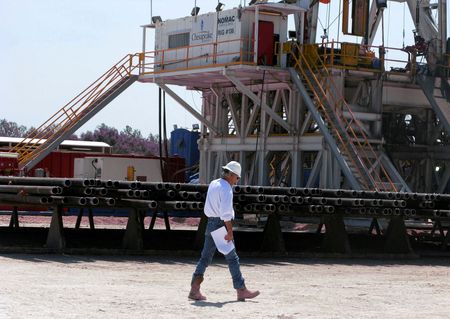
Producers starting the year with fewer hedges than historically will have to sell more gas at the market rate of about $2.45 per million British thermal units (mmBtu), below the breakeven prices for producing gas in some regions, and that may force some companies to reduce drilling and put off completing wells.

Hedges, or contracts that lock in prices for future output, help producers protect cash flows against price swings, helping them drill and complete wells – crucial at a time when Europe has looked to the United States for gas.

U.S. prices for the heating fuel traded as low as $2.34 per mmBtu this month, down 76% from last year’s August peak and the lowest level since April 2021, on mild winter weather in North America and on weaker exports.

The low levels of hedging would drain cash flow as market selling prices are low, said Matt Hagerty, senior energy strategist at FactSet’s BTU Analytics.

About 36% of 2023 gas production was hedged at the end of September, according to consultancy Energy Aspects, which tracked 40 publicly traded gas producers. That percentage was down from 52% a year earlier.

Producers entered in to only two to three swap deals per month from April to October last year, said David Seduski, natural gas analyst at Energy Aspects, referring to a type of hedge. He called that amount “incredibly minimal” and said it compared with 30 to 50 such trades per month in 2021.

A rally in prices in 2022 after Russia’s invasion of Ukraine forced a lot of producers already hedged at lower prices to take on hedging losses. That may have encouraged them to hedge less.

“Last year was pretty jarring for folks, who weren’t ready for the uptick in price. A lot of folks probably sold off those hedges and wanted to be exposed to the upside and might see themselves in the predicament they’re in now,” said Trisha Curtis, chief executive of energy consultancy PetroNerds added.

EQT Corp, the top U.S. producer of natural gas, last month said it expects a $4.6 billion loss on derivatives for 2022, and net cash settlements of $5.9 billion. No. 2 producer Southwestern Energy Co posted a $6.71 billion loss on derivatives for the first nine months of 2022.

RISKY STRATEGIES

Some companies have let their hedges expire, increasing exposure to current prices. Antero Resources Corp said in October that the vast majority of its hedges would roll off by Jan 1.

Another type of hedge, known as a three-way collar, could backfire because of the extent of the fall in prices, analysts said. These transactions have a producer buy an agreement to sell natural gas at one price, called a put, while also selling a put at a lower price in hopes of pocketing the premium from its buyer.

Effectively, this is a calculated bet that gas will fall to a certain level and no further. But when it falls below the predicted lower price, it takes away some of the benefits of the hedge.

Chesapeake Energy Corp, for example, bought puts for 900 million cubic feet at $3.40 per million cubic feet (mmcf), while also selling puts for $2.50 mmcf for the first quarter, according to a November presentation.

Were gas prices to average $2.36 per mmcf, the company would pay out 14 cents per mmcf, reducing the gains from the hedge.

Antero and Chesapeake did not respond to a request for a comment.

Denver-based Ovintiv Inc, previously Encana, also said it had sold puts for 400 mmcfpd at $2.75 per mmcf for the first quarter of 2023, according to a November press release. That would erode the gains from the hedges by about 39 cents per mmcf.

On the other hand, companies that locked in higher prices on average during the run-up in prices late last year could see gains, Rystad Energy senior analyst Matthew Bernstein said.

While overall hedging was lower, the average $3.16 per mmBtu was higher than a year earlier, he added. EQT, for example, has hedged about 58% of its total production at an average of about $3.40 per mmBtu, higher than current market prices.

Ovintiv and EQT did not immediately respond to a request for a comment.

(Reporting by Arathy Somasekhar in Houston; Editing by Matthew Lewis)