
Categories
Pharma Stocks

Novartis Unveils $23 Billion U.S. Investment to Revolutionize Pharmaceutical Manufacturing and R&D

Novartis Announces $23 Billion U.S. Investment to Boost Manufacturing and R&D

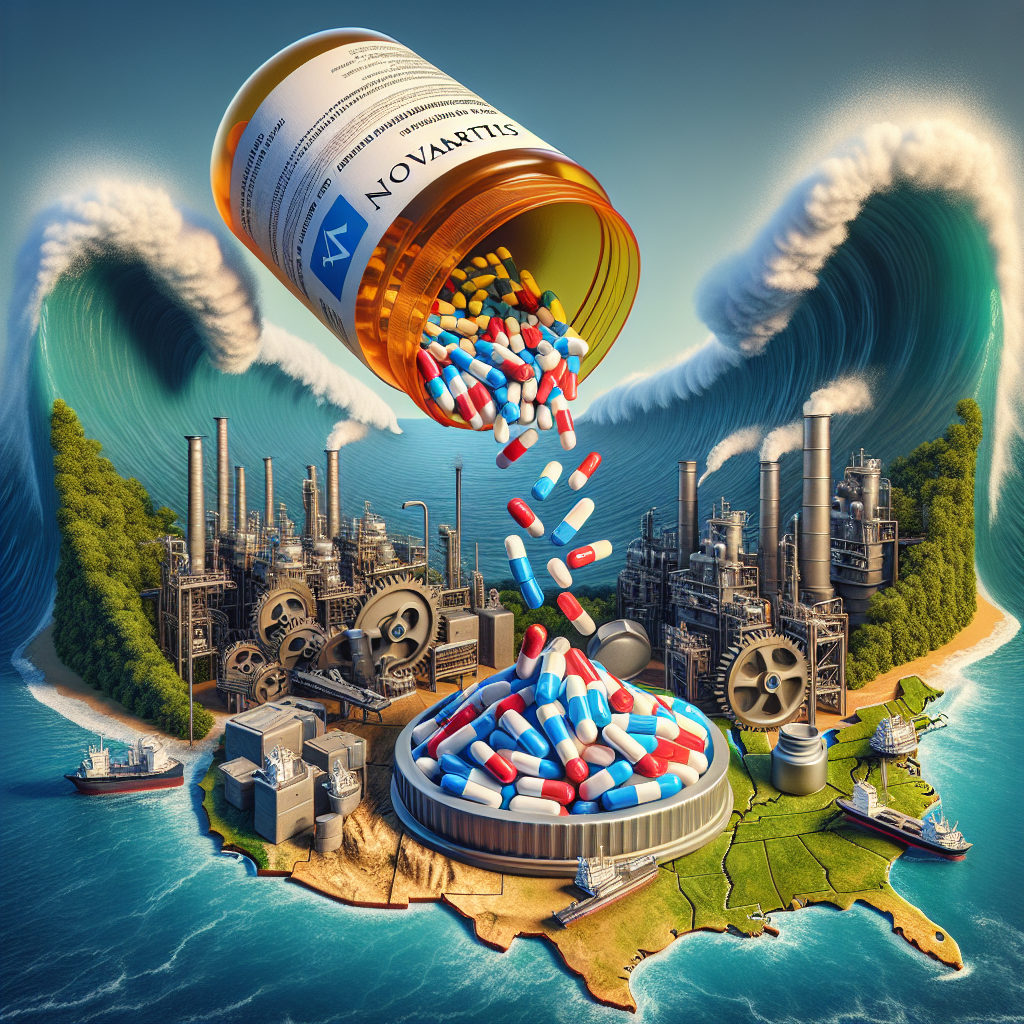
In a significant move to enhance its U.S. operations, Swiss pharmaceutical giant Novartis has unveiled plans to invest $23 billion in building and expanding 10 facilities across the United States over the next five years. This strategic initiative follows similar investment commitments from major industry players like Eli Lilly and Johnson & Johnson, marking a trend among pharmaceutical companies to bolster their domestic manufacturing capabilities.

Aiming for Self-Sustainability in U.S. Medicine Production

According to a press release from Novartis, the company’s investment will not only enhance its production capacity but is also aimed at producing all its key medicines for U.S. patients entirely within the country. The announcement was first reported by Reuters, following an interview with Novartis CEO Vas Narasimhan.

As part of the planned expansion, Novartis will construct four entirely new manufacturing facilities in states yet to be determined. Additionally, the company will establish new radioligand therapy plants in Florida and Texas, while also expanding existing facilities in Indiana, New Jersey, and California. These radioligand plants are expected to support Novartis’ commercial radiopharmaceuticals, including Lutathera and Pluvicto.

Comprehensive Manufacturing Upgrades

The new sites are projected to handle various aspects of drug manufacturing, including biologic drug substances, final drug products, chemical drug substances, and oral solids. Moreover, the plants will be equipped for device assembly and packaging duties, further strengthening Novartis’ manufacturing infrastructure in the U.S.

Currently, Novartis manufactures several key drugs, which include cell and gene therapies and radiopharmaceuticals, within the U.S. The new investment will bring the company’s small interfering RNA (siRNA) production to the U.S. for the first time and enhance its capabilities in oncology, immunology, and neuroscience.

Investment in Research and Development

Alongside the expansion of its manufacturing footprint, Novartis also plans to invest $1.1 billion to establish a new R&D hub in San Diego. Set to open in 2028 or 2029, this facility is described as the “epicenter” of Novartis’ West Coast research presence, reflecting the company’s commitment to increasing domestic drug discovery efforts.

In total, these initiatives are projected to create approximately 1,000 new jobs at Novartis, further contributing to the U.S. economy.

Responses to Trade Policies

Novartis’ announcement comes shortly after U.S. President Donald Trump introduced new tariffs on imports, which included a 10% base duty on nearly all U.S. imports and reciprocal trade penalties for countries with significant trade deficits. Although pharmaceuticals were exempted from the latest round of tariffs, the renewed threats of sector-specific duties targeting the pharmaceutical industry have prompted a reevaluation of investment strategies by numerous companies.

CEO Narasimhan refrained from directly addressing the tariffs in the recent press release, instead focusing on Novartis’ “strong U.S. growth outlook.” He emphasized the supportive “pro-innovation policy and regulatory environment” in the U.S. that enables Novartis to drive medical innovations.

Competition among Pharma Giants

The competitive landscape among pharmaceutical companies is intensifying, as similar investment plans have emerged from other industry leaders. In February, Eli Lilly announced it would invest $27 billion in the U.S. for the construction of four new production facilities—more than doubling its prior domestic investment since 2020. Similarly, Johnson & Johnson disclosed plans for a $55 billion investment in U.S. operations over the next four years, which includes the construction of three new manufacturing sites and expansions of existing facilities.

The combined efforts of these companies signify a pivotal shift towards greater domestic manufacturing capabilities among U.S. pharmaceutical firms. Biopharma leaders have warned that without substantial policy changes in favor of domestic life sciences investment, the European Union could risk losing R&D and manufacturing infrastructure to the U.S.

Conclusion

As Novartis embarks on its $23 billion investment journey, the pharmaceutical industry is witnessing a transformative era driven by geopolitical factors and a commitment to enhancing domestic capabilities. It remains to be seen how these investments will shape the future landscape of pharmaceutical manufacturing and research in the U.S.

Categories
Pharma Stocks

Novartis Commits $23 Billion to U.S. Manufacturing and R&D Amid Changing Trade Landscape

Novartis Increases U.S. Investment to $23 Billion Amid Industry Trends

In a significant move following substantial investment pledges from Eli Lilly and Johnson & Johnson, Switzerland-based Novartis is set to enhance its manufacturing and research capabilities in the United States. The company announced a plan to invest $23 billion over the next five years to build and expand ten facilities across the U.S., as disclosed in a press release on Thursday.

According to an interview with Reuters, Novartis CEO Vas Narasimhan highlighted that this substantial investment underscores the company’s commitment to growth within the U.S. market. The strategy appears to be influenced by the uncertainties surrounding trade tariffs on pharmaceuticals proposed during the second Trump administration, prompting major pharmaceutical players to reassess their global manufacturing footprint.

Significant Growth in Manufacturing Operations

As part of this ambitious plan, Novartis will construct four new manufacturing facilities in states that are yet to be determined, while also establishing new radioligand therapy plants in Florida and Texas. Existing radioligand manufacturing facilities in Indiana, New Jersey, and California will also be expanded. These new sites are expected to support the production of Novartis’s commercial radiopharmaceuticals, including Lutathera and Pluvicto.

Moreover, the new plants within Novartis’s production network will focus on manufacturing biologic drug substances, final drug products, chemical drug substances, and oral solids. The expansion will also enable the company to manage device assembly and packaging tasks. This investment aims to enhance Novartis’s ability to produce all its key medicines for U.S. patients domestically, minimizing reliance on international manufacturing.

Advancements in Research and Development

Alongside manufacturing growth, Novartis is also committing $1.1 billion towards the establishment of a new R&D hub in San Diego. Scheduled to open in 2028 or 2029, this facility is anticipated to become the “epicenter” of Novartis’s research presence on the West Coast. The investment is expected to generate about 1,000 new jobs in the U.S., showcasing Novartis’s dedication to fostering domestic drug discovery and innovation.

Company Perspective Amid Changing Trade Policies

The announcement of Novartis’s investment strategy comes shortly after President Donald Trump revealed a new tariff regime during his administration, dubbed “Liberation Day.” This imposed a base duty of 10% on nearly all U.S. imports and created various reciprocal trade penalties for countries deemed to have high trade deficits with the U.S. Although pharmaceuticals were exempted from the latest tariffs, the looming threat of sector-specific duties targeting pharmaceuticals has stirred connotations of instability within the industry, leading to drops in share prices among pharmaceutical giants.

While addressing these matters, Narasimhan focused more on Novartis’s optimistic growth outlook in the U.S. and praised the “pro-innovation policy and regulatory environment” that facilitates their pursuit of medical advancements. “We are prepared for shifts in the external environment and fully confident in our 2025 guidance, mid- to long-term sales growth outlook, and 2027 core margin guidance,” he stated.

Industry Trends and Responses

The ongoing changes in trade policy resonate with the broader pharmaceutical industry, as major players respond with substantial investments in domestic facilities. Earlier this year, Eli Lilly announced a $27 billion plan to construct four new U.S. production facilities, significantly increasing its investment in domestic manufacturing since 2020. Johnson & Johnson followed suit with a staggering $55 billion investment over the next four years, including plans to expand three existing manufacturing sites and build new ones as part of its comprehensive operational network across medicines and medical technology.

As the pharmaceutical landscape continues to evolve due to shifting trade policies, industry leaders warn that Europe could face detrimental effects if rapid policy changes in favor of the domestic life sciences are not implemented promptly. The competitive pressure coming from robust U.S. investments might pose significant challenges for European pharmaceutical companies in terms of maintaining their manufacturing and R&D capabilities.

Conclusion

With Novartis’s notable investment in U.S. manufacturing and research, alongside similar pledges from Eli Lilly and Johnson & Johnson, it is evident that the pharmaceutical industry is gearing up for significant growth based on domestic capabilities. As these companies prepare to navigate a potentially treacherous trade environment, the focus on bolstering U.S. operations reflects a broader trend of prioritizing local production amidst global uncertainties. The implications of such decisions will likely shape the future landscape of the pharmaceutical industry, both domestically and internationally.

Categories
Pharma Stocks

Pharma Stocks Plummet as Trump Raises Alarm with New Tariff Threats

Pharma Stocks Dip as Trump Revives Pharma Tariff Threats

In a dramatic turn of events, U.S. pharmaceutical stocks have taken a hit following President Donald Trump’s recent comments indicating an impending “major” tariff on pharmaceutical imports. This development comes on the heels of a brief reprieve for the pharmaceutical industry, as previous tariffs initially excluded drugs, providing some relief amid an ongoing trade war.

Impact of Trump’s Tariff Threats

Following the announcement of general tariffs on most U.S. imports last week—termed as “Liberation Day”—the markets held their breath in anticipation of Trump’s next moves. However, during a recent dinner at the National Republican Congressional Committee, Trump stated, “We’re going to be announcing very shortly a major tariff on pharmaceuticals,” which sent ripples through the stock market. Politico reported his assertion that the tariffs would compel drug manufacturers to relocate their production facilities back to the U.S.

Trump reiterated this stance during comments aboard Air Force One, suggesting that the pharmaceutical tariffs would be unlike anything previously seen. He indicated that these tariffs could be set at “25% or higher,” heightening concerns among stakeholders in the pharmaceutical sector.

Market Reactions

As news of the impending tariffs spread, shares of major pharmaceutical companies faced downward pressure. U.S. drugmakers such as Gilead Sciences, Pfizer, Merck & Co., and Eli Lilly experienced declines ranging from about 1.5% to close to 3% in midmorning trading. On the European front, stocks for companies like Novo Nordisk and Sanofi decreased approximately 2% and 3.3%, respectively, while AstraZeneca and GlaxoSmithKline (GSK) saw a drop of about 4% each.

Concerns about Trade Barriers

Although pharmaceuticals were initially spared from Trump’s general tariffs, the sector remains anxious about how these newly proposed duties will be structured. Jeff Stoll, the U.S. national strategy leader for life sciences at KPMG, emphasized that if active pharmaceutical ingredients (APIs) remain out of the exemption, it would exacerbate concerns regarding trade barriers for the industry.

Moreover, leaders in the life sciences sector in Europe are raising significant alarms about the potential repercussions of the U.S. trade restrictions on their pharmaceutical R&D and production capabilities. The European Federation of Pharmaceutical Industries and Associations (EFPIA) recently informed European Commission President Ursula von der Leyen about the existential risks posed by these tariffs. They advocate for rapid policy changes within Europe to counteract the incentives for pharmaceutical companies to relocate their operations to the U.S.

Challenges of Reshoring Manufacturing

While the objective of incentivizing drugmakers to manufacture within the U.S. may appear straightforward, the practicalities of such a shift are complex. Building new manufacturing facilities can demand investments upwards of $2 billion and often takes between five to ten years before becoming operational, according to the Pharmaceutical Research and Manufacturers of America (PhRMA). This reality poses significant challenges for drugmakers considering a switch due to impending tariffs.

In light of these complexities, both PhRMA and several major drug companies are reportedly lobbying the government for a phased approach to implementing any pharmaceutical-specific trade taxes. They aim to mitigate the potential financial and operational risks that a sudden tariff could impose on the industry.

Conclusion

The looming threat of tariffs on pharmaceuticals adds another layer of uncertainty to an already volatile market. As pharmaceutical stocks continue to react to Trump’s comments, industry players must navigate these challenges while balancing the long-term impacts of potential reshoring initiatives. As the situation develops, stakeholders in the pharmaceutical sector will be closely monitoring the administration’s next steps and the implications for global trade dynamics.

Categories
Pharma Stocks

Trump’s New Tariffs on Pharmaceuticals: A Strategic Move to Boost U.S. Drug Manufacturing

Trump Teases New Tariffs on Pharmaceuticals: Aiming to Revive U.S. Drug Manufacturing

In a recent address at a Republican National Congressional Committee dinner, President Donald Trump hinted at the imposition of new tariffs on pharmaceuticals. This announcement comes amid a backdrop of escalating trade tensions and ongoing discussions around the manufacturing of prescription drugs in the United States. The tariffs, which Trump claims will reinvigorate domestic production, are set to be part of a broader strategy aimed at reshaping U.S. import policies.

The Context of Upcoming Tariffs

The anticipated tariffs on the pharmaceutical industry follow closely on the heels of a significant escalation in existing trade measures. Just hours before Trump’s announcement, tariffs—including an astonishing 104% rate on imports from China—were slated to go into effect. This marks a crucial development in the ongoing trade relations between the U.S. and its international partners, intensifying debates around economic strategy and national sovereignty.

Trump’s focus on the pharmaceutical sector—previously exempt from his “reciprocal” levies—highlights a national concern regarding dependency on foreign drug manufacturers. During his address, he made a poignant observation that many of the prescription drugs consumed by Americans are no longer produced domestically. By introducing these new tariffs, Trump asserts that he will restore pharmaceutical production on U.S. soil, a move he believes will benefit American jobs and the economy.

Pharmaceutical Industry Landscape

The global pharmaceutical landscape is characterized by a mix of U.S. and European companies dominating the market. According to a report by the executive search firm Proclinical, among the leading players based on 2023 revenue, five of the largest pharmaceutical firms—namely Pfizer, Johnson & Johnson, Merck, AbbVie, and Gilead Sciences—are headquartered in the United States. In contrast, key competitors such as Roche, Sanofi, AstraZeneca, Novartis, and GSK are based in Europe.

The disparity in production capabilities has become a focal point for Trump, who suggested that the new trade policies would encourage U.S. pharmaceutical companies to increase their domestic manufacturing output. In his view, the tariffs not only represent an economic strategy but also a matter of national security, ensuring that essential medications are no longer dependent on foreign supply chains.

The Economic Implications of Tariffs

While tariffs are a common tool used to protect domestic industries, they often come with significant economic implications. By imposing tariffs on pharmaceuticals, Trump seeks to increase costs for companies that import these goods, which may ultimately lead to higher prices for consumers. Critics argue that such measures could create a counterproductive effect, pushing prices higher while doing little to address the fundamental issues facing the U.S. healthcare system.

The pharmaceutical sector has long been a contentious issue, with debates surrounding drug pricing, access to medications, and the balance between profit margins and public health needs. Critics of Trump’s tariff strategy warn that it may not sufficiently address the complexities of drug pricing in the U.S., where healthcare costs are already a burden for many families.

Future Prospects and Concerns

As news of Trump’s proposed tariffs spreads, industry stakeholders are left to navigate the uncertainties that these trade policies may unleash. Investors and companies importing pharmaceuticals must weigh the costs associated with tariffs against the potential benefits of increased domestic production. The sentiments expressed at the NRCC dinner indicate that these announcements could be just the beginning of a larger wave of market-changing policies.

In conclusion, Trump’s promise of a major tariff on pharmaceuticals represents a bold and potentially controversial move aimed at rejuvenating U.S. drug manufacturing. As the situation unfolds, it remains crucial for consumers, investors, and industry leaders to monitor how these tariffs will reshape the pharmaceutical landscape and what implications they may hold for the future of healthcare in America.

This recent development underscores the intricate dance of trade policies and their far-reaching consequences on domestic industries, ultimately raising essential questions about the U.S.’s role in global markets and the sustainability of its economic strategies.

Categories
Pharma Stocks

Novo’s Wegovy and J&J’s Tremfya Lead Pharmaceutical Ad Spending Surge During March Madness

Novo’s Wegovy, J&J’s Tremfya Boost TV Ad Spending During March Madness

In a notable shift in advertising dynamics within the pharmaceutical sector, Novo Nordisk’s publicity surge for its obesity treatment, Wegovy, alongside Johnson & Johnson’s enhanced spending for Tremfya, is indicative of a strategic pivot towards engaging audiences during the historically significant March Madness basketball tournament. Recent data reveals that the top ten pharmaceutical spenders collectively allocated an impressive $248 million on TV drug advertising in March, representing a harmonious balance between January’s soaring $302.5 million and February’s sharp drop to $204.5 million.

Change in Spending Trends

The current trends reveal a significant transformation in the advertising landscape for the pharmaceutical industry. Last year, AbbVie’s Skyrizi and Rinvoq dominated the TV ad spending rankings, securing the top positions consistently. However, the first quarter of 2025 has painted a different picture. The two AbbVie products have only managed to achieve top-two monthly rankings on one occasion thus far, representing a stark contrast to their stronghold in early 2024.

In both January and March of 2025, Skyrizi and Rinvoq have slipped to third and fourth positions respectively, overtaken by Novartis’ Pluvicto and Johnson & Johnson’s Tremfya in January and more recently by Novo Nordisk’s Wegovy and Tremfya again in March.

March’s Top Ad Spenders

Leading the charge in ad spending for March were:

1. Wegovy by Novo Nordisk

  • Estimated National TV Ad Spend: $40.4 million (up from $25.8 million in February)
  • Number of Spots: 1
  • Biggest-ticket Ad: “Discover the Power: $0” (Estimated spend: $40.4 million)

2. Tremfya by Johnson & Johnson

  • Estimated National TV Ad Spend: $32.6 million (up from $20.1 million in February)
  • Number of Spots: 4 (one ulcerative colitis, three psoriasis)
  • Biggest-ticket Ad: “Break Away” (Estimated spend: $23.3 million)

3. Rinvoq by AbbVie

  • Estimated National TV Ad Spend: $29.2 million (down from $34.8 million in February)
  • Number of Spots: 5 (two eczema, two UC/Crohn’s, one arthritis)
  • Biggest-ticket Ad: “Just Okay: Jet Ski” (Estimated spend: $11.7 million)

4. Skyrizi by AbbVie

  • Estimated National TV Ad Spend: $27.9 million (up from $27 million in February)
  • Number of Spots: 6 (four psoriasis, one Crohn’s/UC, one psoriatic arthritis)
  • Biggest-ticket Ad: “In the Picture” (Estimated spend: $15.1 million)

5. Rexulti by Lundbeck and Otsuka

  • Estimated National TV Ad Spend: $26.2 million (up from $19.3 million in February)
  • Number of Spots: 2 (one depression, one Alzheimer’s)
  • Biggest-ticket Ad: “Still Masking: Garage and Office” (Estimated spend: $18.1 million)

6. Ozempic by Novo Nordisk

  • Estimated National TV Ad Spend: $21.7 million (up from $10.6 million in February)
  • Number of Spots: 3
  • Biggest-ticket Ad: “Testimonials: Michael and Tanya” (Estimated spend: $16.1 million)

7. Dupixent by Sanofi and Regeneron

  • Estimated National TV Ad Spend: $20.9 million (down from $22.4 million in February)
  • Number of Spots: 6 (two asthma, four eczema)
  • Biggest-ticket Ad: “Kenny” (Estimated spend: $7.9 million)

8. Zepbound by Eli Lilly

  • Estimated National TV Ad Spend: $19 million (up from $8.4 million in February)
  • Number of Spots: 4
  • Biggest-ticket Ad: “Change: What’s Possible” (Estimated spend: $13.8 million)

9. Jardiance by Eli Lilly and Boehringer Ingelheim

  • Estimated National TV Ad Spend: $15.8 million (up from $13.9 million in February)
  • Number of Spots: 3 (one CKD, two diabetes)
  • Biggest-ticket Ad: “Musical: Store” (Estimated spend: $11.2 million)

10. Vraylar by AbbVie

  • Estimated National TV Ad Spend: $14.3 million (up from $8.9 million in February)
  • Number of Spots: 3 (one depression, two bipolar)
  • Biggest-ticket Ad: “Stuck in My Head: Basketball” (Estimated spend: $11.2 million)

Conclusion

The pharmaceutical advertising landscape is undergoing a clear transformation as companies like Novo Nordisk and Johnson & Johnson capitalize on significant cultural events to enhance exposure and engagement. With the advent of March Madness providing a compelling backdrop, it will be interesting to observe if these investment patterns will persist and influence overall sales trends in the health industry moving forward.

Categories
Pharma Stocks

GSK and Pfizer End Patent War Over RSV Vaccines as Market Faces Uncertain Future

GSK and Pfizer Resolve RSV Patent Feud Amid Market Uncertainties

The landscape of the respiratory syncytial virus (RSV) vaccine market has been tumultuous, marked by the resolution of a significant patent dispute between two pharmaceutical giants—GSK and Pfizer. The companies have officially decided to dismiss a lawsuit concerning their respective RSV vaccines. This agreement comes in the wake of considerable changes in the regulatory environment that have drastically reduced the market size for RSV vaccinations.

Background of the Patent Dispute

According to a recent filing in the U.S. District Court in Delaware, the settlement follows a ruling from a U.K. high court in November that invalidated two of GSK’s RSV vaccine patents, thereby siding with Pfizer. The legal conflict began when GSK filed a lawsuit against Pfizer in 2023, shortly after the U.S. Food and Drug Administration (FDA) granted approvals for GSK’s RSV vaccine, Arexvy, and Pfizer’s competing product, Abrysvo. GSK alleged that Pfizer’s vaccine infringed upon four of its patents related to the antigen technology used in its formulation.

Initial Market Optimism

Initially, the RSV vaccine market was considered a promising opportunity, with GSK’s first-to-market product, Arexvy, generating impressive sales of approximately $1.5 billion within its first year. However, as the year progressed, the optimism surrounding the RSV vaccine market faced unexpected challenges.

Impact of CDC Recommendations

In mid-2024, the Centers for Disease Control and Prevention (CDC) advisory committee made a critical adjustment to its age recommendations for RSV vaccinations, leading to significant financial repercussions for both GSK and Pfizer. Following the CDC’s announcement, GSK experienced a staggering 70% decline in Arexvy sales year-over-year in the last quarter of 2024, while Pfizer’s Abrysvo revenues suffered a 62% drop during the same period. The latest launch from Moderna, the mRESVIA, also underwhelmed, achieving only $15 million in fourth-quarter sales after its approval in May 2024.

Industry Reaction and Cost-Cutting Measures

The adverse performance of these vaccines prompted Moderna to announce a significant $1.5 billion cost-cutting initiative. Industry analysts suggest that the companies had not anticipated this downturn, hoping instead for a more favorable outcome as long-term data on RSV vaccinations became available. However, the situation worsened with the appointment of the vaccine-skeptic Robert F. Kennedy Jr. as the new secretary of the Department of Health and Human Services (HHS).

Regulatory Environment Under RFK Jr.

Since assuming office, RFK Jr. has adopted a position hostile to vaccination policies, which has raised alarms within the pharmaceutical sector. Notably, a regular meeting of the CDC vaccination committee was postponed shortly after he took office, followed by the cancellation of an FDA vaccine advisory committee meeting. This situation catalyzed executive changes within the FDA, including the displacement of Peter Marks, the director of the FDA’s Center for Biologics Evaluation and Research, due to disagreements over vaccine policy.

Implications for the Biotech Sector

Industry experts have begun to advise against entering the vaccine sector amidst the current climate. Mani Foroohar, an analyst at Leerink Partners, remarked, “If you’re going to be a biotech company right now, don’t be a vaccine company.” This sentiment highlights the pressing need for drugmakers to reassess their strategies moving forward.

Future of Patent Disputes

As GSK and Pfizer have resolved their patent litigation over RSV vaccines, the focus is likely to shift to the ongoing patent battle concerning mRNA COVID-19 vaccine technologies between the two companies. The potential financial returns from persistent patent litigation will influence future decisions by pharmaceutical companies about engaging in or continuing legal disputes.

Conclusion

The resolution of the patent dispute between GSK and Pfizer marks a critical juncture in the challenging landscape of the RSV vaccine market. With changing regulatory dynamics and shifting market potential, both companies will need to navigate a complex environment as they pursue future opportunities in the biotech sector. The impact of political decisions on public health initiatives, as highlighted by the recent changes in the HHS, poses additional uncertainties that will require careful management and strategy adaptation from vaccine producers.

Categories
Pharma Stocks

Roche Faces Setback as High-Dose Ocrevus Trial Fails Amidst Rising MS Competition

With Biosimilar Competition Looming, Roche Takes a Hit with Failure of High-Dose Ocrevus

Roche, the Swiss pharmaceutical giant, is facing a significant setback as the company strives to maintain its market share with Ocrevus, a leading treatment for multiple sclerosis (MS). With patent protection on Ocrevus set to expire by the end of this decade, Roche was exploring a high-dose version of the drug as a potential solution to extend its market exclusivity. However, a recent phase 3 trial of this high-dose formulation has delivered disappointing results, casting doubt on the drug’s future.

Trial Results: A Disappointing Outcome

The phase 3 study focused on high-dose intravenous formulations of Ocrevus, specifically 1,200 mg and 1,800 mg doses, compared to the approved 600 mg dose administered every 24 weeks. Roche announced that the trial failed to meet its primary endpoint, which was to demonstrate additional benefits in slowing disease progression over at least 120 weeks of treatment.

The primary endpoint evaluated the time to the first onset of a 12-week composite disability progression, incorporating various measures including the time required to complete a 25-foot walk test and a nine-hole peg test. Levi Garraway, M.D., Ph.D., the chief medical officer of Roche’s subsidiary Genentech, noted in a release, “These findings reaffirm that the current Ocrevus IV 600 mg is optimally dosed to significantly slow disability progression.” Roche has indicated that further data from this trial will be presented at an upcoming medical conference.

Market Implications for Roche

Roche’s failure to demonstrate the benefits of a high-dose formulation is particularly impactful against the backdrop of increasing competition in the MS treatment landscape. With the success of Ocrevus, generating sales of approximately 7.6 billion Swiss francs (around $8.1 billion) last year, the company had high hopes that a high-dose version could secure its intellectual property rights further.

In early 2023, Theresa Graham, CEO of Roche Pharmaceuticals, expressed optimism regarding the potential of a high-dose formulation to enhance the company’s IP rights. She stated, “Should high dose be positive and we begin to look at putting it into devices, I think there is definitely some opportunity for expanded IP.” Here, “devices” refer to Roche’s previous success regarding a new formulation of Ocrevus, which can be administered biannually via a subcutaneous injection instead of an infusion.

Rising Competition from Novartis

Roche’s challenges are compounded by the rise of competitors, particularly Novartis and its drug Kesimpta, which has rapidly gained traction in the market. Kesimpta, administered as a monthly subcutaneous shot that can be taken at home, achieved sales of $3.2 billion last year, marking a staggering 49% increase. In contrast, Ocrevus’s growth has slowed significantly, experiencing only a 6% year-over-year gain.

Amidst this competitive landscape, Roche needs to strategize on how best to defend its leading position in the MS market, especially with biosimilar competition looming as patent protections expire. The failure of the high-dose Ocrevus trial underscores the urgency for Roche to explore other avenues for innovation and differentiation.

The Road Ahead for Roche

As Roche navigates through these setbacks, the pharmaceutical company faces the critical task of assessing how to maintain its competitive edge amidst a rapidly changing industry. Future strategies may include focusing on other formulations, enhancing patient convenience with delivery methods, or further investments in research and development to remain at the forefront of MS treatment options.

Ultimately, Roche still has opportunities to cultivate its Ocrevus franchise. However, the company must act swiftly and strategically to fortify its position, as the pharmaceutical landscape will likely continue to evolve with the introduction of new competitors and technologies in the coming years.

As Roche aims to maintain its leadership in the MS market while facing the dual challenges of patent expiration and increasing competition, its pursuit of innovative solutions will be pivotal for its long-term success.

Categories
Pharma Stocks

Axsome’s Sunosi Trial Shows Mixed Results: Hope for Major Depressive Disorder Patients with Daytime Sleepiness

Axsome’s Sunosi Trial Yields Mixed Results, Showing Promise for MDD with Daytime Sleepiness

In a recent announcement, Axsome Therapeutics revealed that its investigational drug, Sunosi (solriamfetol), has demonstrated mixed results in a phase 3 trial aimed at treating patients with major depressive disorder (MDD), particularly those experiencing excessive daytime sleepiness (EDS). A week after celebrating a successful phase 3 trial for the same compound in attention-deficit/hyperactivity disorder (ADHD), the company is now shifting focus as it evaluates its prospects in the realm of depression.

Trial Overview and Results

The phase 3, proof-of-concept study sought to investigate the efficacy of Sunosi in patients diagnosed with MDD, examining the outcomes for those both with and without EDS. Although the trial did not meet its primary endpoint across the entire patient population, Axsome pointed to promising improvements specifically among the subset of patients suffering from EDS.

According to Axsome’s CEO and founder, Herriot Tabuteau, M.D., “The promising results with solriamfetol in MDD patients with severe EDS align with its known pharmacology and support its further evaluation in this potentially new indication.” This sentiment underscores the hope that the drug may address a significant gap in treatment options for MDD patients plagued by daytime drowsiness.

Key Findings

The six-week proof-of-concept study enrolled 51 participants suffering from severe EDS and recorded daily treatment with a 300-mg dose of Sunosi. The results indicated “clinically meaningful and numerically greater improvements compared to placebo” across multiple efficacy measures, including the Montgomery-Åsberg Depression Rating Scale. However, in a larger cohort of 291 patients without severe EDS, no significant difference was observed compared to the placebo group.

This stark contrast highlights the prevalence of EDS in MDD, affecting approximately half of those diagnosed with the disorder, according to Axsome’s findings. Additionally, the company emphasized a notable gap in treatment alternatives, as there are currently no FDA-approved medications specifically targeting MDD with EDS.

Future Directions for Axsome

Looking ahead, Axsome plans to initiate a phase 3 trial targeting MDD patients with EDS later this year. This strategic decision aligns with the encouraging data garnered from the recent trial and reflects the company’s commitment to expanding the therapeutic applications of Sunosi.

Background on Sunosi

Axsome acquired Sunosi from Jazz Pharmaceuticals in 2020 for an upfront payment of $53 million. The drug originally received FDA approval in 2019 as a treatment for EDS associated with narcolepsy or obstructive sleep apnea, functioning as a dopamine and norepinephrine reuptake inhibitor. In addition to its recent endeavors in ADHD and MDD, Axsome is exploring the drug’s potential applications in treating binge eating disorder and excessive sleepiness caused by shift work disorder.

Market Potential and Sales Performance

Despite its challenges, Sunosi’s potential within the market remains significant. Analysts from Leerink have projected peak sales of approximately $500 million upon its full approval and market integration. Although the drug’s sales under Jazz peaked at $58 million in 2021, its trajectory improved under Axsome, with reported sales reaching $94 million last year.

The recent trial misstep represents a rare setback for Axsome, a company that has been on a winning streak. It recently received FDA approval for its migraine treatment Symbravo, which may position itself as a blockbuster. Axsome’s earlier approval for its MDD treatment Auvelity generated impressive sales of $291 million last year, further solidifying the company’s status as a key player in the pharmaceutical industry.

Conclusion

While Axsome Therapeutics faced challenges in the recent Sunosi trial for MDD, the promising results observed in patients with EDS could pave the way for future developments. The company’s commitment to further research in this new indication indicates a potential shift in treatment paradigms for MDD patients suffering from daytime sleepiness. As the landscape of psychiatric treatment continues to evolve, Axsome stands at the forefront, exploring the multifaceted applications of its innovative therapies.

Categories
Pharma Stocks

Wall Street Analysts Sound Alarm Over RFK Jr.’s Impact on Public Health as Health Secretary

Wall Street Analysts Criticize RFK Jr.’s Role as Health Secretary

In an unprecedented move, analysts from Cantor Fitzgerald have expressed pointed criticism of Robert F. Kennedy Jr.’s position as Secretary of the Department of Health and Human Services (HHS). This rare occurrence within Wall Street analyst communications underscores growing concerns regarding Kennedy’s approach to public health, particularly in the context of vaccine skepticism and the resignations of key FDA officials.

Analyst Concerns Over RFK Jr.’s Anti-Science Agenda

On Monday, April 1, 2025, analysts Josh Schimmer and Eric Schmidt of Cantor Fitzgerald highlighted their concerns over what they described as RFK Jr.’s “apparent anti-science and libertarian agenda.” They called on the Trump administration to re-evaluate his role at HHS, emphasizing that his actions may jeopardize public health initiatives.

The call for reevaluation came in the wake of Peter Marks, who serves as the Food and Drug Administration’s (FDA) chief vaccine regulator, announcing his resignation. Marks cited friction with Kennedy, stating that Kennedy sought “subservient confirmation of his misinformation and lies.” In their research note, Schimmer and Schmidt strongly stated, “Pushing out one of the most trusted leaders of the FDA to promote an anti-science agenda is a step too far for us.”

Health and Safety Implications

As vaccine skepticism spikes and the measles outbreak resurges, the analysts articulated that their criticism transcends political implications; it is deeply rooted in health and safety. They commented, “We are not proud to have RFK Jr. at HHS. He is steering this country into dangerous territory based on his own whims and invalidated beliefs.” With Kennedy’s focus seemingly straying from critical health issues to personal ideologies, the analysts stress the urgent need for leadership that prioritizes scientific evidence.

Impact on Pharmaceutical Stocks

Marks’ resignation resulted in an immediate downward trend for vaccine-related stocks. Shares for Moderna Inc. (MRNA) fell by 8.9%, while Novavax (NVAX) saw a decline of 8.4%. Truist analysts remarked, “we expect companies with vaccine businesses to be volatile this week.” The uncertainty surrounding Marks’ departure has raised apprehensions about the future of COVID-19 vaccinations and the potential for a successor to align with RFK Jr.’s controversial views.

Contrasting sentiments emerged from Stifel analysts, who framed Marks’ exit as a significant fear among biotech investors amid Trump’s administration. They noted that Marks’ dedication to transparency and flexibility at the FDA had been pivotal. With potential implications for the biotech sector, analysts are increasingly wary of a regulatory environment that might favor political agendas over scientific integrity.

Broader Implications Amid Political Turbulence

The growing tension between public health policies and political agendas has sparked concern among the scientific community. Approximately 1,900 scientists issued a letter warning of the “real danger” posed by RFK Jr.’s influence at HHS, further illustrating the divide. Amidst these events, markets continue to exhibit volatility, a sentiment exacerbated by President Trump’s push for renovating global trade agreements and cutting government spending.

As the situation unfolds, other Wall Street analysts have also adopted sharper tones regarding political influences on corporate leadership. For instance, Wedbush analyst Dan Ives urged Elon Musk to enhance his leadership amid efforts to reduce government spending, calling for a more proactive stance on behalf of stakeholders.

Conclusion

The pointed criticism from Cantor Fitzgerald’s analysts reflects a growing unease over the implications of RFK Jr.’s approach to public health as he leads the HHS. With vaccine skepticism on the rise and key departures from the FDA, the need for credible, science-backed policies in public health has never been more urgent. As this situation develops, the attention on leadership within HHS poses significant implications for public health, vaccine strategies, and ultimately, the stock performance of biotech and pharmaceutical companies.

Categories
Pharma Stocks

Sanofi’s Qfitlia Receives FDA Approval: A Game Changer in Hemophilia Treatment

Sanofi’s Qfitlia Gains FDA Approval, Entering the Competitive Hemophilia Treatment Arena

In a significant development for patients with hemophilia, the U.S. Food and Drug Administration (FDA) has granted approval for Sanofi’s Qfitlia (fitusiran). This new therapy stands out in a crowded market, offering a unique solution for all types of hemophilia — both A and B — and catering to patients regardless of their inhibitor status. The approval marks an unprecedented moment for hemophilia treatment, particularly as the FDA has cleared several new drugs in this space over the past three years.

Breaking Down Hemophilia Treatment Options

The hemophilia market has been evolving rapidly, with six new treatments authorized in recent years, including three innovative gene therapies. Traditionally, patients with hemophilia A may develop factor VIII inhibitors, while those with hemophilia B could see rise in factor IX inhibitors, making existing clotting factor replacement therapies less effective. Qfitlia’s capability to address both types, along with its ability to work for patients with inhibitors, positions it uniquely in the field.

How Qfitlia Works

Qfitlia employs a small interfering RNA (siRNA) mechanism that regulates gene expression by mimicking natural cellular processes. By targeting and suppressing antithrombin (AT)—a protein that hinders blood clotting—Qfitlia promotes thrombin generation. This process is crucial for preventing the bleeding episodes that adversely affect hemophilia patients. Sanofi’s hemophilia program leader, Dr. Craig Benson, notes, “It’s a different pathway in the coagulation system to rebalance hemostasis.”

The once-every-two-month administration of Qfitlia can also be customized through a companion diagnostic test, offering a flexibility that may be advantageous for patients who juggle treatment routines with daily activities.

Financial Implications

The average annual wholesale acquisition cost for Qfitlia is projected to be around $642,000 for most patients. Despite entering a competitive market, where the demand for hemophilia treatments is potent, analysts are optimistic about Qfitlia’s financial outlook. Clarivate has labeled it a “potentially transformative therapy,” estimating its sales potential could reach $1 billion by 2030.

Clinical Efficacy

In phase 3 clinical trials, Qfitlia demonstrated promising efficacy results, reducing the annualized bleeding rate by a remarkable 90% compared to control groups. For instance, the ATLAS A/B trial, which included 120 non-inhibitor hemophilia patients, found that 51% of those receiving monthly prophylactic doses of Qfitlia experienced no annual bleeds—compared to just 5% of patients on traditional clotting agents. Likewise, the ATLAS-INH trial with 57 severe inhibitor patients showed that 66% on Qfitlia reported no bleeding episodes, significantly outperforming the 5% in the control group.

Comparative Advantages in the Market

Qfitlia possesses distinct advantages over existing therapies. Unlike traditional hemophilia treatments, which typically require intravenous administration a couple of times each week, Qfitlia’s subcutaneous dosing points to a more user-friendly method that may enhance patient compliance. In an environment where drug administration can be a burden, this reduction in frequency and the administration route could be game-changing.

Additionally, while Novo Nordisk’s Alhemo and Pfizer’s Hympavzi also feature subcutaneous delivery, they require daily or weekly doses and are limited in their use to either inhibitors or non-inhibitors. In contrast, Qfitlia stands as a comprehensive treatment option for all patients, making it an appealing choice for many.

Market Landscape and Future Outlook

Despite the competitive nature of the hemophilia treatment market, Qfitlia is poised to establish a foothold. Sanofi’s history with hemophilia medication, including their collaboration with Sobi on the treatment Elocate, puts them in a favorable position to challenge established market leaders like Roche’s Hemlibra, the current prevalent treatment option in this field. Analyst projections suggest that Qfitlia has the potential to outshine its competitors in terms of convenience and efficacy.

As the landscape for hemophilia treatments diversifies, Qfitlia could influence not only treatment regimens but also how patients manage their condition, reinforcing the importance of innovation in healthcare.

Conclusion

With the FDA’s approval of Qfitlia, patients living with hemophilia now have access to a groundbreaking therapy that promises to enhance their quality of life while addressing their unique medical needs. This advancement underscores the critical progress in pharmaceutical innovation, offering hope for improved outcomes in a community historically in need of better treatment options.