Categories
Technology

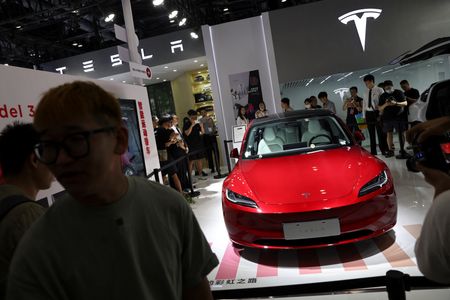
Tesla delivers record Q4 cars, but China’s BYD steals top EV spot

By Akash Sriram

(Reuters) -Tesla delivered a record number of electric vehicles in the fourth quarter, beating market estimates and meeting its 2023 target, but lost its spot as the top EV maker by sales to China’s BYD.

Tesla delivered 484,507 EVs in the October-to-December period, falling short of the 526,409 vehicles that Warren Buffett-backed BYD handed over – mostly in China – suggesting that car buyers were looking for cheaper models in a high-interest-rate economy.

While the U.S. automaker’s year-end sales push mostly paid off, helping it deliver 1.8 million vehicles this year, it fell short of CEO Elon Musk’s ambitious 2 million annual internal target.

However, it is still ahead of BYD for the whole year. The Chinese firm delivered a total of 3.02 million vehicles, including about 1.4 million plug-in hybrid EVs.

Tesla stock, which doubled last year, was nearly flat on Tuesday in a broadly weaker market.

BYD’s deliveries show price cuts are working for the Chinese company, said Susannah Streeter, head of money and markets at Hargreaves Lansdown.

“The fight will hurt margins for both companies, but BYD clearly believes it’s a price worth paying to increase market share and recognition,” she added.

Tesla increased discounts and offered incentives like six months of free fast charging if customers took deliveries by December-end, in a bid to boost sales before some variants of its compact Model 3 sedan lose U.S. federal tax credits in 2024.

That helped it post a growth of 11% over the immediately previous quarter and higher than estimates of 473,253, according to 14 analysts polled by LSEG.

It made a record 494,989 vehicles in the quarter after a production halt in the third quarter to upgrade assembly lines, taking total production in 2023 to 1.85 million units.

On Wednesday, China Passenger Car Association (CPCA) data showed Tesla sold 94,139 China-made electric vehicles (EVs) in December, up 68.7% from a year earlier.

Tesla’s delivery numbers are “much, much, much better than domestic U.S. car companies,” said Gary Bradshaw, portfolio manager at Tesla shareholder Hodges Capital.

Smaller rival Rivian also reported deliveries on Tuesday, with the company missing market estimates amid a broader pullback in EV demand.

The weakness has led U.S. automakers including Ford and General Motors to become more cautious about their EV production capacity plans.

Tesla is also facing scrutiny from regulators over its self-driving technology with the company recalling more than 2 million vehicles last month to install new safeguards in its Autopilot advanced driver-assistance system, after a federal safety regulator cited safety concerns.

Consumer Reports — an influential U.S. non-profit group that conducts extensive reviews of cars, kitchen appliances and other goods — said its preliminary evaluation suggests the software update to fix issues were not sufficient and did not go far enough to prevent misuse and driver inattention.

TAX CREDITS

Some analysts said Tesla could have to continue the price cuts it started in January last year to maintain demand, after the end of the tax incentives under the Inflation Reduction Act (IRA) brought forward sales into the fourth quarter.

“Tesla may have to cut prices further, especially for a vehicle like the versions of the Model 3 that lost their tax credit,” said Seth Goldstein, equity strategist at Morningstar.

The rear-wheel drive and long-range variants of Tesla’s Model 3 no longer have federal tax credits of $7,500 this year as updated requirements on battery material sourcing kick in, under the IRA.

Goldstein, however, said that most of the price cuts were in response to higher interest rates by the U.S. Federal Reserve so Tesla may maintain prices if borrowing costs start coming down.

Model 3 cars and Model Y sports utility vehicles accounted for 461,538 deliveries in the quarter, while Tesla handed over about 23,000 units of its other models.

Tesla did not disclose if the deliveries included the newly launched Cybertruck.

(Reporting by Akash Sriram in Bengaluru; editing by Shounak Dasgupta, Krishna Chandra Eluri and Pooja Desai)

tagreuters.com2024binary_LYNXMPEK010C3-VIEWIMAGE

tagreuters.com2024binary_LYNXMPEK010C2-VIEWIMAGE

tagreuters.com2024binary_LYNXMPEK010C1-VIEWIMAGE

tagreuters.com2024binary_LYNXMPEK010C4-VIEWIMAGE

Categories
Technology

More EVs lose US tax credits including Tesla, Nissan, GM vehicles

By David Shepardson

WASHINGTON (Reuters) -Many electric vehicles lost eligibility for tax credits of up to $7,500 after new battery sourcing rules took effect on Monday, including the Nissan Leaf, Tesla Cybertruck All-Wheel Drive, some Tesla Model 3s and Chevrolet Blazer EV, the U.S. Treasury said.

The Treasury issued guidelines in December detailing new battery sourcing requirements aimed at weaning the U.S. electric vehicle supply chain away from China. They took effect on Monday.

The number of EV models qualifying for U.S. EV tax credits fell from 43 to 19. Those figures include different versions of the same vehicle type. Treasury said some manufacturers have yet to submit information on eligible vehicles, which could lead to changes in the list.

Tesla did not immediately comment Monday but said on its website “Cybertruck is likely to qualify for the federal tax credit later in 2024.”

The new rules allow buyers to claim the tax credit of up to $7,500 at a participating dealership at the point of sale. The tax credit sets limits on vehicle price and buyer income to qualify.

The Volkswagen ID.4, Tesla Model 3 Rear Wheel Drive, BMW X5 xDrive50e, Audi Q5 PHEV 55, Cadillac Lyriq and Ford E-Transit are among the vehicles that fell off the list of vehicles eligible for tax credits.

Volkswagen said on Monday it “is in the process of confirming eligibility for a federal EV tax credit for vehicles” after Jan. 1.

“We are optimistic that MY2023 ID.4s and all MY2024 ID.4s will be eligible under the new rules,” VW added.

BMW did not immediately comment.

Nissan said is working with suppliers in an effort to meet changing requirements “and regain tax credit eligibility for the Nissan Leaf in the future.”

The Treasury said “automakers are adjusting their supply chains to ensure buyers continue to be eligible for the new clean vehicle credit, partnering with allies and bringing jobs and investment back to the United States.”

Ford Motor said last month its E-Transit would lose the $3,750 tax credit, as would the Mach-E and Lincoln Aviator Grand Touring plug-in hybrid, but its F-150 EV Lighting and the Lincoln Corsair Grand Touring retained credits.

General Motors noted all of its EVs would temporarily lose eligibility except the Chevrolet Bolt, adding the Lyriq and Blazer EV are losing the credit because of two minor components.

GM expects after a sourcing change the Lyriq and Blazer EV will regain eligibility in early 2024 and said its Chevrolet Equinox EV, Chevrolet Silverado EV, GMC Sierra EV and Cadillac OPTIQ produced “after the sourcing change will be eligible for the full incentive.”

The 2022 Inflation Reduction Act law reformed the EV tax credit, requiring vehicles to be assembled in North America to qualify for any tax credits, eliminating nearly 70% of eligible models at the time.

Tesla disclosed in December its Model 3 Rear-Wheel Drive and Long Range vehicles would lose federal tax credits starting Jan. 1. The Model 3 Performance retains the $7,500 credit.

(Reporting by David ShepardsonEditing by Marguerita Choy and Lisa Shumaker)

tagreuters.com2024binary_LYNXMPEK000FI-VIEWIMAGE

tagreuters.com2024binary_LYNXMPEK000FJ-VIEWIMAGE

tagreuters.com2024binary_LYNXMPEK000FL-VIEWIMAGE

Categories
Energy

Oil prices settle down 3% as Red Sea shipping disruptions ease

By Shariq Khan

BENGALURU (Reuters) -Oil prices fell 3% on Thursday as more shipping companies said they were ready to transit the Red Sea route, easing concerns about supply disruptions as Middle Eastern tensions stay elevated.

The more active Brent crude futures for March delivery settled down $2.39, or 3%, at $77.15. Brent futures for February delivery, which expired after settlement, fell 1.3% to $78.39 a barrel.

U.S. West Texas Intermediate crude futures fell by $2.34, or 3.2%, to $71.77 a barrel. On Wednesday, oil prices dropped nearly 2% as major shipping firms began returning to the Red Sea.

Denmark’s Maersk will route almost all container vessels sailing between Asia and Europe through the Suez Canal from now, and divert only a handful around Africa, a Reuters breakdown of the group’s schedule showed on Thursday.

France’s CMA CGM is also increasing the number of vessels travelling through the Suez Canal, it said earlier in the week.

“The perception is that the Red Sea route is reopening and will bring supply to market weeks faster,” Price Futures Group analyst Phil Flynn said.

Major shipping companies stopped using Red Sea routes and the Suez Canal earlier this month after Yemen’s Houthi militant group began targeting vessels.

The U.S. Energy Information Administration reported a much larger-than-expected draw in U.S. crude oil inventories last week, which limited price declines for awhile.

Later, prices fell further, likely as traders focused on a bulk of the draw coming from the U.S. Gulf Coast region, where refiners are scrambling to clear inventories to avoid high taxes on storage at the end of the year, UBS analyst Giovanni Staunovo said.

U.S. crude stockpiles fell by 7.1 million barrels in the week ended Dec. 22, EIA data showed, while analysts polled by Reuters had expected a draw of 2.7 million barrels. Crude oil stocks at the U.S. Gulf Coast fell by 11.03 million barrels, the biggest decline since Aug, the data showed. [EIA/S]

Investors expect interest rate cuts in Europe and the U.S. in 2024, which could boost oil demand.

(Reporting by Shariq Khan, Natalie Grover, Yuka Obayashi and Sudarshan Varadhan; Editing by Tomasz Janowski, Kirsten Donovan Barbara Lewis and David Gregorio)

tagreuters.com2023binary_LYNXMPEJBR00S-VIEWIMAGE

Categories
Technology

Apple can temporarily sell smartwatches after US appeals court win

By Blake Brittain and Jaspreet Singh

(Reuters) -Apple can for now resume sales of its flagship smartwatches, after a U.S. appeals court on Wednesday paused a government commission’s import ban on the devices imposed in a patent dispute over its medical monitoring technology.

The tech giant had filed an emergency request asking the U.S. Court of Appeals for the Federal Circuit to halt an order from the U.S. International Trade Commission (ITC), which had ruled that Apple had infringed the patents of Irvine, California-based Masimo.

A final decision could cost either company millions of dollars and potentially force a settlement or some kind of technological workaround by Apple, analysts said. Ultimately, though, any financial hit for Apple is likely to be dwarfed by the bad publicity the lawsuit is generating, they said.

Masimo shares closed 4.6% lower at $115.11 following the decision on Wednesday, and Apple shares closed flat at $193.15.

“We are thrilled to return the full Apple Watch lineup to customers in time for the new year,” Apple said in a statement. “Apple Watch Series 9 and Apple Watch Ultra 2, including the blood oxygen feature, will become available for purchase again in the United States at Apple Stores starting today and from apple.com tomorrow by 12 pm PT.”

Masimo declined to comment on the court decision.

The ITC barred imports and sales of Apple Watches with technology for reading blood-oxygen levels. Starting with its Series 6 model in 2020, Apple included a pulse oximeter feature in its smartwatches.

Masimo has accused Apple of hiring away its employees, stealing its pulse oximetry technology and incorporating it into Apple Watches. Apple has countersued, calling Masimo’s legal actions a “maneuver to clear a path” for its own competing smartwatch.

“Apple can easily develop their own blood monitoring software, it is just a matter of time … The software development costs are not something that will be too concerning for a company as wealthy as Apple,” said Stuart Cole, chief macro economist at Equiti Capital.

“The bigger issue is that this is not very good PR for Apple, suggesting as it does that Apple is stealing technology from competitors rather than developing its own. Apple is fighting this lawsuit more with an eye on what it means for their future health-wearable products rather than this specific blood oxygen monitoring piece of software,” he said.

In a four-paragraph ruling on Wednesday, the appeals court said it would halt the ban while it considers Apple’s motion for a longer-term pause during the appeals process. The court gave the ITC until Jan. 10 to respond to Apple’s request.

U.S. President Joe Biden’s administration declined to veto the ban on Tuesday, allowing it to take effect. Apple asked for a pause of the ban later that day.

Apple has said it is working on a range of legal and technical options.

On Tuesday, the company told the court that U.S. Customs and Border Protection is considering whether redesigned versions of its watches infringe Masimo’s patents and can be imported. The customs agency has set a target date of Jan. 12 for its decision, Apple said.

Apple had paused sales of the affected devices from its website and retail locations last week in the United States due to the ITC decision. They remained available at retailers including Amazon, Best Buy, Costco and Walmart.

The ban did not affect the Apple Watch SE, a less-expensive model without a pulse oximeter. Previously sold watches also were not be affected by the ban.

A jury trial on Masimo’s allegations against Apple in California federal court had ended with a mistrial in May.

Apple’s wearables, home and accessory business, which includes the Apple Watch, AirPods earbuds and other products, brought in $8.28 billion in revenue during the third quarter of 2023, according to a company report.

(Reporting by Blake Brittain in Washington and Jaspreet Singh in Bengaluru, additional reporting by Max Cherney in San Francisco, and Akash Sriram and Aditya Soni in Bengaluru; Editing by Ben Klayman, Chizu Nomiyama, Howard Goller and Matthew Lewis)

tagreuters.com2023binary_LYNXMPEJBQ0DM-VIEWIMAGE

tagreuters.com2023binary_LYNXMPEJBQ0DO-VIEWIMAGE

Categories
Energy

US offshore wind poised for success next year after turbulent 2023

By Scott DiSavino

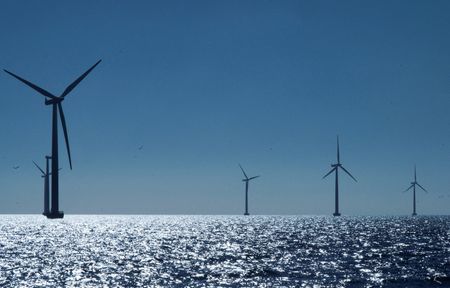
NEW YORK (Reuters) – The U.S. offshore wind industry is eying a brighter 2024, with work expected to start on several projects following a year marked by stalled developments and billions of dollars in write-offs.

The offshore wind industry is expected to play a major role in helping several states and U.S. President Joe Biden meet goals to decarbonize the power grid and combat climate change.

But progress slowed in 2023 after offshore developers canceled contracts to sell power in Massachusetts, Connecticut and New Jersey, and threatened to cancel agreements in other states, as soaring inflation, interest rate hikes and supply chain problems increased project costs.

European energy companies Orsted, Equinor and BP took about a combined $5 billion in writedowns on U.S. offshore wind projects that were in development because existing power sales contracts would not cover the cost of building and financing the projects.

Next year, developers hope to revive projects with canceled or threatened power sales contracts by bidding their facilities in upcoming solicitations in several states, including New York, New Jersey, Massachusetts and Connecticut.

“While auction clearing prices may increase, states appear to remain committed to clean energy goals,” said Eli Rubin, senior energy analyst at energy consulting firm EBW Analytics Group.

There were only two small offshore wind projects operating in the U.S. at the start of 2023, one in Rhode Island and another in Virginia, with total capacity of just 41 megawatts (MW). Capacity is set to jump to almost 1,000 MW in 2024 as commercial-scale projects off New York and Massachusetts enter service.

One thousand megawatts of offshore wind can provide power to around 500,000 U.S. homes.

“State procurements and policies will continue to drive demand for offshore wind energy and federal support will enable more job creation, supply chain investment and domestic energy production,” said Ryan Ferguson, spokesman at Danish energy company Orsted.

STATE SUPPORT

New York last month launched a solicitation that allowed companies to exit old contracts and re-offer projects at higher prices. It will announce winners of an expedited solicitation for offshore wind in February.

The state accelerated the solicitation in October after several developers, including Orsted, BP and Equinor, threatened to cancel contracts to sell power that were awarded in 2019 and 2021 before the Federal Reserve started hiking interest rates in March 2022 to fight soaring inflation.

New York’s first offshore wind farm, Orsted’s 132-MW South Fork provided first power in December.

In New Jersey, Governor Phil Murphy directed state utility regulators in November to launch an accelerated offshore wind solicitation in early 2024 after Orsted, the world’s biggest offshore wind company, canceled its two Ocean Wind projects.

Elsewhere in New Jersey, Shell and France’s EDF continue to develop the 1,510-MW Atlantic Shores wind farm, which should produce power by 2027-2028, according to the project’s website.

In Virginia, U.S. energy company Dominion Energy said its roughly $10 billion, 2,587-MW Coastal Virginia Offshore Wind project remained on budget and on track to start offshore construction in May 2024. First power is expected in the second half of 2025 and completion is set for late 2026.

In Massachusetts, Avangrid and Copenhagen Infrastructure Partners’ 806-MW Vineyard Wind 1 project is on track to produce first power in the near future.

Avangrid, which canceled contracts to sell power from projects off Massachusetts and Connecticut in 2023, said it plans to re-bid its 1,232-MW Commonwealth Wind off Massachusetts and 804-MW Park City off Connecticut in future solicitations.

“What you’re going to see in 2024 is a lot of competitive bids that will lead to contracts that will enable projects to go forward,” said Ken Kimmell, chief development officer for offshore wind at Avangrid.

Avangrid is majority owned by Spanish energy company Iberdrola.

Orsted, meanwhile, said it plans to start offshore construction in the spring of 2024 on its roughly $4 billion Revolution Wind project, which will supply 704 MW to consumers in Rhode Island and Connecticut.

(Reporting by Scott DiSavino, Editing by Rosalba O’Brien)

Categories
Technology

Apple cannot repair older out-of-warranty watches during ban – Bloomberg News

(Reuters) -Apple customer service teams were informed in a company memo this week that it will no longer replace out-of-warranty models going back to Apple Watch Series 6, Bloomberg News reported on Thursday.

The iPhone maker had said on Monday it would pause sales of its Series 9 and Ultra 2 smartwatches in the U.S. from this week, in relation to the patent dispute over the technology that enables the blood oxygen feature on the devices. These two models are currently unavailable on Apple’s U.S. website.

If a customer has a broken screen, for instance, they would not be able to get the issue fixed by Apple, the Bloomberg News report said, adding the company will still offer help that can be done via software, such as reinstalling the operating system.

Company representatives were told to inform affected customers they will be contacted when hardware replacements are allowed again, according to the report.

Apple did not immediately respond to a Reuters request for comment.

(Reporting by Arsheeya Bajwa in Bengaluru; Editing by Krishna Chandra Eluri)

Categories
Crypto

Crypto miner Core Scientific expects to emerge from bankruptcy in January

(Reuters) -Cryptocurrency miner Core Scientific said on Thursday it was expecting to emerge from bankruptcy in mid-to-late January, a year after it became a casualty of high-profile collapses that led to a rout in crypto tokens.

The Austin, Texas-based company said it has reached an in-principle agreement with all key stakeholders on the terms of a global settlement.

“The global settlement removes key hurdles to our anticipated emergence from Chapter 11 in January,” said CEO Adam Sullivan in a statement.

Core Scientific had filed for bankruptcy protection in December last year, citing slumping bitcoin prices, rising energy costs for bitcoin mining and unpaid debt from U.S. crypto lender Celsius Network, one of its biggest customers.

More than a trillion dollars in value were wiped out from the crypto sector last year with rising interest rates exacerbating worries of an economic downturn.

The crash eliminated key industry players such as crypto hedge fund Three Arrows Capital and Celsius.

The biggest blow came after major crypto exchange FTX filed for bankruptcy protection in November 2022. Its swift fall sparked tough regulatory scrutiny of how crypto firms hold funds and conduct business operations.

Core Scientific said it has rescheduled the confirmation hearing to Jan. 10 and intends to file a motion to modify certain dates, including an extension of the deadlines to vote or file an objection.

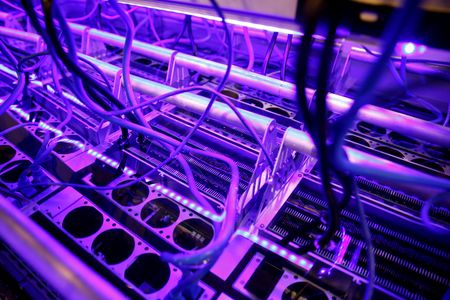
Processing bitcoin transactions and “mining” new tokens is done by powerful computers, hooked to a global network, that compete against others to solve complex mathematical puzzles. The business became less profitable as the price of bitcoin fell, while energy costs soared.

Core Scientific was delisted after the bankruptcy proceedings began. It had gone public in mid-2021 through a merger with a blank-check company in a deal that at the time valued the miner at $4.3 billion.

(Reporting by Manya Saini in Bengaluru; Editing by Anil D’Silva and Arun Koyyur)

Categories
Energy

Oil settles up on Red Sea tensions; gains capped by US stock builds

By Laura Sanicola

(Reuters) -Oil prices settled slightly higher after a choppy trading session on Wednesday as investors worried about global trade disruption and tensions in the Middle East following attacks on ships by Yemen’s Iran-aligned Houthi forces in the Red Sea.

Limiting price gains were a surprise U.S. crude inventory build, larger than expected fuel stocks gains and record domestic oil production.

Brent crude futures settled up 47 cents, or 0.6%, at $79.70 a barrel, while U.S. West Texas Intermediate crude settled up 28 cents, or 0.4%, to $74.22 a barrel.

Both benchmarks briefly turned negative following the EIA report and the possibility of a new ceasefire after the leader of Hamas paid his first visit to Egypt for more than a month.

Early in the session, the benchmarks rose by more than $1 as major maritime carriers chose to steer clear of the Red Sea route, with longer voyages increasing transport and insurance costs.

On Wednesday, Greece advised commercial vessels sailing in the Red Sea and the Gulf of Aden to avoid Yemeni waters. Greek ship owners control about 20% of the world’s commercial vessels in terms of carrying capacity.

“The possibility of a significant price downturn would appear likely on first suggestion of stabilization of cargo transits through the Red Sea corridor,” said John Ritterbusch, president of Ritterbusch and Associates LLC in Galena, Illinois.

On Tuesday, Washington launched a task force to safeguard commerce in the region. Sources including shipping and maritime security officials told Reuters that few practical details are known about the initiative or whether it will directly engage in the event of further armed attacks.

The Houthis vowed to defy the U.S.-led naval mission and to keep targeting Red Sea shipping in support of Palestinian enclave Gaza’s ruling Hamas movement.

About 12% of world shipping traffic passes up the Red Sea and through the Suez Canal. Although oil supply has been realigned, no shortages have yet emerged, analysts said.

“As long as production is not threatened, the market will eventually adjust to changing supply routes,” said Ole Hansen, an analyst at Saxo Bank.

ECONOMIC GREEN SHOOTS

Recent data suggests central bank action to quell sticky inflation in Europe had made a meaningful difference.

German producer prices fell more than expected in November, data showed on Wednesday, a day after it was confirmed that euro zone inflation slowed sharply to 2.4% last month on a year-on-year basis.

A European Central Bank policymaker cautioned it was “rather unlikely” interest rates would be cut during the first six months of next year.

In Britain, inflation plunged in November to its lowest rate in more than two years, strengthening the case for rate cuts.

On Tuesday, the U.S. Energy Department said the government bought 2.1 million barrels of crude for delivery in February, as the U.S. continues to replenish reserves.

(Additional reporting by Natalie Grover, Florence Tan and Jeslyn Lerh; editing by Paul Simao, Nick Zieminski and David Gregorio)

tagreuters.com2023binary_LYNXMPEJBJ01B-VIEWIMAGE

Categories
Crypto

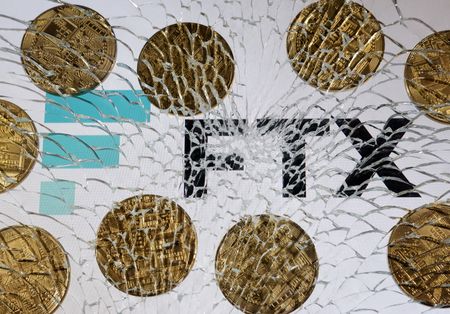
FTX resolves dispute with Bahamian liquidators

By Dietrich Knauth

(Reuters) -Bankrupt crypto exchange FTX Trading on Tuesday announced a settlement with liquidators for FTX’s Bahamas unit, resolving a long-simmering dispute over whether the company’s U.S. bankruptcy proceedings should take precedence over the Bahamian liquidation.

FTX and FTX Digital Markets have agreed to pool their assets and harmonize their approach to valuing customer claims to ensure equal treatment for customers in either country’s insolvency process. The settlement will allow most customers of FTX.com’s international crypto exchange to choose whether to seek repayment from either the U.S. bankruptcy or the Bahamian liquidation, according to FTX.

FTX’s CEO John Ray, who took control of the company from convicted FTX founder Sam Bankman-Fried, said that the agreement is a critical milestone in the company’s effort to repay customers.

“The unique challenges raised by the conflicting filings of the FTX Debtors and FTX Digital Markets have been some of the toughest the team has faced,” Ray said in a statement. “But we recognized at the beginning that we have an overlapping constituency: FTX.com customers.”

The Bahamian liquidators, Brian Simms and Peter Greaves, said in a statement that the agreement will avoid “years of protracted litigation and expense” and “accelerate the return of funds to customers.”

FTX had been at odds with Bahamian officials ever since filing for bankruptcy protection on Nov. 11, with a hole in its balance sheet that left its 9 million customers facing billions in potential losses. FTX had sued the Bahamian liquidators in March, seeking a ruling that the liquidators had wrongly claimed ownership of the exchange’s assets.

Under the agreement, FTX’s U.S. based bankruptcy team will take the lead on asset recovery efforts, including any potential sale of the FTX.com exchange or its intellectual property. The Bahamian liquidators will be in charge of selling real estate assets in the Bahamas and pursuing certain litigation claims.

The settlement also includes an agreement to FTX’s proprietary crypto token FTT as equity in FTX, which would be wiped out in the company’s bankruptcy. The value of FTT tokens had been a point of contention between the two sides last year, when FTX’s U.S. team alleged that most of the assets seized by the Bahamian liquidators were valueless FTT tokens.

FTX, which collapsed in November 2022, has committed to using at least 90% of its assets to repay customers. The company plans to pay customers back in U.S. dollars, rather than in cryptocurrency.

(Reporting by Manya Saini in Bengaluru and Dietrich Knauth in New York; Editing by Emelia Sithole-Matarise and Louise Heavens)

tagreuters.com2023binary_LYNXMPEJBI0K2-VIEWIMAGE

Categories
Crypto

US SEC says no to new crypto rules; Coinbase asks court to review

By Chris Prentice, Michelle Price and Mike Scarcella

WASHINGTON (Reuters) -The U.S. Securities and Exchange Commission on Friday denied a petition by Coinbase Global seeking new rules from the agency for the digital asset sector, which the country’s largest crypto exchange then sought to challenge in court.

The five-member commission, in a 3-2 vote, said it would not propose new rules because it fundamentally disagreed that current regulations are “unworkable” for the crypto sphere, as Coinbase has argued. Coinbase later said it had filed a petition for review of the SEC’s decision in court.

The dispute was the latest in a broader tug-of-war between the crypto sector and the top U.S. markets regulator, which has repeatedly said most crypto tokens are securities and subject to its jurisdiction. The agency has sued several crypto companies, including Coinbase, for listing and trading crypto tokens which it says should be registered as securities.

“Existing laws and regulations apply to the crypto securities markets,” SEC Chair Gary Gensler said in a separate statement supporting the decision.

Coinbase disputed that assertion.

“No one looking fairly at our industry thinks the law is clear or that there isn’t more work to do,” chief legal officer Paul Grewal said in a statement. “We should be working together to create laws and rules that will benefit consumers and US innovation”.

Shortly thereafter, Coinbase notified a federal court of appeals in Philadelphia of its plans to seek review of the SEC’s denial.

The SEC’s decision was “arbitrary and capricious” and an “abuse of discretion”, Coinbase said in a court filing that Grewal shared on social media platform X.

In 2022, the company pressed the SEC to create a bespoke set of rules for the crypto sector, arguing that existing U.S. securities laws are inadequate. In April, Coinbase appealed to a judge to force the SEC to respond to the petition.

The court said it would not force the agency to act, given the SEC had said it would respond to Coinbase’s petition.

Crypto firms have said they want a clearer idea of when the SEC views a digital asset to be a security.

In his statement on Friday, Gensler argued that in asking the SEC to write rules, Coinbase had acknowledged the SEC’s authority over the crypto sector, something the crypto exchange has refuted in the past.

Republican SEC Commissioners Hester Peirce and Mark Uyeda said in a joint statement that they disagreed with the decision.

“In our view, the Petition raises issues presented by new technologies and other innovations, and addressing these important issues is a core part of being a responsible regulator,” they said.

(Reporting by Michelle Price and Mike Scarcella in Washington and Chris Prentice in New York; Editing by Chizu Nomiyama, Paul Simao and Diane Craft, Kirsten Donovan)