Curaleaf Holdings, Inc. Announces Upsizing and Closing of $300 Million Senior Secured Term Loan Facility
Deal Strengthens Curaleaf’s Balance Sheet and Liquidity
WAKEFIELD, Mass., Jan. 15, 2020 /PRNewswire/ — Curaleaf Holdings, Inc. (CSE: CURA) (OTCQX: CURLF), a leading vertically integrated cannabis operator in the United States, today announced the upsizing and closing of a Senior Secured Term Loan Facility (the “Facility”) from a syndicate of lenders totaling US$300 million. The notes bear interest at a rate of 13.0% per annum, payable quarterly in arrears, with a maturity 48 months from closing.
The proceeds will be used to refinance existing debt, satisfy transaction fees and expenses from previously announced acquisitions, fund capital expenditures and for general corporate purposes. The sole placement agent for the Facility is Seaport Global Securities LLC.
We are pleased with the upsizing and closing of the deal at what we believe to be attractive terms. Most importantly we strengthened our balance sheet without diluting our existing shareholders.
Joseph Lusardi, Chief Executive Officer of Curaleaf
With the completion of this transaction, we have ample liquidity to execute on our strategy and are well-positioned to take advantage of the significant market opportunities that exist in this space.
About Curaleaf Holdings
Curaleaf Holdings, Inc. (CSE: CURA) (OTCQX: CURLF) (“Curaleaf”) is a leading vertically integrated multi-state cannabis operator in the United States. It is a high-growth cannabis company with a national brand known for quality, trust and reliability. The company is positioned in highly populated, limited license states, and currently operates in 12 states with 52 dispensaries, 14 cultivation sites and 14 processing sites. Curaleaf has the executive expertise and research and development capabilities to provide leading service, selection, and accessibility across the medical and adult-use markets, as well as in the CBD category through its Curaleaf Hemp brand.
Organigram Reports First Quarter Fiscal 2020 Results
Net revenue more than doubled to $25.2 million from $12.4 million in Q1 2019
Gross margin before fair value changes to biological assets and inventory of $9.3 million or 37% of net revenue compared to $8.8 million or 71% of net revenue in Q1 2019
Net loss of $0.9 million compared to net income from continuing operations of $29.5 million in Q1 2019 largely due to non-cash fair value changes to biological assets and inventories in the prior year quarter
Adjusted EBITDA¹ of $4.9 million compared to $6.8 million in Q1 2019
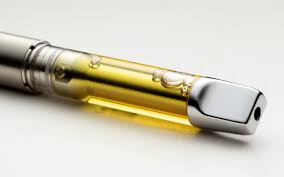
As planned, the Company started shipping Trailblazer Torch vape cartridges on December 17, 2019 and expects to start shipping Edison + Feather ready-to-go distillate pens before the end of January 2020 followed by Edison + PAX ERA distillate cartridges in Q2 calendar 2020
Received licensing for chocolate production and packaging areas in December 2019 and remain on track for initial sales of cannabis-infused chocolates in Q1 calendar 2020
The Company believes it has enough capital to fund its operations and capital expenditure plans. The Company had $34.1 million of cash and short-term investments at quarter-end. Additionally, as of the date of this press release, Organigram has $30.0 million in undrawn capacity on its term loan and $32.1 million available to raise under its total $55 million at-the-market equity program (the “ATM Program”) after it raised $22.9 million subsequent to quarter-end
MONCTON, New Brunswick, January 14, 2020–(BUSINESS WIRE)–Organigram Holdings Inc. (NASDAQ: OGI) (TSX: OGI), the parent company of Organigram Inc. (the “Company” or “Organigram”), a leading licensed producer of cannabis, is pleased to announce its results for the first quarter ended November 30, 2019 (“Q1” or “Q1 2020”).
Despite ongoing industry challenges, we are pleased with solid Q1 2020 results and our return to positive adjusted EBITDA during the quarter. Our team was also successful in shipping the first of our Rec 2.0 products as planned and on schedule in December of 2019.
Greg Engel, CEO
We also look forward to the launch of the remainder of our vape pen portfolio followed soon after by our premium cannabis-infused chocolate products. In addition to an exciting line-up of 2.0 products, we are rolling out a couple of new core strains, such as our high THC Edison Limelight, across the country following their success as limited-time-offers in smaller markets.
Key Financial Results for the First Quarter Fiscal 2020
Net Revenue:
Q1 2020 net revenue grew 102% to $25.2 million from $12.4 million in Q1 2019 wherein Q1 2019 adult-use recreational cannabis was only legalized on October 17, 2018
Gross Margin before fair value changes to biological assets and inventories sold:
Q1 2020 gross margin before fair value changes to biological assets and inventories of $9.3 million or 37% of net revenue compared to $8.8 million in Q1 2019 or 71% of net revenue
Higher absolute gross margin in Q1 2020 was due to higher net revenue. Lower Q1 2020 gross margin as a percentage of net revenue was largely due to higher cost of sales from increased staffing for more cultivation and post-harvest capacity without experiencing the benefit of full economies of scale as the Company believes consumer demand continues to be impacted by an inadequate retail store network in Canada
Gross Margin:
Q1 2020 gross margin of $11.2 million compared to Q1 2019 gross margin of $51.7 million, largely due to a net non-cash fair value gain on biological assets and inventories sold of $1.9 million in the current quarter versus $42.9 million in Q1 2019
Adjusted EBITDA³:
Q1 2020 adjusted EBITDA of $4.9 million compared to Q1 2019 adjusted EBITDA of $6.8 million
Q1 2020 adjusted EBITDA was impacted by higher SG&A compared to Q1 2019 as the Company increased staffing and sales and marketing efforts in response to the first year of legalized adult-use recreational cannabis including edibles and derivative products
Sales and Marketing and General and Administrative Expenses (“SG&A”):
Q1 2020 SG&A of $9.4 million compared to $4.5 million in Q1 2019 as the Company had scaled up staffing and marketing activities for legalization of adult-use recreational cannabis sales
Q1 2020 SG&A represented 37% of net revenue compared to 36% in Q1 2019, which reflected higher net revenue in Q1 2020 and management’s disciplined approach to spending despite being in a high growth period
Net Income (Loss) from Continuing Operations:
Q1 2020 net loss of $0.9 million or $(0.006) per share on a diluted basis compared to Q1 2019 net income of $29.5 million or $0.195 per share largely due to non-cash fair value changes to biological assets and inventories sold
Key Commentary on Q1 2020 Results vs Q4 2019
Q1 2020 net revenue of $25.2 million was largely comprised of about $16.7 million of sales to the adult-use recreational and medical markets and about $9.5 million to the wholesale and international markets with the negligible balance coming from other sources, partly offset by about $1.1 million in a provision for product returns and price adjustments. This compared to Q4 2019 net revenue of $16.3 million comprised of about $20.0 million of sales and about $3.7 million in a provision for product returns and pricing adjustments. The majority of the Q1 2020 provision was related to THC oils which have seen less than anticipated demand in the adult-use recreational market. The majority of the Q4 2019 provision was related to two slower selling stock-keeping units (“SKUs”) sold to the Ontario Cannabis Store (OCS), comprised of a bespoke order of lower THC dried flower intended to fulfill a supply gap in the market earlier in calendar 2019 and THC oils.
Q1 2020 cash and “all-in” costs of cultivation of $0.61 and $0.87 per gram of dried flower harvested4, respectively, decreased from $0.66 and $0.94 per gram in Q4 2019 as yield per plant increased from 148 grams in Q4 2019 to 152 grams in Q1 2020.
Q1 2020 cost of sales remained relatively stable at $15.8 million from $15.5 million in Q4 2019. Q1 2020 cost of sales benefited from lower inventory write-offs than in Q4 2019 and lower post harvest costs for product sales to another LP for which product is packaged in bulk without any specific labeling and excise stamps.
Q1 2020 gross margin before fair value changes to biological assets and inventory increased to $9.3 million or 37% of net revenue from Q4 2019 gross margin before fair value changes to biological assets and inventories of $0.7 million or 5% largely due to higher net revenue and relatively stable cost of sales and indirect production costs as described above.
Q1 2020 gross margin of $11.2 million compared to Q4 2019 gross margin of negative $11.1 million, largely due to negative non-cash fair value changes in biological assets and inventories in the prior year quarter.
Q1 2020 positive adjusted EBITDA5 of $4.9 million compared to Q4 2019 negative adjusted EBITDA of $7.9 million. Q4 2019 negative adjusted EBITDA was impacted by lower gross margin before fair value changes to biological assets and inventories (described above) and higher SG&A compared to Q1 2020.
Q1 2020 SG&A of $9.4 million decreased 32% from $13.9 million in Q4 2019. As expected, Q1 2020 SG&A as a percentage of net revenue decreased to 37% from 85% in Q4 2019 as the Company had previously indicated Q4 2019 was an anomaly.
The Company has chosen to initially focus on the two most popular product forms based on US state sales data: vaporizer pens and edible products6.
To date, Organigram has submitted new product notifications to Health Canada in October 2019 for a comprehensive vape pen portfolio and cannabis infused chocolates.
As planned, the Company began shipping the first of its 2.0 products, Trailblazer Torch vape cartridges, on December 17, 2019. The cartridges are custom engineered with borosilicate glass and stainless-steel components, designed to accommodate a standard 510-thead battery.
Launches of Edison + Feather ready-to-go distillate pens and Edison + PAX ERA® distillate cartridges are expected in January 2020 and Q2 calendar 2020, respectively.
The Company’s next-generation product portfolio includes high-quality cannabis infused chocolate and a dissolvable powder product, designed using nanotechnology for faster absorption of cannabinoids (when compared to traditional edible products). Planned launches of Organigram’s chocolate and dissolvable powder products are anticipated in Q1 and Q2 calendar 2020, respectively.
As expected, the Company took delivery of its high speed, high capacity, fully automated chocolate production line in October 2019. Installation of the production line has been completed, licensing approval for the chocolate operations area has been received and the Company expects commissioning in time for initial sales in Q1 calendar 2020.
As previously announced, Organigram has developed a proprietary nano-emulsification technology that is anticipated to provide an initial absorption of cannabinoids within 10 to 15 minutes. The emulsion process developed by the Organigram team generates micro-particles that are very small and uniform, which it expects will translate to an absorption and onset of effect that is rapid, reliable and controlled. The Company anticipates the nano-emulsion technology will have stability to temperature variations, mechanical disturbance, salinity, pH and sweeteners. The Company’s researchers have also recently developed a way to transform this emulsification into a solid form, turning it into a dissolvable powder. This shelf stable, water-compatible, unflavored nano-emulsion formulation is also expected to begin to be absorbed within 10 to 15 minutes when ingested after being added to a liquid. The powdered formulation will offer consumers a measured dose of cannabinoids which they can then add to liquid, such as a beverage of their choice, while also offering the discretion, portability and shelf life expected of a dry powder formulation. The Company expects to launch the dissolvable powder product in Q2 calendar 2020.
Phase 4 Expansion
In December 2019, the Company received Health Canada licensing approval for the remaining 16 grow rooms for incremental target production capacity of about 13,000 kg per year of dried flower and sweet leaf. This brings the Company’s total licensed target production capacity to 89,000 kg per year7. Management has decided to fill these newly licensed rooms in Phase 4B at a slower pace in response to lower than anticipated consumer demand at this time which the Company believes is largely due to the lack of an inadequate retail store network at this time, particularly in Ontario.
As previously reported with the release of Organigram’s Fiscal 2019 results on November 25, 2019, the Company’s management made a strategic decision to delay the completion of Phase 4C (the final stage of the Phase 4 expansion), previously targeted for the end of calendar 2019, largely due to less than anticipated consumer demand noted above and to more effectively manage and prioritize cash flow as well as potentially use the space in 4C for other opportunities (if strategic and/or market factors dictate).
In December 2019, the Ontario government announced it is taking steps to move to an open market for retail cannabis stores beginning in January 2020. Store authorizations from this open application process are expected to be issued beginning in April, at an initial rate of approximately 20 per month. Management will assess its decision to delay the completion of Phase 4C on an ongoing basis based on the progress and extent of store openings and the impact on consumer demand.
To date, the Company has completed a significant portion of Phase 4C, such that the Company’s management believes the remaining construction can be completed in a relatively short timeframe to be ready to respond to an increase in consumer demand which may result from additional store openings.
The estimate to complete all of Phase 4 (including the remainder of Phase 4C) was approximately $16 million as of quarter-end.
If and when the Company decides to complete 100% of Phase 4C for cultivation as currently designed, the Moncton Campus facility is expected to have a target production capacity of 113,000 kg per year7 of dried flower and sweet leaf.
Phase 5 Under Refurbishment
The Company is taking an already constructed 56,000 square foot footprint within its existing facility and turning it into a multi-functional space (“Phase 5”) with design specifications to European Union GMP standards.
Phase 5, once fully licensed and operational, is expected to add significant functionality to the Moncton Campus including additional post-harvesting rooms (including drying rooms), additional extraction capacity, and a dedicated derivatives and edibles facility.
The estimated total capital cost of Phase 5 is expected to be approximately $65 million8 and the estimate to complete was approximately $20 million as at quarter-end.
In addition to the chocolate production line now installed and licensed, Phase 5 plans also include a powdered drink mixing and packaging line, expanded vaporizer pen filling and automated packaging, additional extraction by both CO2 and hydrocarbon as well as additional areas for formulation including short path distillation for edibles and vaporizer pen formulas.
Outlook
The Company believes that the Canadian market is positioned for growth with additional retail store openings planned in the largest markets of Ontario and Quebec collectively representing over 60% of the Canadian population.
Legalization of edible and derivative products is also expected to significantly expand the legal market from its current state. Certain provinces have announced delays or other restrictions on the launch of vaporizable products in their markets including Newfoundland & Labrador, Quebec and Alberta. The Company is adjusting its distribution schedules and revenue expectations accordingly.
Organigram has and continues to build excised finished product across a variety of SKUs and is ready to onboard the addition of Ontario retailers. The first few of Ontario’s new stores opened in December 2019. That same month, Ontario announced it is taking steps to move to an open market for retail cannabis stores beginning in January 2020. Store authorizations from this open application process are expected to be issued beginning in April, at an initial rate of approximately 20 per month. This is expected to set the stage for further growth for Organigram and the industry. The Société québécoise du cannabis also previously announced plans to double its number of stores and Alberta’s robust network of about 375 stores has continued to grow to meet consumer demand.
Liquidity and Capital
Organigram had $34.1 million in cash and short-term investments at quarter-end. The Company also generated positive adjusted EBITDA9 of $4.9 million in Q1 2020.
The Company reported approximately $84.5 million in current and long-term debt as at quarter-end, which primarily represents the carrying value of its term loan in its credit facility with BMO and a syndicate of lenders. As of the date of this press release, there is $30.0 million in available capacity on the term loan in its credit facility. The Company also has a revolver of up to $25 million available to be drawn against specified receivables.
On November 15, 2019, the Company amended its credit facility with BMO to: i) extend the final draw deadline of the term loan from November 30, 2019 to March 31, 2020; ii) postpone the commencement of principal repayments on the term loan to May 31, 2020; and iii) realign the financial covenants structure, effective November 30, 2019, to be more consistent with industry norms up to and including May 31, 2020, which will also provide the Company with greater flexibility around the timing and quantum of incremental draws. The financial covenants will revert to the original structure on August 31, 2020.
Included in the facility is an uncommitted option to increase the term loan and/or revolving debt by an incremental $35 million to a total of $175 million, subject to agreement by BMO and the syndicate of lenders and satisfaction of certain legal and business conditions.
On November 22, 2019, the Company filed a base shelf prospectus for an amount up to $175 million through the issuance of common shares, preferred shares, debt securities, subscription receipts, warrants or units. The purpose of filing the base shelf prospectus is to shorten the timeline to raise funds for growth opportunities and working capital.
On December 4, 2019, Organigram announced it had established an ATM program pursuant to a prospectus supplement to the base shelf prospectus that allows the Company to issue up to $55 million (or its U.S. dollar equivalent) of common shares from treasury, the volume and timing of which is at its discretion. The ATM program will be effective until the earlier of December 25, 2021 and the issuance and sale of all the common shares issuable pursuant to the ATM program, unless terminated prior to such date by the Company or the agents under the ATM program. The Company has used, and continues to intend to use, the net proceeds to fund capital projects, for general corporate purposes and to repay indebtedness. As of the date of this press release, the Company had issued 7,302,600 common shares for gross proceeds of approximately $22.9 million at a weighted average price of $3.14 per common share, leaving about $32.1 million available for common share issuance under the ATM program.
Capital Structure
Outstanding basic and fully diluted share count as at January 12, 2020 is as follows:
First Quarter Fiscal 2020 Conference Call
The Company is scheduled to report its first quarter fiscal 2020 results on Tuesday, January 14, 2020 after market close. The Company will host a conference call to discuss its results:
A replay of the webcast will be available within 24 hours after the conclusion of the call at https://www.organigram.ca/investors and will be archived for a period of 90 days following the call.
Non-IFRS Financial Measures
This news release refers to certain financial performance measures (including adjusted EBITDA, adjusted EBITDA as a percentage of net revenue and cash and “all-in” cost of cultivation) that are not defined by and do not have a standardized meaning under International Financial Reporting Standards (“IFRS”) as issued by the International Accounting Standards Board. These non-IFRS financial performance measures are defined below. Non-IFRS financial measures are used by management to assess the financial and operational performance of the Company. The Company believes that these non-IFRS financial measures, in addition to conventional measures prepared in accordance with IFRS, enable investors to evaluate the Company’s operating results, underlying performance and prospects in a similar manner to the Company’s management. As there are no standardized methods of calculating these non-IFRS measures, the Company’s approaches may differ from those used by others, and accordingly, the use of these measures may not be directly comparable. Accordingly, these non-IFRS measures are intended to provide additional information and should not be considered in isolation or as a substitute for measures of performance prepared in accordance with IFRS. Please refer to the Company’s Q1 2020 MD&A for definitions and reconciliations to IFRS amounts.
About Organigram Holdings Inc.
Organigram Holdings Inc. is a NASDAQ Global Select Market and a Toronto Stock Exchange (“TSX”) listed company whose wholly owned subsidiary, Organigram Inc., is a licensed producer of cannabis and cannabis-derived products in Canada.
Organigram is focused on producing high-quality, indoor-grown cannabis for patients and adult recreational consumers in Canada, as well as developing international business partnerships to extend the Company’s global footprint. Organigram has also developed a portfolio of adult use recreational cannabis brands including The Edison Cannabis Company, Ankr Organics and Trailblazer. Organigram’s primary facility is located in Moncton, New Brunswick and the Company is regulated by Health Canada under the Cannabis Act (Canada) and the Cannabis Regulations (Canada).
1 Adjusted EBITDA is a non-IFRS financial measure not defined by and does not have any standardized meaning under IFRS; please refer to the Company’s Q1 2020 MD&A for definitions and a reconciliation to IFRS. 2 Adjusted EBITDA and adjusted EBITDA as a percentage of net revenue are non-IFRS financial measures not defined by and do not have any standardized meaning under IFRS; please refer to the Company’s Q1 2020 MD&A for definitions and a reconciliation to IFRS. 3 Adjusted EBITDA is a non-IFRS financial measure not defined by and does not have any standardized meaning under IFRS; please refer to the Company’s Q1 2020 MD&A for definitions and a reconciliation to IFRS. 4 Cash and “all-in” costs of cultivation per gram of dried flower harvested are non-IFRS measures that are not defined by and do not have any standardized meaning under IFRS. “Cost of cultivation” per gram harvested includes “cash” costs such as direct labour, direct materials and manufacturing overhead (e.g. maintenance) as well as “non-cash” expenses such as employee share-based compensation for cultivation employees and depreciation related to buildings and equipment of the production facility. Cost of cultivation does not include packaging costs, which are added to arrive at the cost for inventory, nor distribution costs (shipping), both of which are included in the cost of sales. Thus, readers are cautioned against comparing cost of cultivation per gram harvested with cost of sales for the same period(s) for at least two reasons: (1) Cost of sales includes packaging costs and distribution (shipping) costs which “Cost of cultivation” does not, and (2) there is a delay between when product is harvested and when it is sold. Sometimes that delay is one or two quarters (and longer with extraction material). Cost of cultivation also does not include indirect production costs, which are expensed directly against gross margin. 5 Adjusted EBITDA is a non-IFRS financial measure not defined by and does not have any standardized meaning under IFRS; please refer to the Company’s Q1 2020 MD&A for definitions and a reconciliation to IFRS amounts. 6 QUICK TAKE – Cannabis – Cowen’s THC Tracker: U.S. Brands – Cowen and Company, March 29, 2019 7 Target production capacity once licensed and fully operational; several factors can cause actual capacity and cost to differ from estimates. See “Risk Factors” in the Company’s Q1 2020 MD&A. 8 Target production capacity once licensed and fully operational; several factors can cause actual capacity and cost to differ from estimates. See “Risk Factors” in the Company’s Q1 2020 MD&A. 9 Adjusted EBITDA is a non-IFRS financial measure not defined by and does not have any standardized meaning under IFRS; please refer to the Company’s Q1 2020 MD&A for definitions and a reconciliation to IFRS.
On the eve of Cannabis 2.0 in Canada, with the addition of edibles and beverages, investors and producers are excited by the potential growth. With the rock star alliances between major brewers and Licensed Producers, the level of investment and the hype you would think that it is a big deal. It’s not.
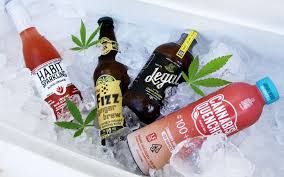
First let’s consider a critical regulation: The container cannot contain more than 10mg of THC. So, whether it is a wine bottle or a skinny can or a tetra Pak juice box, it has the same kick. Which is to say, not that much.
For perspective, pre-rolls are commonly half a gram (500 mg). If they contain potency of 20% then you are holding a joint with 100mg of THC versus your beverage with one tenth of that. It’s not all perfectly equivalent, and it is a personal choice on how much and how you choose to ingest, but having 10mg of THC has a material impact on what the Producer can charge for the serving. The retail price in Colorado for a 10mg serving is around $CDN 6.50 and of course it is a significant premium to flower.
While drinks may be a premium product and brand power can drive premium pricing (think Lagunitas Hi-Fi Hops Cannabis bev), regulations have shut that door as well. There will be no cross-branding with alcohol brands or breweries.
Now let’s consider the cost side. Nothing creates manufacturing cost like small production runs. These runs will make your local craft brewery look like Budweiser in July. The container will also be non-standard because it needs to have a childproof mechanism. A plain old skinny can won’t cut it. Lastly, the high-quality THC derivative, however it is created, is in the early stages of development and scale. It will not be inexpensive as an “active ingredient”.
Some industry players may claim that the relatively high early-stage costs are a natural part of the growth curve and margins will improve with volume growth. This explanation assumes that there is ample consumer demand for it and cost can be worked out over time. Based on some US market data from Q4 2019 from Headset, the beverage share of the cannabis market is…”a sliver”. That is, too small on the stacked column chart to get a number. Colorado operators that I have spoken to have pegged the beverage share in that long-established market at two percent. Not so fast, niche marketer! The most popular sku’s in Colorado are in 100ml single serve bottles, like the popular Olala cannabis sodas. So, go ahead and factor down the potential Canadian market size to take out any higher-potency offerings.
There are long-tail niche categories that can still succeed with the instant breadth of distribution and convenience that online commerce provides. This may be case for for gummies, oil, tinctures, capsules, flower etc. Bulky, heavy beverages are at a profound shipping disadvantage. Beverages, then, are perhaps best distributed in physical stores and “on-premise” bars or cafés where they can be well-merchandised. Of course, the national bricks and mortar retail infrastructure is still in its first trimester of life.
Ultimately, Canada’s THC beverages are a product that is constrained by regulations, at a cost disadvantage, cannot leverage existing brands, have little natural consumer demand and virtually no distribution opportunities. If you think that’s tough, try doing it with CBD rather than THC.
About the author:
Marc Solby is the founder of Lighthouse Consulting in Toronto and the Cannabis Consumer Update, Canada’s first syndicated study of the cannabis consumer. He has led market research and consulting with the world’s leading beer, wine and spirits companies and is a former Director of Marketing at Labatt Breweries. Published by NCV Newswire.
TORONTO, Jan. 13, 2020 /CNW/ – TerrAscend Corp. (CSE:TER;) (“TerrAscend” or the “Company”) has completed its previously announced upsized non-brokered private placement (the “Private Placement”) with orders totaling an aggregate amount of approximately US$33.5 million, inclusive of the first tranche of the Private Placement which closed on December 30, 2019. Chairman Jason Wild, Executive Chairman Jason Ackerman, and each of the Company’s additional directors participated in the Private Placement.
On January 10, 2019, the Company closed the second tranche of the Private Placement, issuing 3,450,127 units (each, a “Unit”) at an issue price of CAD$2.45 per Unit resulting in proceeds to the Company of CAD$8,452,811. Each Unit consists of one common share in the capital of the Company (the “Common Shares”) and one Common Share purchase warrant (a “Warrant”). Each Warrant will be exercisable to acquire one Common Share (a “Warrant Share”) prior to January 14, 2022 at an exercise price of CAD$3.25 per Warrant Share.
As noted previously, the Company intends to use the proceeds from the Private Placement to accelerate the completion of the New Jersey cultivation and processing facilities, to satisfy the previously announced January 2020 contingent purchase price payment related to the acquisition of Ilera Healthcare, and for working capital and general corporate purposes.
For further details concerning the Private Placement, please refer to the Company’s news release dated December 30, 2019.
The securities to be issued pursuant to the private placement have not been and will not be registered under the U.S. Securities Act of 1933, as amended (the “1933 Act”), or under any state securities laws, and may not be offered or sold, directly or indirectly, or delivered within the United States absent registration or an applicable exemption from the registration requirements. This news release does not constitute an offer to sell or a solicitation to buy such securities in the United States.
The Canadian Securities Exchange (“CSE”) has neither approved nor disapproved the contents of this news release. Neither the CSE nor its Market Regulator (as that term is defined in the policies of the CSE) accepts responsibility for the adequacy or accuracy of this release.
About TerrAscend
TerrAscend provides quality products, brands, and services to the global cannabinoid market. As the first North American Operator (NAO), with scale operations in both Canada and the US, the Company participates in the medical and legal adult use market across Canada and in several US states where cannabis has been legalized for therapeutic or adult use. TerrAscend is the first and only cannabis company with sales in the US, Canada, and Europe. TerrAscend operates a number of synergistic businesses, including The Apothecarium, an award-winning cannabis dispensary with several retail locations in California and Nevada; Arise Bioscience Inc., a manufacturer and distributor of hemp-derived products; Ilera Healthcare LLC, Pennsylvania’s premier medical marijuana cultivator, processor and dispenser; Ascendant Laboratories Inc., a biotechnology and licensing company committed to the continuous improvement of cannabinoid expressing plants; Solace RX Inc., a proposed Drug Preparation Premises (DPP) focused on the development of novel formulations and delivery forms; and Valhalla Confections, a manufacturer of premium cannabis-infused edibles. Additionally, TerrAscend has been chosen by the State of New Jersey to be one of six permit applicants for a vertically integrated medical cannabis operation. For more information, visit www.terrascend.com.
Fire & Flower Achieves Milestone of 45 Cannabis Retail Stores Ahead of Projections
EDMONTON, Jan. 13, 2020 /CNW/ – Fire & Flower Holdings Corp. (“FFHC”) (TSX: FAF) and its wholly-owned subsidiary Fire & Flower Inc. (collectively with FFHC, “Fire & Flower” or the “Company”), today announced that it has achieved the milestone of 45 open and operating cannabis retail stores.
Fire & Flower has previously stated that the Company anticpated achieving the milestone of 45 retail cannabis stores by the end of its fiscal year, being February 1, 2020. The Company has achieved this milestone several weeks in advance of its previously stated goal and today has 46 open and operating stores across its retail network.
The new stores included in the Company’s milestone achievement are located at the following addresses:
1108 4th street SW, Calgary, Alberta
6004 Country Hills Blvd NE, Calgary, Alberta
212, 11245 Valley Ridge Drive NW, Calgary, Alberta
350, 590 Baseline Road, Sherwood Park, Alberta
19-99 Wye Road, Sherwood Park, Alberta
1276 3 Avenue South, Lethbridge, Alberta
10 Westwind Drive, Spruce Grove, Alberta
40 Hewlett Park Landing, Sylvan Lake, Alberta
4331-52 Avenue, Whitecourt, Alberta
Fire & Flower is committed to delivering on the targets that we have provided to our shareholders and reaching 45 cannabis retail stores several weeks in advance of when we had anticipated to reach this target is a clear demonstration of our discipline in achieving our goals.
Trevor Fencott, Fire & Flower’s Chief Executive Officer
Achieving this aggressive goal is a testament to our deep retail experience and strong management team. As the cannabis industry continues to face headwinds, Fire & Flower is well positioned to continue to achieve growth and demonstrate leadership in the category.
The Company continues to focus on opening new retail stores across Alberta, where the AGLC continues to issue retail licences, and in the province of Ontario where open licensing has commenced. Fire & Flower is also closely monitoring regulatory environments and taking proactive steps in provinces across Canada to ensure early market entry when private retail opportunities emerge.
About Fire & Flower
Fire & Flower is a leading purpose-built, independent adult-use cannabis retailer poised to capture significant Canadian market share. The Company guides consumers through the complex world of cannabis through education-focused, best-in-class retailing while the Hifyre digital platform connects consumers with cannabis products. The Company’s leadership team combines extensive experience in the cannabis industry with strong capabilities in retail operations.
Fire & Flower Holdings Corp. owns all issued and outstanding shares in Fire & Flower Inc., a licensed cannabis retailer that owns or has interest in cannabis retail store licences in the provinces of Alberta, Saskatchewan, Manitoba and Ontario and the Yukon territory.
Through its strategic investment with Alimentation Couche-Tard Inc. (ATD.A, ATD.B), the Company has set its sights on the global expansion as new cannabis markets emerge.
Trulieve Files Lawsuit against GRIZZLY RESEARCH LLC for Libel
TALLAHASSEE, Fla., Jan. 10, 2020 (GLOBE NEWSWIRE) — Trulieve Cannabis Corp. (“Trulieve” or the “Company”) (CSE: TRUL) (OTCQX: TCNNF), a leading and top-performing cannabis company in the United States, announced today that it has filed a lawsuit in Florida state court against GRIZZLY RESEARCH LLC (“Grizzly”) alleging, among other claims, defamation for publicly disseminating false and libelous statements about Trulieve to manipulate the stock price and further its own financial interests. On December 17, 2019, Grizzly published a false, misleading, and unsubstantiated report. The Complaint demonstrates the defamatory, false and misleading nature of the report. The Company posted a summary of these claims and responses on their website.
This lawsuit represents Trulieve’s firm stance against such false and misleading reports. We will work tirelessly to fight back against these fraudulent claims in a legal setting.
Kim Rivers, Trulieve CEO
The truth matters deeply to the Trulieve team, and we are proud to champion honesty in our industry and hopefully prevent this firm from using slander in an attempt to manipulate stock prices in the future. We will protect our brand by ensuring that the trust between Trulieve and its shareholders, as well as customers, is never called into question.
Trulieve will prosecute this lawsuit to the fullest extent and is seeking a retraction of the false and misleading report, as well as compensatory, special, and punitive damages, attorneys’ fees and interest.
About Trulieve
Trulieve is a vertically integrated “seed-to-sale” company and is the first and largest fully licensed medical cannabis company in the State of Florida. Trulieve cultivates and produces all of its products in-house and distributes those products to Trulieve-branded stores (dispensaries) throughout the State of Florida, as well as directly to patients via home delivery. Trulieve also operates in California, Massachusetts and Connecticut. Trulieve is listed on the Canadian Securities Exchange under the symbol TRUL and trades on the OTCQX Best Market under the symbol TCNNF.
Welcome to The Week in Weed, your Friday look at what’s happening in the world of legalized marijuana.
Let’s start with a look at the new marijuana market in Illinois. First day sales topped $3 million and 77,000 transactions at more than 40 dispensaries. All those new customers have led to shortages; clearly, pegging supply to demand is a complicated business.
Moving on to South Dakota, where no type of cannabis is legal. Will that change in 2020? The Secretary of State recently validated a ballot initiative that would both legalize recreational marijuana and require the legislature to pass laws governing hemp. This initiative joins another ballot measure that would legalize medical marijuana.
In other South Dakota news, the Department of Agriculture approved the Flandreau Santee Sioux’s plan to grown industrial hemp on tribal lands. Regular readers will doubtless recallthat South Dakota’s governor, Kristi Noem, is no fan of hemp.
In Virginia, Governor Northam released a criminal justice reform agenda that includes decriminalizing marijuana. New prosecutors in two Northern Virginia counties indicated that they will no longer pursue possession charges for small amounts of marijuana for personal use.
So which states are most likely to legalize marijuana in 2020?Cannabis Business Timeshas an article that names 11 possibilities.
As for hemp, 2019 was a big year. Hemp Industry Daily has a rundown of the top 10 stories.
Finally, the Ohio State Medical Board received a petition asking for an addition to the qualifying conditions for medical marijuana. The condition? Being a Cleveland Browns or Cincinnati Bengals fan. Hard to argue there’s not a lot of pain involved in rooting for either of those franchises.
Planet 13 Announces Strong Finish to 2019 – Approximately 695,000 Customers Served in 2019 at an Average Ticket above $90
Approximately 695,000 customers served in 2019 at an average ticket above $90 for preliminary unaudited revenue of ~$63 million
Preliminary unaudited gross margin of ~57% for 2019, with margin expansion throughout the year – 50% in Q4 2018 compared to between 56% and 59% in Q4 2019
Served an average of ~1,900 customers per day in 2019 at an average ticket greater than $90 – well above the expectations set for the market at the time of Planet 13’s public listing
Planet 13 served 1,757 customers per day in December at a record average ticket of USD$100
All figures are reported in United States dollars ($) unless otherwise indicated
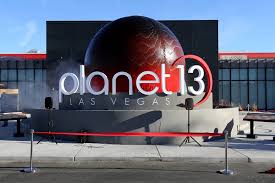
LAS VEGAS, Jan. 9, 2020 /CNW/ – Planet 13 Holdings Inc. (CSE: PLTH) (OTCQX: PLNHF) (“Planet 13” or the “Company”), a leading vertically-integrated Nevada cannabis company, today announced a strong end to 2019. The Company served ~695,000 customers in 2019 at an average ticket of above $90 from the Planet 13 Las Vegas Cannabis Entertainment Complex (the “SuperStore”). In addition, although Q4 is a seasonally slower period in Las Vegas with lower overall tourist traffic, Planet 13 successfully delivered a record average ticket of $100 during December.
At the time of our public listing, we targeted 2,000 customers per day on average and a USD$75 ticket. In 2019 we far exceeded these targets, with ~1,900 customers per day and an average ticket of above $90 driving approximately $63 million in preliminary unaudited revenue, making Planet 13 one of the largest revenue generators in the public cannabis sphere.
Bob Groesbeck, Co-CEO of Planet 13
We hosted over one million visitors during the year, while setting the foundation for continued growth in 2020 and beyond, with a new restaurant and customer-facing production facility opened in Q4 at the SuperStore and with our Santa Ana location on track to open in the 2nd half of 2020.
Mr. Groesbeck continued, “The SuperStore is Nevada’s highest-grossing and most influential dispensary with over 9% of Nevada’s total sales in 20191. It is proving to be a powerful engine both for third party and in-house brand launches and development. During the year, we introduced four new in-house brands – two vapes and two edibles – that have been well received by customers. These brands drive revenue and margin at the SuperStore, we see an even bigger opportunity to leverage the growing value of these brands into third-party dispensaries in Nevada. As we look forward to 2020, we are focused on increasing our share of the Nevada market by entering the wholesale market, opening the first SuperStore concept store outside of Nevada, and by continuing to focus on innovation and providing the highest quality cannabis entertainment and shopping experience on the planet.”
During Q4, Planet 13 opened Phase II of the SuperStore adding a restaurant in late October and customer-facing production facility in November to what was already the top-grossing publicly reporting dispensary in America2. Planet 13’s two new edible brands Dreamland Chocolates and HaHa gummies were introduced at MJ Biz with purchases starting December 10th, 2019.
About Planet 13
Planet 13 (www.planet13holdings.com) is a vertically integrated cannabis company based in Nevada, with award-winning cultivation, production and dispensary operations in Las Vegas – the entertainment capital of the world. Planet 13’s mission is to build a recognizable global brand known for world-class dispensary operations and a creator of innovative cannabis products. Planet 13’s shares trade on the Canadian Stock Exchange (CSE) under the symbol PLTH and OTCQX under the symbol PLNHF.
Get ahead of the crowd by signing up for 420 Investor, the largest & most comprehensive premium subscription service for cannabis traders and investors since 2013.
Published by NCV Newswire
The NCV Newswire by New Cannabis Ventures aims to curate high quality content and information about leading cannabis companies to help our readers filter out the noise and to stay on top of the most important cannabis business news. The NCV Newswire is hand-curated by an editor and not automated in anyway. Have a confidential news tip? Get in touch.
Get Our Sunday Newsletter
Planet 13 Announces Strong Finish to 2019 – Approximately 695,000 Customers Served in 2019 at an Average Ticket above $90
Approximately 695,000 customers served in 2019 at an average ticket above $90 for preliminary unaudited revenue of ~$63 million
Preliminary unaudited gross margin of ~57% for 2019, with margin expansion throughout the year – 50% in Q4 2018 compared to between 56% and 59% in Q4 2019
Served an average of ~1,900 customers per day in 2019 at an average ticket greater than $90 – well above the expectations set for the market at the time of Planet 13’s public listing
Planet 13 served 1,757 customers per day in December at a record average ticket of USD$100
All figures are reported in United States dollars ($) unless otherwise indicated
LAS VEGAS, Jan. 9, 2020 /CNW/ – Planet 13 Holdings Inc. (CSE: PLTH) (OTCQX: PLNHF) (“Planet 13” or the “Company”), a leading vertically-integrated Nevada cannabis company, today announced a strong end to 2019. The Company served ~695,000 customers in 2019 at an average ticket of above $90 from the Planet 13 Las Vegas Cannabis Entertainment Complex (the “SuperStore”). In addition, although Q4 is a seasonally slower period in Las Vegas with lower overall tourist traffic, Planet 13 successfully delivered a record average ticket of $100 during December.
At the time of our public listing, we targeted 2,000 customers per day on average and a USD$75 ticket. In 2019 we far exceeded these targets, with ~1,900 customers per day and an average ticket of above $90 driving approximately $63 million in preliminary unaudited revenue, making Planet 13 one of the largest revenue generators in the public cannabis sphere.
Bob Groesbeck, Co-CEO of Planet 13
We hosted over one million visitors during the year, while setting the foundation for continued growth in 2020 and beyond, with a new restaurant and customer-facing production facility opened in Q4 at the SuperStore and with our Santa Ana location on track to open in the 2nd half of 2020.
Mr. Groesbeck continued, “The SuperStore is Nevada’s highest-grossing and most influential dispensary with over 9% of Nevada’s total sales in 20191. It is proving to be a powerful engine both for third party and in-house brand launches and development. During the year, we introduced four new in-house brands – two vapes and two edibles – that have been well received by customers. These brands drive revenue and margin at the SuperStore, we see an even bigger opportunity to leverage the growing value of these brands into third-party dispensaries in Nevada. As we look forward to 2020, we are focused on increasing our share of the Nevada market by entering the wholesale market, opening the first SuperStore concept store outside of Nevada, and by continuing to focus on innovation and providing the highest quality cannabis entertainment and shopping experience on the planet.”
During Q4, Planet 13 opened Phase II of the SuperStore adding a restaurant in late October and customer-facing production facility in November to what was already the top-grossing publicly reporting dispensary in America2. Planet 13’s two new edible brands Dreamland Chocolates and HaHa gummies were introduced at MJ Biz with purchases starting December 10th, 2019.
About Planet 13
Planet 13 (www.planet13holdings.com) is a vertically integrated cannabis company based in Nevada, with award-winning cultivation, production and dispensary operations in Las Vegas – the entertainment capital of the world. Planet 13’s mission is to build a recognizable global brand known for world-class dispensary operations and a creator of innovative cannabis products. Planet 13’s shares trade on the Canadian Stock Exchange (CSE) under the symbol PLTH and OTCQX under the symbol PLNHF.
BARRIE, Ontario, Jan. 09, 2020 (GLOBE NEWSWIRE) — MediPharm Labs Corp. (TSX: LABS) (OTCQX: MEDIF) (FSE: MLZ) (“MediPharm Labs” or the “Company”) a global leader in research-driven, pharmaceutical quality cannabis extraction, distillation and derivative product production, is pleased to announce that it has completed its first deliveries under a cannabis 2.0 white label agreement (the “Agreement”) with 1193269 B.C. Ltd., which operates as Shelter Brand House (“Shelter”), a cannabis product development company.
Through its wholly owned subsidiary MediPharm Labs Inc., the Company is providing high-quality cannabis extracts, filling services and national distribution of a line of custom-formulated Shelter vape cartridges initially under the brand Wayfarer, along with other future contemplated brands. Shelter created Wayfarer for consumers with uncompromising tastes who want the highest-calibre experience along with sleek product design.
Being among the first licence holders to bring newly approved, quality-assured cannabis concentrate derivative products to Canadian consumers confirms the continued execution of MediPharm Labs’ platform that we’ve built over the last five years.
Pat McCutcheon, Chief Executive Officer, MediPharm Labs
We intend to use our proven platform to expand our white label portfolio with serial innovators like Shelter who focus on building top, quality brands for all consumers.
First Consumer-tested Shipments Completed
In December 2019, MediPharm Labs received initial purchase orders from provincially authorized distributors for Shelter’s Wayfarer-branded, quality-assured vape cartridges. Utilizing its new Cannabis Act research licence that allows sensory testing of final products, MediPharm Labs’ Research and Development Team selected formulations for the initially launched Wayfarer products after human feedback on terpenes and final products. MediPharm Labs confirms its initial shipments of Wayfarer Northern Lights (Indica) vape cartridges were delivered into three provinces, British Columbia, Saskatchewan and Manitoba before the end of 2019.
Shelter’s mission is to lead in both quality and innovation at every stage of bringing cannabis to market.
Shelter’s CEO and founder, Mark Hauk
Wayfarer cannabis vape cartridges are an outstanding example of Shelter’s custom hardware and brand development abilities. MediPharm Labs is our perfect production and distribution partner for Wayfarer.
Agreement Terms
The Agreement, entered into in December 2019, has an initial term of 12 months, with an option to extend, and relates to the filling, formulation and distribution of Shelter-branded vape cartridges, subject to purchase orders and pricing from provincial distributors. Under the Agreement, MediPharm Labs will receive certain fees for services related to procurement, formulation, quality assurance, manufacturing and distributing to provincial retailers, along with a portion of revenue from sales of the Shelter vape cartridges.
Exhibition
Both MediPharm Labs (booth 1136) and Shelter will be exhibiting at the LIFT EXPO in Vancouver, January 9-11, 2020.
About Shelter
Shelter is a Canadian quality and innovation leader in processing, packaging and branding of cannabis products. Shelter is a consumer-focused brand and packaging development company that has, with its partners, created quality cannabis pre-rolls and vape pens under brand names Wildlife, Journey, Botany and Wayfarer. The Shelter Craft Collective creates custom partnerships with small-batch cultivators, enabling them to leverage Shelter’s portfolio of capabilities to bring their quality craft cannabis to market.
About MediPharm Labs
Founded in 2015, MediPharm Labs specializes in the production of purified, pharmaceutical quality cannabis oil and concentrates and advanced derivative products utilizing a Good Manufacturing Practices certified facility and ISO standard built clean rooms. MediPharm Labs has invested in an expert, research driven team, state-of-the-art technology, downstream purification methodologies and purpose-built facilities with five primary extraction lines for delivery of pure, trusted and precision-dosed cannabis products for its customers. Through its wholesale and white label platforms, MediPharm Labs formulates, sensory-tests, processes, packages and distributes cannabis extracts and advanced cannabinoid-based products to domestic and international markets. As a global leader, MediPharm Labs has completed commercial exports to Australia and is nearing commercialization of its Australian extraction facility. MediPharm Labs Australia was established in 2017.
Exclusive Interview with springbig Co-Founder and CEO Jeffrey Harris
In the fall of 2018, cannabis software company springbig had 1.9 million consumers on its platform. Now, the company has reached more than 12 million consumers this month. Co-Founder and CEO Jeffrey Harris checked in with New Cannabis Ventures to discuss springbig’s evolving team, growing market share, and new features for the company’s platform. The audio of the entire conversation is available at the end of this written summary.
The Growing springbig Team
Two years ago, the springbig team had 13 to 15 people; today that number has grown to approximately 55. The company is planning to end 2020 with 70 to 75 employees.
The springbig Team
In addition to Harris, the company’s management team includes people like CTO Mark Horbal, who has been with springbig since the beginning; Vice President of Marketing Natalie Shaul; Vice President of Product Development Sam Harris; and Vice President of Finance/Controller Shana Zehr. The company also recently added Veronica Taylor as Vice President of Client Success.
The company adds 35 to 40 new customers each month. As springbig grows, it will focus on adding to its account management team to ensure its customers are properly supported. The company has opened a Seattle, Washington office to service its accounts in the Pacific Time Zone. Additionally, springbig is focused on its technology team, which is currently about 18 people strong, including developers, QA, project management, and CTO Horbal. springbig’s sales team currently has four employees.
springbig’s Customers
Right now, springbig has more than 550 accounts, ranging from single retail locations to large dispensary chains. The company is in more than 1,400 dispensaries in the U.S. and Canada.
springbig went from 5 million consumers on its platform six months ago to more than 12 million now. Serving larger customers with more stores has allowed the company to achieve this rapid pace of growth and will help it to continue expanding, according to Harris.
Markets like Illinois and Michigan, both newly minted adult-use markets, are targets for growth. springbig is also interested in mature markets like Colorado and California–particularly southern California as more stores open. North America remains the company’s primary focus.
The springbig Platform
The springbig platform has three main components: loyalty, campaign messaging, and automated messaging.
Loyalty. springbig’s loyalty feature allows its customers to create and manage a consumer loyalty program with customized rewards. Consumers can access their reward wallets on their phones. The loyalty program can be based on various models, but the points per dollar model tends to drive more ROI than a points per visit model, according to Harris.
An Example of the Reward Wallets Powered by springbig
The company is planning to launch a new feature that will allow a point-of-sale partner to display the customer’s rewards wallet, so consumers won’t need their phones.
Messaging is a Core Component of the springbig Platform
Campaign messaging. The campaign messaging component of the platform allows retailers to connect with consumers via SMS, MMS, and email. A high level of segmentation allows springbig’s customers to reach different consumer groups. For example, the retailer can message based on the average spend or brands purchased.
Automated messaging. springbig’s automated messaging is based on a variety of behavior-based triggers. The company is integrated with 17 point-of-sale providers within the cannabis industry, which gives it the ability to access real-time data. Behavior based on data from partnered POS providers, including companies like Leaf Logix, BioTrackTHC, Green Bits, Flowhub, Treez, Adilas, and MJ Freeway, is used to create the triggers that initiate automated messages to consumers. springbig is always adding to its automated trigger engine to drive more opportunities, according to Harris.
New Features
The company is planning to launch a new enterprise-level feature for its larger customers. This feature will allow larger chains to access and query a data warehouse, facilitating additional insight into their consumers. The enterprise offering will also include additional loyalty, reporting, and compliance components.
In February, springbig will be launching its new brand marketing platform, which will allow brands to work with retail partners to market products to consumers. The platform will be launching in beta in the California, Nevada, and Washington markets, according to Harris.
Investors and Funding
springbig has raised approximately $9 million, and the company is gearing up for what it expects will be its final raise, according to Harris. This capital raise will be used to fund growth; springbig has been cash flow positive since October.
Altitude Investment Management led the company’s last round. During its last round, Altitude was its only new investor; the rest of the round was picked up by existing investors. This time, springbig is looking at two categories of investors: cannabis investment funds and tech investment funds. Harris anticipates a similar situation for this raise–selecting a lead and existing investors participating again.
There are no plans to take the company public at this time, according to Harris. The plan is to double the company’s business in 2020.
2020 Growth
The company ended December with a little over $11 million in annual recurring revenue, representing more than 600 percent year-over-year growth. springbig is targeting approximately $30 million for 2020, and it aims to be in 2,500 stores by the year’s end.
springbig carefully tracks a number of KPIs on at least a monthly basis: number of accounts, number of new accounts, number of stores, retention rate (approximately 99 percent), quantity of messaging, and annual recurring revenue. Tracking these metrics helps the company ensure there are no holes in its plan, according to Harris.
The Competition
When springbig first came onto the scene, Baker Technologies was the leading pure-play in the space, but it became part of TILT Holdings (CSE: TILT) (OTCQB: TLLTF). Harris still sees TILT, a well-funded public company, as an important competitor. Other companies, like Sprout, are a part of the competitive landscape.
Harris expects competition to remain fairly steady over the next year, but he is taking into consideration the possibility of companies from outside the cannabis industry making an entrance.
The Brand Platform Opportunity
Looking ahead, the launch of the brand platform is a major opportunity and a significant impetus behind the company’s upcoming capital raise. The platform opens the door to a whole new customer set, brands across multiple states, and Harris thinks this part of the business could be as big as or bigger than the retail segment.
Manage Consent
To provide the best experiences, we use technologies like cookies to store and/or access device information. Consenting to these technologies will allow us to process data such as browsing behavior or unique IDs on this site. Not consenting or withdrawing consent, may adversely affect certain features and functions.
Functional
Always active
The technical storage or access is strictly necessary for the legitimate purpose of enabling the use of a specific service explicitly requested by the subscriber or user, or for the sole purpose of carrying out the transmission of a communication over an electronic communications network.
Preferences
The technical storage or access is necessary for the legitimate purpose of storing preferences that are not requested by the subscriber or user.
Statistics
The technical storage or access that is used exclusively for statistical purposes.The technical storage or access that is used exclusively for anonymous statistical purposes. Without a subpoena, voluntary compliance on the part of your Internet Service Provider, or additional records from a third party, information stored or retrieved for this purpose alone cannot usually be used to identify you.
Marketing
The technical storage or access is required to create user profiles to send advertising, or to track the user on a website or across several websites for similar marketing purposes.





















 Bob Groesbeck, Co-CEO of Planet 13