Categories
Crypto

While CME Shines, Literally No One Is Trading Bakkt’s Bitcoin Options

By Omkar Godbole

NADA: No one traded Bakkt’s bitcoin options this past week. Credit: Shutterstock

Trading volumes in bitcoin options listed on the Intercontinental Exchange’s Bakkt platform have completely dried up, even while CME’s options product is seeing strong interest. 

As per Bakkt’s data, not a single bitcoin options contract was traded last week on Bakkt, withactivity last registered on Jan. 17, when 20 lots had changed hands. 

This is happening while the price of bitcoin has rallied to three-month highs, raising the cryptocurrency’s volatility. 

Demand for options tends to rise with a spike in volatility, the standard deviation of an asset’s returns that is used as a measure of uncertainty. An options contract gives the right, but not the obligation, to buy or sell the specified amount of the underlying on or before the expiration date. A call option gives the holder a right to buy, while the put option gives the holder the right to sell.

New York-based Bakkt launched the first regulated bitcoin options contract on Dec. 9, having rolled out a cash-settled futures and physically settled futures November and September, respectively.

The physically delivered product, which went live on Sept. 24, was well received by the markets. Trading volumes quadrupled to $4.8 million in one month after launch, as noted by Bakkt Volume Bot, a Twitter account that tracks the exchange’s trades. The solid growth likely motivated Bakkt to offer option contracts on bitcoin.

So far, however, the uptake for its options product has been weak. Bakkt traded a little over $1 million worth of options in the first four weeks since the launch on Dec. 9. The highest contract, worth $500,000, was initiated during the second week.

These numbers appear weak when compared to the Chicago Mercantile Exchange’s (CME) first-day options trading volume of $2.3 million. Trading activity on Bakkt has dwindled particularly since the launch of options on the CME. The CME listed options on Jan. 13, a month after Bakkt’s launch. Even so, the Chicago-based exchange is witnessing higher trading volumes; while Bakkt saw no activity last week, the CME traded 59 lots of options.

For now, institutional investors seem to be preferring CME over Bakkt, which isn’t surprising as the CME’s two-year-old bitcoin futures are among the most liquid derivative products in the cryptocurrency space. 

While Bakkt futures witnessed a record trading volume of 6,600 contracts on Dec. 18, the CME futures registered an average daily volume of 6,400 in 2019. However, the difference is substantially more pronounced given that Bakkt’s contracts are for one bitcoin each while the CME futures’ contract size is five bitcoin. 

It remains to be seen if Bakkt volume will pick up with a potential rise in price volatility ahead of the mining reward halving due in May or if the CME will continue to dominate the derivatives space.Disclosure Read More

The leader in blockchain news, CoinDesk is a media outlet that strives for the highest journalistic standards and abides by a strict set of editorial policies. CoinDesk is an independent operating subsidiary of Digital Currency Group, which invests in cryptocurrencies and blockchain startups.

Categories
Crypto

Ex-PBoC Governor Urges China to Join Global Conversation on Libra

By David Pan

Image via Shutterstock

A former senior official with the People’s Bank of China (PBoC) believes the nation should join a global conversation about regulating stablecoins, with a particular focus on the Libra stablecoin.

Min Zhu, former deputy governor at the PBoC, said China should join other nations in regulating the Facebook-led Libra stablecoin, according to a report by South China Morning Post. 

“I think it’s critically important to join the discussions and take part in coordinated global regulation of Libra,” Zhu said, noting there is still no specific timeline to launching the digital yuan, which is also called Digital Currency Electronic Payment (DCEP), according to the report.

The comment comes as central banks and financial institutions put forward guidance on how to better regulate stablecoins. International organizations such as the G7 working group and the Financial Action Task Force have taken steps to evaluate and regulate Libra’s potential impact on the global financial system. 

China in particular is racing Libra to launch its stablecoin, the digital yuan. Last year David Marcus, who oversees Facebook’s blockchain wallet subsidiary Calibra and is a member of the Libra governing council, warned U.S. legislators that China would win the currency race should Libra be halted.

Facebook CEO Mark Zuckerberg repeated the claim in his testimony before congressional lawmakers.

Meanwhile, officials from the Chinese central bank have repeatedly said the digital yuan is more advanced in several technical aspects than Libra. However, China could lose substantial financial clout at home and abroad if Libra prevails.  

Like many central banks, PBoC fears the rise of Libra could erode its ability to carry out effective monetary policies as the bank would lose its absolute control over demand and supply of the currency market.

China also fears Libra, partly backed by the U.S. dollar, could amplify the currency’s dominance over the international financial system, making it even harder for China to internationalize the yuan. 

The Chinese central bank initially assembled a task force in 2014 to develop its own national digital currency. However, it accelerated the process and released more details about DCEP when Facebook unveiled its plan to launch Libra in June 2019. Disclosure Read More

The leader in blockchain news, CoinDesk is a media outlet that strives for the highest journalistic standards and abides by a strict set of editorial policies. CoinDesk is an independent operating subsidiary of Digital Currency Group, which invests in cryptocurrencies and blockchain startups.

Categories
Crypto

Standard Chartered Invests More Money in Newly Rebranded Trade Finance Startup

By Danny Nelson

SHIPPING SOON: Contour, the recently-rebranded Voltron blockchain trade finance startup, plans to commercialize its letter-of-credit service following several successful pilot projects.

Standard Chartered has invested an undisclosed sum into Contour, a Corda-based blockchain trade platform, to streamline transaction settlement processes.

Contour, which rebranded from Voltron last week, recently tapped R3’s Asia chief Carl Wegner as CEO in the run-up to a full commercial launch of its digitized letter-of-credit (LoC) service, which it claims reduced processing time for LoCs from two weeks to just under a day in multiple pilot projects. Standard Chartered Global Head of Transaction Banking Lisa Robins said Tuesday the company streamlined the trade process by cutting down on the amount of paper needed.

Letters of credit are a bank-backed payment guarantee – transferable proof the seller will get the money owed. They are an integral part of cross-border commerce and yet, according to Contour, LoCs can take up to 10 days to process and settle.

Contour has financial backing from Bain and Co., Bangkok Bank, BNP Paribas, HSBC, ING, SEB, R3, CryptoBLK and CTBC Venture Capital. Many of those current partners were part of Contour’s LoC trials under the network’s previous name. 

“The opportunity cost in trade finance is huge,” Carl Wegner said in a recent company blog post. “Trillions of dollars in commodities, products and services are transacted daily, but the sector is still characterized by slow, duplicative and expensive processes. Contour delivers a network where trusted information is shared in real time, effectively digitizing letters of credit across all users in the transaction.”

Institutional clients seemed to agree. In May 2019, 96 percent of participants in an R3-run trade trial of 50 banks and firms indicated Voltron could improve their finance processing.

The newly branded company will seek to capitalize on that sentiment later this year. According to Wegner, the company is “now focusing on scaling the network with more banks, corporates and partners, and look forward to continuing to collaborate with our growing community.” 

GTR reported Contour will launch a commercial version of the product in the second half of 2020 and plans to build out its technical staff in the interim.Disclosure Read More

The leader in blockchain news, CoinDesk is a media outlet that strives for the highest journalistic standards and abides by a strict set of editorial policies. CoinDesk is an independent operating subsidiary of Digital Currency Group, which invests in cryptocurrencies and blockchain startups.

Categories
Crypto

Deutsche Bank Says Digital Currencies Could Be Mainstream in 2 Years

By Paddy Baker

Credit: 360b / Shutterstock

A digital currency could see widespread adoption within the next few years, a new report by Deutsche Bank suggests.

Published Monday, the Deutsche Bank report said digital currencies, while only a decade old, have already been shown to have the “potential to radically change payments, banking, central banking and the balance of economic power.”

“We believe a new digital currency could become mainstream within the next two years,” according to the report, with both China’s digital yuan initiative and Facebook’s Libra project expected to launch this year. The report said that could make digital currencies available to more than 1.5 billion Chinese citizens and 2.5 billion Facebook users – combined, more than half of the world’s population.

At its current adoption rate, cryptocurrencies are running parallel to the internet during its early years, the report reads. Should this continue, there could be more than 200 million blockchain wallets by 2030, up from the 50 million in 2020.

Monday’s report is the third in Deutsche Bank’s series that examines the future landscape for payments. As the first paper highlights, many existing cryptocurrencies, such as bitcoin, are too volatile to be used as a viable means of payment or as a store of value. The second in the series indicated the inherent benefits of cash mean it would endure as a payments method possibly for decades to come.

Although many of these same sentiments are echoed in the third paper, researchers also highlighted that digital currencies could combine the convenience of electronic payments with the privacy of cash payments. In the case of central bank digital currencies (CBDCs), they present new solutions for dealing with problems systemic in the global economy.

If CBDCs were fully rolled out, Deutsche Bank said, central banks could make interest-bearing accounts available to every citizen. That could “resolve many problems caused by the current fractional reserve banking system,” the report reads, and commercial banks would not be “vulnerable to bank runs”: governments would not be forced into a position where they have to bail out the “too big to fail” institutions as they had to do in 2008, researchers said.

As part of its research, Deutsche Bank surveyed 3,600 bank clients. Although restricted to a smaller percentage of the population, the report noted a “stark contrast” in attitudes between older and younger respondents.

While a larger share of the older generation had never held cryptocurrencies or understood how they worked, the report found a “large majority” of millennials – those born between 1981 and 1996 – had already traded cryptocurrencies and believed they would be beneficial for the overall economy.

Deutsche Bank said in 2017 the opportunities presented to businesses by blockchain technology were “huge,” predicting as much as 10 percent of global GDP could be tracked or regulated using the blockchain by 2027. In September 2019, the bank joined the Interbank Information Network (IIN), a blockchain-based payments initiative that uses JPMorgan’s JPMCoin stablecoin.Disclosure Read More

The leader in blockchain news, CoinDesk is a media outlet that strives for the highest journalistic standards and abides by a strict set of editorial policies. CoinDesk is an independent operating subsidiary of Digital Currency Group, which invests in cryptocurrencies and blockchain startups.
Categories
Crypto

Bitcoin Eyes $8.8K After Largely Erasing Last Week’s Dip

By Omkar Godbole

View

  • Bitcoin’s four-hour chart indicates the recent pullback has ended and the bulls have regained control. The weekly chart is also aligned in favor of the bulls.
  • A retest of key resistance near $8,800 looks likely. A violation there would expose the 200-day average currently near $9,000.
  • The bullish case would weaken if prices find acceptance under the resistance-turned-support of $8,530.

Bitcoin has erased much of the losses seen in the second half of the last week and looks set to revisit resistance near $8,800.

The number one cryptocurrency found bids near $8,270 during the Asian trading hours on Sunday and rose as high as $8,677 around 01:00 UTC Monday, according to CoinDesk’s Bitcoin Price Index.

With the $400 recovery, bitcoin has retraced 80 percent of the drop from $8,793 to $8,213 observed during the three days to Jan. 25.

Some analysts believe the overnight price rise has marked an end of the corrective pullback from the Jan. 19 high of $9,188 and has put the bulls back in the driver’s seat.

The argument has merit, as the correction had taken the shape of a typically bullish falling-wedge pattern, which was breached to the higher side 24 hours ago.

As a result, bitcoin looks set to challenge higher resistance levels. At press time, the cryptocurrency is changing hands near $8,610, representing a 2 percent gain on a 24-hour basis.

4-hour chart

Bitcoin activated twin bullish cues on Sunday: the move above $8,350 confirming a wedge breakout, and the break above $8,530 confirming a double-bottom breakout.

The latter has been reinforced by dip demand near $8,530, as highlighted by the long tail attached to the current four-hour candle.

The falling-wedge breakout indicates the rally from the Jan. 3 low of $6,850 has resumed, while the double bottom breakout has opened the doors for $8,800 (target as per the measured move method). That roughly coincides with Wednesday’s high of $8,793, the level at which bitcoin started to fall.

A break above $8,793 would expose the 200-day average lined up near $9,000. If that hurdle is crossed, the recent high of $9,188 would come into play.

However, the cryptocurrency may have a tough time forcing a break above $8,793 if trading volumes continue to remain weak.

As can be seen on the above chart, volumes haven’t picked up post-breakout. Green bars, representing buying volumes, have been smaller than the red bars (selling) observed throughout the pullback from $9,200.

Weekly chart

The MACD histogram, an indicator used to identify trend changes and trend strength, has crossed above zero, signaling a bullish reversal on the weekly chart for the first time since August.

With the shift, the bullish signal provided by the falling channel breakout witnessed earlier this month has gained credence.

The immediate bullish case would weaken if prices find acceptance under $8,530. In that case, sellers may test dip demand by pushing prices to last week’s low of $8,200.

Disclosure: The author holds no digital assets at the time of writing.

Categories
Crypto

Major Australian Exchange Expands to Singapore for Crypto-Friendly Regs

By Paddy Baker
Credit: Shutterstock

Independent Reserve, one of the largest cryptocurrency exchanges in Australia, is expanding to Singapore after an “overwhelmingly positive” response from the regulator.

Adrian Przelozny, CEO and founder of the Sydney-based exchange, announced Friday it had expanded its trading services to users in Singapore, saying in a statement that his team “felt the time was right to make this move.”

Przelozny referenced “a number of positive moves by Singaporean regulators” as part of his reasoning.

Independent Reserve offers a host of retail and institutional trading features, including a spot marketplace and over-the-counter (OTC) service. The exchange introduced insurance coverage against theft or loss of digital assets held in a client’s account in February 2019.

Established in 2013, Independent Reserve claims it has more than 120,000 customers and 8,000 self-managed super funds (SMSFs), a private superannuation fund operated by its members and regulated by Australian law.

Singapore adopted an open-arms approach to cryptocurrency regulation when the Monetary Authority of Singapore (MAS), the country’s de facto central bank and financial regulator, created a legal framework – the 2019 Payment Services Act – that effectively brought all cryptocurrency payments providers under its jurisdiction.

The Payments Services Act was one of the main factors that influenced the Independent Reserve’s decision to move to Singapore, according to Przelozny.

“Having worked closely with Australian regulators, and as the only Australian exchange to have insurance on crypto assets, the response we’ve received so far from the Singapore market has been overwhelmingly positive,” Przelozny said.

A number of other exchanges, attracted to Singapore’s regulatory regime, have also expressed an interest in moving to the country. Binance announced plans to set up a new fiat-to-crypto exchange in the country last year. A group of ex-Morgan Stanley bankers launched a crypto derivatives exchange in December after MAS published a proposal to regulate these types of financial products.

New Singapore users will now have access to an institutional trading platform for cryptocurrencies including bitcoin, ether, litecoin and XRP. Singaporean dollar trading pairs will be integrated into its platform and will operate as a wholly separate entity from the Australian-based platform, Independent Reserve confirmed.Disclosure Read More

The leader in blockchain news, CoinDesk is a media outlet that strives for the highest journalistic standards and abides by a strict set of editorial policies. CoinDesk is an independent operating subsidiary of Digital Currency Group, which invests in cryptocurrencies and blockchain startups.

Categories
Crypto

Hawaiian Bill Would Let Banks Act as Crypto Custodians

By Danny Nelson

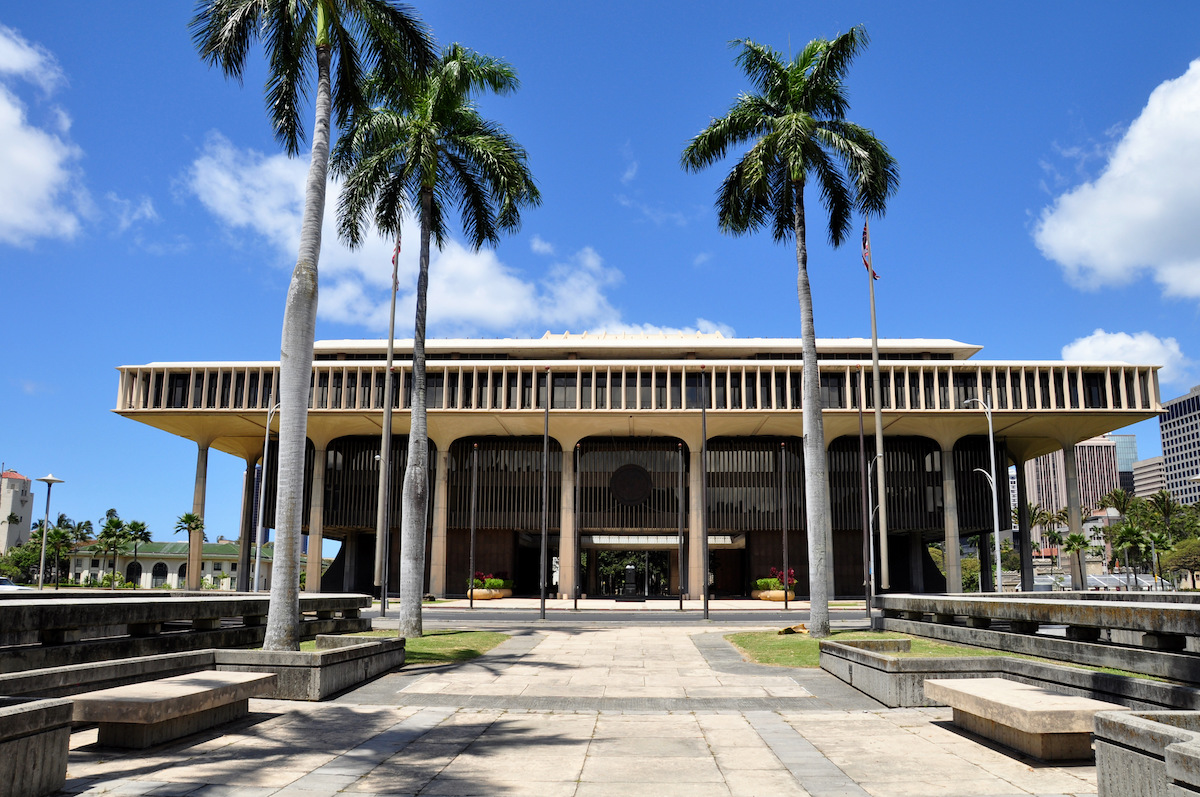
Hawaii’s bill would green-light banks as crypto custodians. But it doesn’t solve the double-reserve problem that pushed Coinbase out in 2017. Hawaii State Capital via Shutterstock.

Hawaiian lawmakers have submitted a bill that allows banks to provide custody for digital assets.

SB2594, introduced on Jan. 18 with bipartisan backing, would make it legal for Hawaiian banks to hold “digital securities,” “virtual currencies,” “digital consumer assets” and other “open blockchain tokens” for their customers. It would further authorize Hawaiian courts to hear digital asset claims.

State Senators Gil Riviere (D-23), Sharon Moriwaki (D-12), Stanley Chang (D-9), Les Ihara (D-10) and Kurt Fevella (R-19) sponsored the bill.  

In effect, the bill could clear the way for Hawaiian banks to offer digital services alongside their existing ones. U.S. banks have long balked at touching bitcoin and other cryptocurrencies, fearing regulatory uncertainties and the assets’ at times illicit associations could spell trouble down the line.

But the troubles go a step further in Hawaii, where even crypto-focused money services struggle to function. That’s because the Hawaii Division of Financial Institutions requires crypto-licensed entities hold fiat reserves equal to their virtual currency holdings, a decision Coinbase said led to its shuttering of operations in the state in 2017.

This legislative effort does not appear to end the “double reserve” problem, as Coinbase has called it. But it would, conceivably, give some legal clarity to Hawaiian banks. 

The bill’s language describes a low-cost, at times pro-consumer custodial system that could come online 60 days after passage. Banks would be required to pay a $1 annual fee and hire an independent accountant to examine their digital books.

Customers could also authorize their custodians to transact with their digital assets. They would need to agree to the “source code version” the banks would utilize, with statutory ambiguities “resolved in favor of the customers.”Disclosure Read More

The leader in blockchain news, CoinDesk is a media outlet that strives for the highest journalistic standards and abides by a strict set of editorial policies. CoinDesk is an independent operating subsidiary of Digital Currency Group, which invests in cryptocurrencies and blockchain startups.

Categories
Crypto

‘Fluffypony’ Weighs In on CBDC Trend at Davos 2020

By John Biggs

Riccardo Spagni image via CoinDesk video

Riccardo Spagni, better known as “Fluffypony,” discusses privacy and whether or not central bank digital currencies (CBDCs) are just a fleeting thing. The Monero community leader speaks with CoinDesk’s Leigh Cuen in Davos, Switzerland.

“There’s less hype, but more talk,” said Spagni. “It’s kind of like one of those things where people say they are building a fintech product that has AI and blockchain.”

Spagni sees blockchain as moving into an offensive role now that privacy is gaining a more important role in computing.

“Companies like Apple are mainstreaming privacy,” he said. “They’re saying it’s okay to turn around and say to a government, ‘I’m not going to comply with your regulation because I’m a big company that doesn’t need to. I’m going to continue giving privacy back to the people.'”

Categories
Crypto

Why High-Profile Defections Aren’t Libra’s Biggest Challenge

By Nathaniel Whittemore

Libra has lost another Association member, but according to @nlw that’s likely low on its worries list, plus Square’s LN efforts & TON’s SEC support.

News broke yesterday the Libra Association had seen its eighth high-profile defection, this time from the telecom giant Vodafone. In today’s episode of The Breakdown, @nlw argues Association membership is far less of a factor in Libra’s success than key regulatory questions around domiciling, the value peg and the U.S.’s fear of a Chinese digital currency.

Also in this episode, Square Crypto announced its plans for a “Lightning Development Kit” while Square also announced a new patent that could make crypto easier to use. In regulatory battles, meanwhile, both the Blockchain Association and the Chamber of Digital Commerce have filed amicus briefs around the SEC-Telegram lawsuit. 

Topics Discussed

Vodafone Is the Latest Big Company to Quit Facebook-Founded Libra Association

Square Crypto Is Creating a ‘Lightning Development Kit’ for Bitcoin Wallets

Jack Dorsey’s Square Wins Patent for Fiat-to-Crypto Payments Network

Blockchain Association Sides With Telegram Against SEC, Says Grams Are Not Securities

Categories
Crypto

Bitcoin’s Lighting ‘Torch’ Reignites, Blazes Through 38 Countries in 3 Days

By Alyssa Hertig

Torch image via Shutterstock

Bitcoin’s lightning torch is back, and it’s zipped through at least 38 countries already.

The torch is a digital game first ignited in January 2019 by pseudonymous bitcoin enthusiast Hodlonaut, known for his Twitter avatar of a cat in a spacesuit. Each “torchbearer” sends a tiny amount of bitcoin to the next. A key rule is to add a little bit more money to the payment each time it moves to someone new.

The goal is to highlight the speed and global nature of the lightning network, a payment technology that could solve or at least greatly ease some of bitcoin’s most critical problems. Started on a whim for fun, the torch became a global event, even carried by Twitter CEO Jack Dorsey, showing how frictionless and indifferent to borders the form of payment is compared to legacy methods like Visa and Paypal.

On Sunday, Hodlonaut lit the torch again. Since then, many enthusiasts have been posting lightning “invoices” on Twitter to which the torchbearer can send the next lightning payment.

It’s moving around the world much faster the second time around, already reaching 91 people in three days.

“Made over 30 passes across the globe as I slept!” Hodlonaut said Tuesday morning.

Last time, it took longer than two weeks to get to 139 people in 37 countries. But the torch made some exciting stops on that tour. Despite worries about breaking U.S. sanctions, the torch made it to Iran last March. A group of Venezuelans received the torch with no electricity. In an interesting experiment, they powered their lightning node with a motorcycle battery.

The first torch fizzled out when it reached a hard-coded limit on how much lightning can be sent in a single payment. The cap is 4.29 million satoshis, the unit for one hundred millionth of a bitcoin. Developers could lift the cap (which works out to about $370 at current exchange rates) when they think the payment technology is secure enough.

Until then, Hodlonaut is eager to see how long the new torch lasts.

“How many sats before it breaks?” he tweeted, using the short form of “satoshis,”Disclosure Read More

The leader in blockchain news, CoinDesk is a media outlet that strives for the highest journalistic standards and abides by a strict set of editorial policies. CoinDesk is an independent operating subsidiary of Digital Currency Group, which invests in cryptocurrencies and blockchain startups.