Categories
Crypto

Vodafone Is the Latest Big Company to Quit Facebook-Founded Libra Association

By Nikhilesh De
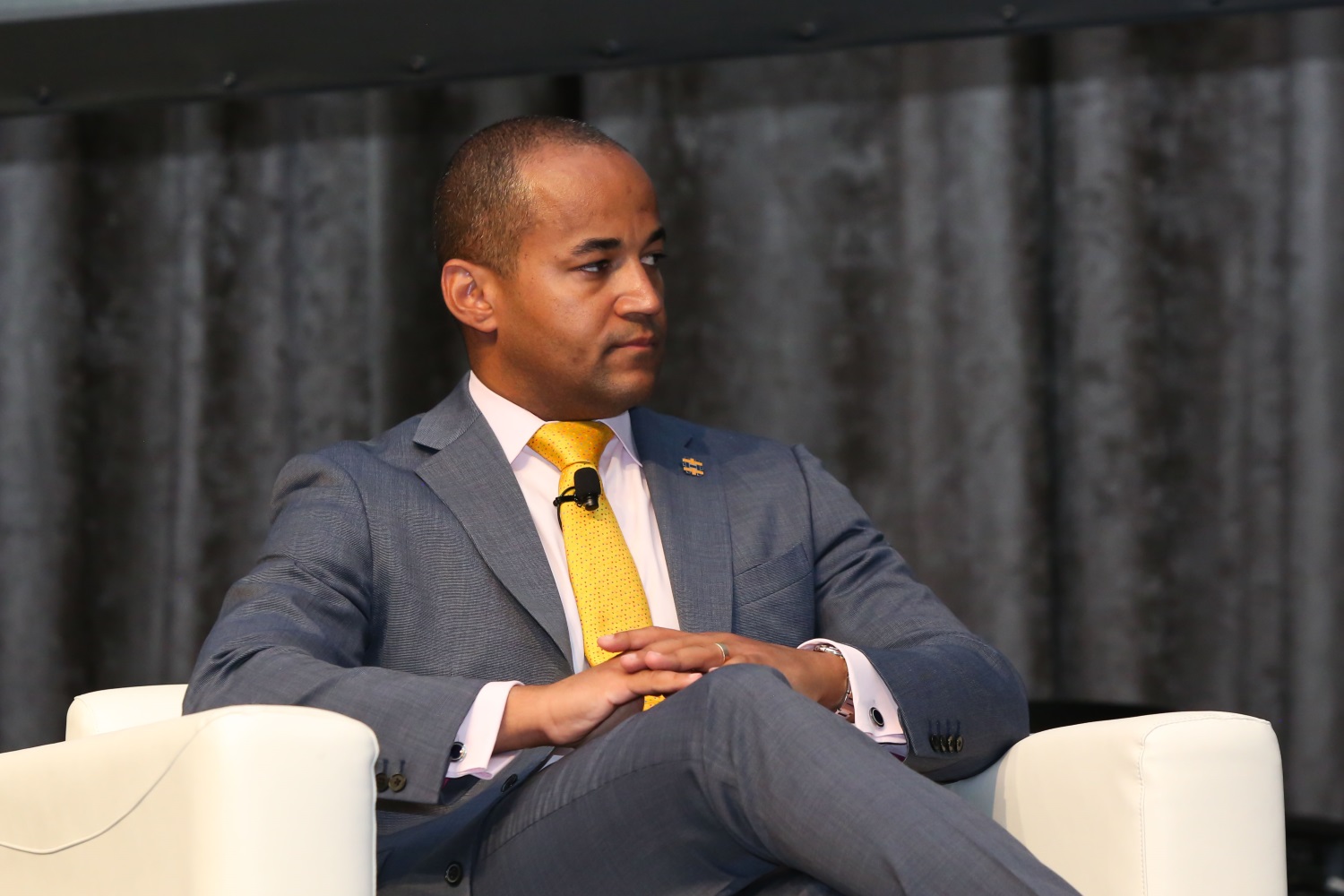
CARRY ON: “The design of Libra’s governance and technology ensures the Libra payment system will remain resilient,” said policy chief Dante Dispate following Vodafone’s departure. (Image via CoinDesk archive)

British telecom conglomerate Vodafone has become the eighth company to pull out of the Libra Association, the governing council for the Facebook-created global digital currency initiative, CoinDesk has learned. 

Vodafone and Libra both confirmed Tuesday that the company is no longer part of the consortium. Vodafone will dedicate resources previously intended for Libra to its well-established and successful digital payment service, M-Pesa, which the company plans to expand beyond the six African nations currently served.

The parting appears to be amicable, with Vodafone leaving specifically to focus on its own related service and not due to the regulatory concerns that apparently spooked other former members.

Vodafone joins PayPal, Mastercard, Visa, Mercado Pago, eBay, Stripe and Booking Holdings in withdrawing from the controversial stablecoin project, and it is the first company to exit after the association was formally organized in October 2019. The payment companies likely left due to concerns about increased regulatory scrutiny, which several U.S. Senators threatened. (At least one, Visa, specifically mentioned “regulatory expectations” as a reason for not joining.)

In a statement, a Vodafone spokesperson said the company believes it can most effectively bring affordable financial services to the world’s poor by focusing on M-Pesa for the moment.

“We have said from the outset that Vodafone’s desire is to make a genuine contribution to extending financial inclusion,” the spokesperson said. “We remain fully committed to that goal.”

Dante Disparte, head of policy and communication with the Libra Association, addressed Vodafone’s decision in a statement. 

“Although the makeup of the Association members may change over time, the design of Libra’s governance and technology ensures the Libra payment system will remain resilient,” Disparte said.

Libra intends to admit new members to the Association in 2020, a person familiar with the situation said. The waitlist is currently north of 1,500 companies. A roughly two-thirds majority of existing members must agree to add any new participant.

Door remains open

Facebook unveiled Libra in June 2019, after months of speculation around the project. While the social media giant remains a member of its governing council through its blockchain wallet subsidiary Calibra, on paper Libra is an independent entity. 

The Libra stablecoin is intended to serve as a global means of payment, and would be backed by a basket of sovereign currencies including the U.S. dollar, the euro, the British pound and others. 

Libra’s goal is to “build a financial ecosystem that can plug in and empower billions of people,” Disparte told CoinDesk in June.

Marketing materials for Libra and Calibra said 1.7 billion individuals worldwide remain closed off from financial services. Libra is hoping to solve this issue by making it easier for individuals to transfer funds from person to person, a goal Vodafone shares.

The telecom has long run its own digital money in Africa through M-Pesa, a mobile platform-based transfer service. 

M-Pesa already offers the ability to accept a number of different currencies for remittances.  It is possible the platform will accept stablecoins, possibly including Libra, in the future, an individual familiar with Vodafone’s thinking said.

“We will continue to monitor the development of the Libra Association and do not rule out the possibility of future cooperation,” the Vodafone spokesperson said. 

2020 launch?

While Libra originally intended to launch in the first half of 2020, this timeline was thrown into doubt last year when Facebook CEO Mark Zuckerberg said regulatory concerns might push back the date.

Speaking on stage at the Blockchain Central panel held by the Global Blockchain Business Council at Davos, Disparte further hinted at a possible delay in the launch schedule. 

“We’d rather go slow and get it right, than assign a deadline to launch that keeps us from solving the problem of payments for those who need this solution most,” he told CoinDesk’s Joanne Po.

Regulatory certainty will, however, be needed to help “unlock” digital currencies, he said.

The launch timeline was not a concern for Vodafone, according to the person familiar with the company’s thinking.

Still, these regulatory concerns do not appear to be holding Libra back from technical design and development. The group has already launched a testnet for Libra, with new features added over the past several months. 

Last week, Libra announced the formation of a technical steering committee to oversee further development of its roadmap, made up of executives from several Association members.

“The Association is continuing the work to achieve a safe, transparent, and consumer-friendly implementation of the Libra payment system,” Disparte said in his statement Tuesday.Disclosure Read More

The leader in blockchain news, CoinDesk is a media outlet that strives for the highest journalistic standards and abides by a strict set of editorial policies. CoinDesk is an independent operating subsidiary of Digital Currency Group, which invests in cryptocurrencies and blockchain startups.
Categories
Crypto

Square Crypto Is Creating a ‘Lightning Development Kit’ for Bitcoin Wallets

By Nikhilesh De

Jack Dorsey speaks at Consensus 2018, image via CoinDesk archives

Square Crypto, the payment company’s bitcoin-focused wing, is building a “Lightning Development Kit” for wallet and app developers to more easily build on the layer-2 solution.

Announced Tuesday, the new kit includes an API, language tools, demo apps and other features to help developers integrate support for Lightning payments into their own wallets. Existing bitcoin wallets will also be able to support Lightning through the new kit, rather than requiring companies to build a separate wallet.

The tools will help developers create better user experiences, a Medium post explained.

“For bitcoin to become a widely used global currency – one that can’t be stopped, tampered with, or rigged in anyone’s favor – improvements to bitcoin’s UX, security, privacy, and scaling are required,” the group said.

The post indicated that the kit is still being built out and did not provide a timeline for release, but said “today’s Lightning infrastructure is incomplete without features like these.”Disclosure Read More

The leader in blockchain news, CoinDesk is a media outlet that strives for the highest journalistic standards and abides by a strict set of editorial policies. CoinDesk is an independent operating subsidiary of Digital Currency Group, which invests in cryptocurrencies and blockchain startups.

Categories
Crypto

CME Open Interest for Bitcoin Futures Up 100% Since Start of 2020

By Omkar Godbole

Credit: Shutterstock

Open interest in bitcoin futures listed on the Chicago Mercantile Exchange (CME) have doubled in the first few days of the year, as noted by data analytics firm Skew.

About $235 million worth of positions (5,329 contracts) were open on the CME on Jan. 17 compared to $110 million seen in early December. Open interest is the sum of all contracts that have not expired, been exercised or physically delivered.

Open interest has spiked alongside price, confirming an upward trend. Bitcoin bottomed out near $6,430 in mid-December and rose to a 2.5-month high of $9,188 on Sunday. At press time, the cryptocurrency changed hands at $8,600, representing a 20 percent gain on a year-to-date basis. 

The bitcoin futures market witnessed increased activity in the runup to the launch of options trading. Open interest rose to more than 5,000 contracts in the first four trading days of the week. 

Further, more than 17,000 contracts (equivalent to over 85,000 bitcoin) traded on Jan. 8 – the day when the options product went live and registered a first-day volume of $2.3 million or 55 options contracts. 

Options trading volume more than doubled to 122 contracts on Friday,  amounting to a notional volume of 610 BTC or $5.3 million, as each contract represents five bitcoins. 

“BTC has seen remarkable growth in volume and customer interest with nearly 2.5M contracts traded to date and 4.9K+ contracts traded daily, “ the CME tweeted on Dec. 17.

Further, nearly 6,400 futures contracts traded each day (equal to 31,850 bitcoin) at the exchange in 2019.

The ever increasing numbers at the CME may reflect rising institutional interest in the cryptocurrency, and could accelerate bitcoin’s evolution as a mature asset class. 

“CME’s product has evolved over the last two years and is now one of the most liquid, listed bitcoin derivatives globally. We have seen strong participation from institutional investors, physical bitcoin traders and other clients who value the transparency, price discovery and risk transfer that only a regulated marketplace like CME Group can offer,” Tim McCour, managing director at CME Group wrote in a LinkedIn post in December. 

Other exchanges also witnessed increased activity over the last few months. Total trading volume rose in futures listed across the globe to well above $25 billion on Jan. 14, according to Skew. That was the busiest day since Oct. 26.Disclosure Read More

The leader in blockchain news, CoinDesk is a media outlet that strives for the highest journalistic standards and abides by a strict set of editorial policies. CoinDesk is an independent operating subsidiary of Digital Currency Group, which invests in cryptocurrencies and blockchain startups.

Categories
Crypto

Palestinian Militant Group Has Received 3,370 Bitcoins in Donations Since 2015: Report

By Paddy Baker

Credit: Shuttershock

A Palestinian militant group took millions of dollars-worth of bitcoin donations to finance its operations, according to a new report.

Obtained by the Jerusalem Post and reported Sunday, the report from the Israeli International Institute for Counter-Terrorism (ICT) found the al-Nasser Brigades, the military wing of the Popular Resistance Committees (PRC), used bitcoin sent from overseas as a means to fund operations both in and out of the Gaza Strip.

ICT researchers linked the group to the bitcoin wallet address, “1LaNXgq2ctDEa4fTha6PTo8sucqzieQctq,” which showed “an irregular increase in the scope of activity,” with more than 4,500 transactions over the past four years.

The report claims the group – which the Jerusalem Post says has links to Hamas – used bitcoin to avoid sanctions, offer a degree of anonymity to donors from overseas and enable cross-border money transfers.

The wallet, which had received a total of nearly 3,370 BTC (almost $29 million at current prices) between October 2015 and July 2019, was also linked to financial website “cash4ps.” Digging a little deeper, researchers found cash4ps had a bank account with the Islamic National Bank, designated by the U.S. as a terrorist organization in 2010 for its connection to Hamas.

The Bitcoin Abuse Database linked the wallet to Hamas in February 2019, saying it had been used for “collecting donations to a terrorist organization.”

The PRC is a coalition of various armed groups, affiliated with Hamas, that has fought for the total reclamation of a state of Palestine from Israel since 2000. Through the al-Nasser Brigades, it is generally considered to be one of the strongest factions in Gaza, with close links to Hamas and Hezbollah. It has been designated as a terrorist organisation by both Israel and the U.S.

The al-Nasser Brigades has been active in numerous conflicts with Israel. It was part of a broader group, including Hamas, responsible for the 2006 kidnapping of Israeli soldier Gilad Shalit. Shalit was only released in 2011 following a prisoner exchange deal.

Funding cut

This isn’t the first time that Palestinian militant groups have been found to be using cryptocurrencies. One Israeli blockchain analytics firm reported in February 2019 that Hamas may be using a Coinbase wallet address to help with fundraising. The New York Times has previously said that bitcoin had been used for “tens of thousands of dollars” worth of illicit transactions.

Iran has historically been one of the primary backers for many armed groups in Palestine. The country reportedly donated as much as $23 million every month to Hamas following the group’s 2006 victory in the Palestinian legislative elections. But much of this funding was cut in 2013 after Hamas continued supporting the revolution against the Iranian-backed Syrian president Bashar al-Assad.

The ICT researchers connected the bitcoin wallet to various Facebook posts from the al-Nasser affiliated al-Baraq media that appealed for support “due to lack of resources and Iran’s rejection to their request for support.”

As opposition efforts in Syria have faded, Iranian relations with Palestinian armed groups have begun to warm over the past year. Just over a month after the last transaction on the identified bitcoin wallet, Iran increased its monthly payments to Hamas to $30 million in return for assistance gathering intelligence on the missile stockpiles of their “common enemy” Israel.

It’s unclear if Palestinian militants are continuing to focus on bitcoin as a fundraising mechanism now that many have re-developed stronger ties with Iran.

Economic isolation has also forced many Palestinian businesses to use cryptocurrency to send and receive international payments. CoinDesk has previously highlighted that there were up to 20 bitcoin dealers operating in Gaza each processing as much as $5 million to $6 million per month for clients that included charities based overseas as well as domestic businesses or entrepreneurs.

One source at the time said that Hamas’ use of bitcoin may very well have helped raise awareness of bitcoin among Palestinians.

Disclosure: The author holds positions in bitcoin, as well as other crypto assets.Disclosure Read More

The leader in blockchain news, CoinDesk is a media outlet that strives for the highest journalistic standards and abides by a strict set of editorial policies. CoinDesk is an independent operating subsidiary of Digital Currency Group, which invests in cryptocurrencies and blockchain startups.

Categories
Crypto

Plaintiffs Combine Their Market-Manipulation Lawsuits Against Bitfinex and Tether

By Danny Nelson

Plaintiffs in three separate putative class action lawsuits against Bitfinex and Tether have moved to consolidate their cases, according to a Thursday court filing.

Court filings by David Leibowitz et al, Eric Young et al, and Bryan Faubus et al, accuse the sister companies of manipulating the crypto markets. Their cases share common threads, filings show, including allegations that Bitfinex and Tether manipulated the price of bitcoin and bitcoin futures in violation of federal law.

All three cases were filed in the U.S. District Court for the Southern District of New York.

District Judge Katherine Polk Failla ordered the suits consolidated on Thursday. Defendants did not object, with Tether writing in a press statement Friday it “looks forward” to debunking the “fanciful accusations.” 

“Tether will continue to defend the digital token ecosystem and the many contributions of the cryptocurrency community, and will not now or in the future pay any amount to settle plaintiffs’ claims,” the statement said.

The consolidation sheds some light on Young’s decision last week to withdraw and refile in the Southern District of New York. At first unexplained, it now appears that the plaintiffs abandoned the original Western District of Washington jurisdiction so they could join the other two in New York.

Tether anticipated a fourth class action suit, filed by Joseph Ebanks on Thursday, may also join in.

Categories
Crypto

Davos Needs to Wake Up to the Ills of Centralization

This is part of a series of op-eds previewing the World Economic Forum in Davos, Switzerland. CoinDesk will be on the ground in Davos from Jan. 20–24 chronicling all things crypto at the annual gathering of the world’s economic and political elite. Follow along by subscribing to our pop-up newsletter, CoinDesk Confidential: Davos.

Michael J. Casey is the chief content officer of CoinDesk. The opinions here are his own.

As the world’s most influential and self-entitled gather in Davos, Switzerland, for next week’s World Economic Forum, a predictable set of problems are on their minds: climate change, political polarization, trade tensions and cyber-attacks top their list of worries, according to the WEF’s just-released Global Risks Survey.

Those are weighty issues. But if we look at them through the decentralization mindset encouraged by cryptocurrencies and blockchain technology, it’s hard not to conclude that elephants in rooms are being overlooked. It’s with those issues, the ones not being talked about, where the real important stuff lies.

The disintermediating, fragmenting and decentralizing impact of the internet has made the 21st century’s political and economic structure profoundly different from the previous one. But the Baby Boomers who run our governments and companies still tend to apply 20th century assumptions about centralized money and power. They fail to see how our outdated political and economic institutions are out of touch with this new reality, and how that explains society’s ever-waning trust in them. It’s a myopia that also means they often fail to recognize, much less understand, the alternative decentralized models quietly emerging from the developers building cryptocurrency, blockchain and digital identity technologies.

So, as I head to Davos with my CoinDesk colleagues for a week of reporting and speaking engagements, I want to contemplate some of the issues “Davos Man” might be missing.

It’s worth remembering the people for whom these issues most matter are not those cocktail-sipping elites but regular Joes and Joans. This year may well mark the most divisive U.S. election in decades. If our bickering leaders aren’t focused on these big themes, where does that leave us in four years’ time? We need these issues on the ballot.

China’s digital yuan

China is expected to launch a digital currency sometime this year. The question not being asked enough is: As this project grows – and likely many others from other countries and companies – what will it mean for the dollar-centric global economy and its multitudinous stakeholders?

How will digital fiat currencies impact global trade and capital flows? Do they pose a competitive threat to the dollar and, by extension, to U.S. economic power? What would such a transformation mean for how the international community tackles the big-ticket issues Davos elites worry about: petrodollar investments in carbon-rich assets, for example, or global trade tensions?

The digital yuan might seem like a superficial change, akin to a more advanced banknote or a state-run version of a mobile banking or payments app. But while China’s centrally managed approach to digital-currency technology is in some respects the antithesis of the decentralized model behind bitcoin, it is nonetheless a radical change.

Two things matter: One, a digital fiat currency will circulate without banks managing the flow and, two, it is programmable, which makes it much more powerful than analog currency. Marc Andreessen says “software is eating the world.” Money-as-software might just devour it.

A digital currency will enable the Chinese government to directly manage and monitor its users’ spending patterns. Putting aside the terrifying surveillance prospects behind this “panopticon” vision, this information-gathering power will greatly aid China in its international aspirations. Its economic response machine will be run by a far superior data-analytics system than anything employed by any other country.

A “programmable” yuan will provide the missing payment component that hundreds of Chinese blockchain and smart-contract projects need. It will enable autonomous machines, micropayment infrastructure management systems, smart cities and other ideas the West will struggle to keep up with.

As I’ve argued elsewhere, currency programmability, when interoperable with other countries’ fiat digital currencies, could also enable Chinese companies and their foreign partners to do a direct runaround of the dollar-based trade system.

Currently, the yuan occupies an immaterial amount of cross-border trade and reserve asset holdings. But as this technology poses alternatives to the dollar and if China aggressively inserts its version into investment projects in Africa, for example, or into its 65-country Belt and Road Initiative, its international usage could grow rapidly.

Recently, a Harvard-MIT simulation game found that digital fiat currencies could quash America’s capacity to impose sanctions on rogue states.  But the issue goes wider: If non-dollar digital fiat lets anyone bypass the intermediating U.S. banks that U.S. regulators lean on to catch international criminals, why will anyone use banks for cross-border money movements at all? Where does that leave Wall Street, that engine of American economic power?

Some people, including former U.S. Commodity Futures Trading Commission Chairman Chris Giancarlo, have recognized this threat to U.S. economic leadership. But Chinese digital currency dominance does not appear to be on many leaders’ radars – it’s certainly not featuring in the Democratic primary presidential debates.

So, come on, Davos, let’s talk about it.

Digital privacy

To be fair, privacy in the internet age, defined as the threat to our online personal data, will probably get a decent examination at Davos 2020. 

The Cambridge Analytica story, Edward Snowden’s unveiling of the NSA’s citizen-snooping system and the growing awareness that Silicon Valley behemoths such as Google are managing our lives, has put this issue front and center. It deserves to be.

The problem is the structural factors behind this dangerous surveillance capitalism system are poorly understood.

Most political reactions to the drumbeat of stories about data abuse by Facebook and Google amount to leaders tut-tutting at these companies, occasionally fining them and demanding they just stop being bad. Few realize that, essentially, they can’t stop being bad. These centralized entities, with their closed, non-interoperable “walled gardens” of data, have built their entire business models – and therefore their shareholders’ profit expectations – on surreptitiously and systematically extracting information about human lives.

The other problem is the ad-hoc efforts to change these businesses’ behavior clashes with other demands placed upon them.

Witness the contradiction in lawmakers’ critiques of the Facebook-founded Libra digital currency project. On the one hand, they demanded it protect users’ privacy but on the other they demanded it maintain all the monitoring necessary to prevent money laundering. Or look at how Facebook’s critics simultaneously demand its social media platform remove disturbing hate-speech content and that it also cease arbitrarily censoring and “de-platforming” users.  Without understanding the problem, people can’t see how holding both of these positions is untenable. 

There are two approaches to this issue: a political one, such as an antitrust order to constrain the internet giants, or a technological one, in which social media platforms move to a decentralized structure of user control (one potentially where zero-knowledge proofs or other advanced forms of encryption enable verification without revealing identities).

Let’s discuss these options, Davos.

Disinformation

You thought fake news was a problem. You ain’t seen nothing yet.

As Arif Khan writes in this pre-Davos opener for CoinDesk, fake news is going on steroids.

With people such as Jordan Peele using clever stunts to highlight the problem, “deepfakes” – in which image manipulation technology is making it increasingly difficult for people to detect reality-altering changes to a digital video or image – are starting to get people’s attention.

Yet, the full extent of how much society depends on the glue of trustworthy information is greatly underappreciated. The foundation of our democracy, of our legal system, of our business relationships and of everything else in between is at stake when the truth cannot be verified.

How do we get ahead of this when artificial intelligence is progressing so rapidly and when information is no longer delivered to us through central filters?

A solution will require a combination of tools like AI detection software, watermarking and blockchain-based tracking of digital media provenance.

It also requires stakeholders at technology companies, media organizations and government bodies to jointly establish standards for those technologies so we can all agree on how we’ll re-establish the integrity of the information we rely on.

This is an urgent problem, one tailor-made for a mountain-town gathering of money and power.

Let’s look outside the bubble. Let’s become inquisitive. Let’s abandon rigid, outdated ways of thinking. Let’s say goodbye to know-it-all Davos Man, because clearly he doesn’t.

Categories
Crypto

Deribit Takes On New Trading Tools to Capture ‘Exploding’ Options Market

By Sebastian Sinclair

Amid increasing activity within the crypto derivatives market, software maker Trading Technologies (TT) announced Wednesday it would provide trading tools to users of leading crypto exchange, Deribit.

Included in the suite are advanced order types, charting and analytics as well as access to a feature allowing users to create algorithms for bot trading.

TT users eligible to trade on Deribit will be able to access all listed products, including bitcoin (BTC) and ether (ETH) futures, perpetual and options contracts. Dutch-based (for another month) Deribit, founded in 2016, is now the fifth crypto-only exchange that TT supports, alongside BitMEX, CoinFLEX, Coinbase and Bakkt.

TT’s vice president of cryptocurrencies, Michael Unetich, said demand for crypto derivatives was strong in regions such as the U.S., Asia and Europe.

“We hope to provide trading access to the highest volume derivatives exchanges in the world. CME is one leading derivatives venue, while others are located in Asia.” Unetich said.

Trading Technologies creates professional trading software, infrastructure and data solutions for a wide variety of users, including proprietary traders, brokers, money managers, chartered tax advisors (CTAs), hedge funds, commercial hedgers and risk managers. Traditional financial institutions like Goldman Sachs; stock exchanges like the Johannesburg Stock Exchange; and Europe’s largest derivatives exchange Eurex also use the 25-year-old firm’s tools.

Jehan Chu, co-founder and managing partner of Kenetic, a Hong Kong-based blockchain investment and trading firm said TT’s connection to Deribit was a “massive show of confidence” for the “exploding” options market. 

“TT’s long credible history and impressive user base combined with Deribit’s experience as one of the first crypto options platform is an exciting match that should significantly increase volumes over time,” Chu said.

Commenting on the Asia-Pacific region for retail investors, Chu also said the TT and Deribit partnership would “expand the options markets for Asian traders through a familiar and trusted platform.”

Indeed, the BTC options market saw a large amount of activity on January 14, according to data provider Skew, with Deribit outstripping the competition to reach the highest amount of options traded in nearly two months. That activity has since cooled while the spot price of BTC is currently changing hands for $8,722, CoinDesk BPI data shows.

Su Zhu, co-founder at Singapore-based crypto investment firm Three Arrows Capital, told CoinDesk the new options exchanges such as OKEx, CME and Bakkt are driving more volume to Deribit as the central primary liquidity venue for options.

“This month is shaping up to be the largest volume month ever for options,” Zhu said.Disclosure Read More

The leader in blockchain news, CoinDesk is a media outlet that strives for the highest journalistic standards and abides by a strict set of editorial policies. CoinDesk is an independent operating subsidiary of Digital Currency Group, which invests in cryptocurrencies and blockchain startups.

Categories
Crypto

Bull Breather? Bitcoin Market Turns Indecisive at Two-Month High

By Omkar Godbole

View

  • Bitcoin is facing temporary bullish exhaustion, according to Wednesday’s “doji” candle. Now a may could be in the offing.
  • The case for a notable pullback will strengthen if prices break below Wednesday’s low of $8,555. That could yield a drop to $8,200.
  • A move above the hourly chart resistance at $8,705 would allow a re-test of Wednesday’s high near $8,900.

The bitcoin market is telling a tale of bullish exhaustion with indecisive price action following a rise to the highest point since November.

The top cryptocurrency witnessed two-way business on Wednesday. Prices rose from lows near $8,550 seen during the Asian trading hours to a two-month high of $8,903, only to end the day (UTC) on a flat note at $8,808, according to CoinDesk’s Bitcoin Price Index.

Essentially, bitcoin created a “doji” candle, which is widely considered a sign of indecision in the marketplace.

In this case, however, the candle could be considered a sign of buyer exhaustion, as it has appeared following a sharp rally from $6,850 to $8,900 and suggests the indecision is predominantly among the bulls.

The price action seen so far today is telling the same story. The cryptocurrency fell from $8,800 to $8,575 during the Asian trading hours and has struggled to chart a strong bounce ever since. This is in contrast to the quick reversals from sub-$8,600 levels seen in the previous two days.

At press time, bitcoin is trading near $8,600, representing a 1 percent drop on a 24-hour basis.

Bitcoin now risks a deeper pullback below Wednesday’s low of $8,555. A drop through that support would validate buyer exhaustion signaled by the doji candle (above left), attracting selling pressure.

It would also confirm a double-top breakdown on the hourly chart (above right). That would open the doors for $8,210 (target as per the measured move method).

That said, the short-term outlook would turn bearish only if any pullback ends up violating the bullish higher low of $7,667 created Jan. 10.

That, however, looks unlikely with the 5- and 10-day averages continuing to trend north. These averages, currently located at $8,508 and $8,276, respectively, tend to reverse pullbacks when they are on an upward trajectory. Further, the longer duration charts have recently turned bullish.

Wednesday’s high of $8,903 will likely come into play if prices violate the lower high of $8,705 seen on the hourly chart in the next few hours.

A break above $8,900, a level that has acted as strong resistance in the last 48 hours, would likely invite stronger buying pressure, yielding a quick move to the 200-day average at $9,100.

Disclosure: The author holds no cryptocurrency assets at the time of writing.

Categories
Crypto

Kraken Acquires One of Australia’s Longest-Running Crypto Exchanges

By Sebastian Sinclair

Kraken image via Shutterstock

U.S.-based Kraken announced its plans for expansion into the Asia-Pacific (APAC) region on Tuesday after acquiring one of Australia’s longest-running cryptocurrency exchanges, Bit Trade.

Kraken is aiming to position itself as the premier cryptocurrency service within the region, identifying Australia as a key growth area for retail and institutional clients. The financial terms of the deal were not disclosed.

Its acquisition of Bit Trade, a platform that combines liquidity from several exchanges into one interface, signifies a major step into the APAC region by offering local customers access to Kraken’s high trading volumes.

“Australians will have access to the deep liquidity on Kraken in Australian Dollar (AUD) whilst benefiting from the fast settlement times via local Australian banking and with the security of a local Australian compliance framework,” Bit Trade CEO Jonathon Miller told CoinDesk in an email.

The entire Bit Trade team will join Kraken as part of the acquisition with Miller becoming “Managing Director of Kraken in Australia.”

Founded in 2013, Bit Trade quickly built a strong reputation for offering intuitive and sophisticated products without compromising security or regulatory compliance. 

The announcement also marks Kraken’s fifth public acquisition, following its most recent take over of Circle Trade in December 2019. 

Ryan Watkins, a research analyst at Messari, said in a recent crypto research report that he expects the industry’s top cryptocurrency exchanges by trade volume to partake in nearly $1 billion of acquisitions over the next 24 months.

“Liquidity begets liquidity,” Watkins wrote. “We’d expect the exchange industry to continue to consolidate as local exchanges get scooped up into larger platforms.”Disclosure Read More

The leader in blockchain news, CoinDesk is a media outlet that strives for the highest journalistic standards and abides by a strict set of editorial policies. CoinDesk is an independent operating subsidiary of Digital Currency Group, which invests in cryptocurrencies and blockchain startups.

Categories
Crypto

Startup Crypto Exchange Blade to Launch Zero-Fee Trading in February

By Omkar Godbole

(via Shutterstock).

Crypto perpetuals exchange Blade will be introducing zero-fee trading next month in a bid to gain market share from rivals. 

The Coinbase-backed exchange, which began operations in September, will also drop the $10 subscription fee it had planned to collect from traders on a monthly basis. Though based in San Francisco, Blade prohibits U.S. residents from opening accounts on its platform.

Blade will be the first cryptocurrency exchange to offer fee-less trading in bitcoin perpetuals – no-expiry contracts which mimic a margin-based spot market and trade close to the underlying reference price.

Its main rival, BitMEX, which dominates the perpetuals space, is currently charging a 7.5 basis points (bps) taker fee per trade and so are other competitors, namely Deribit and ByBit. 

Further, there will be no restrictions or eligibility requirements. This is in contrast to a few exchanges that offer products somewhat similar to zero-fee trading, but require users to buy and hold exchange tokens.

With a fee-less, zero-eligibility model, Blade is hoping to attract meaningful volume from the likes of BitMEX and other exchanges. Blade also offers up to 150x leverage, compared to BitMEX’s 100x leverage. 

The increased volume could come from high-frequency trades like scalpers, who enter and exit quickly, usually within seconds, using high leverage to make many small profits from large numbers of trades throughout the trading day. Scalpers work on thin margins and need lower costs to make money. 

If Blade succeeds in capturing a significant market share with its new strategy, it could trigger a pricing war, where rivals reduce costs to retain users. Disclosure Read More

The leader in blockchain news, CoinDesk is a media outlet that strives for the highest journalistic standards and abides by a strict set of editorial policies. CoinDesk is an independent operating subsidiary of Digital Currency Group, which invests in cryptocurrencies and blockchain startups.