Categories
Energy

Solar Firm Sunnova Gets $3 Billion Loan Guarantee from U.S. Energy Department

(Reuters) – Sunnova Energy International said on Thursday the U.S. Department of Energy (DOE) will provide the solar company up to $3 billion in a partial loan guarantee to expand clean energy access.

Shares of the company rose 2.3% to $16.20 in premarket trading.

The company last month said it was in discussion with the DOE regarding the potential issuance of an indirect guarantee of 90% for up to $3.3 billion in solar loans.

The DOE’s Loan Program Office aims to speed development of the clean energy sector with loans to automakers, miners, recyclers and others, many of which would struggle to obtain private financing given their large capital needs.

“The DOE financing would accelerate the adoption of solar and storage, decrease greenhouse gas emissions, and expand the availability of reliable, clean, and affordable energy to those communities who benefit the most from low-cost energy,” Sunnova CEO William Berger said in a statement.

Sunnova also expects the DOE loan guarantee to support up to $4 billion – $5 billion in the company’s loan originations, reduce its weighted average cost of capital and generate interest savings.

The transaction is expected to close in the second quarter and Sunnova plans to issue its first securitization under the program in the first half of 2023.

(Reporting by Arunima Kumar in Bengaluru; Editing by Shailesh Kuber and Devika Syamnath)

Categories
Energy

Oil Slides as U.S. Holds off Refilling Strategic Reserve

By Ahmad Ghaddar

LONDON (Reuters) -Oil prices fell sharply on Friday amid declining European banking shares and after U.S. Energy Secretary Jennifer Granholm said refilling the country’s Strategic Petroleum Reserve (SPR) may take several years, dampening demand prospects.

Brent crude fell $2.50, or 3.3%, to $73.41 a barrel by 1031 GMT, while West Texas Intermediate U.S. crude futures dived $2.47, 3.5%, to $67.49 a barrel.

Both benchmarks, which fell about 1% on Thursday, were on track to end the week slightly higher, after posting their biggest weekly declines in months last week due to banking sector turmoil and worries about a possible recession.

Banking stocks slid in Europe with Deutsche Bank and UBS Group hit hard by worries that the worst problems in the sector since the 2008 financial crisis have not yet been contained.

A stronger dollar, which rose 0.6% against other currencies on Friday, also fuelled the sell-off. A stronger greenback makes crude more expensive to holders of other currencies.

“The lack of crude buying for the SPR represents a major blow to the oil demand outlook,” PVM Oil analyst Stephen Brennock said.

“If anything, it will heap even more pressure on China to do the heavy lifting on the demand side over the coming months,” he added..

The White House said in October it would buy back oil for the SPR when prices were at or below about $67-$72 per barrel.

Granholm told lawmakers that it would be difficult to take advantage of low prices this year to add to stockpiles, which are currently at their lowest level since 1983 following sales directed by President Joe Biden last year.

Strong demand expectations from China capped decreases, with Goldman Sachs saying commodities demand was surging in China, the world’s biggest oil importer, with oil demand topping 16 million bpd.

Meanwhile, Russian Deputy Prime Minister Alexander Novak said a previously announced cut of 500,000 barrels per day (bpd) in Russia’s oil production would be from an output level of 10.2 million bpd in February, the RIA Novosti news agency reported.

That would mean Russia is aiming to produce 9.7 million bpd between March and June, according to Novak, which would be a much smaller output cut than Moscow previously indicated.

(Additional reporting by Yuka Obayashi in Tokyo and Trixie Yap in Singapore; editing by Jason Neely)

Categories
Energy

Oil Rises as Banking Fears Ease for Now

By Alex Lawler

LONDON (Reuters) -Oil rose on Tuesday, extending a recovery from a 15-month low hit the previous day, as the rescue of Credit Suisse eased worries about global banking sector risks that could hit economic growth and fuel demand.

After jitters initially on Monday the mood across financial markets has lifted in the wake of UBS’ takeover of Credit Suisse and after major central banks said they would enhance market liquidity and support the banking system.

Brent crude was up 52 cents, or 0.7%, at $74.31 per barrel at 0910 GMT. U.S. West Texas Intermediate (WTI) also gained 52 cents, or 0.8%, trading at $68.16.

“Banking jitters may have taken a breather yesterday but remain in play,” said Stephen Brennock of oil broker PVM.

“Although an immediate crisis appears to have been averted there are still fears of another sell-off.”

The next focus for investors is the decision by the U.S. Federal Reserve on Wednesday on whether and by how much to raise interest rates when it concludes its two-day meeting.

Since the banking strife began this month, markets have revised down expectations for the next Fed rate hike to 25 basis points from 50 bps.

The dollar index, rose on Tuesday after hitting a five-week low the previous session. A stronger dollar makes oil more expensive for holders of other currencies and so can temper demand.

A meeting of key ministers from OPEC+, which includes OPEC members plus Russia and other allies, is scheduled for April 3. OPEC+ sources told Reuters the drop in prices reflects banking fears, rather than a worsening supply and demand balance.

Also coming into view is the latest U.S. oil inventory reports, which a Reuters survey expects to show lower crude and product inventories. The first report, from the American Petroleum Institute, is due out at 2030 GMT on Tuesday.

(Additional reporting by Muyu Xu in Singapore; Editing by Susan Fenton)

Categories
Energy

Oil Rises on Demand Hopes as Banking Fears Ease

By Rowena Edwards

LONDON (Reuters) -Oil prices firmed on Friday as a meeting between Saudi Arabia and Russia calmed markets and after support measures stabilised a banking crisis that set oil prices on course for their biggest weekly fall since December.

Brent crude futures firmed by $1.09, or 1.46%, to $75.79 a barrel by 1040 GMT. U.S. West Texas Intermediate crude rose $1.20, or 1.76%, to $69.55.

Both benchmarks hit more than one-year lows this week and are on track for their biggest weekly falls since December at about 9%.

Oil and other global assets were pressured this week by the collapse of Silicon Valley Bank (SVB) and Signature Bank and trouble at Credit Suisse and First Republic Bank.

But prices recovered some ground on Friday after support measures from the European Central Bank and U.S. lenders.

The dollar, meanwhile, is being kept under pressure by expectations of less aggressive increase to interest rates by the U.S. Federal Reserve next week. A weaker dollar makes oil cheaper for holders of other currencies and typically supports oil prices.

“The conditions for volatile trading remain intact. The oil price roller-coaster is pausing for breath but is by no means over,” said Stephen Brennock of oil broker PVM.

Further support came from OPEC+ members attributing this week’s price weakness to financial drivers rather than any supply and demand imbalance, adding that they expected the market to stabilise.

A meeting between oil producers Saudi Arabia and Russia on Thursday also calmed fears.

Meanwhile, WTI’s fall this week to less than $70 a barrel for the first time since December 2021 could spur the U.S. government to start refilling its Strategic Petroleum Reserve, boosting demand.

Analyst expectations on China’s demand recovery also supported the price rebound, with U.S. crude exports to China in March heading towards their highest in nearly two and a half years.

“This leaves sufficient (foreseeable) support for the oil price with OPEC+ having to convene an extraordinary meeting,” Commerzbank said on Friday.

An OPEC+ monitoring panel is due to meet on Apr. 3.

(Reporting by Rowena Edwards in LondonAdditional reporting by Florence Tan and Trixie Yapin SingaporeEditing by David Goodman)

Categories
Asia Business Economy Energy Europe Middle East UK US

Oil drops 3% as high inflation risks stoke demand worries

By Shariq Khan

BENGALURU (Reuters) – Oil prices fell by $2 per barrel to their lowest in two weeks on Wednesday, as investors became more concerned that recent data will prompt more aggressive interest rate increases by central banks, pressuring economic growth and fuel demand.

Brent crude futures settled $2.45, or 3%, lower at $80.60 per barrel. West Texas Intermediate crude futures (WTI) dropped $2.41, or 3%, to end at $74.05 a barrel.

The settlement levels were the lowest for both benchmarks since Feb. 3.

Minutes from the latest U.S. Federal Reserve meeting showed a majority of Fed officials agreed the risks of high inflation remained a “key factor” shaping monetary policy and warranted continued rate hikes until it was controlled.

“While better U.S. economic data should mean better oil demand, the concern is that this forces the Fed to overtighten monetary policy to bring inflation under control,” said UBS analyst Giovanni Staunovo.

“This is also supporting the U.S. dollar, which is not of help for oil.”

The U.S. dollar Index gained for a second straight session, making greenback-denominated oil more expensive for holders of other currencies. [USD/]

Other U.S. economic reports, however, showed some troubling signs for the world’s biggest oil consumer. Sales of existing homes fell in January to their lowest since October 2010.

U.S. crude stockpiles rose by 9.9 million barrels last week, according to market sources citing American Petroleum Institute figures on Wednesday. U.S. oil inventories have climbed every week since mid-December, worrying investors about demand in the country. [API/S]

A Reuters poll had forecast a 2.1 million barrels increase in crude stockpiles last week. Official data from the Energy Information Administration is due Thursday at 11:00 a.m. EST. [EIA/S]

The American Petroleum Institute, an industry group, releases its inventory report at 4:30 p.m. ET (2130 GMT).

Demand for crude oil is seasonally lower with major U.S. refineries deep in maintenance season, said Price Group analyst Phil Flynn.

Some 1.44 million barrels per day of U.S. refining capacity is expected to be offline in the week ending March 3, according to research company IIR energy.

A massive snowstorm in the U.S. Northern Plains and Upper Midwest has also hit fuel demand, with 3,500 flights delayed or cancelled across the country so far, according to FlightAware.com.

U.S. gasoline futures slid almost 4% to their lowest in two weeks.

(Reporting by Shariq Khan, additional reporting by Rowena Edwards and Trixie Yap; Editing by Marguerita Choy, David Gregorio and Lincoln Feast.)

tagreuters.com2023binary_LYNXMPEJ1L02V-VIEWIMAGE

Categories
Business Economy Energy Europe Middle East UK US

Oil settles down $2/bbl, ends week lower on Fed worries, ample supply

By Laura Sanicola

(Reuters) -Oil settled down $2 a barrel on Friday and ended the week markedly lower, as traders worried that future U.S. interest rate hikes could weigh on demand and got nervous about mounting signs of ample crude and fuel supply.

On Thursday, two Fed officials warned additional hikes in borrowing costs are essential to curb inflation. The sentiments lifted the U.S. dollar, making oil more expensive for holders of other currencies.

Brent crude futures settled down $2.14 or 2.5%, to $83.00 a barrel, falling 3.9% week on week. West Texas Intermediate (WTI) U.S. crude settled down $2.15, or 2.7%, to $76.34, falling 4.2% from last Friday’s settlement.

“Rate hike jitters have returned with a vengeance,” said Stephen Brennock of oil broker PVM.

Various signs of ample supply also weighed on the market.

Russian oil producers expect to maintain current volumes of crude oil exports, despite the government’s plan to cut oil output in March, the Vedomosti newspaper said on Friday, citing sources familiar with companies’ plans.

The latest snapshot of U.S. supplies, released on Wednesday, showed crude inventories in the week to Feb. 10 rose by 16.3 million barrels to 471.4 million barrels, their highest level since June 2021.

“Because oil storage is at a 19 month high, refiners are going to stretch out turnaround season for as long as they can,” said Bob Yawger, director of energy futures at Mizuho.

Heating oil cracks fell 5% on Friday as warm weather sapped demand for the fuel in mid-February.

The oil and gas rig count, an early indicator of future output, fell by one to 760 in the week to Feb. 17, energy services firm Baker Hughes Co said on Friday.

Despite this week’s rig decline, Baker Hughes said the total count was still up 115, or 18%, over this time last year.

Some support came from moves this week by the International Energy Agency and the Organization of the Petroleum Exporting Countries to raise their forecasts for global oil demand growth this year, citing expectations for more Chinese demand.

And Saudi Arabia’s energy minister said the current deal by OPEC+, which groups OPEC producers with Russia and others, to cut oil output targets by 2 million barrels per day, would be locked in until the end of the year, adding he remained cautious on Chinese demand.

(Additional reporting by Alex Lawder, Yuka Obayashi and Sudarshan Varadhan; editing by Jason Neely, Kirsten Donovan and David Gregorio)

tagreuters.com2023binary_LYNXMPEJ1H01P-VIEWIMAGE

tagreuters.com2023binary_LYNXMPEJ1G03Q-VIEWIMAGE

Categories
Asia Australia Business Economy Energy Environment Technology US

New Biden EV charger rules stress Made In America, force Tesla changes

By Jarrett Renshaw and Hyunjoo Jin

(Reuters) -The Biden administration on Wednesday issued long-awaited final rules on its national electric vehicle charger network that require the chargers to be built in the United States immediately, and with 55% of their cost coming from U.S.-made components by 2024.

The White House hopes the new rules, issued after nearly eight months of debate, will jump-start the biggest transformation of the U.S. driving landscape in generations. It seeks to give consumers unfettered access to a growing coast-to-coast network of EV charging stations, including Tesla Inc’s Superchargers.

Companies that hope to tap $7.5 billion in federal funding for this network must also adopt the dominant U.S. standard for charging connectors, known as “Combined Charging System” or CCS; use standardized payment options; a single method of identification that works across all chargers; and work 97% of the time.

Tesla, the nation’s largest EV maker and charging company, plans to incorporate the CCS standard and expand beyond its proprietary connectors, the administration said.

“No matter what EV you drive, we want to make sure that you will be able to plug in, know the price you’re going to be paying and charge up in a predictable, user-friendly experience,” Transportation Secretary Pete Buttigieg told reporters in a preview of the rules.

The first tranche of the billions in federal funds will now be rolled out to states in upcoming weeks, forcing companies like Tesla, EVgo Inc and ChargePoint Holdings Inc to jockey for their share of the funds from state governments.

The network is a central part of President Joe Biden’s plan to tackle climate change by converting 50% of all new U.S. vehicle sales to electric by 2030. A dearth of chargers on Ameriocan roads has slowed the growth of EV sales and the positive environmental impact, advocates say.

Manufacturers warned before the rules were released that imposing a domestic components quota too soon in the program rule would slow the rollout. The new rules extend the Made in America deadlines to help give those companies more time to onshore their supply chain.

EV charger manufacturer Tritium announced on Wednesday that it will add more than 250 jobs to its Tennessee manufacturing facility, bringing the total to more than 750 jobs at the site. White House National Climate Adviser Ali Zaidi said that under Biden’s leadership the number of EV models being offered to consumers has doubled, along with the number of charging stations and EV sales.

“So this is not pie in the sky. It’s literally steel in the ground. We are seeing the Biden climate vision on wheels,” Zaidi said.

‘BUILD AMERICA, BUY AMERICA’

Under the 2021 bipartisan infrastructure law, federal infrastructure projects like EV chargers must obtain at least 55% of construction materials, including iron and steel, from domestic sources and have all manufacturing done in the United States starting immediately.

However, the Department of Transportation requested a waiver for EV charging stations and initially proposed that at least 25% of the chargers’ overall cost come from American-made components starting in July of this year and then 55% by Jan. 1, 2024.

The new rules ditch the two-step process and start imposing the component cost provision in July 2024 at 55%. The chargers must be assembled at a U.S. factory, and any iron or steel charger enclosures or housing must be made in the United States, starting immediately.

The United States and its allies Mexico and the European Union have clashed over protectionist policies implemented by Biden. The United States and the EU set up a task force last year to look at American laws that Europeans fear will discriminate against foreign electric car makers.

EV chargers require iron and steel for some of their most crucial parts, including the internal structural frame, heating and cooling fans and the power transformer. Chargers with cabinets that house the product require even more steel, making up to 50% of the total cost of the chargers in some cases.

Global demand for EV chargers is putting strain on the supply chain that makes it difficult, if not impossible, to meet the made-in-America standards and expedite construction of new chargers, states and companies warned in comments to the Department of Transportation.

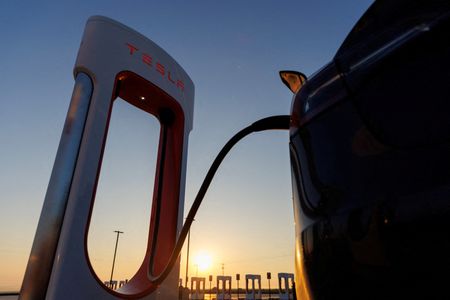
The new rules would allow Tesla to keep its unique connectors, but it will have to add a permanently attached CCS connector or adapter that charges a CCS-compliant vehicle, similar to a gas pump that has a separate handle for gas versus diesel.

Tesla told the DOT that the plan was “aggressive” and “could lead to a shortfall in the number of compliant charging stations available given the pace and scale of deployment,” records show.

However, labor advocates argue that delaying or skirting the requirements undercuts congressional intent and punishes companies that moved early to comply with the rules.

“This is a once-in-a-lifetime shot to get this right,” said Scott Paul, president of the Alliance for American Manufacturing. “The challenge with extensions is it becomes habit-forming and the herd will always fight and delay.”

(Reporting by Jarrett Renshaw in Philadelphia and Hyunjoo Jin in San Francisco; additional reporting by David Sherpardson; editing by Heather Timmons, Matthew Lewis and Jonathan Oatis)

tagreuters.com2023binary_LYNXMPEJ1E0DB-VIEWIMAGE

tagreuters.com2023binary_LYNXMPEJ1E0DC-VIEWIMAGE

tagreuters.com2023binary_LYNXMPEJ1E0DG-VIEWIMAGE

tagreuters.com2023binary_LYNXMPEJ1E0DE-VIEWIMAGE

Categories
Business Economy Energy Environment US

U.S. Gas Producers Skimped on Price Hedges and Now Face a Reckoning

By Arathy Somasekhar

HOUSTON (Reuters) – A rout in natural gas prices will hurt first-quarter earnings and cash flows at gas producers as hedges – the industry’s version of price insurance – were inadequate to offset the expected losses, analysts and industry experts said.

Producers starting the year with fewer hedges than historically will have to sell more gas at the market rate of about $2.45 per million British thermal units (mmBtu), below the breakeven prices for producing gas in some regions, and that may force some companies to reduce drilling and put off completing wells.

Hedges, or contracts that lock in prices for future output, help producers protect cash flows against price swings, helping them drill and complete wells – crucial at a time when Europe has looked to the United States for gas.

U.S. prices for the heating fuel traded as low as $2.34 per mmBtu this month, down 76% from last year’s August peak and the lowest level since April 2021, on mild winter weather in North America and on weaker exports.

The low levels of hedging would drain cash flow as market selling prices are low, said Matt Hagerty, senior energy strategist at FactSet’s BTU Analytics.

About 36% of 2023 gas production was hedged at the end of September, according to consultancy Energy Aspects, which tracked 40 publicly traded gas producers. That percentage was down from 52% a year earlier.

Producers entered in to only two to three swap deals per month from April to October last year, said David Seduski, natural gas analyst at Energy Aspects, referring to a type of hedge. He called that amount “incredibly minimal” and said it compared with 30 to 50 such trades per month in 2021.

A rally in prices in 2022 after Russia’s invasion of Ukraine forced a lot of producers already hedged at lower prices to take on hedging losses. That may have encouraged them to hedge less.

“Last year was pretty jarring for folks, who weren’t ready for the uptick in price. A lot of folks probably sold off those hedges and wanted to be exposed to the upside and might see themselves in the predicament they’re in now,” said Trisha Curtis, chief executive of energy consultancy PetroNerds added.

EQT Corp, the top U.S. producer of natural gas, last month said it expects a $4.6 billion loss on derivatives for 2022, and net cash settlements of $5.9 billion. No. 2 producer Southwestern Energy Co posted a $6.71 billion loss on derivatives for the first nine months of 2022.

RISKY STRATEGIES

Some companies have let their hedges expire, increasing exposure to current prices. Antero Resources Corp said in October that the vast majority of its hedges would roll off by Jan 1.

Another type of hedge, known as a three-way collar, could backfire because of the extent of the fall in prices, analysts said. These transactions have a producer buy an agreement to sell natural gas at one price, called a put, while also selling a put at a lower price in hopes of pocketing the premium from its buyer.

Effectively, this is a calculated bet that gas will fall to a certain level and no further. But when it falls below the predicted lower price, it takes away some of the benefits of the hedge.

Chesapeake Energy Corp, for example, bought puts for 900 million cubic feet at $3.40 per million cubic feet (mmcf), while also selling puts for $2.50 mmcf for the first quarter, according to a November presentation.

Were gas prices to average $2.36 per mmcf, the company would pay out 14 cents per mmcf, reducing the gains from the hedge.

Antero and Chesapeake did not respond to a request for a comment.

Denver-based Ovintiv Inc, previously Encana, also said it had sold puts for 400 mmcfpd at $2.75 per mmcf for the first quarter of 2023, according to a November press release. That would erode the gains from the hedges by about 39 cents per mmcf.

On the other hand, companies that locked in higher prices on average during the run-up in prices late last year could see gains, Rystad Energy senior analyst Matthew Bernstein said.

While overall hedging was lower, the average $3.16 per mmBtu was higher than a year earlier, he added. EQT, for example, has hedged about 58% of its total production at an average of about $3.40 per mmBtu, higher than current market prices.

Ovintiv and EQT did not immediately respond to a request for a comment.

(Reporting by Arathy Somasekhar in Houston; Editing by Matthew Lewis)


Categories
Business Economy Energy Latest Market News Politics US

U.S. weekly jobless claims increase, labor market still tight

WASHINGTON (Reuters) – The number of Americans filing new claims for unemployment benefits increased more than expected last week, but remained at levels consistent with a tight labor market.

Initial claims for state unemployment benefits rose 13,000 to a seasonally adjusted 196,000 for the week ended Feb. 4, the Labor Department said on Thursday. Economists polled by Reuters had forecast 190,000 claims for the latest week.

Claims have remained low despite high-profile layoffs in the technology industry as well as the interest rate-sensitive finance and housing sectors. There is anecdotal evidence that companies are generally reluctant to lay off workers after experiencing difficulties recruiting during the pandemic.

Workers remain scarce in some industries. There were 1.9 job openings for every unemployed person in December, government data showed last week. According to an Institute for Supply Management survey last Friday, some services businesses in January reported they were “unable to hire qualified labor,” saying that “supply is thin.”

Economists speculate that severance packages were delaying the filing of unemployment benefits claims while the abundance of job openings made it easier for laid off workers to find new jobs. They also believed that seasonal factors, the model the government uses to strip out seasonal fluctuations from the data, were keeping claims lower.

“We do, however, expect the reported level of claims to be revised up when the annual seasonal factor revisions are published this spring,” said Lou Crandall, chief economist at Wrightson ICAP.

The claims report also showed the number of people receiving benefits after an initial week of aid, a proxy for hiring, increased 38,000 to 1.688 million during the week ending Jan. 28.

Lower layoffs have been a major contributor to strong job gains. The government reported last Friday that nonfarm payrolls surged by 517,000 jobs in January, the most in six months, after rising 260,000 in December. The unemployment rate fell to more than a 53-1/2 year low of 3.4% from 3.5% in December.

Federal Reserve Chair Jerome Powell said on Tuesday that the U.S. central bank’s fight to tame inflation could last “quite a bit of time,” in a nod to January’s blowout job gains. Since March, the Fed has hiked its policy rate by 450 basis points from near zero to a 4.50%-to-4.75% range.

(Reporting by Lucia Mutikani; Editing by Chizu Nomiyama)

tagreuters.com2023binary_LYNXMPEJ180MZ-VIEWIMAGE

tagreuters.com2023binary_LYNXMPEJ180RK-VIEWIMAGE

Categories
Energy

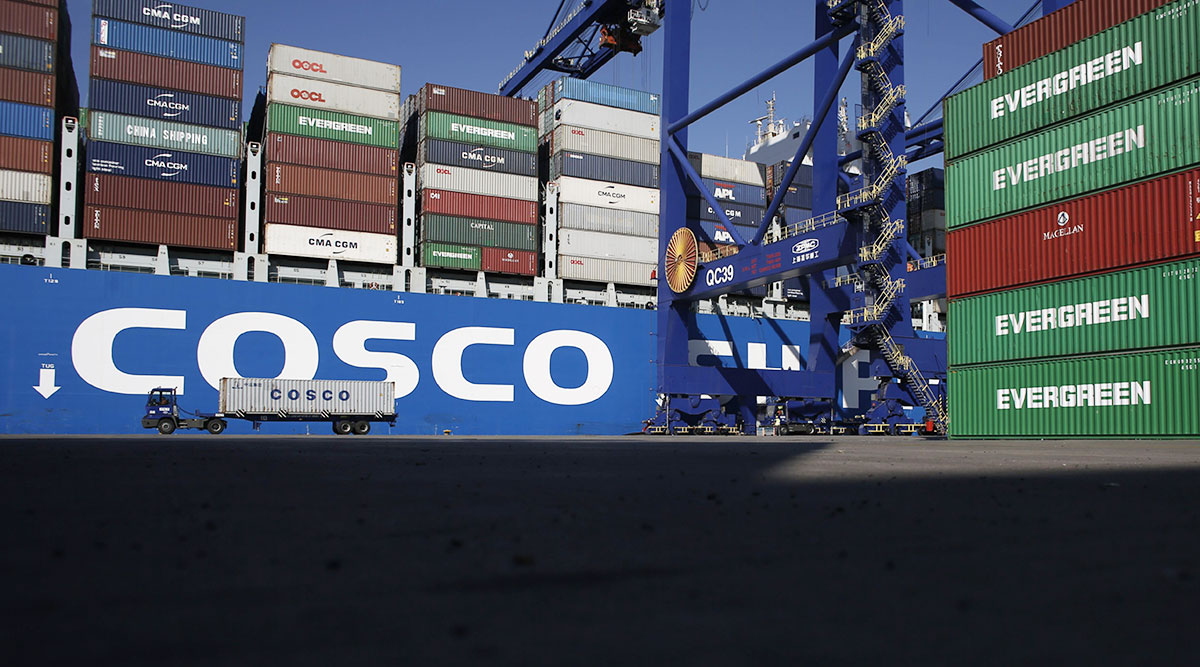
U.S. Unexpectedly Lifts Iran-Related Sanctions On Chinese Tanker Company

By Irina Slav

The United States will remove the sanctions it imposed on Chinese tanker operator Cosco for violating the Iran oil sanctions, Reuters reports, citing sources in the know.

One of the sources, from a large Chinese oil company, said Cosco had already been taken off the sanction list and only an official confirmation of the removal was pending. The other source said Washington had given indication it was about to lift the sanctions.

Washington imposed sanctions on several Chinese tanker operators last September, alleging that they continued to transport Iranian oil in violation of the sanctions that the U.S. Department of Treasury imposed on Tehran earlier that year.

“We are imposing sanctions on certain Chinese firms for knowingly engaging in a significant transaction for the transport of oil from Iran, including knowledge of sanctionable conduct, contrary to U.S. sanctions,” U.S. Secretary of State Mike Pompeo said in September 2019, adding in a tweet that “We will take action on any sanctionable Iranian oil transaction.”

As a result of the sanctions on the Chinese tanker operators, 25 Very large Crude Carriers operated by a regional unit of Cosco in Dalian went out of service, and shipping rates for oil cargoes around the world shot up. This ended up disrupting shipping markets because it remained unclear for a while whether the sanctions only concerned Cosco’s Dalian tanker unit, which operates some 40 vessels, according to Reuters, or the whole shipping company with a fleet of more than 1,000 vessels.

Now, if the removal of the sanctions on Cosco is confirmed, this will lead to a plunge in freight rates, which makes it bad news for shipper but good news for the oil industry.

In the meantime, China has continued to import Iranian oil, customs data has shown. The latest from the Chinese customs authority revealed the country imported close to 300,000 bpd of Iranian oil last year. Imports could actually be even higher, with the rest coming from ship-to-ship transfers at sea.