Categories
Energy

Why 2020 Could Be A Record Year For Oil Trading Giants

By Alex Kimani 

Retail investors with long positions in crude oil markets had little to cheer about in 2019 as the market failed to maintain the early-year rally as pipeline outages, geopolitical tensions and dramatic changes in ship fuel regulations shook up the global oil market leading to high volatility.

It was an annus mirabilis, though, for large oil traders, who took full advantage of the choppy markets and a spike in volatility to make a killing through oil trades.

Bloomberg has reported that dozens of large oil traders made billions of dollars in profits in the year, with many posting record earnings thanks to a rocky oil market. According to Marco Dunand, CEO of Mercuria Energy Group Ltd., one of the five largest independent oil traders in the world, 2019 was among the best years ever for the energy trading industry.

The good news for oil traders: the trading bonanza could be set for a repeat in 2020.

The current oil market could be headed for an encore as many of the catalysts that shaped last year’s market remain in force.

Rich pickings

Independent traders were among the biggest winners, with the likes of Vitol Group and Trafigura posting record profits.

Trafigura, one of the largest commodity trading companies on the globe, was the first to provide an early glimpse into the rich pickings at its fiscal year ending report in September. The company revealed that its oil unit delivered a record gross profit of $1.7 billion for the full year.

Vitol, the world’s largest independent oil trader, is expected to report earnings near $2 billion, one of its best ever, while Mercuria’s CEO revealed that it also enjoyed a “very good year”. 

But it’s not just independent traders that enjoyed last year’s bonanza. 

In-house trading units of oil giants such as Royal Dutch Shell Plc, BP Plc and Total Plc

also pocketed billions of dollars in profits in the volatile market. These oil giants probably made the biggest bucks considering their oil trading divisions dwarf those by independent players. For instance, Shell trades the equivalent of 13 million barrels of oil per day, nearly double the 7.5Mb/d by Vitol. 

According to a person knowledgeable in the matter cited by Bloomberg, Shell and BP made several billions of dollars apiece from oil trades last year.

A series of catalysts conspired to create the kind of volatility that these oil traders thrive on.

First off, scores of supply outages boosted the premiums that oil refiners pay over the benchmark price. 

In 2019, Washington imposed fresh sanctions on Venezuela, disrupting flows. 

Related: Can Seawater Batteries Replace Lithium?

Then in April, several countries halted Russian shipments into Europe via the key Druzhba pipeline amid concerns of contamination with pollutants. 

The biggest supply disruption, however, came after Saudi exports were cut off following a major terrorist attack on the country’s key petroleum facilities in September.

Then there was the IMO2020 rules that force the shipping industry to use fuel with a lower sulfur content. The rules, which came into force in January, have resulted in increased volatility in the price of fuel-oil and marine diesel. 

Shell is rumored to have made at least $1 billion in trades linked to the IMO2020 changes.

There were other factors at play, too. 

Gunvor CEO Torbjorn Tornqvist said that 2019 was “up there among the best years ever” for the trading house, thanks to the company’s expansion into LNG, super-cooled natural gas that can be transported by vessel.Most of the world’s LNG is transported by LNG carriers in onboard, super-cooled (cryogenic) tanks.

The bumper trading profits for publicly traded companies is expected to soften some of the blow by low energy prices and asset write-downs that have overtaken the industry. Shell is expected to report 4th quarter and fiscal 2019 earnings on 30th January before market open while BP is expected to do the same on 2nd February.

More of the same?

So far, the current year is displaying the same kind of uncertainty that created turbulent oil markets last year.

The China coronavirus outbreak and continued inventory builds in the US market have been depressing prices. 

Only a few weeks ago, nobody foresaw the epidemic risk factor with the first case reported in December. Second, crude stocks gained 3.5 million barrels in the week to Jan. 24– more than 7x market expectations with gasoline stocks rising to a record high for the 12th consecutive week to 261.1 million barrels pointing again at weak demand.

Meanwhile, tensions in the Middle East have somewhat dissipated but remain high. There are rumours that ISIS is taking advantage of the US-Iran crisis to make a comeback, though the United States has been downplaying the threat. The unlikely coalition between the US and Iran was responsible for pushing ISIS back, and expulsion of US troops from Iraq could give the jihadist group an upperhand and could lead to a another flare up in tensions in the region. The signing of the Phase One Trade Deal between Washington and Beijing also partly removed a major risk overhang from the oil market.

The ongoing events seem to support a rather bullish thesis by a leading industry prognosticator.

Two weeks ago, the US Energy Administration (EIA) published its latest short-term oil outlook where it predicted that inventory builds in 2020 and draws in 2021 would lead to Brent prices averaging $65/b in 2020 and $68/b in 2021. That’s considerably higher than the current Brent price of $57.44/barrel. The EIA says it expects, ‘‘…global oil prices to be affected by both the downward price pressures of relatively weak oil market balances and by the upward price pressures of geopolitical risk.’’

But that’s just part of the story.

Related: U.S. To Become Net Oil Exporter This Year: EIA

This forecast assumes that Brent crude oil prices will decline in early 2020 through May 2020 as risk premiums slowly fade then climb from mid-2020 and into 2021 due to tightening market fundamentals. However, the EIA failed to account for a key supply disruption: Libya. As ING recently cautioned, outages in Libya–where production has been steadily declining amid a blockade–should not be discounted and could swing the market into a deficit as early as in the first quarter despite continuing lackluster demand.

It’s this sort of rocky backdrop that created excessive volatility in the markets in 2019 and led to record profits by oil punters.

Source: Investng.com

Crude Oil Volatility Index, or Oil VIX (OVX) is a popular volatility indicator for oil traders. OVX tends to spike near market bottoms while lulls are more commonly seen near short-term market tops. After falling steadily in December, volatility in the oil market is once again spiking suggesting a bottom might not be far off.

Source: Investing.com

Hedgers and professional traders tend to dominate the energy futures market, with hedge funds speculating on long- and short-term direction while industry players are taking positions to offset physical exposure. Retail investors tend to exert less influence in oil futures markets than in more emotional markets, like high beta growth stocks and precious metals.

That said, retail’s influence can rise considerably when crude oil trends sharply by attracting small players who are drawn into energy markets by table-pounding talking heads and  front-page headlines. 

Waves of greed and fear can intensify underlying momentum, thus contributing to epic climaxes and collapses while printing exceptionally high volume. Tight convergence between positive catalysts can generate powerful uptrends while the opposite rings true for negative elements.

With the oil futures market being extremely liquid and low margin costs offered by many brokers, retail traders with their fingers on the pulse, a keen eye on the charts and plenty of gumption can also partake in some of the oil profits the majors have been enjoying.

Categories
Energy

Iran Claims It’s “Able To Enrich Uranium At Any Percentage”

Iran’s Deputy Atomic Energy Organization Director Ali Asghar Zarean made a key, provocative announcement on Saturday, saying the Islamic Republic has now passed the low uranium enrichment threshold for a nuke. 

“At the moment, if (Iranian authorities) make the decision, the Atomic Energy Organization, as the executor, will be able to enrich uranium at any percentage,” Ali Asghar Zarean said, according to Reuters

Specifically, he declared the agency had surpassed 1,200 kg of low-level enriched uranium, following early last month Iran’s leaders declaring they consider the program under “no limitations” following the Qassem Soleimani assassination.

The Saturday announcement also comes nearly two weeks after European signatories to the 2015 nuclear deal – Germany, France and Britain – said they are moving to trigger the JCPOA’s dispute resolution mechanism formally declaring Tehran is in breach, which could bring UN sanctions

A report in The Jerusalem Post underscores how dire the situation is after this latest threshold has been reached:

If true, the news could substantially accelerate the point at which Israel and the US might need to decide if they will intervene militarily before Iran develops a nuclear weapon.

However, none of this necessarily means Iran has moved to take the final step of weaponizing and delivering the material. Leadership in Tehran has continually emphasized its nuclear program is for peaceful energy purposes. 

The 1,200kg would still have to be enriched to 90 percent weaponized uranium for a weapon. Combined with the challenges of a delivery method, Israeli defense officials say it could take up to a year to develop a nuke if the Iranians were to move on it now, according to The Jerusalem Post

To compare to pre-2015 nuclear deal levels, Iran had much more uranium yet never enriched it past the 20 percent level. It remains to be seen whether Iran’s newest announcement is a possible bluff, or an attempt at sowing disinformation to intimidate Washington  still a distinct possibility which awaits IAEA or other international scientific confirmation.

By Zerohedge.com

Categories
Energy

Is This The End Of Canada’s Oil Sands?

By Irina Slav

Another billion-dollar energy project is polarizing Canada once again, but this time, it’s got nothing to do with pipelines, or even LNG terminals. It’s the Frontier oil sands mine that the federal government of Justin Trudeau must approve or reject by the end of next month.

According to most observers, this decision will seal the fate of Canadian oil sands forever.

Trudeau is no stranger to energy policy controversy. In 2017, during a community meeting in Ontario, Trudeau raised pro-oil hackles by saying the oil sands industry needed to be phased out.

“You can’t make a choice between what’s good for the environment and what’s good for the economy,” the Prime Minister said. “We can’t shut down the oilsands tomorrow. We need to phase them out. We need to manage the transition off of our dependence on fossil fuels. That is going to take time. And in the meantime, we have to manage that transition.”

Time is a relative concept so it’s anyone’s guess if Trudeau meant, among other projects, the Frontier mine, which is seen to have a productive life of 40 years, producing 260,000 bpd of heavy crude at its peak. For those committed to Canada reducing its greenhouse gas emissions, 40 years is bound to be too long a time. For those committed to keeping its oil industry going, Frontier is essential for the long-term survival of that industry.

The problem for Trudeau is that he is, once again as with Trans Mountain, between a rock and a hard place, and in the end, perhaps no one will be happy.

Last year, the Liberals won the elections, but could only form a minority government. This means they cannot make decisions on their own. 

Related: Does Exxon Know Something About Biofuel That Its Peers Don’t?

“We have got a Liberal minority and the balance of power shifts to the NDP and the Greens, who are completely opposed to any progressive energy policies,” the chief executive of Auspice Capital Advisors, Tim Pickering, told Reuters last October, following the election.

If that was the end of it, Frontier would probably never see the light of day, especially since the Liberals themselves promised to do more about emissions during this term in office. However, there are many groups that support the project, including not just the Conservative Alberta government, but also a number of First Nations willing to invest in new energy projects.

No wonder then that this week the federal Environment Minister, Jonathan Wilkinson, suggested, talking to media, that the government will delay its decision on the Frontier mine project.

“Cabinet can make a decision to approve, it can make a decision to reject, it can make a decision to delay,” Wilkinson said, as quoted by Reuters. It was a statement not particularly informative, but many took it to mean a delay could be the most likely outcome.

Alberta Premier Jason Kenney immediately responded to the suggestion of a delay.

“Their current deadline is the end of February for a decision … and I’ve been very clear to the prime minister … if they say no to this project, then they are signalling his earlier statement that he wants to phase out the oilsands,” Kenney said, as quoted by the Canadian Press.

Indeed, many see the approval or rejection of the Frontier mine project as crucial in indicating, once and for all, what is more important for the Liberal government, environmental protection or the development of Canada’s mineral resources. The public seems to be split on those, but to make matters more complicated, some polls suggest there is also significant overlap between wanting to protect the environment and develop the oil sands. 

Related: Can Europe’s Largest Economy Survive Without Coal?

Interestingly enough, whatever the federal government decides in February, the company behind the Frontier mine Teck Resources, might decide to not go through with it, as Sharon J. Riley notes in an overview of the issue for The Narwhal.

Frontier was planned at a time when oil price forecasts pointed to significantly higher Brent and WTI levels than we are actually seeing. Back in 2016, when Teck Resources submitted its project documentation to a federal panel that had to review the viability of the project, the company expected WTI to rise to $80-90 per barrel this year. Yet the U.S. benchmark is trading below $60 at the moment with little upside potential.

Teck even said it in its 2018 financial report: “The Frontier contingent resources have been subcategorized as “development pending” and “economically viable”. There is uncertainty that it will be commercially viable to produce any portion of the resources.”

Could this mean the whole approval affair is much ado about nothing? Not really. If the Trudeau government rejects Frontier, it would be a clear indication it is prioritizing environmental commitments over the energy industry. This is bound to anger a lot of people who are already angry at the lack of federal government support for the oil industry.

Besides anger, a rejection would worsen an already bad investment climate in Alberta, and it could lead to more companies going under, hitting the economy of the oil heartland. This means that if Trudeau was serious about the phase-out of the oil sands, he would need to come up with an alternative source for the 11 percent of GDP that the energy industry contributes currently.

Categories
Energy

Which Industries Will Be Hit Hardest By Europe’s Green Deal?

By Ag Metal Miner

Heard of Europe’s Green Deal? No?

That may not be surprising, as it was only announced last month. While it sounds like the latest fruit and veg special offer at your local supermarket, it is likely to be one of the most profound policy changes to hit Europe since the formation of the Common Agricultural Policy or the creation of the Euro — or so says Nick Butler, chair of the Policy Institute at Kings College London, writing in the Financial Times this week.

The Green Deal was announced by new European Commission President Ursula von der Leyen, and in brief, is a commitment by the E.U.’s 27 member states to achieve zero net carbon emissions by 2050.

In the U.S., at least outside of California, we are used to rather hollow commitments to carbon reduction.

There is a lot of talk – even a proposed U.S. Green New Deal – but relatively little action; there isn’t likely to be any under a Trump presidency.

The Europeans, however, are dead serious about it.

While there are big questions still to be answered about how it will be funded, the probability is they will achieve it, with profound consequences for many industries, trading partners and trading patterns.

The Green Deal envisions a power sector based largely on renewable sources, the rapid phasing out of coal, decarbonization of gas and a focus on energy efficiency, Butler writes. The strategy will affect many established businesses, particularly those working in the eastern Europe coal market, and trading patterns, as Europe needs less oil and gas in its move to renewables. 

Related: 5 Niche Energy ETFs You’ve (Probably) Never Heard Of

The most substantial loser will be Russia, Butler suggests, currently the largest single supplier of European energy imports in the last two years.

Russia may succeed in gaining an even greater share of the European gas market by building new pipelines. However, within a couple of decades these could become redundant as Europe embraces its green future, unless the holy grail can be found of gas being decarbonized at a competitive cost.

How it is to be paid for is of less interest to those outside the bloc. Much water needs to pass under the bridge before it will be clear how the estimated $100 billion of E.U. support funding – not the cost, that will be many times that figure – is to be met.

Diversion of existing regional funds is the most likely source of the majority of funding but, more to the point, maybe the change in trade practices the new policy provokes. The approach is inherently protectionist, Butler writes, with policy implemented through regulatory enforcement, but those outside the bloc that do not observe the same standards are likely to see trade penalties as Europe seeks to ensure it is not disadvantaged by its drive toward zero emissions.

The Green Deal is yet another example of what is becoming increasingly obvious. It doesn’t matter whether or not you believe in climate change, global warming and man’s impact upon this planet, because enough of the rest of the world does to impact your business, your lifestyle and your future opportunities and threats.

Believe it or not, we are all going to be impacted by the movement to reduce emissions.

Categories
Energy

Traders Increase Short Interest In Big Oil Stocks

By Tsvetana Paraskova

Short sellers have increased their bearish bets on four of six of the biggest oil companies as oil prices came under intense downside pressure after the coronavirus outbreak in China.  

Short interest in ExxonMobil, ConocoPhillips, Petrobras, and Occidental Petroleum increased in the period January 1 to 15, while the number of bearish bets on Chevron and BP dropped, 24/7 Wall St reports.

In the first half of January 2020, Occidental Petroleum saw the biggest jump in short interest among the six oil stocks that 24/7 Wall St tracks. Short interest in Oxy’s shares surged by 31 percent to 27.92 million shares in the two-week reporting period that ended on January 15.

Oxy’s share price rose by nearly 15 percent by January 15, but then started to slide in lockstep with oil prices, which were heavily weighed down by the coronavirus outbreak in China, which has investors and traders concerned that oil demand will be affected.

Among the stocks 24/7 Wall St watches, Brazil’s state-held oil firm Petrobras saw the second-biggest jump in short interest—shorts increased by 30 percent between January 1 and 15, while Petrobras’s stock lost 6.7 percent in that period.

ConocoPhillips saw short interest rise by 7 percent in the two weeks through January 15, with 12.18 million shares shorted, or around 1 percent of the company’s total float.  

Short interest in ExxonMobil also increased, by 2 percent to 39.58 million shares, or 0.9 percent of the U.S. supermajor’s free float.

Short interest in BP, however, plunged by 22 percent, according to 24/7 Wall St, while BP’s shares gained 2.6 percent in the first half of January. Short interest in Chevron also dropped, by 2 percent, but its stock fell by 3.6 percent in the two weeks through January.

After January 15, the share prices of many oil stocks have been sliding, as fears of weakened global oil demand amid the coronavirus outbreak have been depressing oil prices for several days in a row.

Categories
Energy

OPEC+ Halts Slide In Oil Prices

By Tom Kool

After several days of losses, oil prices stabilized on Tuesday morning after OPEC and partners announced their intent to extend output cuts till June of this year.

Chart of the Week

  • U.S. oil production is expected to average 13.3 million barrels per day (mb/d) in 2020, an increase of 9 percent from last year, according to the EIA. The agency sees output averaging 13.7 mb/d in 2021.
  • The agency expects the rig count to continue to decline through most of 2020. But improved rig efficiency means that output could continue to climb, albeit at a slower rate.
  • The EIA sees the Permian averaging 5.2 mb/d this year, up 0.8 mb/d from 2019.

Market Movers

  • Key Energy Services (NYSE: KEG) reached a debt restructuring agreement with creditors, helping it avoid bankruptcy. Key is a well-services company based in Houston, and it was delisted from the NYSE last year.
  • Eni (NYSE: E) announced a gas and condensate discovery in the Mahani onshore block in the UAE.
  • Halliburton (NYSE: HAL) was awarded seven contracts for drilling and completion services at the next phase of the Ichthys LNG project in Australia.

Tuesday January 28, 2020

The coronavirus continues to send panic through global markets. Oil prices turned positive on Tuesday, with WTI trading close to $54 and Brent just above $59. With tens of millions of people essentially locked down in China, oil demand is expected to take a hit. 

OPEC+ mulls deeper cuts. The sharp drop in oil prices over the past week and fears about a renewed oil supply surplus has OPEC+ turning on the rumor mill again. An OPEC source says that the group will consider extending the cuts until June, while other source said the group might also consider a deeper cut from current levels. The current deal expires in March.

Too much panic? Oil has declined by around $7 per barrel in a little over a week, and some analysts think the selloff has gone too far. “Several questions remain unanswered about the potential fallout from the coronavirus, but if the experience from the 2003 SARS outbreak is any indication, demand worries are likely overdone,” Barclays said in a note. Others agreed. “We believe coronavirus is a Chinese jet fuel demand story for now and not yet a global demand story,” RBC Capital Markets wrote.

Libyan oil production falls to 280,000 bpd. Libya’s oil production has plunged to 280,000 bpd as the LNA continues to blockade the country’s oil export terminals. Libya has very little storage capacity so once filled, output could soon fall further. The head of the National Oil Corp. said that the country’s oil production is rapidly falling to zero.

Related: OPEC Considers Deeper Oil Cuts Amid Virus Market Meltdown

Exxon’s stock hits 10-year low. ExxonMobil (NYSE: XOM) closed at a 10-year low on Monday. Bloomberg notes that the oil major is running a counter-cyclical strategy – spending heavily at a time when prices are low and supply is readily available – in order to profit from the next cycle. Most if its big projects – Guyana, Mozambique, Gulf Coast petrochemicals – will not “meaningfully begin contributing” to cash flow until 2023-2025, Scotiabank said. Goldman Sachs said that its “concern” is the “lack of [free cash flow] in the business model if oil prices do not recover.”

Russia to complete Nord Stream 2. Gazprom will move forward without foreign companies in order to complete the Nord Stream 2 pipeline. The project is nearly complete but has been delayed because of U.S. sanctions. “The Nord Stream 2 project, which is already 94 per cent complete, will be finished by the Russian side,” Gazprom deputy head Elena Burmistrova said.

BlackRock planning storage and renewables fund. The world’s largest asset manager is creating a multibillion-dollar renewable energy fund, which follows on the heels of its decision to no longer finance coal projects.

New Mexico to hit 1 mb/d. The state of New Mexico likely surpassed 1 mb/d of oil production in November, according to Rystad Energy. The southeast corner of the state has become one of the hottest parts of the Permian. “Over half of the state’s oil production comes from wells set in 2019, making the sub-basin one of the areas with the youngest base production. This is putting pressure on base decline as younger wells decline faster,” Rystad said.

LNG prices continue to fall. JKM prices are down 40 percent year-on-year, amid a global glut of gas. Prices recently fell below $4/MMBtu. If prices fall further, it would put pressure on U.S. natural gas prices, dragging them down even lower.

Trump to revise mileage rule. The Trump administration is trimming its plan to rollback Obama-era fuel economy standards in order to boost the odds the plan survives legal challenges.

ExxonMobil makes new discovery in Guyana. ExxonMobil (NYSE: XOM) raised its Guyana oil estimates by 2 billion barrels after disclosing yet another discovery.

Venezuela weighs privatization. The Venezuelan government is proposing giving shares to foreign companies in the country’s oil operations, which would amount to a significant departure from decades of state control. The government has held talks with Rosneft, Repsol (BME: REP) and Eni (NYSE: E), according to Bloomberg.

Tesla’s rise could mean a hard fall. Tesla’s (NASDAQ: TSLA) extraordinary spike recently – with its share price doubling since October – sets up the possibility of a hard fall.

Categories
Energy

5 Reasons Why Big Oil Is Here To Stay

By David Messler

The investment case for oil companies has been under attack recently. Climate change activists know that the dividends paid by the largest of these companies are among the most lucrative and stable over time, of any payers in the marketplace today. Further, they know these attacks will receive wide coverage precisely because of the criticality of the dividend stability to these companies stock price. It’s a two-fer for these folks. The only thing is…it isn’t true.

Dividends are the principle reason to own the shares of the major oil companies. The dividend payouts these days are yielding 4-7 percent, thanks to the depressed equity valuations of the oil majors. As you will note, this is well above most other options, like U.S. 10-year treasury notes as an example. Any threat to the dividend will absolutely bring a “dog diving under the bed in a thunderstorm” response from the typical investor. They will push the sell button lickety-split. And, of course, that’s just the response hoped for. Smart investors in these companies will pause just a moment for a second opinion. Perhaps one with some facts behind it, like you will read in this article.

Source

“Sustainable” forms of energy are all the rage these days. You can’t watch a money show without hearing from the bloviator de jour about how “Green Energy” will replace traditional hydrocarbon sources in about ten-years or so. Among these worthies are the CEOs of major institutional holders, like Blackrock or Norway’s Sovereign Wealth Fund and other large banking and fund management companies. These leaders will freely admit they are moving toward divestiture due to the political narratives regarding climate change, stating it as a fact. The truth is they have no rational basis, but are rather yielding to the out-spoken minority “stake-holders,” who are demanding action on their part to divest “dirty energy sources.”

As noted above in this article, we will take a closer look at the investbility of some of the biggest dividend payers on the planet. In doing this we will look past the splashy headlines that the CEO’s of these companies garner in watering-holes like Davos. Get ready for some real analysis, and prepare to sleep well at night knowing your retirement portfolio will be there when you need it.

Climate change propaganda and misinformation

The stimulus for this article was an article I chanced on by a climate change crisis group called the Institute for Energy Economics and Financial Analysis, or IEEFA.

A little research finds this is an organization that takes its mission as:

“The Institute’s mission is to accelerate the transition to a diverse, sustainable and profitable energy economy.”

Hmmm, what the heck are they talking about, you may wonder? One thing is for sure they have an agenda against the petroleum industry, making their conclusions suspicious to this reader. Now, let’s understand information can be completely accurate and still be misleading. 

I haven’t gone back and fact-checked any of the information linked from this IEEFA article. Instead, I did my own investigation using company documents to see if I could justify my faith in the companies whose viability was being questioned. My results will be revealed in the next section of this article.

Like most investigations that start with an agenda, the IEEFA article contains a grain of truth. This “grain” helps to anchor the disinformation that follows. To wit: many oil companies have outspent cash flows maintaining dividends over the time period measured.

Source

IEEFA course provides no context here, just raw data. This can be misleading. In the discussion that follows, we will provide some context to help evaluate the concerns that we really have. Related: Oil Bears Are Back As Demand Fears Go Viral

What is the trend for the future? Are our investments safe, as safe as any stock investment can be, and are the dividends many of us rely upon to maintain our retired standard of living, likely to continue?

That’s what I want to know, and I expect if you are reading this article, you do as well.

Reasons why super major stocks will remain investible

Let me offer the following points that should give you more confidence in the ability of these companies to continue earning your trust and your capital on into the future.

  1. Dividend Payout Patios (Net income/dividend)

Ratios below 1:1 are considered “safe,” classically, but safe is a relative term. Over the past five years all of these companies with the exception of Total (NYSE:TOT) bonds sales have been the way they covered the dividend. Currently, they are in the range of or slightly above historical sub 1:1 levels.

The context lacking in the IEEFA article, denoted by the hump in the middle of the chart above, represents the full impact of the “lower for longer” oil price. The impact of these lower price realizations, and the fact that these companies were also slow to whittle down their capex budgets, meant that the dividend was being supported by borrowing. 

So what is the truth, if that IEEFA article is so offbase? What are these companies telling us about coverage projections going forward? Let’s look at a few cash flow projections from this cohort.

  • Based on a Brent price of $60, Shell, (NYSE:A) (NYSE:RDS.B) projects free cash flows to rise from around $28 bn in 2020 to about $35 bn by 2025. With current obligations of about $16 bn for dividends, that leaves an increasingly fat amount for stock repurchases. Dividend coverage should improve consistently over this time and shareholders should lose no sleep. The check will be in the mail.
  • ExxonMobil (NYSE:XOM) recently has struggled to maintain a sub-1:1 cash flow to dividend ratio as my chart above shows. Currently, it is well above that and the current 5.15 percent yield notes the markets dissatisfaction with that situation. That will change and soon. With the Liza field coming on line and with break-even costs in the $30/bbl range, as much $5 bn of free cash could be generated from that project alone. XOM is on track to produce a million barrels a day from the Permian by 2025 with BE costs as low as $20/bbl. Bank America Merrill Lynch recently put out a bullish call on XOM with a price target based on increasing cash flow from these projects of $100/share.
  • Chevron (NYSE:CVX) is a dividend champion that has been increasing its dividend in recent years and lowering capex resulting in its current 0.53 coverage ratio. Market sages will tell you that the safest dividend is one that’s just been raised. CVX consistently ranks as one of the best-managed companies and has a project portfolio that will keep profits gushing in years to come. It grew cash flow by 50 percent YoY in 2018, and current management’s fiscal discipline should maintain that trend over the next few years. It currently covers capex and dividends with a $52 oil price, and has been buying back stock currently at a clip of $4 bn per annum.

This has turned into a long article so I will skip the same type of analysis for (NYSE:BP) and (NYSE:TOT) in terms of project portfolios and capex restraint. All of these companies have redesigned their upstream projects to be cash flow positive with oil prices much lower than they are now. In this core group of Super Major energy companies, investors should sleep well at night.

  1. Stock buybacks. These companies are all buying back billions of dollars of their common stock every year. This decreases the total dividend payout, and makes the dividend safer for each remaining share of stock. In the past year, Shell has bought back about $12 bn worth of its stock, on a 2018 commitment of $25 bn by 2020. Shell recently announced that weaker than expected oil prices might drag this out a bit. That knocked the stock price down a bit, which I saw as a buying opportunity.

Shell will buy another ~$3 bn in Q-1 of 2020. Do investors care if this happens by the end of 2020 or takes a quarter or two more? They shouldn’t. On the plus side, oil prices might rise more than anticipated and share repurchases could be accelerated. As you may have noted things can change rapidly in the oil market.

  1. Debt reduction. This is a priority for all of these companies and is being funded through free cash and assets sales with the proceeds going to debt reduction. Portfolio “high grading” is underway. It’s not perfect and sometimes it one step back for every two steps forward. Picking on Shell once again, the official target for debt to capital is 25 percent. Moving toward that goal for most of 2018, the company has taken a stutter-step higher to the 28 percent range. Part of this was due to lease costs hitting the balance sheet in late 2018. There can be no doubt that lower than anticipated oil prices has slowed this process.

Source

Shell management reminds us of this regularly during the analyst calls. What matters to us is that they consider it a matter of the utmost priority. Ben Van Beurden comments in response to an analyst’s question regarding the timing of stock buybacks and debt reduction:

“So, very clearly, we are still completely intent on buying back $25 billion of shares and we are also completely committed to strengthening the balance sheet by bringing debt down.”

  1. Diversifying the product mix to include “Green Energy.”Green energy or sustainable energy sources is the path to the future, or so we are repeatedly told. It is only prudent for the big oil companies to seed research and startup companies in this area. So far, none of these efforts have reached the level where they are accounted for separately on the balance sheet however, with the notable exception of LNG. Whether it’s biodiesel in Brazil, or electrical charging stations in the UK, or wind farms in the Permian, or LNG, efforts are being put forth by them all. Whether any of these can turn a profit down the road remains to be seen. For now, it is enough that the exercise is underway, as it raises their ESG profile.
  2. Investing in new technologies. These companies all have and are developing more AI expertise with big data. The Shells and BPs of the world all generate huge amounts of data every day. Terabytes upon terabytes of it daily. Historically, the resources to manage this information efficiently just did not exist. Now it does these companies are moving rapidly to integrate and perhaps monetize this technology.

“AI can help find those cost reductions by tackling a range of problems. Its deployment in upstream operations could yield collective savings in capital and operating expenditures of $100 billion to $1 trillion by 2025, according to a 2018 report by PricewaterhouseCoopers. Most companies declined to discuss their exact spending on AI.”

As these resources are deployed in remote locations or refineries, costs will come down as the article quoted above notes.

Risks

Oil prices carry the key risk to dividend sustainability over the near and medium term. As we’ve seen in a plus-$50 environment they can all make money and cover their dividends.

Source

West Texas Intermediate- WTI, has fluctuated wildly in price over the last 10 years. For the last four however, it has been above $50 except for a couple of very brief periods. I’m ok with economics built on $50 oil.

Environmental and Social Governance-ESG, risk must now be built in to the risk profile in owning these stocks. It can be thought of as replacing the old exploration risk that modern technology has reduced dramatically. When I entered the oilfield 40+ years ago, dry holes- ones with no hydrocarbon shows, ran as high as 85 percent of the exploration wells drilled. Today that ratio has more than flipped with dry holes being a rarity. Just what is the extent of this risk?

Related: Libya Oil Output Plummets To 280,000 Bpd

No one really knows for sure. That said, a measure of comfort can be taken in the broad ownership of legacy oil stocks. For example, have a look at the top ten institutional holders of ExxonMobil below.

Source

Your takeaway

These are the companies that hold the trillions of retirement dollars from 401Ks and Roth IRAs. They are invested in the big oil companies for yield, stability, and to an extent growth. I don’t mind keeping company with the tens of thousands institutional holders of XOM and the other companies we’ve been discussing.

The key takeaways for you as an investor in the big oil company dividend payers is that they are all on track to deliver the cash flow that underpins the dividends they are committed to pay.

As investors, there is no doubt we need to keep an eye on this ESG divestiture movement. For the short term it represents little threat to the value of our investments. It is worth noting however, the Norwegian Sovereign Wealth fund has endorsed companies like Shell and BP expressly. In a recent Financial Times article Norway’s Finance Minister, Siv Jensen commented that:

“Ms Jensen said the largest oil and gas majors were given a reprieve because Norway believed such groups were “in all likelihood” the ones that would make the main investments in renewable energy in the future.”

You have a responsibility here as well. That is the task of vetting what you read and take stock in. Ask yourself as read if there is an under-lying agenda that is masked behind the seemingly objective and forthright information being presented?

We’ve shown here that information presented this way can be completely factual and still be misleading. Potentially with portfolio damaging consequences if acted upon. Caveat emptor! Protect your wealth!

Categories
Energy

Oil Extends Plunge On Coronavirus Fears

By Tsvetana Paraskova

Oil prices extended losses early on Monday, slumping to nearly four-month lows amid fears that the Chinese coronavirus outbreak will slow China’s economic growth and oil demand.  

At 08:25 a.m. EDT on Monday, WTI Crude was down 3.19 percent at $52.46 and Brent Crudetraded down 3.11 percent at $58.03, as investors and speculators were dumping riskier assets such as oil and rushed to safe-haven assets such as gold, Treasury bills, and the Japanese yen.

Oil extended its losses from last week, while the death toll from the coronavirus continues to rise. Brent Crude prices are nearing their lowest since early October 2019 and are now below the $60 a barrel psychological threshold for the first time in 2020.

Brent Crude prices have dropped by some 9 percent since the virus was first detected last week, ING strategists said on Monday, noting that “Macro concerns over energy demand due to curtailed movement of people and trade have been weighing on an oil market that is otherwise tight due to ongoing supply concerns in Libya and OPEC+ output cuts.”

Amid the panic mode in the market, OPEC’s largest producer and de facto leader Saudi Arabia issued a statement on Monday, trying to calm the oil market.

“The Kingdom of Saudi Arabia and other OPEC+ producers have the capability and flexibility needed to respond to any developments, by taking the necessary actions to support oil market stability, if the situation so requires,” Energy Minister Prince Abdulaziz bin Salman said in a statement carried by the official Saudi Press Agency.

Related: Increased New Well Productivity Helped US Shale Growth In 2019

The current market meltdown, including oil and other commodities, “is primarily driven by psychological factors and extremely negative expectations adopted by some market participants despite its very limited impact on global oil demand,” the minister added.

In a separate statement, the energy minister of the United Arab Emirates (UAE), Suhail al-Mazrouei, said that the market should not overreact to the gloomy demand outlook due to the virus outbreak in China.

“It is important that we do not exaggerate projections related to future decreases in oil demand due to events in China, and the market does not over-react based on psychological factors, driven by some traders in the market,” al-Mazrouei said, as carried by Reuters.

Categories
Energy

Increased New Well Productivity Helped US Shale Growth In 2019

By Tsvetana Paraskova

Rising productivity from new wells has driven U.S. shale production higher in recent years and higher in 2019, too, the Energy Information Administration (EIA) said on Friday.

Last year, shale production accounted for 64 percent of all crude oil production in the United States, with the share of shale output rising thanks to the increasing productivity of new wells that were brought online.

In all major shale regions, the average first full month of production from new wells has grown since 2007, the EIA has estimated.

As production rates from new wells rose, overall shale production rose even in 2015 and 2016 when drilling activity was subdued to the low oil prices.  

“Since 2017, recovering oil prices and more efficient production from new wells have helped producers cover costs of drilling, production, and the development of new technologies,” the EIA said.

The longer laterals and the injection of more proppant during the fracking process have been the key drivers of higher new well productivity over the past decade.

In the Permian region, total production and production per new well have been constantly growing for 13 years in a row, according to the EIA.

Although at a slower pace, U.S. shale production will continue to increase in the near term, as per EIA estimates.

Oil production in the seven most prolific shale plays in the U.S. is set to increase by 22,000 bpd in February to 9.2 million bpd, the EIA said in its latest monthly Drilling Productivity Report earlier this week. Year over year, the Permian basin’s production in February 2020 would be an increase of 800,000 bpd.

In the January 2020 Short-Term Energy Outlook (STEO), the EIA estimates that total U.S. crude oil production averaged 12.2 million bpd last year, a rise by 1.3 million bpd compared to 2018. This year, EIA sees U.S. crude oil production averaging 13.3 million bpd, while the average American crude oil production will be 13.7 million bpd in 2021, with the Permian accounting for most of the growth. 

Categories
Energy

The Hottest Energy Conflict Right Now

By Viktor Katona

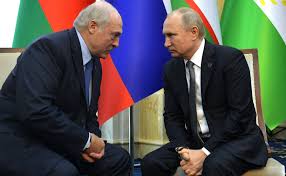
Belarus has just bought two cargoes of Johan Sverdrup, the recently commissioned Norwegian oilfield and is in talks with several oil-producing countries from the Soviet Union to ramp up crude imports in the upcoming weeks. This in and of itself might not seem such a big thing yet considering that Belarus in the past years was 100 percent reliant on Russian crude (and has barely purchased any in 2020), it marks an unexpected escalation of what initially seemed to a technical issue, a transit fee discrepancy, that should have been sorted on a professional level, without the involvement of politics. Instead, the undeclared war between Belarus and Russia is now upending traditional lines of supply and wreaking havoc in the two states.

Let’s start with the chronology first. The roots of the conflict are to be traced back to the inability of the two sides to settle on a crude supply deal for 2020, one which would build on the previous years’ uninterrupted supplies whereby Belarus was buying 23-24 million tons per year, of this some 18 million tons per year for domestic usage in its 240kbpd Novopolotsk and 320kbpd Mozyr Refineries. Belarus rejects any Russian proposals that mirror the pricing practice of the past years as the Russian tax maneuver jeopardizes up to 5 percent of Belarus’ GDP. The Russian tax maneuver is a long-mooted step to phase out crude and product export duties and offsetting the balance by means of a Mineral Resources Extraction Tax (MRET) increase.

Graph 1. Russian Export Duty in 2014-2020, USD per metric ton.

Source: author.

Since Belarus has been receiving all crude oil duty-free up until the last days of 2019, Russia’s decision to move in the direction of harmonizing its oil sector taxation with the requirements of its post-CIS integration brainchild, the Eurasian Economic Union, renders it inadvertently one of its victims. The phasing out is not immediate as it is spread out over five years (2019-2024) yet Belarus does not want to sit idly whilst the margins and profits of its refiners shrink and their standing vis-à-vis Russia becomes unfavored. To complicate matters even more, 6mtpa of the 24mtpa Belarus annually purchased were only nominally related to the Eastern European state – the Kremlin used it as a political sweetener for purely political reasons, these volumes were customs cleared in Belarus (not Russia) so that the Belarussian budget gets some $600-800 million per year. Related: Expect A Strong Year For Oil Discoveries

Source: CEFO.

This might seem as a tough nut to crack – thanks to the duty-free character of crude imports Belarus saved approximately $2 billion per year and now would be compelled to purchase crude at market level. However, the particularities of post-Soviet deal-making render it even more complicated. All of the crude agreements are inextricably linked to the two sides’ gas agreements (Belarus has paid 132 USD/MCm whilst the average European price of Gazprom was 242 USD/MCm in 2018 and 202 USD/MCm in 2019), Minsk’s manifold debt repayment schemes vis-à-vis Russian state banks and President Lukashenka’s erratic foreign policy.

Gas negotiations are palpably less toxic than the crude-related ones, owing in no small part to the fact that Gazprom controls Belarus’ gas transmission network, i.e. it cannot be used as a bargaining chip in bilateral negotiations/disputes. This is not the case with crude and one can see the result – as soon as the Belarussian-Russian dispute emerged, the Belarussian Trade and Anti-Monopoly Ministry declared that it seeks an immediate 16.6 percent hike on pipeline crude transit volumes (the crude which is supplied to Central and Eastern Europe via the Druzhba pipeline). The Belarussian President upped the ante by imposing a sudden 50-percent “environmental tax” on all crude and product transit volumes, needless to say that in a completely unannounced fashion.

Related: Goldman: China Coronavirus Could Push Oil Down By $3

Why Johan Sverdrup? The reason for buying Johan Sverdrup is fairly straightforward – the 28 degree API density grade is very similar in its product yield to Urals, the crude for which both Belarussian refineries were initially configured. According to market rumors, the Belarussian state company BNK bought two Aframax cargoes and will ship them home from the Lithuanian port of Klaipeda, delivering them to the Novopolotsk Refinery by rail. The vicinity of Norway’s continental shelf played no small part in this – MT Breiviken which will deliver the first cargo loaded January 19 and by January 23 it had already reached its final destination, i.e. the required voyage was really quick, coming in handy for Minsk’s bargaining position even if it overpaid it.

What does Russia seek? As much as Russia has garnered a rather adverse reputation for its energy sector-related dealings, with Belarus it faces a difficult dilemma – it wants to make sure that a powerful political message is made to President Lukashenka, all the while keeping Belarus’ oil sector out of the trouble. Its interests are by no means altruistic – Belarus’ largest refinery in Mozyr is co-owned by a joint venture of Rosneft and Gazprom Neft, meaning that Russian NOCs control 42.58 percent of the asset (the rest is controlled by the Belarussian state). Given that Belarus’ downstream was loss-making even in the “good” years of 2017 and 2018, primarily due to government-controlled fuel prices and currency devaluations, neither of the companies wants to incur even deeper losses.

What next? As wild as the current situation seems, this is not the first time such unbridled negotiations take place. Tariff hikes are a usual subject for the two sides’ disputes, moreover in 2010 Belarus has already tried to import Venezuelan crude to demonstrate that it can survive without Russian deliveries. Lukashenka’s cash-strapped regime needs further Russian loans and Moscow’s cooperativeness in keeping Belarus’ loss-making energy sector afloat, all the while Russia, seeking to enter a new period of détente with Europe, has no political interest in spoiling its geopolitical game by actions in Belarus. Hence, after the bombastic declarations and threats abate, Moscow and Minsk will curve out yet another modus operandi (which everyone knows will last only for a couple of years, only to repeat the entire process from scratch).