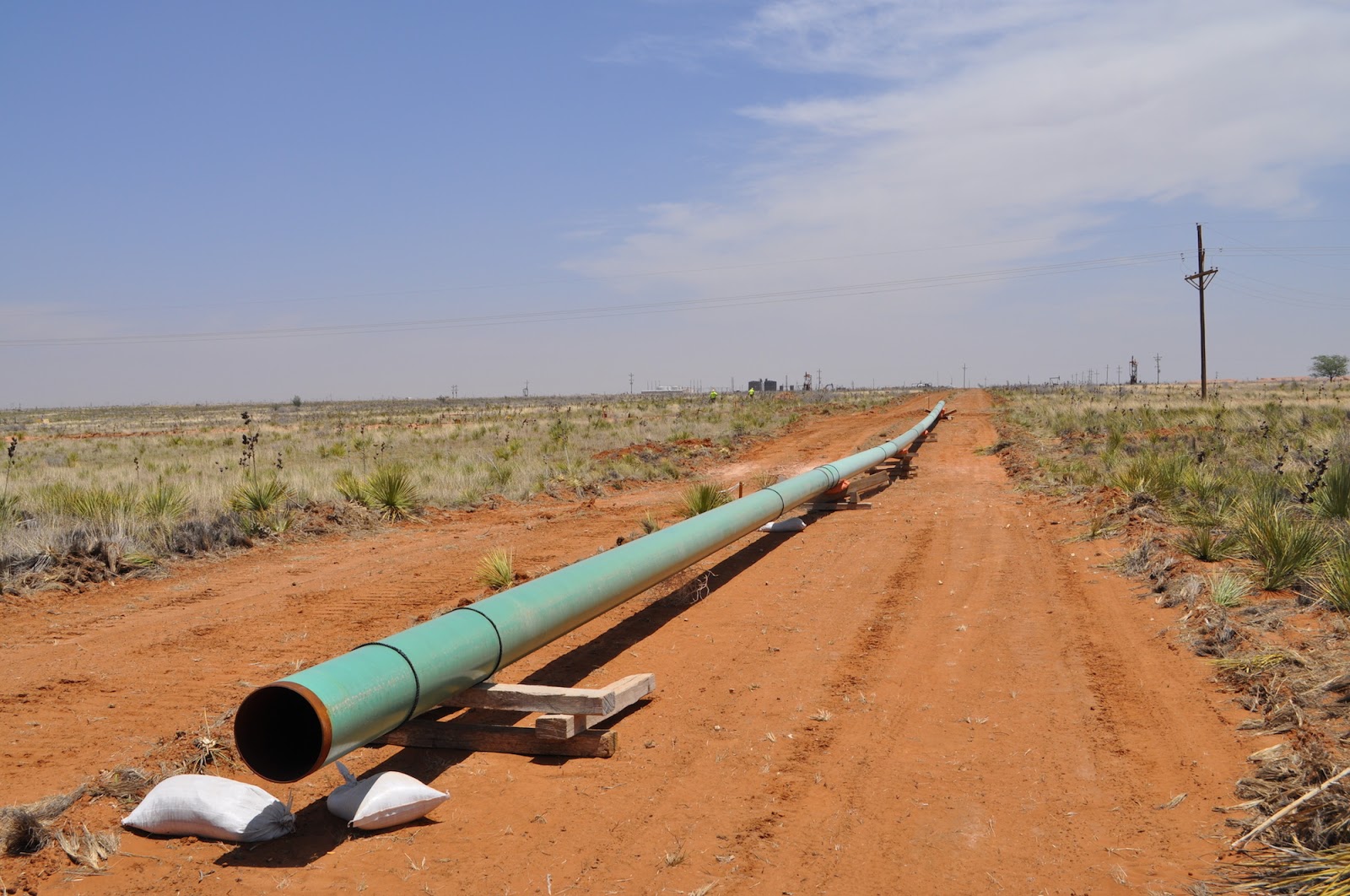
The manager of the account of Angola’s state oil firm Sonangol at a Portuguese bank was found dead in Lisbon on Wednesday, just before he was named as a suspect in an embezzlement case against the former head of Sonangol, Isabel dos Santos, daughter of the former Angolan president and believed to be Africa’s richest woman.
The bank manager, Nuno Ribeiro da Cunha, 45, was found on Wednesday at one of his homes in Lisbon, Portuguese media reported on Thursday, quoting sources at the police.
According to one of those sources, “everything points to suicide.”
Cunha reportedly attempted suicide earlier this month and was suffering from depression, the BBC reports, quoting Portuguese media.
Cunha was the head of private banking at small Portuguese bank EuroBic, in which Isabel dos Santos is believed to have been the main shareholder.
Earlier this month, the BBC, the Guardian, Portugal’s Expresso newspaper and 34 other media organizations revealed an investigation that showed that dos Santos, as head of state oil firm Sonangol, “ripped off Angola.”
Isabel dos Santos was made head of Sonangol in 2016 by her father, the former president of Angola, José Eduardo dos Santos, who had been president for nearly 40 decades before stepping down in 2017. Back then, the new president, Joao Lourenço, sacked Isabel dos Santos from her post at Sonangol.
Angola’s authorities then started to investigate Isabel dos Santos, who currently lives in the UK, owns expensive properties in central London, and is said to have a fortune of around US$2.1 billion.
Prosecutors charged her on Wednesday with money laundering and embezzlement while she was chair of the state oil firm Sonangol.
“Isabel dos Santos is accused of mismanagement and embezzlement of funds during her tenure at Sonangol,” Angola’s Attorney General Helder Pitta Gros said on Wednesday, as carried by the BBC.
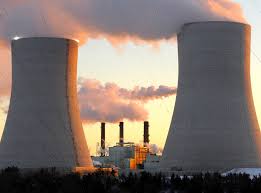
Nuclear waste is a huge issue and it’s not going away any time soon–in fact, it’s not going away for millions of years. While most types of nuclear waste remain radioactive for mere tens of thousands of years, the half-life of Chlorine-36 is 300,000 years and neptunium-237 boasts a half-life of a whopping 2 million years.
All this radioactivity amounts to a huge amount of maintenance to ensure that our radioactive waste is being properly managed throughout its extraordinarily long shelf life and isn’t endangering anyone. And, it almost goes without saying, all this maintenance comes at a cost. In the United States, nuclear waste carries a particularly hefty cost.
Last year, in a hard-hitting expose on the nuclear industry’s toll on U.S. taxpayers, the Los Angeles Times reported that “almost 40 years after Congress decided the United States, and not private companies, would be responsible for storing radioactive waste, the cost of that effort has grown to $7.5 billion, and it’s about to get even pricier.”
How much pricier? A lot. “With no place of its own to keep the waste, the government now says it expects to pay $35.5 billion to private companies as more and more nuclear plants shut down, unable to compete with cheaper natural gas and renewable energy sources. Storing spent fuel at an operating plant with staff and technology on hand can cost $300,000 a year. The price for a closed facility: more than $8 million, according to the Nuclear Energy Institute.” Related: Has Natural Gas Hit Rock Bottom?
With the United States as a poster child of what not to do with your nuclear waste, the United Kingdom is taking a much different tack. The UK is currently undertaking what the country’s Radioactive Waste Management (RWM) department says “will be one of the UK’s largest ever environmental projects.” This nuclear waste storage solution comes in the form of a geological disposal facility (GDF), a waste disposal method that involves burying nuclear waste deep, deep underground in a cocoon of backfill, most commonly comprised of bentonite-based cement. This type of cement is able to absorb shocks and is ideal for containing radioactive particles in case of any failure. The GDF system would also be at such a depth that it would be under the water table, minimizing any risk of contaminating the groundwater.
According to reporting from Engineering & Technology, nuclear waste is a mounting issue in Europe and in the UK in particular. “Under European law, all countries that create radioactive waste are obliged to find their own disposal solutions – shipping nuclear waste is not generally permitted except in some legacy agreements. However, when the first countries charged into nuclear energy generation (or nuclear weapons research), disposal of the radioactive waste was not a major consideration. For several of those countries, like the UK, that is now around 70 years ago, and the waste has been ‘stored’ rather than disposed of. It remains a problem.”
In fact, not only does it remain a problem, it is a mounting problem. As nuclear waste has been improperly or shortsightedly managed in the past, the current administration can no longer avoid dealing with the issue. In the past the UK used its Drigg Low-Level Waste Repository on the Cumbrian Coast to treat low and intermediate level waste, but now, thanks to coastal erosion, the facility will soon begin leeching radioactive materials into the sea, although that might not be quite as scary as it sounds. Related: EIA Sees Lower Brent Prices On Fading Geopolitical Risk
“Back in 2014, the Environment Agency raised concerns that coastal erosion could result in leakage from the site within 100 to 1,000 years, although it was counter-claimed that the levels of radioactivity after such a time would be low enough to be harmless,” Engineering & Technology writes. “This would definitely not be the case for high-level wastes, where radioactivity could remain a hazard into and beyond the next ice age, hence the need for longer-term disposal.”
Where exactly will that longer-term disposal be based? That’s up for debate. And it won’t be an easy thing to decide, as the RWM says that they will need a community to volunteer to be involved in such a costly, lengthy, and potentially unpopular project. And it’s not just an issue for the current inhabitants of potential locations in the UK, but for many generations to come over the next tens of thousands of years of radioactivity.
Gulf economies are in for a stronger year than 2019 as investment programs aimed at diversifying them away from oil begin to bear their first fruit, a Reuters poll among economics has suggested.
According to the respondents in the poll, Saudi Arabia’s economy could expand by 2 percent this year, up from 0.3 percent last year. This is further going to rise to 2.2 percent in 2021, the polled economists said.
The majority believe that the weak growth last year was the consequence of Saudi Arabia’s going above and beyond to support prices, and cutting substantially more oil production than it was obliged to under the OPEC+ deal. However, the effect of these cuts should begin to wane as the non-oil industries in the Kingdom gather pace.
“Real GDP growth in Saudi should benefit from stronger non-oil activity as the investment program gains momentum. The drag from the oil sector should moderate in 2020 following a sharp reduction in oil output in 2019,” the chief economist of Abu Dhabi Commercia Bank, Monica Malik, told Reuters.
“Saudi Arabia’s third quarter GDP data, showing a fall of 0.5% year-on-year, was broadly as expected, with OPEC+ cuts constraining the contribution of the oil sector to economic growth,” Oxford Economics said in a note cited by Reuters, adding that the Kingdom’s efforts to shift away from oil were beginning to yield results.
Saudi Arabia in December said it would cut spending this year by 7.8 percent but still expected to book a budget deficit at the end of the year. This deficit is expected to hit $50 billion, or 6.5 percent of GDP, up by $15 billion from 2019.
Saudi Arabia’s neighbour, the UAE, will also do well, according to the Reuters poll. Dubai has drafted a record budget for this year of $18 billion, with Abu Dhabi, the second-largest emirate and oil hub, spending $13.6 billion under a three-year package. Dubai is hosting the Expo 2020, which is certainly positive for its economic performance, and Abu Dhabi is investing in Masdar City: a smart city/tech innovation hub project expected to transfer the emirate’s economy away from oil.
The outlook for smaller producers such as Oman and Kuwait is more guarded, but still positive, with Oman’s GDP seen to expand 1.7 percent this year and 2.3 percent in 2021, and Kuwait’s economy expanding by 1.9 percent this year and 2.6 percent in 2021.
If America doesn’t need Saudi oil anymore, why is it still wooing crown princes, especially when American public opinion isn’t really on board?
A Business Insider poll from September 2019 showed that, on the best of days, only one in five Americans viewed Saudi Arabia as a U.S. ally–even fresh off an attack on Saudi Aramco oil facilities, and even when that attack was widely believed to have been orchestrated by Iran.
Outside of the White House, there was little sympathy coming out of the United States. The most recent Gallup Poll on the subject, conducted in February 2019, showed only 4% of Americans with a “very favorable” view of Saudi Arabia. In fact, most view Saudi Arabia in a worse light than Venezuela.
At the same time, America is not reliant on Saudi oil.
Over the past decade, U.S. oil production has doubled. In terms of extraction, dramatic media reports have emerged at various times over the past couple of years to the effect that the U.S. has surpassed Saudi Arabia as a crude oil exporter.
In June 2019, the U.S. did indeed surpass Saudi Arabia–briefly.
For a better understanding, data shows that Saudi Arabia exported 7.38 million barrels per day in 2018. The U.S. exported 2 million barrels per day in 2018.
In 2019, the U.S. was averaging about 2.9 million bpd in exports. In October 2019, U.S. imports of Saudi crude oil reached their lowest point since early 1974, at 419,000 barrels per day.
Globalization Changes Things
Today, however, dependence isn’t just about physical oil. It’s about markets.
In the era of entrenched globalization, it doesn’t matter if you’re an importer or an exporter, you’re still beholden to the global market and its volatility. Independence, in other words, doesn’t mean what it used to mean backed when Western powers started drawing lines in the Middle Eastern sands over oil.
Whether independent or not, the U.S. will still import oil because sometimes it’s more convenient and because not all oil is the same and imports arise from a need to efficiently supply various refining capabilities that process different types of crude.
So, what does America (or, rather, Washington) need Saudi Arabia for, exactly, if not for oil?
The answer is simple: oil is one thing, but oil money is quite another. One form of ‘dependence’ is traded for another–and that’s global.
Not only has Saudi Arabia just hit its highest level of foreign investment in the Kingdom (up 54% in 2019 from the previous year), but Saudi money is pumping into every major global sector, with Fintech increasingly driving investment. The Public Investment Fund (PIF), Saudi Arabia’s sovereign wealth fund, partnered with Japanese Softbank Group with a $100-billion investment in the tech sector that began in 2016 and is eyeing $2 trillion in investments.
This is also a highly lucrative venue for the defense industry, with “successive U.S. governments” having received “billions of dollars from selling American weapons to Saudi Arabia”.
Foreign Policy Based on Oil, Any Way You Look at It
Without the need for Saudi oil, U.S. foreign policy on the Middle East is confused, at best. Trump has varyingly said he would like to get out of the Middle East entirely and deployed additional forces at the same time.
There was no American military response to the attack on Saudi Aramco oil facilities last September. That was a Saudi problem, even though the intention of the attack was likely to provoke the United States. Instead, the U.S. deployed 14,000 additional troops to Saudi Arabia, which Trump claims are being funded “in cash” by the Saudis to the tune of $1 million (a notion being debunked). No one is sure what this means, exactly, other than that the U.S. military is providing a lucrative private mercenary service even in venues it claims it no longer has a foreign policy interest.
Likewise, in Syria, we saw a dramatic announcement of a withdrawal and a stepping aside to allow a Turkish invasion in the north. Immediately afterwards, we saw a reversal, with U.S. troops redeployed to “protect” Syrian oil.
Then, most spectacularly, we have the U.S. assassination of an Iranian general on Iraqi soil–again in a region in which the latest version of American foreign policy claims to have no skin in the game.
The only true form of oil independence is being completely disconnected from global markets, and that means a continued “interest” in the Middle East.
The fact remains, that oil independence doesn’t account for the fact that one-third of the world’s oil still travels through the Strait of Hormuz, and the U.S. still imports plenty of oil from plenty of countries.
Everyone is connected to global supply, and if that global supply is disrupted, the American consumer will feel it. The market knows this, but it’s the only “entity” that truly understands globalization.
American public opinion is bound to continue to disagree, and that will likely get worse in the wake of the December 6th mass shooting by a Saudi serviceman at a Pensacola, Florida, air base. While it’s not getting a lot of attention, the U.S. has expelled 21 members of the Saudi military following this incident, though none were said to be connected to the accused or of aiding the Saudi Air Force lieutenant who committed the terrorist act that killed three sailors and wounded eight others.
What the public should be up in arms about is not only that this was a “terrorist” attack, but that 17 of the 21 cadets expelled in the aftermath were found to have possessed online terrorist material, while some also possessed child porn.
That US-Saudi relations are still as strong as ever should be clear by the lack of any of the usual Twitter vitriol coming from Trump over the incident. While the FBI has called this a “terrorist” incident, Trump has refrained from being too critical of the Saudis.
At the same time, indications are that the Saudis, for instance, were not warned of the assassination of Iran’s General Soleimani in Iraq, which means they are being left out of key Iran-related policy decisions in Washington to some extent.
Really what it all means is that washing Washington’s hands clean of the Middle East isn’t feasible after close to a century of entrenchment.
Trump may think he’s going to get out of the Middle East, but there is no escape without removing sanctions on Iran. As long as sanctions persist, the Iranian regime will provoke.
And even then, in the era of globalization, it’s all about global investment funds. Saudi Arabia has one of the biggest. At this point, there is no way to remove the Middle East from the global equation.
While Elon Musk and other naysayers have condemned hydrogen, the energy is expected to see a breakthrough over the new decade: a 50 percent cost reduction — making it highly competitive with traditional fuel and low-carbon alternatives.
That comes from a new study by Hydrogen Council and McKinsey & Co., Path to Hydrogen Competitiveness: A Cost Perspective. The report outlines three core market drivers: a steep drop in production costs, higher load utilization cutting distribution and refueling costs, and additional cost drops from scaling up of end-use equipment manufacturing.
The study looked at 25,000 data points gathered and analyzed from 30 global companies with cost reductions expected across several different hydrogen applications. These sectors include long-distance and heavy-duty transportation, industrial heating, heavy industry feedstock, and others, which make up about 15 percent of global energy consumption.
Writers of the study see the need for supportive government policies to be adopted in key geographies, along with investment support of around $70 billion in the lead up to 2030 in order to scale up and produce for a much more cost-competitive fuel. The study makes the argument that while it’s a sizable spend, it would account for less than 5 percent of annual global spending on energy. Another comparison was offered. Last year, Germany invested about $30 billion to support renewable energy.
“The Hydrogen Council believes that the report’s findings will not only increase public awareness about the potential of hydrogen to power everyday lives, but also debunk the myth that a hydrogen economy is unattainable due to cost,” said Euisun Chung, executive vice chairman of Hyundai Motor Group and co-chair of the Hydrogen Council. “If we are to reach our global climate goals by mid-century and reap the benefits of hydrogen, now is the time to act.”
Hydrogen critics continue to waive flags of warning about the energy really succeeding.
S&P Global Platts’ Jeffrey McDonald and Andrew Moore point out that while advocates champion the pervasive fuel’s carbon-reducing benefits, much of it is being extracted from natural gas. It’s abundant in key markets like the U.S., and its much cheaper than from electrolysis.
Critics also argue that the transportation refueling infrastructure is likely decades away from coming close to competing with retail gas stations.
But support for hydrogen as a viable energy source is growing.
The Hydrogen Council study is given more credibility by Chevron joining up days ago with a number of other global oil producers such as BP, Shell, Sinopec, and Total S.A., as supporters of the hydrogen global advisory group. These energy giants share that ranking with global automakers and a few of their Tier 1 supplier partners — Audi, BMW, Bosch, Cummins, Daimler, General Motors, Great Wall Motors Co., Honda, Hyundai, Michelin, Siemens, and Toyota.
Chevron sees hydrogen as part of the “energy transition.” The company has been testing out the fuel and investing in infrastructure and technology in recent years. It’s used to refine crude at Chevron refineries and in other chemical processes. Between 2005 to 2010, the energy company operated five hydrogen filling stations at fleet operator sites using multiple technologies for on-site generation, storage, and dispensing. It was part of a US Dept. of Energy hydrogen demonstration project.
While support for hydrogen had been fading by the end of that time period, Chevron has been impressed in recent years to see new supportive regulations, automaker commitments, and technology advancements. As the emissions regulatory structure tightens in Europe and other global markets, Chevron and other oil giants have been spreading capital into other energy segments that they see having a strong competitive chance for the future.
Chevron will be conducting hydrogen fueling station “test-and-learn” pilots at locations in California. The global energy giant also recently contributed to a report developed by the Fuel Cell and Hydrogen Energy Association entitled Road Map to a US Hydrogen Economy. The association’s report stresses the versatility of hydrogen in a lower-carbon future.
Hydrogen’s market potential in three segments is another facet that’s gained Chevron’s support.
“Our support for the Hydrogen Council reflects our view that hydrogen can play a role in a lower carbon future as a transportation fuel, an industrial feedstock and an energy storage medium,” said Michael Wirth, Chevron’s chairman and CEO.
Tough times are continuing for Alberta’s oil and gas country, with the amount of unpaid property taxes that oil and gas companies owe to Alberta towns has more than doubled over the course of just a year.
The total tax debt outstanding? $173 million—a 114% increase from this time last year as the industry comes up short thanks to patches of huge gaps between the price of West Texas Intermediate and Western Canadian Select oil benchmarks, and production curtailments to producers in an attempt to keep that gap in check.
And now, oil and gas producers are—whether out of a sheer inability to pay or by design–passing on their pain to the governments they are beholden to.
This, even as municipal tax rates on shallow gas wells and pipelines were recently reduced by as much as 35% in an effort to “prevent further company failures and job losses” in Alberta.
Saddled with unpaid tax invoices, Canada is also facing an exodus of oil companies—either foreign ones who are tired of trying to make a go of it in Canada, or native ones looking for greener pastures–the most recent of which is Encana, who will change its name and hightail it across the border to Denver, Colorado. Other recent runaways, either in whole or in part, are Kinder Morgan, whose Canadian experience rose to nightmarish proportions, ConocoPhillips, Shell, Equinor, and Marathon Oil.
The situation is so dire for the municipalities, according to the Financial Post, that some now have a “write-down budget”, to account for taxes due from companies who are likely to never make good on their payments.
Last year, the Alberta Court of Appeal ruled that municipalities are unsecured creditors when it comes to bankruptcy—this means that are last to get paid in the event of default—and less likely to see the money ever.
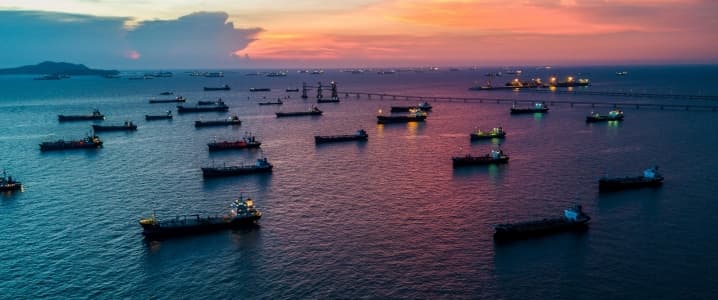
The shipping industry must spend at least $1 trillion on new fuel technology if it is to meet UN emissions targets by 2050.
According to a new study by experts from UCL and the Energy Transitions Commission, the minimum average that would need to be spent every year from 2030 is $50bn.
Global shipping is responsible for about 2.2 percent of the world’s carbon dioxide emissions. The International Maritime Organisation has set itself the target of reducing emissions by 50 percent by 2050.
If the sector was to fully decarbonise by 2050, an additional $400bn of investment would be needed over the 20-year period.
Roughly 87 percent of the investment would be in land-based infrastructure and production facilities for low-carbon fuels.
The remainder would be used for upgrades to the ships themselves.
Tristan Smith, reader at UCL’s Energy Institute, said: “Our analysis suggests we will see a disruptive and rapid change to align to a new zero carbon system, with fossil fuel aligned assets becoming obsolete or needing significant modification.”
In December the sector submitted a proposal to form a $5bn research and development fund for decarbonising the industry.
The fund, which will operate over a ten-year period, is designed to accelerate the development of commercially viable net zero ships by the early 2030s.
The International Maritime Research and Development Board (IMRB), as the fund will be known, will be financed by the payment of a mandatory $2 for every tonne of fuel a shipping company buys.
The study comes as the global shipping sector gears up for rising costs and new rules on the maximum amount of sulphur that will be allowed in their fuel.
The legislation from the IMO, which comes in to force on 1 March, is an attempt to reduce sulphur emissions by 80 percent.
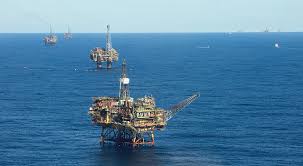
The start-up of the massive Johan Sverdrup oilfield sent Norway’s oil production rising to a nine-year high in December 2019, beating the authorities’ forecast by 12.7 percent, data from the Norwegian Petroleum Directorate (NPD) showed on Friday.
In December 2019, the third month of operation of Equinor’s Johan Sverdrup oilfield in the North Sea, Norway’s oil production averaged 1.759 million barrels per day (bpd), the highest oil production offshore Norway since January 2011.
Norway’s oil production in December rose by 4.3 percent from November and jumped by 17 percent compared to December 2018.
Despite the Johan Sverdrup start-up, the average oil production in Norway in full-2019 was expected to be at its lowest level in three decades, the NPD has estimated previously.
But Johan Sverdrup’s development will help Norway boost its oil production over next few years.
The huge oilfield in Norway’s North Sea is already producing 350,000 barrels of oil per day, two months after coming on stream, a senior executive at Equinor told Reuters early last month.
Daily oil production during the first phase of the Johan Sverdrup development is estimated at 440,000 bpd and is expected to be reached by the middle of this year. Peak production with the second development phase is expected to reach 660,000 bpd. At peak production, Johan Sverdrup will account for around a third of Norway’s crude oil production, operator Equinor says.
Norway’s oil production is expected to jump in 2020 through 2023, thanks to the start up of Johan Sverdrup, which began pumping oil in early October 2019. But after Johan Sverdrup and after Johan Castberg in the Barents Sea scheduled for first oil in 2022, Norway doesn’t have major oil discoveries and projects to sustain its oil production after the middle of the 2020s.
As the asymmetric war between Iran and the U.S. continues to escalate, threatening oil supply across the Middle East, oil markets appear to be entirely ignoring the conflict. As oil prices tank while geopolitical tensions soar, there has never been a better time to get an insider’s view on the market.
In an exclusive interview with James Stafford of Oilprice.com, Jay Park, CEO of Reconnaissance Energy Africa, discusses:
– Why oil prices aren’t responding positively to the specter of war
– What will influence prices in 2020
– Where the next shale boom might be
– How Recon Energy is positioning itself in a new oil hotspot
– And why regimes the world over are failing to attract investors
JAMES STAFFORD: The oil markets have had a volatile couple of weeks—even by 2019 standards. How worried should the oil markets really be about the recent escalation in Middle East tensions?
JAY PARK: Well when you look at oil markets in general, there are five things that influence the price of oil:
– Oil supply and how it’s changing
– Market demand and how it’s moving
– OPEC, its quotas, and its compliance with those quotas
– Geopolitics
– And finally, sentiment about those four things.
When we talk about the recent events in the Middle East we are talking about geopolitics. But despite all this tension, there hasn’t been any real change to supply or demand as a result of the recent tensions in the region. Sentiment is and sentiment alone is what moved prices higher. The tensions were particularly bullish for oil because for most of 2019 there was this underlying worry in the market that an agreement could be reached that would lift the sanctions on Iranian oil and flood the market. That prospect seems very unlikely now. More recently, Iran’s retaliation has convinced markets that this conflict is likely to remain a proxy war within Iraq as opposed to one that causes major global disruptions.
JS: Do you see another September 2019-style retaliation from Iran in the future?
JP: Iran is suffering from U.S. sanctions on its oil, and it would love to share that pain with Washington’s Gulf allies, particularly Saudi Arabia and the UAE.
It is reasonable to anticipate that Iran might take steps to impact oil production in those areas, whether via attacks on shipping or facilities. It’s reasonable because Iran has already done this type of thing in the past year.
JS: If Iran did retaliate in that way, what would the impact be?
JP: When a couple of oil tankers were hijacked and the Aramco refinery at Abqaiq was attacked, the incidents had less of an impact on oil prices and for a shorter period of time than most anticipated. We seem to be seeing a similar trend today after Iran’s retaliation underwhelmed. Further hostile actions may not necessarily have the same muted effect, but it was certainly underwhelming in 2019. It would have to be a sustained military operation with an impact on supply that could last for several months at least.
At that point we’d be looking at a hot war, which could easily increase the price of oil by 20%-30%, moving it to $90-$100 per barrel.
JS: Looking beyond geopolitics, what do you see as the biggest investment opportunities in today’s oil markets? I mean, we’ve got Exxon’s massive finds in Guyana, Apache’s recent discovery in Suriname, your own Recon Africa project in Namibia. If investors are moving away from U.S. shale, where should they be looking and why?
JP: Well, to begin with, I think it’s been clear for a long time that growth in U.S. shale is slowing and that has made finding the next big oil frontier the holy grail for oil companies like Reconnaisance Energy Africa.
As you said, both Guyana and Suriname look interesting after their recent successes – but those are capital intensive offshore plays that only really the oil majors are capable of exploiting. When you are looking at real value, I firmly believe there is nowhere on earth with as much potential as Africa.
To give you an idea of just how undervalued that continent is, the value of subsoil resources in OECD countries is about $300,000 per square mile, compared to the value of subsoil resources in Africa of $60,000 per square mile. Now, this is either because Africa doesn’t have its fair share of the world’s resources, or because it hasn’t found those resources yet. I’d put money on the latter because Africa is vastly underexplored compared to the rest of the world.
JS: Ok, but just because the resources may be there doesn’t mean that these are investor-friendly opportunities…
JP: That’s very true, and precisely why it remains so underexplored as a continent. But, before becoming CEO of Recon Energy Africa I was a lawyer specializing in upstream oil and gas and petroleum regimes. Now, what that means is that I have spent years of identifying and creating investor friendly petroleum regimes around the world. And it is with that experience that I was able to identify these opportunities in Namibia that we are currently working on.
Let me explain. A country’s petroleum regime can make or break its oil industry. I have worked with 17 governments holding 44% of the world’s oil reserves and 33% of the world’s gas reserves. I know how to make these structures work, and what works is doing things in a sustainable way so explorers will come, invest, have success, and then reinvest. That’s the ultimate goal—to find the right kind of petroleum regime that works for both investors and states. Now, once you are able to identify a state with the correct regime – and find an oil project with high potential within that state you have a winning formula.
JS: But the problem is that most African states have poorly constructed petroleum regimes?
JP: Yes. Many states in Africa have struggled with their petroleum regimes. These states tend to create regimes that are complex and heavily taxed. They also fail to give investors the assurances they need. Investors want to be confident that when they make a discovery, it will turn into money. That’s part of the reason that I am disappointed that Africa has fallen behind. While it is the place to go for resources, their regimes don’t meet the objectives I described. They either aren’t attractive to investors or they poorly address the state’s need, for example through inadequate environmental policies.
JS: Ok, so how do you go about finding a country and project that is suitable?
JP: Well I rate petroleum regimes across the world, including in Africa. I have a report card with 10 items on it, and I grade each one, and then give an overall grade to each country.
Assessing these regimes is precisely how I came to Namibia with Reconnaissance Energy Africa. The founders of the company wanted to know where the next great opportunity was. They brought together geologists from various backgrounds, petroleum taxation experts, and then I participated from the point of view of petroleum regimes. The idea was to find the next oil and gas hot spot.
Now, each of these experts were vital in narrowing down exactly that. A geologist might point out that Saudi Arabia has the best rock formations on earth, but you can’t get a grant from the state there. Libya is likely to have a great shale resource, but our taxation experts would point out that the state taxes oil and gas at over 90%, so shale would become an impossible proposition. We needed to identify places with great resource potential, plus good fiscal terms, plus a good legal regime.
That’s exactly how we got to Namibia. We filtered through various countries and Namibia came out very high for all of these targets.
JS: Namibia hasn’t really been on anyone’s radar. When we talk about the next ‘shale revolution’ it’s usually Argentina, or perhaps Russia. Where does Namibia suddenly fit in?
JP: It’s not on anyone’s radar because there are no commercial discoveries yet, but there is activity offshore. Those who have seen success in Angola, for instance, think the same opportunities might exist in Namibia. You probably hadn’t heard of Suriname on the oil map, either, until a couple of months ago. By the time it’s on everyone’s radar, it’s much less of an opportunity. And Namibia is a virgin opportunity.
We were looking at the onshore because we had an interest in shale, but instead, we discovered a giant deep basin, the Kavango Basin. It’s never seen a drill bit, yet it’s an analogue to one of the world’s largest shale discoveries in South Africa. This is all part of the Permian Karoo shales of South Africa, Botswana and Namibia. And we found a particular part that is a very deep basin that simulates in many ways the kind of environment you see in Eagle Ford. So, we licensed the entire basin. That’s 6.3 million acres, with test wells to be drilling this year to confirm there’s a working hydrocarbon system.
We already know we have interesting rock, so we don’t need seismic.
JS: Let’s shift back to the macro picture now. How has oil exploration changed over the last 5-7 years, and what can we expect going forward?
JP: The obvious answer is that technology has revolutionized exploration.
Despite appearances, we are really only in the very early stages of shale exploration and production. We’ve only been doing it for 10-15 years. There have been huge developments from data to drilling tech–massive advances in seismic, further-reaching horizontal drilling capabilities, refracking jobs, you name it. And there is a lot more to be learned.
We can drill deeper, too. Forty years ago when I started, a well in 800 meters of water was considered deep. Now, 3,000 meters of water is considered deep. If you look at the land area that is exploitable today that was not exploitable 15-20 years ago, it would add up to about the size of a continent.
JS: Do you see this as the end of the cheap oil era? Do you think all the cheap, easy-to-reach stuff has already been tapped?
JP: It is interesting to look back seven or so years when the talk of peak oil was very real. Then, too, everyone said all the easy resources had been found and produced, and called for $200 oil. But technology has proven that sentiment to be false. I suspect the same will be true in the future as tech advances march on.
Yes, today’s resources are more expensive, but we are still managing to make it work at $60 oil.
Still, in the last five years, we have seen far less exploration and discovery of oil than what we are consuming. That disparity can’t continue forever – we need new oil. And with existing fields declining at 3-4% per year you need to find a lot of new oil. The new oil that may be coming online in Guyana, Brazil, and Norway this year will close that gap to some extent, even with less growth from US shale than we have seen in recent years.
JS: Aside from Iran, do you see any other geopolitical time bombs that people are overlooking?
JP: Venezuela, but it’s difficult to see Maduro leaving soon. He’s survived US sanctions and local opposition. Even if the Maduro government is replaced, it would take a number of years for Venezuela’s oil industry to come back.
Perhaps a more urgent venue is Mexico. Its oil industry is facing significant challenges in the coming years.
In 2016, I helped Pemex do its first ever joint venture and we developed the first-ever farm out structure for Mexico. Farmout is a very common oil and gas transaction in which someone with a lot of land but not enough money to explore it enters into a transaction with an oil company, swapping capital for land. This was the first time in 70 years that Pemex had done one of these.
The concept of hydrocarbon reforms in Mexico was based on this idea: let’s let private capital take some petroleum grants and let Pemex use its massive acreage opportunities and allow it to do joint ventures. I thought those reforms were good and produced fast results, with farmouts being made and new discoveries and production happening. Within a few years, things were already moving.
The fruits of that were just starting to be seen when the new government came in and stopped it. There are great shale opportunities within Mexico, but they are undeveloped and the shale boom has bypassed the country. The regime that makes unconventional oil work has clearly been demonstrated in other countries, but Mexico has failed to capitalize on this. To make this work, the petroleum regime would need to be a concessions regime and a regime with a relatively low government take – 50% or less. That’s not Mexico today.
JS: So what’s the solution?
JP: The key to success for any government is focusing on exploiting as many types of resources as efficiently as possible.
Different kinds of resources require different recipes – different terms. In Alberta, where I’m from, we have five different regimes for five different resources. And all five get exploited. Nothing is wasted.
Take that back to Namibia. It’s got a 5% royalty and 35% corporate income tax on its oil reserves – it’s an attractive environment because they haven’t found anything yet as the country is vastly underexplored. They aren’t taxing the resource high because they want people to find it. It needs to be handled on a case by case basis but when looking for new opportunities in oil exploration the petroleum regime should always be one of the key things you look at. Good geology, good fiscal terms, and a good petroleum regime—that’s the formula, and at Recon Energy Africa, we think we have found that in Namibia’s Kavango Basin.
JS: Thanks for your time Jay.
As the race to tap Africa’s true potential as a major oil and gas producing region heats up, other companies are also vying for their own piece of the pie, including…
Exxon (NYSE:XOM) recently acquired an additional 7 million net acres from the government for a block extending from the shoreline to about 135 miles offshore in water depths up to 13,000 feet, with exploration activities to begin by the end of this year.
What Exxon’s banking on is that Namibia, which according to theory once fit together with Brazil, shares the same geology as Brazil’s pre-salt basins, Santos and Campos, which have already proved resource-rich, according to Deloitte.
Chevron (NYSE:CVX) ranks among the top oil producers in Nigeria and Angola. Other areas on the continent where the company holds interests include Benin, Ghana, the Republic of Congo and Togo. Chevron also holds a 36.7 percent interest in the West African Gas Pipeline Company Limited, which supplies Nigerian natural gas to customers in the region.
British Petroleum (NYSE:BP) has significant interest in Africa, but not necessarily the same stake as its peers. While BP has some oil assets in the region, it is focusing heavily on renewable power generation and natural gas production. Recently, it began work on a project in Mauritania and Senegal. The company noted, “We see this as the start of a new chapter for Africa’s energy story.”
Royal Dutch Shell (NYSE:RDS.A) is a veteran in the African oil and gas game. The company began drilling in the region in the 1950s, and now has assets in over 20 countries across the continent. Though it has sold off a number of assets in the region in recent years, it continues to maintain a strong presence in South Africa.
Total (NYSE:TOT) is another major betting big on Africa’s potential. It has been present in the region for over 90 years, and it is showing no sign of reducing its footprint anytime soon. In fact, just recently, the company announced a major oil discovery offshore Suriname. John J. Christmann, Apache CEO and President noted, “The well proves a working hydrocarbon system in the first two play types within Block 58 and confirms our geologic model with oil and condensate in shallower zones and oil in deeper zones. Preliminary formation evaluation data indicates the potential for prolific oil wells.”
By. James Stafford of Oilprice.com
**IMPORTANT! BY READING OUR CONTENT YOU EXPLICITLY AGREE TO THE FOLLOWING. PLEASE READ CAREFULLY**
Forward-Looking Statements. Statements contained in this document that are not historical facts are forward-looking statements that involve various risks and uncertainty affecting the business of Recon. All estimates and statements with respect to Recon’s operations, its plans and projections, oil prices, recoverable oil, production targets, production and other operating costs and likelihood of oil recoverability are forward-looking statements under applicable securities laws and necessarily involve risks and uncertainties including, without limitation: risks associated with oil and gas exploration, development, exploitation and production, geological risks, marketing and transportation, availability of adequate funding, volatility of commodity prices, imprecision of reserve and resource estimates, environmental risks, competition from other producers, government regulation, dates of commencement of production and changes in the regulatory and taxation environment. Actual results may vary materially from the information provided in this document, and there is no representation that the actual results realized in the future will be the same in whole or in part as those presented herein. Other factors that could cause actual results to differ from those contained in the forward-looking statements are also set forth in filings that Recon and its technical analysts have made, We undertake no obligation, except as otherwise required by law, to update these forward-looking statements except as required by law.
Exploration for hydrocarbons is a speculative venture necessarily involving substantial risk. Recon’s future success will depend on its ability to develop its current properties and on its ability to discover resources that are capable of commercial production. However, there is no assurance that Recon’s future exploration and development efforts will result in the discovery or development of commercial accumulations of oil and natural gas. In addition, even if hydrocarbons are discovered, the costs of extracting and delivering the hydrocarbons to market and variations in the market price may render uneconomic any discovered deposit. Geological conditions are variable and unpredictable. Even if production is commenced from a well, the quantity of hydrocarbons produced inevitably will decline over time, and production may be adversely affected or may have to be terminated altogether if Recon encounters unforeseen geological conditions. Adverse climatic conditions at such properties may also hinder Recon’s ability to carry on exploration or production activities continuously throughout any given year.
DISCLAIMERS
ADVERTISEMENT. This communication is not a recommendation to buy or sell securities. Oilprice.com, Advanced Media Solutions Ltd, and their owners, managers, employees, and assigns (collectively “the Company”) may in the future be paid by Recon to disseminate future communications if this communication proves effective. In this case the Company has not been paid for this article. But the potential for future compensation is a major conflict with our ability to be unbiased, more specifically:
This communication is for entertainment purposes only. Never invest purely based on our communication. We have not been compensated but may in the future be compensated to conduct investor awareness advertising and marketing for TSXV:RECO. Therefore, this communication should be viewed as a commercial advertisement only. We have not investigated the background of the company. Frequently companies profiled in our alerts experience a large increase in volume and share price during the course of investor awareness marketing, which often end as soon as the investor awareness marketing ceases. The information in our communications and on our website has not been independently verified and is not guaranteed to be correct.
SHARE OWNERSHIP. The owner of Oilprice.com owns shares of this featured company and therefore has an additional incentive to see the featured company’s stock perform well. The owner of Oilprice.com will not notify the market when it decides to buy more or sell shares of this issuer in the market. The owner of Oilprice.com will be buying and selling shares of this issuer for its own profit. This is why we stress that you conduct extensive due diligence as well as seek the advice of your financial advisor or a registered broker-dealer before investing in any securities.
NOT AN INVESTMENT ADVISOR. The Company is not registered or licensed by any governing body in any jurisdiction to give investing advice or provide investment recommendation. ALWAYS DO YOUR OWN RESEARCH and consult with a licensed investment professional before making an investment. This communication should not be used as a basis for making any investment.
PAST PERFORMANCE IS NOT INDICATIVE OF FUTURE RESULTS. Investing is inherently risky. Don’t trade with money you can’t afford to lose. This is neither a solicitation nor an offer to Buy/Sell securities. No representation is being made that any account will or is likely to achieve profits similar to those discussed.
Ticker: Just a few years back, the U.S. shale industry was drowning in a sea of hubris, with pompous experts making outrageous claims such as the Permian Shale is anear-infinite resource thanks to the basin’s explosive production growth in the latter half of the last decade.
Investors are now learning the hard way that the key to prognostication is to sound certain even when you know very little.
Analysts and investors who still harbor the “Too Big to Fail” mentality as far as U.S. shale is concerned are, sadly, mired in a depressing cognitive dissonance. The signs of the time are everywhere, and the question is no longer whether shale production can continue indefinitely but rather how much longer before it finally gives out.
One big investor has a rather depressing answer to the latter.
Adam Waterous, CEO at Waterous Energy Fund, says US shale production will peak in 2020 and then begin a steep decline thereafter. He argues that the financial position of Permian oil has clearly become untenable and production is much closer to peaking than many current forecasts suggest.
Source: Bloomberg
Disappointing Returns
Waterous has told Bloomberg that few investors are still eager to touch the sector after nearly a decade of underperformance, including negative free cash flow and disappointing returns.
He certainly has a valid point.
Steve Schlotterbeck, former CEO of the largest natural gas producer EQT, claims the average shale company has destroyed 80% of shareholder value (excluding capital) over the past decade. The US energy sector has emerged as the worst performer over the timeframe, with its weighting in the S&P 500 falling from 13% at the peak of the shale boom to just 4% currently–unmistakable signs of capital flight.
Meanwhile, bankruptcies in the sector have soared, with the total number that have gone under since 2015 clocking in at more than 200, including high-profile ones such as Chesapeake Energy, Sanchez Energy and Halcon Resources.
To make matters worse, the fund manager says the usual M&A playbook that smaller producers have increasingly been turning to is a broken model that’s incapable of creating any shareholder value.
Living in Denial
According to Waterous, analysts and investors who don’t believe that the shale bust has already begun are going through the first phase of grief: Denial.
Investors who initially thought that the massive structural changes that kicked off about five years ago were merely a cyclical event with the good times set to return will be disappointed to learn that those halcyon days are gone forever. He has observed that many companies are now in the Bargaining phase as they try to operate within existing cash flows.
The good part for investors: Mr. Waterous says in the fifth and final stage, Acceptance, companies will accept that this is the new norm and will start returning cash payouts to shareholders via dividends to allow them to recoup some of their investments.
A handful of companies have arguably reached this stage as the rank of high-dividend payers in the sector keeps swelling.
That handful includes, according to Kiplinger, the likes of Chevron (NYSE:CVX), which has prioritized dividends over stock buybacks, and Valero Energy (NYSE:VLO), which has more than doubled its payout over the past five years. The list also includes ExxonMobil (NYSE:XOM), which Bank of America insists can fund massive expansion at the same time as it increases its dividend.
To be fair, Mr. Waterous seems to have vested interests in the shale saga considering that his PE firm has been picking up distressed energy assets on the cheap. Waterous once served as head of investment banking at Bank of Nova Scotia where he had a direct hand in M&A plays that helped reshape the energy sector. He seems to be putting those skills to good use, with his firm buying Pengrowth Energy Corp. in November in a $21 million deal after the company’s shares cratered under a huge debt load.
Certainly not everyone shares Waterous’ “Peak Permian in 2020” view, with BloombergNEF analyst Tai Liu saying the shale oil pessimism is overdone.
Indeed, the general consensus is that the US shale industry still has some room to run, with production in the current year expected to continue to rise, albeit at a slower pace.
Nevertheless, it’s also noteworthy that Waterous is hardly alone in his gloomy shale outlook.
In 2017, Simon Flowers, Chairman and Chief Analyst at Wood Mackenzie, predicted that a slowdown in Permian production would begin in 2021 as drillers hit a cost efficiency ceiling.
Manage Consent
To provide the best experiences, we use technologies like cookies to store and/or access device information. Consenting to these technologies will allow us to process data such as browsing behavior or unique IDs on this site. Not consenting or withdrawing consent, may adversely affect certain features and functions.
Functional
Always active
The technical storage or access is strictly necessary for the legitimate purpose of enabling the use of a specific service explicitly requested by the subscriber or user, or for the sole purpose of carrying out the transmission of a communication over an electronic communications network.
Preferences
The technical storage or access is necessary for the legitimate purpose of storing preferences that are not requested by the subscriber or user.
Statistics
The technical storage or access that is used exclusively for statistical purposes.The technical storage or access that is used exclusively for anonymous statistical purposes. Without a subpoena, voluntary compliance on the part of your Internet Service Provider, or additional records from a third party, information stored or retrieved for this purpose alone cannot usually be used to identify you.
Marketing
The technical storage or access is required to create user profiles to send advertising, or to track the user on a website or across several websites for similar marketing purposes.