Categories
Energy

Just How Serious Is The Shale Slowdown?

By Nick Cunningham 

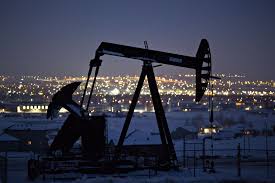
U.S. shale growth may be slamming on the breaks, although analysts differ over how significant the slowdown will be.

The EIA says that U.S. shale growth will slow down this year, but the agency still has growth at a rather optimistic 1.1 million barrels per day (mb/d), putting the annual 2020 average at 13.3 mb/d. The agency does see a more dramatic slowdown in 2021, with growth of just 0.4 mb/d.

The upbeat assessment is echoed by Rystad Energy, which predicts growth of 1.9 mb/d from U.S. shale, although that figure includes natural gas liquids. The firm sees Brazil and Norway adding another 1.3 mb/d, which combined risks leaving the oil market oversupplied this year. The recently announced OPEC+ cuts “might not be enough to sustain oil prices at $60 per barrel,” Rystad said in a report.

Right on cue, rumors of OPEC+ delaying its March meeting until June hit the news wire on Tuesday. In this hypothetical scenario, the cuts, which are set to expire at the end of the first quarter, would be pushed off until June. The OPEC rumor mill is nothing new, but anonymous leaks to the press coming only two weeks after the latest deal went into effect is…notable.

But other market watchers are warning that the shale boom might be closer to a peak than is commonly thought. Adam Waterous, an investor at Waterous Energy Fund, says that the Permian basin is either at or near a peak in production. “The North American oil market has been grossly overcapitalized, which is not sustainable,” he told Bloomberg. “It’s impossible to continue to have uneconomic production and capex.”

Even if the EIA is closer to the mark, the figures of over 1 mb/d of growth refers to an annual average. U.S. production ended the year at around 12.9 mb/d, according to the weekly data, so achieving 13.3 mb/d may be a bit less impressive than the annual changes suggest. “The momentum is declining significantly,” Commerzbank said in a note. “The decline in drilling activity and the rising costs of exploration are likely to slow the rate at which production is expanded.” Related: Oversupply Fears Are Front And Center In Oil Markets

Beneath the headline figures about production growth are ongoing operational challenges in the shale patch.

“The average cumulative production per well over the first twelve months of output has been on the rise since mid-2015 until April 2018, when it peaked, and has slightly fallen since,” JBC Energy said in a report.

The energy consultancy said that initial production rates increased in the North Dakota in recent years, but the tradeoff was steeper decline rates. The widely-cited productivity improvements in well design, along with an intensification of sand, water, lateral length, etc., all aimed at producing more oil and gas from a given well – those improvements are being offset by steeper decline rates, JBC said.    

“So even under the optimistic assumption that cumulative production plateaued over the past year and has not fallen further, an increasing number of new wells is needed to offset the decline from the constantly growing fleet of legacy wells, in order to retain growth.” The JBC report was entitled “Another Nail in The Coffin of US Shale Growth.” Related: The World’s Most Expensive Oil Nears $100 Per Barrel

This is not a new story, but it is one that is still unfolding. Either way, the steeper decline rates further complicate a business model that already has serious red flags.

Meanwhile, the latest EIA inventory data showed another build in refined products, and oil prices slid on the news. Short-term movements may not matter much, but the shale industry is very sensitive to price. With WTI slipping back into the $50s per barrel, and analysts warning about ongoing oversupply issues, that could lead to the shale growth projections coming in at the lower end of those forecast ranges.

The flip side of that is if production undershoots the consensus estimates, it could result in a tightening up of the market, which ultimately is a bullish trend. But for now, the main market narrative still assumes U.S. shale continues to add new production. The weekly EIA data also showed output topping 13 mb/d for the first time last week.
By Nick Cunningham of Oilprice.com

More Top Reads From Oilprice.com:

U.S. shale growth may be slamming on the breaks, although analysts differ over how significant the slowdown will be.

The EIA says that U.S. shale growth will slow down this year, but the agency still has growth at a rather optimistic 1.1 million barrels per day (mb/d), putting the annual 2020 average at 13.3 mb/d. The agency does see a more dramatic slowdown in 2021, with growth of just 0.4 mb/d.

The upbeat assessment is echoed by Rystad Energy, which predicts growth of 1.9 mb/d from U.S. shale, although that figure includes natural gas liquids. The firm sees Brazil and Norway adding another 1.3 mb/d, which combined risks leaving the oil market oversupplied this year. The recently announced OPEC+ cuts “might not be enough to sustain oil prices at $60 per barrel,” Rystad said in a report.

Right on cue, rumors of OPEC+ delaying its March meeting until June hit the news wire on Tuesday. In this hypothetical scenario, the cuts, which are set to expire at the end of the first quarter, would be pushed off until June. The OPEC rumor mill is nothing new, but anonymous leaks to the press coming only two weeks after the latest deal went into effect is…notable.

But other market watchers are warning that the shale boom might be closer to a peak than is commonly thought. Adam Waterous, an investor at Waterous Energy Fund, says that the Permian basin is either at or near a peak in production. “The North American oil market has been grossly overcapitalized, which is not sustainable,” he told Bloomberg. “It’s impossible to continue to have uneconomic production and capex.”

Even if the EIA is closer to the mark, the figures of over 1 mb/d of growth refers to an annual average. U.S. production ended the year at around 12.9 mb/d, according to the weekly data, so achieving 13.3 mb/d may be a bit less impressive than the annual changes suggest. “The momentum is declining significantly,” Commerzbank said in a note. “The decline in drilling activity and the rising costs of exploration are likely to slow the rate at which production is expanded.” Related: Oversupply Fears Are Front And Center In Oil Markets

Beneath the headline figures about production growth are ongoing operational challenges in the shale patch.

“The average cumulative production per well over the first twelve months of output has been on the rise since mid-2015 until April 2018, when it peaked, and has slightly fallen since,” JBC Energy said in a report.

The energy consultancy said that initial production rates increased in the North Dakota in recent years, but the tradeoff was steeper decline rates. The widely-cited productivity improvements in well design, along with an intensification of sand, water, lateral length, etc., all aimed at producing more oil and gas from a given well – those improvements are being offset by steeper decline rates, JBC said.    

“So even under the optimistic assumption that cumulative production plateaued over the past year and has not fallen further, an increasing number of new wells is needed to offset the decline from the constantly growing fleet of legacy wells, in order to retain growth.” The JBC report was entitled “Another Nail in The Coffin of US Shale Growth.” Related: The World’s Most Expensive Oil Nears $100 Per Barrel

This is not a new story, but it is one that is still unfolding. Either way, the steeper decline rates further complicate a business model that already has serious red flags.

Meanwhile, the latest EIA inventory data showed another build in refined products, and oil prices slid on the news. Short-term movements may not matter much, but the shale industry is very sensitive to price. With WTI slipping back into the $50s per barrel, and analysts warning about ongoing oversupply issues, that could lead to the shale growth projections coming in at the lower end of those forecast ranges.

The flip side of that is if production undershoots the consensus estimates, it could result in a tightening up of the market, which ultimately is a bullish trend. But for now, the main market narrative still assumes U.S. shale continues to add new production. The weekly EIA data also showed output topping 13 mb/d for the first time last week.
Categories
Energy

Canadian Crude Prices Sink On Cold Snap

By Julianne Geiger

The price of Western Canadian Select oil is falling thanks to a brutal cold snap in Western Canada, where temperatures less than 20 below are literally freezing Canada’s oil, making it less viscous and difficult to transport.

But that’s not the only oil problems Canada is having due to the cold. Refineries have been disrupted due to the cold, and barrels that can’t be shipped via pipeline due to capacity constraints must be shipped by rail—and trains move slower in the cold as well, Bloomberg reported on Wednesday.

The price of a barrel of WCS has fallen to $35.33 as of Tuesday, from $40.77 just ten days ago. While some of the fall is in line with other oil prices that have fallen this week on geopolitical tensions easing and persistent worry that the China/US trade deal may not boost oil demand growth as much as the market would like, the gap between WCS and WTI has widened, from $22.50 per barrel on January 6 to $22.90 on Tuesday.

Already Canada has restricted production to shrink the gap between the two benchmarks, although it has eased some of these production restrictions as the gap between the two began to shrink last year.

Most of Canada’s oil exports make their way to the United States, with its heavy, sour crude finding a willing market in the US Gulf Coast refineries, which typically set the price of the WCS to WTI differential due to their strong buying power for the grade.

If Canada’s oil production does not fall in line with its falling ability to export its oil in the cold—where the cold and heavy oil must be mixed with extra condensate to keep it flowing—the gap between WTI and WCS will continue to widen.

Categories
Energy

OPEC Raises 2020 Global Oil Demand Growth Estimate

By Tsvetana Paraskova

Healthier global economic growth in 2020 is expected to lead to higher oil demand growth this year, OPEC said in its closely-watched Monthly Oil Market Report (MOMR) on Wednesday.

OPEC raised its 2020 economic growth forecast by 0.1 percentage point to 3.1 percent.  

As a result of the improved economic outlook for this year, the cartel revised up its forecast for the 2020 global oil demand growth by 140,000 barrels per day (bpd) to 1.22 million bpd.   

Oil demand growth in developed economies will be just 90,000 bpd this year, thanks to mature economies in America, but the bulk of global oil demand growth will come from developing Asian economies, particularly India and China, OPEC said. Oil demand growth in non-OECD countries will be 1.13 million bpd this year.  

“The low interest rate environment is likely to support economic growth expected at 3.1% in 2020. Moreover, some additional support could possibly come from countries with ample fiscal space, taking the opportunity to borrow at very low rates – or sometimes negative rates – to finance infrastructure projects, which is expected to support the demand for oil,” OPEC said.

The cartel also revised up its non-OPEC oil supply growth estimates for this year, by 180,000 bpd to 2.35 million bpd, thanks to upward revisions for the oil production in Norway, Mexico, and Guyana.

“The US, Brazil, Canada and Australia are the key drivers for growth in 2019, and continue to lead growth in 2020, with the addition of Norway and Guyana,” OPEC said.

Referring to OPEC’s production for December, the cartel’s secondary sources—the ones it considers legit—found that production fell by 161,000 bpd compared to November, to average 29.44 million bpd last month.

Saudi Arabia, Iraq, and the UAE—the top three OPEC producers—were the countries which reduced their production the most in December, with the Saudis cutting 111,000 bpd from November to 9.762 million bpd.  

OPEC’s production figures confirm earlier surveys that the cartel not only continued to cut its crude oil production in December 2019, but it also managed to reach its deeper-cut target for Q1 2020 a month earlier than planned. 

Categories
Energy

The Cannabis Industry’s Dirty Energy Secret

By James Burgess

Your average marijuana plant is a rather unimposing, forest green weed that blends well with nature. The dirty truth, however, is that the business of growing cannabis is anything but green. In fact, the growing of pot is so power-intensive that its ecological footprint is quickly becoming an environmental nightmare.

The $344 billion cannabis industry is one of the country’s most energy-intensive in the world, frequently demanding an array of heating, ventilation and air-conditioning (HVAC) systems, fans and 24-hour indoor lighting rigs at multiple growing sites.

Just how much electricity does the entire US marijuana industry consume?

The numbers are mind-boggling.

They’re also the bane of the cannabis industry, according to Joseph Maskell, founder and president of AAXLL, one cannabis company aiming to be a major disrupter of the short-lived status quo.

“The key in this emerging industry is to be asset-light,” says Maskell.

“With billions spent just on electricity in the US cannabis-growing industry, the companies that will survive the next culling, which is already in process, will be those with low capital outlays, no warehouses, no buildings, no machinery.”

Back in 2016, after the state of Oregon legalized recreational marijuana, Pacific Power in Portland recorded seven blackouts that the company traced to marijuana production.

Meanwhile, a good 45% of Denver’s increase in energy demand or “load growth” was directly linked to electricity that went to power marijuana growth.

In other words, investors are going to have to unplug unless they want to see their profits go up in smoke.

Appetite for Energy

The electricity consumption of marijuana grow houses is staggering when you compare it to consumption by the average business or residential unit.

In 2014, the NPCC  worked out that it takes 4,000 to 6,000 kilowatt-hours (kWh) of energy to produce a single kilogram of marijuana product. Electricity costs can represent 20% of the total cost of cannabis production.

Back in 2015, it was estimated that a 5,000-square-foot indoor facility in Boulder County consumed ~41,808 kilowatt-hours per month–or nearly 66x the average consumption by a household in the county. More than two percent of the city’s electricity usage went to marijuana production.

More recent estimates are not very encouraging either, even as more energy professionals enter the marketplace.

Evan Mills, a scientist at the Lawrence Berkeley National Laboratory, says that production of legal marijuana in the US consumes 1% of total electricity, or 41.71 billion kilowatt-hours (kWh) of electricity, at a cost of $6 billion per year. 

That’s enough energy to power 3.8 million homes or the entire State of Georgia. Generating that much electricity spews out 15m tons of greenhouse gas emissions (CO2), or about what three million average cars would produce in a year.

The actual figures could be much higher, says AAXLL’s Maskell.

A 2017 study by New Frontier Data revealed that only 25% of marijuana is produced legally, which is hardly surprising considering that recreational weed is legal in only 11 states and Washington DC. In effect, this means that growing marijuana could be consuming as much as 3-4% of the country’s electricity.

Obviously, such insane levels of electricity consumption is putting a major strain on public utilities as evidenced by the Pacific Power blackouts. As Steven Corson, a Portland General Electric (PGE) spokesman, has lamented: “We don’t track the numbers specifically related to cannabis producers, but some have created dangerous situations by overloading existing equipment.”

Lack of Standards

The huge energy appetite by the cannabis industry can be pinned on how grow houses operate.

Ron Flax, the chief building official in Boulder County, says the basic issue is the lighting intensity inside the grow facilities which is much higher than for any other plant. For instance, Solstice, a Washington based marijuana producer, uses 1,000W high intensity discharge lamps (HID), for the vegetative phase of growth.

Colorado, one of the leading cannabis states where most of the electricity is coal-powered, has devised schemes to discourage excessive power use by growers. The state requires commercial growers to either pay a 2c charge per kW or offset their electricity use with renewable energy (average electricity rate in Denver is 11.05 cents per kWh).

The accrued funds go to the Energy Impact Offset Fund where they are used to finance sustainable cannabis cultivation and also educate growers. Meanwhile, Seattle City Light is incentivizing growers to shift to more efficient lighting technologies. The public utility has promised six-figure rebates to growers who switch to LED lights instead of power-guzzling HIDs.

The big problem here is that the marijuana industry is still infantile and lacks clear standards. Even in states where weed is legal, production still tends to be done in underground operations with everyone doing what works for them.

It’s tough to be profitable right now in an industry that’s so energy-intensive. Cannabis 2.0, says Maskell , will be an entirely different beast. That’s why AAXLL isn’t focused on capital burying marijuana growing; rather, it’s focused on a revenue-generating end product that spends on marketing brilliance, like their Balance CBD line, not machinery.

Eventually, the market might dictate that growers use cheaper greenhouses and take production outdoors where costs are bound to be much lower. In the meantime, it’s going to be a steep learning curve for the burgeoning industry.

Companies to watch as the cannabis industry and the energy industry collide:

Canopy Growth Corporation (NYSE:CGC) (TSX:WEED)

After securing a major $4 billion investment from beverage giant Constellation Brands, it seemed like Canopy Growth was on the top of the world. The same day, shares in the company surged by 30 percent.

Though things have cooled down a bit since then after a downgrade from analysts of the Constellation Brands stock, Canopy has not stopped making moves in the market, most recently swallowing up renowned vaporizer producer Stor & Bickel Gmbh & Co., the creator of the iconic Volcano® Medic and the Mighty® Medic devices

The €145 million all-cash deal makes it one of the largest in the marijuana sector this year, and Canopy Growth is not likely to stop there.

Aurora Cannabis (NYSE:ACB) (TSX:ACB)

Aurora Cannabis is one of the biggest names in the burgeoning marijuana sector. With a market cap over $1.9 billion, Aurora has carved out its position as a leader in the industry. And the company is still making moves.

Recently, Aurora sealed a supply deal with Mexico’s Farmacias Magistrales SA, the country’s first and, for now, at least, only federally licensed importer of raw materials containing THC.

In an announcement from Aurora, the company stated that the deal “firmly establishes Aurora’s first-mover advantage in one of the world’s most populous countries, where more than 130 million people will have federally legal access to a range of Aurora’s non-flower medical cannabis products containing THC.”

Molson Coors (NYSE: TAP) (TSX: TPX-A)

Molson Coors is an iconic multi-national beer company, with brands that are recognizable across the United States and Canada. Besides just its Molson and Coors lines, the company has also ventured into more niche beverages to take advantage of the growing craft beer market, buying up brands like Leinenkugel’s and Blue Moon.

Not to be left behind in the marijuana boom, Molson Coors is also developing a line of non-alcoholic cannabis-based beverages with its partner, the Hydropothecary Corporation.

Molson Coors Canada president and CEO Frederic Landtmeters noted, “While we remain a beer business at our core, we are excited to create a separate new venture with a trusted partner that will be a market leader in offering Canadian consumers new experiences with quality, reliable and consistent non-alcoholic, cannabis-infused beverages.”

Exxon (NYSE:XOM) Despite Exxon’s late entry to the shale game, the company is still light years ahead of its competition in terms of profits.

Not only is Exxon held a key role in bringing the oil and gas industry into the modern era, the company is also a world leader in the development of biofuels and fuel cells.

Spending approximately $1-billion per year on the research and development in new energy technologies, Exxon is sure to continue on its path of innovation for years to come. Investors can rest assured; this research will pay off for them.

Halliburton (NYSE:HAL) is one of the largest oilfield services companies in the world. The company has secured its place in the oil and gas industry. But it didn’t happen overnight.

The oilfield services sector is highly competitive and ripe with innovation. In order to stay ahead, companies must be on the absolute cutting edge of technology. And that’s exactly what Halliburton has done.

And recently, Halliburton increased the heat for its competition. Partnering with Microsoft, Halliburton is securing its position as a leader in the industry.

This partnership is significant. Microsoft, a leader in the tech world, is looking to bring machine learning, augmented reality, and the Industrial Internet of Things to the oil and gas industry.

Categories
Energy

The Unexpected Consequences Of Germany’s Anti-Nuclear Push

By Irina Slav

Germany, the poster child for renewable energy, sourcing close to half of its electricity from renewable sources, plans to close all of its nuclear power plants by 2022. Its coal-fired plants, meanwhile, will be operating until 2038. According to a study from the U.S. non-profit National Bureau of Economic Research, Germany is paying dearly for this nuclear phase-out–with human lives.

The study looked at electricity generation data between 2011 and 2017 to assess the costs and benefits of the nuclear phase-out, which was triggered by the Fukushima disaster in 2011 and which to this day enjoys the support of all parliamentary powers in Europe’s largest economy. It just so happens that some costs may be higher than anticipated.

The shutting down of nuclear plants naturally requires the replacement of this capacity with something else. Despite its reputation as a leader in solar and wind, Germany has had to resort to more natural gas-powered generation and, quite importantly, more coal generation. As of mid-2019, coal accounted for almost 30 percent of Germany’s energy mix, with nuclear at 13.1 percent and gas at 9.3 percent.

The authors of the NBER study have calculated that “the social cost of the phase-out to German producers and consumers is $12 billion per year (2017 USD). The vast majority of these costs fall on consumers.” 

But what are these social costs–exactly?

“Specifically,” the authors wrote, “over 70% of the cost of the nuclear phase-out is due to the increased mortality risk from local air pollution exposure as a consequence of producing electricity by burning fossil fuels rather than utilizing nuclear sources.” 

Related: Is This The Start Of A New Offshore Oil & Gas Boom?

The culprit is coal. According to the study, some 1,100 people die because of the pollution from coal power generation every year. This, the authors say, is a lot worse than even the most pessimistic cost estimates of so-called “nuclear accident risk” and not just that: 1,100 deaths annually from coal-related pollution is worse even when you include the costs of nuclear waste disposal in the equation.

The results of the study, which used machine learning to analyze the data, surprised the authors. The cost of human lives had not been expected to be the largest cost associated with the nuclear phase-out.

“Despite this, most of the discussion of the phase-out, both at the time and since, has focused on electricity prices and carbon emissions – air pollution has been a second order consideration at best,” one of the authors, economist Steven Jarvis, told Forbes.

Just two decades ago, air pollution was a top concern for many environmentalists. Now, carbon emissions and their effect on climate seem to have taken over the environmental narrative and, as the research from NBER suggests, this is leading to neglecting important issues. Meanwhile, there are voices—and some of them are authoritative voices—that are warning a full transition to a zero-emission economy is impossible without nuclear power, which is virtually emission-free once a plant begins operating.

None other than the International Energy Agency—a staunch supporter of renewables—said in a report last year that the phase-out of nuclear capacity not just in Germany but everywhere could end up costing more than just increased carbon emissions as the shortfall in electricity output would need to be filled with fossil fuel generation capacity, just like it is filled in Germany. 

Why can’t renewables fill the gap? Here’s what the IEA had to say:

“If other low-carbon sources, namely wind and solar PV, are to fill the shortfall in nuclear, their deployment would have to accelerate to an unprecedented level. In the past 20 years, wind and solar PV capacity has increased by about 580 gigawatts in advanced economies. But over the next 20 years, nearly five times that amount would need to be added. Such a drastic increase in renewable power generation would create serious challenges in integrating the new sources into the broader energy system.” 

Related: Are Oil Prices Still Too High?

Translation: we are not adding wind and solar fast enough and we can never add them fast enough without risking a grid meltdown.

Even Germany’s fellow EU members recognize the importance of nuclear power. Leaving aside France, where it is the single largest source of energy, accounting for 60 percent of electricity generation, the EU members agreed in December to include nuclear power in their comprehensive climate change fighting plan, which the union voted on at the end of the year.

“Nuclear energy is clean energy,” the Czech Prime Minister, Andrej Babis, said at the time. “I don’t know why people have a problem with this.”

The reason so many people have a problem with nuclear is, of course, obvious. Actually, there are two reasons: Chernobyl and Fukushima. One might reasonably argue that two accidents for all the years nuclear power has been used for peaceful purposes by dozens of nuclear plants make the risk of a full meltdown a small one, but statistics is one thing–fear is an entirely different matter.

The problem with nuclear plants, in most opponents’ minds, is that a meltdown may be rare, but when it does happen, it is far more disastrous than a blackout caused by a slump in solar energy production, for example. 

There is no way to remove the risk of a nuclear reactor meltdown entirely. Reactor makers are perfecting their technology, enhancing safety features, and making sure the risk will be minimal, but the risk remains, deterring politicians–those in the ultimate decision-making position–to make a pragmatic decision that, as the NBER research suggests, could actually save lives.

Categories
Energy

SUVs Not EVs: The Electric Car Boom Hits A Snag

By Jon LeSage

Europe started its long-anticipated vehicle emissions rules on January 1, and China and the US (at least California) will be tightening theirs as well.

Automakers are, for the most part, complying. But what about car buyers?

Consumers are in love with sport utility vehicles (SUVs) for now, and getting them to switch over to smaller, more fuel efficient vehicles is becoming a much tougher sell. Sales data and market studies confirm these findings.

The International Energy Agency (IEA) says that there are now about 200 million SUVs around the world — up from about 35 million in 2010 and accounting for 60 percent of the increase in the global car fleet since 2010. While automakers have been building more fuel-efficient SUVs and pickup trucks in recent years, they’re still consuming a lot more gasoline than small cars, hybrids, and electric vehicles — and SUVs make up a much larger share of the market than these three vehicle segments.

“If the popularity of SUVs continues to rise in line with recent trends, this could add another 2 million barrels per day to our projection for 2040 oil demand,” the IEA said in its November World Energy Outlook 2019 report.

While electric vehicle sales are strong in China — strong enough to get Tesla to invest heavily in its Shanghai plant — SUVs have been even more popular with car shoppers in that market. Much of the same has happened in North American and Europe. 

Related: The U.S. Aims For Energy Storage Dominance

Stable gasoline prices and improved performance and safety are the dominant factors driving the popularity of SUVs in new vehicle sales; and manufacturers have been promoting a certain stylishness and sportiness in crossover and large SUVs at major auto shows. Owners enjoy the benefits of transporting their family members while loading the vehicle with travel bags, groceries, household electronics, sporting equipment, bikes, and more.

BMW is now seeing 44 percent of its global sales go to its “X” branded SUVs. The German automaker is investing heavily in designing and building more plug-in hybrid and battery electric vehicles to comply with stringent emissions rules in their major markets served. But SUVs are bringing a lot more in profit to the company.

Honda is finally rolling out a hybrid version of its popular CR-V crossover SUV, but it may not matter in terms of sales increases. The 2020 Honda CR-V makes it tougher for the competition in the US market. The nation’s best-selling compact-crossover SUV will now have a turbocharged engine and more safety features as standard equipment. Later in the year, the Japanese automaker will introduce the CR-V Hybrid that promises a 50-percent improvement in city fuel economy.

The long-awaited light-duty vehicle emission rules started in EU member countries on January 1. Vehicle manufacturers will have to sell many more electrified vehicles or pay costly fines, a situation similar to China’s rules. China’s new regulatory structure was influence heavily by California’s zero emission vehicle rules.

For automakers with product lineups with few EV offerings, they’ll need to sell lots of conventional cars and trucks, and use the profits to pay the fines. The Trump administration is fighting the California rules in court and national regulations, but California still makes up about half of the nation’s EV sales. The Trump rules will increase fuel efficiency and reduce emissions, but at a much slower pace and lower benchmarks for passenger and commercial vehicles than enacted nearly a decade ago by the Obama administration. 

Related: India’s Oil Demand To Grow Faster Than Any Other Major Economy

Industry analysts expect plug-in hybrid, battery electric vehicle, and hybrid vehicle sales to soar at some point in the future. For now, consumers are happy with larger, traditional gasoline-engine vehicles for the power, performance, fuel pump price stability, and pervasive availability of fuel stations. Diesel-powered passenger vehicles have also been growing in popularity with US buyers in recent years, as manufacturers offer variations of their popular truck models with diesel engines. A number of SUV models now offer diesel engines as well, including the popular Jeep brand.

The pressure is on for automakers and their suppliers to comply with emissions rules. The major stumbling block has been getting buyers — including consumers, fleets, and drivers of ride-hailing vehicles — to switch over to electrified models.

“Consumer preferences for SUVs could offset the benefits from electric cars,” the IEA warned in its report.

The agency said a doubling in market share had seen emissions from SUVs grow by nearly 0.55 gigatons of carbon dioxide (CO2) during the last decade to roughly 0.7 gigatons. As a result, SUVs were the second-largest contributor to the increase in global CO2 emissions since 2010 after the power sector. It’s been part of making passenger vehicles, along with medium- and heavy-duty commercial vehicles, a ripe target for regulators to tackle.

Categories
Energy

This Was The Most Successful Energy Niche Last Year

By Robert Rapier

I had originally intended on presenting my 2020 energy sector predictions today, but those aren’t quite ready. I expect to publish that column no later than a week from today.

Instead, I present another column I always write at the end of each quarter: The performance of different areas of the energy sector. Since the end of the quarter also represented the end of the year, I will also cover the top-performing energy companies of the year.

The S&P 500 returned 8.5% during the fourth quarter, and an impressive 28.9% for all of 2019. The rally in 2019 was broad-based. Every sector that makes up the Select Sector SPDR exchange-traded funds (ETFs) that represent the S&P 500 was up at least 20% for the year — except for one.

The Energy Select Sector SPDR ETF (XLE) tracks an index of energy companies in the S&P 500. The XLE represents the stocks of large energy companies from different sub-sectors (e.g., integrated, oil production, equipment services). It is, therefore, a good benchmark for conservative energy investors. Some of the XLE’s biggest holdings are ExxonMobil, Chevron, ConocoPhillips, EOG Resources, and Schlumberger.

During the third quarter, the XLE generated a total return of 5.5% (including dividends). For all of 2019, the XLE returned 11.7%, but some segments of the energy sector outperformed even the S&P 500. 

Related: How Far Has Renewable Energy Come In The Last 20 Years

The most impressive energy sector performances in 2019 came from the midstream sector. These are the companies that transport and store oil and gas. But within this sector, the midstream corporations turned in outstanding performances, while the midstream companies that are structured as master limited partnerships (MLPs) generally lagged behind.

The Top 20 midstream companies rose by an average of 15.9% for the year, but a different picture emerges if we look at just the midstream corporations. Major midstream corporations like Enbridge, TC Energy (formerly TransCanada), and Kinder Morgan respectively returned 36%, 56%, and 44%. Enterprise Products Partners, the largest MLP, returned 21.9%. TC Energy’s return was the best among the Top 20 midstream companies.

The integrated supermajors returned an average of 2.3% for the quarter, and 8.8% for the year. Every member of this group was in positive territory in 2019, but Chevron was the only member with a double-digit return (+15.3%).

The 20 largest upstream companies averaged a return of 10.5% for the quarter, following declines in both the 2nd and 3rd quarters. For the year, this group returned 9.6%.

In general, the Canadian upstream companies handily outperformed their U.S. peers, with many turning in gains of over 30%. However, the top performer in the Top 20 was U.S.-based Hess, with a 68% return for the year. At the bottom of the pack was Occidental’s 28% decline for the year. This decline was caused by negative reactions to Occidental’s buyout of Anadarko.

The Big Three refiners — Marathon Petroleum, Valero, and Phillips 66 — were up an average of 6.8% for the quarter and 23.4% for the year. Both Valero and Phillips 66 turned in a 2019 gain of over 30%, while Marathon lagged behind with a gain of 6.1%.

The biggest drag on the energy sector continues to be depressed oil and natural gas prices. The problem in the oil sector is primarily too much supply, and not because of softening demand. It’s an important distinction, because oversupply can be resolved. But market perception seems to be largely that of softening demand.

It will take a while for bearish sentiment to shift, but I believe it’s premature for investors to abandon oil-related opportunities. There were plenty of opportunities in the sector in 2019, if one knew where to look. That will also be the case in 2020.

Categories
Energy

Cyber Threats To North American Power Grid Are Growing

By Tsvetana Paraskova

Threats of cyber attacks on North America’s electric network systems are growing, industrial cybersecurity firm Dragos said in a new report this week.  

This year, the firm has identified two groups, Magnallium and Xenotime, which are increasingly probing to compromise electric assets in North America, expanding their targeting from the oil and gas sector to include electric assets.  

“This underscores the trend in threats expanding from single-vertical ICS operations to multi-vertical ICS operations we observe from adversaries targeting industrial entities,” Dragos said in its report.  

Another group, Parisite, identified in 2019, has been focusing on exploiting vulnerabilities in remote connectivity services and virtual private network (VPN) appliances to gain initial access to target industrial control systems (ICS) networks, Dragos said.

“The complete “energy infrastructure sector” (e.g., electric, oil and gas, etc.) of all countries are at risk as companies and utilities face multiple well-resourced ICS-focused adversaries,” Dragos says.

Cyber security experts, however, are not panicking because they believe that the power sector and grid networks, especially in North America, are beefing up their security and are more prepared to withstand cyber attacks.

“There’s an incredible amount of awareness, a lot of work and a lot of dedicated people who are focused on that problem every day,” Bernie Cowens, who was vice president and CISO of Pacific Gas and Electric in California, told Information Security Media Group in an interview.

Last year, Microsoft security researcher Ned Moran said that an infamous Iranian hacker group may be targeting industrial control systems to cause major disruptions in power grids, oil refineries, and other physical energy assets, in an apparent sharpened focus on cyber warfare on critical industries.

The U.S. is looking to strengthen cyber security at critical energy infrastructure. The U.S. Department of Energy is awarding millions of US dollars in research and development of next-generation tools and technologies aimed at improving the cybersecurity of the critical American energy infrastructure, including the electric grid and oil and natural gas infrastructure.

Categories
Energy

Shell Is Selling Washington Refinery

By Irina Slav

Shell is looking for buyers of its Anacortes refinery in Washington, unnamed sources told Reuters, adding that if a sale takes place it would leave Shell’s refining operations in North America concentrated in the Gulf Coast.

The sale would be part of a divestment program announced by the Anglo-Dutch supermajor. It envisages the offloading of $5 billion worth of assets last year and this year, each.

Shell already sold one other U.S. refinery last year, in Martinez, California. The deal, with independent refiner PBF Energy Inc, will see the supermajor get up to $1 billion.

Another refinery, this one in Canada, is also up for sale. That’s the 75,000-bpd Sarnia refinery of Shell in Ontario.

If Shell finds a buyer for the 144,000-bpd Anacortes facility, this will leave it with three refineries in the United States—two in Louisiana with a combined capacity of half a million barrels daily, and one in Texas with a capacity of 340,000 bpd.

Reuters later reported that the Anacortes refinery is the seventh one that has been put up for sale in the United States. The seven account for 5 percent of refining capacity in the country.

Buyers, however, are difficult to find for a number of reasons. These include unfavorable locations, a concern among energy companies about falling refining margins, and the competition prospects given the pending restart of refineries in the Caribbean.

The margins problem, according to analysts, stems from the fact that all refineries are now trying to produce fuels compliant with the new IMO sulfur emissions regulations effective January 1 and this is eating into profits. The U.S. renewable fuel standard is not helping, either.

“When some of your really big companies have stopped buying refineries, that really slows things down,” a Tudor Pickering Holt & Co. told Reuters.

“Refiners don’t want to overpay for an asset with environmental liabilities that might require unknown capital expenditure to meet future requirements,” according to Matt Flanagan, an executive from energy advisory firm Opportune.

Categories
Energy

China To Open Oil, Gas Industry to Foreign Companies

By Irina Slav

China will open its arms for foreign oil and gas companies, and for local private E&Ps, the country’s Ministry for Natural Resources told media as quoted by the China Global Television Network.

The move will “stimulate market vitality” the media quoted the official as saying.

Reuters added that there will be certain limits on who will gain access to China’s oil and gas deposits. According to the Ministry of Natural Resources, these will be companies with net assets worth no less than $43 million.

China has been actively looking for ways to boost domestic oil and natural gas production to alleviate its dependence on imports. However, this has proved difficult to do relying only on the state-owned energy giants.

The change, effective May 1 this year, has been eagerly awaited by the industry because although China is home to some 25.7 billion barrels of proven oil reserves, a lot of it is locked in geologically challenging formations. What’s more, natural depletion at many of its developed oil fields is taking its toll, driving an overall decline in domestic oil production.

“China is accelerating the sector reform due to growing energy security concerns,” an IHS Markit analyst told Reuters. “Vitalising the industry by diversifying the participants, including foreign and private investors, is the focus of that reform.”

China currently imports about 70 percent of the crude oil it processes. That’s too high a level for comfort, especially right now, with tensions running high in the Middle East, which is one of China’s largest suppliers of crude. Developing domestic resources seems quite urgent.

The change effected by Beijing will allow foreign companies to explore and develop oil and gas fields in China without setting up a joint venture with a Chinese company – a rule until now. This, according to Reuters, means the state oil giants will have practically have to cede some of the oil and gas assets they control by virtue of being state companies to private companies.