Categories
Energy

Global Oil And Gas Discoveries Hit Four-Year High

By Rystad Energy

The world’s oil and gas explorers powered ahead and discovered 12.2 billion barrels of oil equivalent (boe) in 2019, the highest volume since 2015, according to estimates from Rystad Energy. Last year recorded 26 discoveries of more than 100 million boe, with offshore regions dominating the list of new oil and gas deposits.

Guyana’s success story from 2018 continued in 2019, with ExxonMobil adding four new discoveries within its offshore Stabroek block, while Tullow Oil’s Jethro and Joe exploration wells established the presence of a working petroleum system to the west of the Stabroek block. Rystad Energy estimates that the discoveries in Guyana hold cumulative recoverable resources of around 1.8 billion boe.

“ExxonMobil can be declared explorer of the year for a second year in a row thanks to its ongoing efforts and results in Guyana, along with significant investments in Cyprus. The supermajor was exceptional, both in terms of discovered volumes and value creation from exploration,” says Palzor Shenga, a senior analyst on Rystad Energy’s upstream team.

The US company discovered around 1.07 billion boe in additional net resources last year. Rystad Energy estimates the value creation from these volumes to be around $2.7 billion, largely driven by the continued success in Guyana.

Off the coast of Mauritania, BP’s Orca gas field was not only the largest single discovery, but also the deepest-water find of 2019, estimated by Rystad Energy to hold about 1.3 billion boe of recoverable resources. Recent gas discoveries in the region now support plans to build an additional LNG hub in the Bir Allah area in Mauritania.

In Russia, Gazprom announced two discoveries in the Kara Sea, Dinkov in the Rusanovsky block and Nyarmeyskoye in the Nyarmeysky block. Rystad Energy estimates Gazprom’s 2019 discoveries to hold combined recoverable resources of around 1.5 billion boe, with Dinkov ranked as the second-largest find in 2019 world-wide.

Other key offshore discoveries in 2019 include Total’s Brulpadda in South Africa, ExxonMobil’s Glaucus in Cyprus, CNOOC’s Glengorm in the United Kingdom and Equinor’s Sputnik in the Norwegian sector of the Barents Sea.Related: The Oil Industry’s Most Promising Dividend Stocks Of 2020

Even so, many of 2019’s high-impact wells turned out to be duds, Shenga noted. “Although the discovered volumes for 2019 surpassed the preceding year, it was a disappointing year for high-profile wells as many prospects with significant estimated pre-drill resources failed to deliver. Over 10 billion barrels of estimated pre-drill volumes were at stake in wells that failed to encounter hydrocarbons.”

US independent Hess and Chinese state player CNOOC occupy the second and the third spots on the list of top explorers of 2019 in terms of value creation from new discoveries, with both benefiting from their partnership with ExxonMobil in Guyana’s Stabroek block. Hess added about $2 billion in value from new discoveries last year, while CNOOC had value creation of about $1.8 billion.

French major Total took fourth place, with about $873 million in value creation from its 2019 exploration activities. “Total’s value creation from exploration in 2019 was largely driven by the play-opening success with the Brulpadda find in South Africa,” says Shenga.

In 2020, Rystad Energy expects the global discovered volumes to continue the rising trend of recent years, with the list of upcoming wildcats including several high-impact wells along with some promising probes delayed from 2019.
Categories
Energy

Why Oil Markets Don’t Have To Worry About World War 3

In a series of moves, Trump has successfully distracted public attention from his impeachment. With some targeted strikes on Hezbollah in Iraq and Syria and the intentionally spectacular public assassination of a key Iranian general – who could have been taken out any time over the course of the past couple of years – the President has relieved much of the domestic pressure that had been building. 

Iran, too, has benefitted. What was a mass anti-government protest in Iran that forced the authorities to cut off the internet has turned into a mass funeral for General Soleimani. 

The million-dollar question since his assassination has been this: What will Iran’s response be?

That response came on Wednesday morning local time in the form of some 20 rockets fired on two Iraqi military bases housing US troops, Ain al-Asad in Anbar province and a base in Erbil, in northern Iraq, on territory governed by the Kurdistan Regional Government (KRG). 

Zero casualties were reported by both U.S. and Iraqi officials, and Trump had described the situation on Twitter as “so far, so good!”. 

What It Means

The key takeaway from these attacks is exactly what Oilprice.com highlighted in its 2019 Middle East Report: Iraq is the next big battleground in the asymmetric and proxy war that is going on between the world’s superpowers. 

World War III, as the click-bait vulnerable masses understand it, is not going to happen. The world has changed since the Second World War and we are unlikely to see anything like that again.  

Related: Oil Prices Soar As Iran Fires Missiles At U.S. Base

Iran is the king of asymmetric warfare out of necessity, and out of lessons learned from the devastating Iran-Iraq war. 

The strike on Iraqi military bases housing U.S. troops was the most predictable and easiest form of retribution for Iran. 

Without causing many casualties, it serves as a very public response to a very public assassination. 

It also solidifies, for the time being, the theory that this is still a proxy war in Iraq, not World War III. 

Furthermore, it makes a response from Trump easy, so both sides can continue the retribution to their public benefit and without the gravest of consequences. 

A likely move for Trump now would be to strike at Hezbollah targets in Iraq and Syria – again – big enough targets to appear significant without pushing the countries to the brink of a hot war. 

The attacks on the Iraqi military bases were preceded by a statement from Hezbollah secretary general Sayyed Nasrallah, who described the assassination of Soleimani as a “psyop” and warned that “fair retribution” would be an end of the American military presence in “our region”. The threat explicitly ruled out any other form of attack that would target American citizens.

Official Iranian statements also noted that “any territory that is the starting point of aggressive acts against Iran will be targeted”. 

That means proxy warfare will continue. 

It also means that the Iraqi military bases, and their U.S. personnel, were already prepared for this attack. 

Nothing Is Conventional

We are already at war; it’s just asymmetric.

Asymmetric warfare arises from a situation in which the warring parties do not have equal military power, and in which conventional weapons and tactics are no longer feasible. It is the springboard for non-state actors to engage in warfare, as well. 

The assassination of Soleimai was a reflection of this. After all, the Iranian general was the key figure behind Iran’s plan to establish a Shia crescent across the region, connecting Iran, Iraq, Syria and southern Lebanon. 

Related: Turkey’s Energy Agenda Puts The Entire Region At Risk

Every move he has made – from organizing the brutal crackdown on anti-Iranian protesters in Iraq to recruiting Russia to Assad’s side in Syria – was towards this singular goal.

That goal requires the removal of American forces from Syria (accomplished, for the most part). Now, it requires the removal of Americans from Iraq. 

The U.S. response is also asymmetrical. 

It started before Soleimani. The event that set it off was the Kataib Hezbollah (the Iraqi arm of Hezbollah) attack on Iraqi military training facilities where U.S. personnel were present. That attack killed one U.S. contractor and wounded U.S. military personnel. The U.S. responded with two separate attacks on December 29th, bombing a total of five Hezbollah bases, killing 25 people. 

Hezbollah responded in kind, orchestrating an attack on the U.S. embassy in Baghdad, using pro-Iranian ‘protesters’. 

And the point of assassinating Soleimani (aside from other fringe benefits) was twofold: First, it removes the most important asymmetrical warfare figure from Iran’s Shia crescent portfolio; second, it is meant to act as a deterrent.

Trump is all about deterrents, as opposed to actual warfare. Twitter is very helpful in this respect.

The goal right now is a show of asymmetric power that serves as a deterrent to Iran. That’s why the Soleimani assassination was undertaken so publicly. The Iranian attack on Iraqi bases was decidedly less spectacular. Not only did the U.S. assassinate Soleimani, but it also killed the leader of Kataib Hezbollah, Abu Mahdi Al-Muhandis, a close Soleimani protege.

This is about influencing Iraq. It’s not about WWIII. And there’s absolutely nothing conventional about it. The game now is about keeping U.S. troops in Iraq. Any withdrawal of U.S. troops would be a victory for Iran, but the Iraqis will need be won over, again, and an assassination of this level on their soil has ruffled some important feathers. Iran’s next move will necessarily be to pressure that withdrawal further. 

Categories
Energy

The Oil Industry’s Most Promising Dividend Stocks Of 2020

by Michael Kern

Dividend stocks hold a special place in many investors’ portfolios. They have the potential to provide a constant stream of income, without some of the risk that comes with betting big on potential market breakouts. But finding the right stocks isn’t always that easy. 

In my experience, the primary rules to abide by when investing in dividend stocks are; a history of strong principles, boosting reward distributions gradually, fantastic technicals, and a history of favorable trading activity in the shares.

Dividend-paying stocks from low-risk, premium businesses are a wise method to create a constant and dependable revenue stream.

Many assume dividend stocks are uninteresting, but the reality is quite the contrary. Several stocks with mouthwatering returns were downright amazing in 2019, providing impressive gains, and of course, strong dividends. And 2020 will likely be no different. 

Dividend income can be an essential part of a long-term investment strategy, especially for individuals who are wanting to grow their portfolios gradually throughout the years. The energy stocks provided below all meet specific criteria, and are worth considering as the new year kicks off. 

BP

As the company with the highest dividend yield on the list at 6.6%, BP is an oil major worth watching in 2020. And while it is heavily dependent on its oil assets, it is also well positioned to ride the renewable energy boom. BP’s renewable as well as nonrenewable fuel source future looks brilliant. 

Wall Street analysts expect BP’s earnings to rise by 21% in 2020. The surge is reasonably attainable with higher oil prices and higher hydrocarbon output. Additionally, BP has a number of upstream projects under development. 

ExxonMobil

With dividends paying out roughly 5%, energy giant ExxonMobil is another firm worth watching, especially as geopolitical tensions reach a boiling point.  

Related: Oil Falls Further On Bearish Inventory Data

Not only does Exxon have a a presence in every sector of the energy industry, it. has global reach which allows it to take advantage of global economic development. And as global energy demand continues to rise, Exxon is poised to rise up to the occasion, offering crude oil, refined products, and even renewables on a significant scale.

According to the company, 550 billion barrels of oil and over 2,100 trillion cubic feet of gas will be needed to meet global demand by 2040. To meet this demand, Exxon is looking to grow its production globally, but specifically in Guyana and the Permian Basin

Chevron

It should come to no surprise to anyone that Chevron’s financial performance is strongly linked to the price of crude oil. While the price of oil struggled somewhat in 2019, 2020 is already shaping up to be an important year for the vital commodity. In fact, oil prices spiked just in the past week following the assassination of Iran’s General Soleimani, and as tensions continue to escalate, many analysts are suggesting prices could climb even higher.

Though the recent geopolitical events have taken the spotlight in oil markets, there are also a number of other factors that are pointing to higher crude prices, from the OPEC+ output cut to the slowdown of U.S. shale growth.

Despite this, however, Chevron is hedging against long-term weakness in oil prices. Its key assets across the globe are likely to boost both oil and gas production in the years to come, cutting back their breakeven costs at the same time.

Categories
Energy

U.S. Drillers Rush To Hedge Production As Oil Prices Soar

By Tsvetana Paraskova

U.S. shale producers have boosted their hedges to lock in higher oil prices for their production this year and next as oil prices shot up following the heightened tension in the Middle East at the end of last week, data compiled by Bloomberg shows.

Oil prices surged on Friday, following the assassination of Iran’s most powerful and visible military leader, Qassem Soleimani, by U.S. forces in Iraq. The attack was carried out following a direct order from U.S. President Donald Trump and was aimed at ‘deterring future attacks’ on U.S. diplomats and service members throughout the region.

Some U.S. shale producers took advantage of the price rally and placed additional hedges such as options strategies on Friday, to lock in high selling prices for 2020 and 2021, people with knowledge of the trades told Bloomberg.

The strategy to purchase financial options allows producers to ensure a minimum price for their crude oil and protect their revenues and production in case oil prices snap sharply back.

U.S. producers could benefit from these hedges and have relatively higher selling prices for their production at a time when shale production growth is slowing down and investors are rewarding discipline in spending and return on investments.

Apart from the U.S. producers, companies active in the North Sea have also increased hedging activity in recent days, traders told Bloomberg, after oil prices hit their highest level in seven months amid fears that a U.S.-Iran conflict may be imminent.

Early on Monday, the oil price rally continued, with Brent Crude prices exceeding US$70 a barrel for the first time since May last year. WTI Crude was also up, rising above US$64 a barrel, also the highest price level since May 2019.

On Tuesday morning, Brent Crude was down 0.8 percent at US$68.30 and WTI Crude was down 0.9 percent at US$62.71, as investors and speculators await an Iranian retaliation for Soleimani’s assassination, but are dialing down the panic that oil supply disruptions may be imminent.

Categories
Energy

Oil Giant Sees Stock Soar 20% On Unexpected Oil Find

By Tsvetana Paraskova

Two weeks after France’s supermajor Total joined Apache Corporation in a highly prospective block offshore Suriname, the two oil corporations announced a significant oil discovery in the block, stoking hopes that the prolific Guyana discoveries are extending into the waters of neighboring Suriname.

Apache and Total made the oil discovery at the Maka Central-1 well drilled offshore Suriname on Block 58, in which Total had just acquired a 50-percent working interest and operatorship.  

“The new license expands our positions in the Guyana-Suriname Basin, a highly favorable petroleum province,” Arnaud Breuillac, President, Exploration & Production at Total, said at the end of December, when the French company announced the deal.

After drilling the Maka Central-1 well in Block 58, Total and Apache struck oil, with Apache CEO and President John J. Christmann saying “We are very pleased with results from Maka Central-1.”

“Preliminary formation evaluation data indicates the potential for prolific oil wells. Additionally, the size of the stratigraphic feature, as defined by 3-D seismic imaging, suggests a substantial resource,” Christmann said.

“In partnership with Total, we look forward to advancing both exploration and development of discoveries on the block,” Apache’s top executive added.

Major discoveries offshore Suriname could turn the South American country into an oil producer, the way significant oil discoveries made its neighbor Guyana the world’s newest oil producer. 

Related: Why Pirates Are Giving Up On Oil

At the end of last year, Guyana officially joined the ranks of oil producing nations, after ExxonMobil and its partners began oil production offshore the South American country.

ExxonMobil and its partner Hess Corporation launched oil production from the Liza field offshore Guyana ahead of schedule and less than five years after the first discovery of oil, the U.S. supermajor said in a statement.

The first cargo of oil from Guyana is set to be sold within several weeks, while production from Liza Phase 1 is expected to reach full capacity of 120,000 barrels of oil per day (bpd) in the coming months, Exxon said.   

Apache Corp. saw its share price rise more than 20% on the news.

Categories
Energy

2020: The Decade For Energy Storage

By Tsvetana Paraskova

The developers of the lithium-ion battery won the Nobel Prize in Chemistry 2019, in recognition of a scientific achievement that has helped power our mobile phones, laptops, and electric vehicles (EVs).

“It can also store significant amounts of energy from solar and wind power, making possible a fossil fuel-free society,” The Royal Swedish Academy of Sciences said, noting that lithium-ion batteries have created a rechargeable world over the past decade.

In the new decade, batteries and battery technology are set to play an increasingly important role in bringing more electric vehicles and renewable energy to the market, analysts say.  

Rapidly declining costs and the potential to scale up existing and breakthrough battery and energy storage solutions are set to dramatically change the global mobility market and the power grid over the next ten years.  

A lot of investments will be necessary in scaling up emerging battery and energy storage technology, as well as in the further development of lithium-ion batteries and alternative battery tech, to support the clean energy transition while global demand for electricity continues to rise. 

Continuously falling battery costs, and rising capacity and usage of clean energy are set to result in booming global stationary energy storage over the next two decades, which will require total investments of as much as US$662 billion, BloombergNEF (BNEF) said in a report last year.  

Related: Oil Soars Following U.S. Killing Of Iran’s Top General

Energy storage installations across the world are expected to soar to 1,095GW, or 2,850GWh, by 2040, compared to a modest deployment of just 9GW/17GWh as of 2018, according to BNEF’s forecasts.

Unsurprisingly, the key driver of the energy storage installation boom will be additionally plunging costs of lithium-ion batteries, which will give financial rationale to additional uses of storage and surging installations of stationary energy storage.

According to BNEF, the exponential rise in renewable-sourced electricity and EV use will transform the global power systems and the transportation sector, driving demand for energy storage.

“The report finds that energy storage will become a practical alternative to new-build electricity generation or network reinforcement,” according to BNEF’s analysts.  

According to UBS, energy storage will be the next critical catalyst for a global shift towards renewable energy. Current energy storage capacity represents just 17 percent of total installed solar and wind capacity, UBS said in a report in November.

“Energy storage cost has almost halved in the past five years but generally remain too pricey for scale-up applications,” UBS says.

The investment bank expects that by 2025, energy storage cost will be under a third of what it is now. These lower costs would spur additional demand for renewables, batteries, and related materials and chemicals.

In the coming decade, energy storage costs are set to fall by 66-80 percent, driven by battery makers’ expansion plans, experience from EV batteries, and material cost cuts in renewables lowering power system costs, UBS’s analysts note.

The energy storage market could be worth up to US$426 billion by 2030.

That is six times the current market value, UBS said.

Battery prices have declined by 87 percent in real terms since 2010, to US$156/kWh in 2019. By 2023, average prices will be close to US$100/kWh, BNEF said a report last month. 

Related: Is This The Future Of Solar?

“New technologies like silicon or lithium anodes, solid state cells and new cathode materials will be key to helping cost reductions play out,” BNEF said.

Lithium-ion batteries have emerged as the clear winner in the battery race, but their drawback in energy storage currently is that lithium-ion energy storage systems are maxing out at around four hours, Wood Mackenzie’s Principal Analyst – Energy Storage, Rory McCarthy, says.

“In the race to develop a winning storage solution, various other technologies will strive to compete with lithium-ion. It won’t be easy to beat on economies of scale, but for storage exceeding the four- hour mark, there’s a clear gap in the market,” McCarthy said.  

According to a Rocky Mountain Institute report from October 2019, as early as 2025, and no later than 2030, non-Lithium-ion battery technologies are set to make early-stage deployments in long-duration energy storage, electrification of heavy-duty transport, and battery-integrated approaches to EV fast-charging infrastructure.  

“Massive investments in battery manufacturing and steady advances in technology have set in motion a seismic shift in how we will power our lives and organize energy systems as early as 2030,” Rocky Mountain Institute said.

Categories
Energy

Erdogan: Turkey, Libya May Open Doors To Foreign Oil Companies

By Irina Slav

Turkey and Libya could use the services of international companies for their joint oil and gas exploration plans in the Mediterranean, Reuters reports, citing Turkey’s president, Recep Tayyip Erdogan.

Erdogan’s statement comes amid attempts by Turkey to restore close relations with Libya. These efforts resulted in a deal that set up a maritime corridor from Turkey’s southern coast to Libya’s northeast shores.

The move was followed by vocal protests from Greece and Cyprus, with Greece expelling the Libyan ambassador and lodging a complaint against Turkey at the United Nations. For Greece, the corridor is a power grab on the part of its neighbor in the resource-rich Eastern Mediterranean.

The European Union is on Greece’s side. Another Reuters report from December said that the union will come out with a statement rejecting the deal on the grounds of it breaking international maritime law.

To make matters more interesting, the Libyan parliament has also rejected the deal, which Erdogan made with the Prime Minister of the Government of National Accord. While the GNA is the Libyan government that the West and the UN recognizes, the Libyan parliament supports an alternative government based in eastern Libya.

The Eastern Mediterranean has drawn the attention of governments in the region after a few significant natural gas discoveries, among them the Zohr field in Egypt, the Leviathan field in Israel, and a few smaller but still sizeable discoveries off the coast of Cyprus. Just recently, the island greenlit a consortium involving Eni and Total to drill for gas in a new part of its exclusive economic zone.

Cyprus sees Turkey’s increased activity in the region as infringement of its territorial rights, but that has not made President Erdogan any less determined to pursue his exploration plans. However, Egypt and Israel have also started worrying about the implications of a Turkey-Libya drilling agreement. Both spoke against the deal, with Egypt calling it illegal and not binding, and Israel warning it could threaten the stability of the region.

Categories
Energy

Prospect Of War Pushes Oil To Seven Month High

By Tom Kool

Oil prices spiked immediately after the U.S. killed Iranian General Qassem Soleimani on Thursday. Soleimani, as head of the Quds force of the Revolutionary Guard, was a very powerful Iranian official, often likened to a shadow foreign minister. Iran promised “severe retaliation,” and many analysts fear a broader regional war. At a minimum, attacks on U.S. military installations in the Middle East are expected. Brent prices shot up by more than 3 percent.

Friday, January 3rd, 2020

U.S. oil workers leaving Iraq. Dozens of workers in the southern oil fields in Iraq are leaving the country and the American embassy urged all U.S. citizens to leave the country immediately. Iraqi officials said production would not be affected.

Supply risks? The big question at this point is how Iran might respond. Rapidan Energy said that the vessels and oil facilities are at risk. “[T]he risk of another major attack against Gulf oil vessels or facilities is now above 50%,” the firm said.

Equity markets sink on attack. Equity markets fell after the attack on Soleimani, interrupting the bullish mood for stocks. The conflict could “dash market hopes for a rebound of the global economy that is still to emerge from under the cloud of the U.S.-China trade war,” Valentin Marinov, head of G-10 currency research at Credit Agricole SA, told Bloomberg. “Risk sentiment should remain fragile also because central banks may be slow to respond or simply no longer have the arsenal to respond in an adequate way.”

$200 billion in shale debt due in next four years. Roughly $200 billion in North American oil and gas debt will mature in the next four years, according to the Wall Street Journal, which includes $41 billion due this year. More than 200 companies have already filed for bankruptcy since 2015, but that number will continue to rise as drillers struggle amid the crushing weight of debt. The huge obligations will force drillers to cut spending, potentially bringing the shale boom to a halt.

Russia’s oil production hits post-Soviet record. Russia appears to be defying the OPEC+ deal, ramping up production to a new post-Soviet record high last year. According to Bloomberg, output exceeded its agreed upon limit in 9 out of 12 months in 2019.

Related: China Grants Export License To Teapot Refiners

OPEC production declines. OPEC production declined in December to 29.55 mb/d, according to Bloomberg, down 90,000 bpd from a month earlier.

Greece, Israel and Cyprus agree on gas pipeline. Greece, Cyprus and Israel signed a deal to build a 1,180-mile subsea pipeline that will move natural gas from the Eastern Mediterranean to Europe. The agreement aims to have a final investment decision by 2022, with the pipeline aiming for completion by 2025. The project is opposed by Turkey, however. 

Problems with new IMO compliant fuel. Reuters reports that some routine tests have turned up problems with new low-sulfur fuels. The new IMO rules took effect on January 1, requiring lower sulfur concentrations. The rules are expected to cut 77 percent of sulfur oxide emissions from the sector. But the implementation could be a bit rocky at first. Marine fuel suppliers “are struggling with sediments,” a specialist told Reuters.

India to import 90 U.S. LNG cargoes. India’s state-owned utility GAIL plans on importing 90 LNG cargoes in FY 2020-2021, double the volumes from the current fiscal year, according to S&P Global Platts.

Tullow Oil falls again on bad Guyana result. Tullow Oil (LON: TLW) briefly plunged by 20 percent after it reported disappointing drilling results in Guyana, before seeing its share price rebound to post just a 6 percent loss on Thursday. “Expectations were high going into this,” David Round, an analyst at BMO Capital Markets, told Bloomberg. “There will be a level of disappointment about the size.” The bad result comes just weeks after Tullow lowered its forecast for its Ghana operations, sending its share price careening down. Tullow is now trading at about $60 per share, down by more than two-thirds from over $200 per share as recently as November.

Is Big Oil the next Big Tobacco? Scrutiny on fossil fuels amid a worsening climate crisis could make oil as toxic as Big Tobacco. But there are lessons to be learned from the tobacco industry’s reckoning, such as spending cuts and an increase in investor payouts.

Hess best 2019 performer. Hess (NYSE: HES) was the best performer in the S&P 5000 Energy Index last year, rising by 65 percent. This is largely due to its success as a partner of ExxonMobil (NYSE: XOM) in Guyana. The first phase of production came online in December.

Related: Why The Saudis Suddenly Agreed To This Mega Oil Deal

EVs in Norway reach 42 percent. EVs captured 42 percent of the market in Norway last year, up from 31 percent the year before. Norway was already the world’s largest EV market per capita, and the country aims to have zero emissions cars make up all new sales by 2025.

Permian pipeline glut. Five new oil pipelines are set to open in the Permian in the next two years, which could add as much as 3.5 mb/d in midstream capacity on top of the current 6 mb/d, way above upstream production, which currently stands at 4.72 mb/d. Pipeline companies are in cutthroat competition, cutting rates to attract interest. “There is a chance that some of the projects would get canceled or consolidated and that would depend on shipper commitment,” Sandy Fielden, director of research for Morningstar Inc., told Bloomberg.

Tesla delivers record 112,000 cars, meets sales goal. Tesla (NASDAQ: TSLA) delivered 112,000 vehicles globally in the fourth quarter, topping Wall Street estimates. That allowed the company to meet its sales goal of 360,000-400,000 for the year.

Categories
Energy

Is This The Future Of Solar?

By Haley Zaremba

Earlier this month, many of the world’s leading experts and authorities on climate change and clean energy met at the United Nations’ Climate Change Conference COP25 in Madrid to discuss the state of the world and the strategy going forward to combat catastrophic climate change. There the UN Secretary-General António Guterres told the gathered delegates and experts that “By the end of the coming decade we will be on one of two paths. One is the path of surrender, where we have sleep walked past the point of no return, jeopardizing the health and safety of everyone on this planet. Do we really want to be remembered as the generation that buried its head in the sand, that fiddled while the planet burned? The other option is the path of hope.”

So far, however, there has been a major hurdle in the race to 100% renewable energy–funding. While there are many scientists and research teams toiling tirelessly at finding a silver-bullet solution–or at least something close to that–to making cheap energy as cheap and efficient as fossil fuels, there has been a major shortage of funding as compared to what would realistically be needed to make the sort of global energy transition necessary to leave most of the world’s proven fossil fuels in the ground–a step that would be essential to avoiding catastrophic climate change according to the Intergovernmental Panel on Climate Change (IPCC), the world’s leading experts on the subject matter at hand.  

Related: Is This The Next Great Oil Frontier?

Despite the bottleneck, however, there are still some clean energy tech advances being made, and a recent breakthrough in solar could have some seriously disruptive potential. Just this month, a research team at the University of Central Florida published findings that combine Artificial Intelligence and solar power to create a new way to “make generating energy from the sun even more ubiquitous by creating a spray coating that can be used on bridges, houses, or even skyscrapers so they can be energy self-sufficient,” according to reporting from DesignNews

According to the report from UFC, the team of researchers used “Machine Learning, aka Artificial Intelligence to optimize the materials used to make perovskite solar cells (PSC). The Organic-Inorganic halide perovskites material used in PSC converts photovoltaic power into consumable energy.” This could be big. Getting technical, the University reports that “These perovskites can be processed in solid or liquid state, offering a lot of flexibility. Imagine being able to spray or paint bridges, houses and skyscrapers with the material, which would then capture light, turn it into energy and feed it into the electrical grid. Until now, the solar cell industry has relied on silicon because of its efficiency. But that’s old technology with limits. Using perovskites, however, has one big barrier. They are difficult to make in a usable and stable material. Scientists spend a lot of time trying to find just the right recipe to make them with all the benefits – flexibility, stability, efficiency and low cost. That’s where artificial intelligence comes in.” 

Related: Burn, Pay, Or Shut It Down: Three Evils For Permian Drillers

AI has the ability to solve the complex problems raised by perovskite cells at a rate that would not otherwise be possible by a team of human scientists, no matter how dogged or intelligent, paving the way for a future in which solar panels would not have to be manufactured, but in which virtually any surface could be converted into an emissions-free solar energy powerhouse by spraying on solar cells. While this is just the first steps toward this potential energy future that sounds straight out of a science fiction novel, it’s a huge breakthrough.

Now, it’s once again a question of funding. Will this promising solar tech receive the kind of investment necessary to keep growing the project toward commercial possibilities with world-saving disruptive potential? Or will it become like the thousands of other promising tech breakthroughs that will languish in small-scale lab experiments as we continue to extract oil, natural gas, and coal? 

Categories
Energy

U.S. Sanctions Have Cost Iran $200 Billion

By RFE/RL staff

Tehran

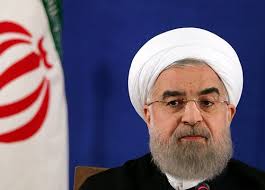
President Hassan Rohani made the comments while launching a railway project near Tehran on December 31.

“Iran would have earned $200 billion surplus income…if the country were not involved in an economic war,” he said.

The United States imposed new sanctions against Iran after Washington abandoned the 2015 nuclear deal in which Iran agreed to curb its controversial nuclear program in exchange for sanctions relief and other incentives.

The U.S. sanctions on Iran’s oil industry and exports have significantly cut Iranian oil exports, as the United States ended in May all waivers for all of Iran’s oil buyers and is going after anyone dealing with Iranian oil.

Since the United States abandoned the deal in 2018, Iran has lost 90 percent of its oil exports, a key source of revenue. Its currency has plummeted, and inflation has surpassed 40 percent.

Rohani also questioned arguments from hardline conservatives who criticize him and who say that the sanctions have not affected Iran.

“What should we do? When there is no food and water, you are still in danger no matter how strong you are,” he said.

Rohani’s comments came just weeks after millions of Iranians protested against economic hardships, inequality, financial corruption, and discrimination following a gas price hike in November.