Categories
Resource Stocks

The 7 Best Silver Mining Stocks To Invest In Now

These 7 mining stock are worth taking a deeper dive on…..

In the dynamic world of precious metals investments, silver stands out for its industrial and monetary value, offering a lucrative opportunity for those looking to diversify their portfolios.

Amidst a myriad of options, our analysts have found seven silver mining stocks that have emerged as top contenders for investors keen on tapping into the sector’s potential. These selections are not just random picks; they are driven by robust hedge fund interest, promising financial performance, and strategic operations that set them apart from their peers.

  1. Pan American Silver Corp. (NYSE:PAAS): With a strong buy average share price target and a 60% upside, Pan American Silver Corp. is a leader in the silver mining industry. Boasting 22 hedge fund investors in Q4 2023, its strategic operations in Vancouver, Canada, make it a prime choice for investors seeking growth.
  2. Hecla Mining Company (NYSE:HL): Known for its lucrative properties in Alaska, Hecla Mining Company is a significant player with a buy rating and a promising average share price target of $5.74. Supported by 14 hedge funds, its strategic investments offer a solid case for potential investors.
  3. Fortuna Silver Mines Inc. (NYSE:FSM): This Canadian mining company, with operations across Peru and Mexico, stands out for beating analyst EPS estimates in recent quarters. Eighteen hedge funds have taken notice, marking it as a compelling option for those looking to invest in silver.
  4. Royal Gold, Inc. (NASDAQ:RGLD): As a metals streaming company with a global presence, Royal Gold, Inc. has secured a cash flow agreement that extends the life of a Canadian mine. With 23 hedge funds backing it, its strong financial position and strategic advantage make it an attractive investment.
  5. MAG Silver Corp. (NYSE:MAG): With the highest upside among our picks, MAG Silver Corp. offers a 105% potential increase. Fourteen hedge funds have invested in this diversified metals miner with operations in Mexico, highlighting its growth potential.
  6. Coeur Mining, Inc. (NYSE:CDE): An American gold and silver mining company with a presence in the U.S., Canada, and Mexico, Coeur Mining has shown a 4.5% annual revenue growth despite mixed earnings results. With 14 hedge funds interested, it presents a nuanced but promising investment opportunity.
  7. Southern Copper Corporation (NYSE:SCCO): Although rated hold on average, Southern Copper Corporation stands out for beating analyst EPS estimates in three of its last four quarters. With 22 hedge funds investing and a robust $288 million stake from Fisher Asset Management, it offers a stable investment option with potential for growth.

Investing in silver mining stocks offers a unique blend of risk and reward, with these seven companies demonstrating significant potential for growth, backed by strategic operations and hedge fund interest. As the global economy continues to evolve, the silver mining sector remains a vibrant field for investors looking to capitalize on precious metals’ enduring value.

At Tips4Traders, we recognize the importance of making informed investment decisions. These seven silver mining stocks represent a curated selection poised for success in the current market climate. As always, investors are encouraged to conduct their research and consider their financial goals and risk tolerance before diving into the silver mining sector. With the right strategy, investing in silver mining stocks can be a glittering addition to any diversified investment portfolio but as always, we recommend talking to a professional for proper advice.

Categories
Resource Stocks

Panama president directs First Quantum to shut copper mine after court ruling

By Elida Moreno and Valentine Hilaire

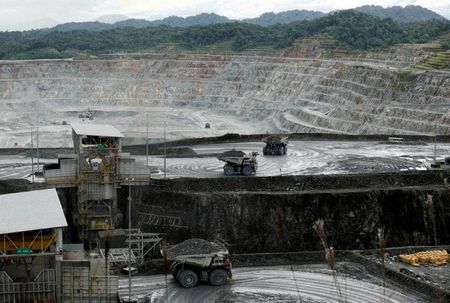
PANAMA CITY (Reuters) – Panama’s president said on Tuesday that Canadian miner First Quantum’s lucrative copper mine Cobre Panama would be shut down, hours after the country’s Supreme Court declared its contract unconstitutional.

President Laurentino Cortizo said in a televised address on Tuesday evening that “the orderly and safe closure of the mine” would begin as soon as the Supreme Court’s ruling was formerly published in the official gazette.

Cobre Panama has sparked public anger in the country that has spilled into street protests. The protests began as small, environmental ones against the mine but have morphed into broader demonstrations against the government amid charges the contract was too generous.

First Quantum said on Tuesday it had suspended commercial production at the mine and was putting in into care and maintenance.

The ruling puts the company on the long and unpredictable road of international arbitration, although it has suggested it would seek to avoid the process if possible through pre-arbitration talks with the Panamanian government.

The contract in dispute was agreed last month by Panama’s government and provided First Quantum a 20-year mining right with an option to extend for another 20 years, in return for $375 million in annual revenue to Panama.

“We have decided to unanimously declare unconstitutional the entire law 406 of October 20, 2023,” Supreme Court President Maria Eugenia Lopez said on Tuesday.

First Quantum acknowledged the ruling and affirmed its “unwavering commitment to regulatory compliance in all aspects of our operations within the country.”

Protester groups on social media said they would keep demonstrating until the ruling was published in the official gazette.

First Quantum shares closed down 0.8%. The company has lost more than C$10 billion ($7.4 billion) of its market value since the protests started in late October and the mine was later forced to suspend production.

The ruling will also have consequences for the copper market, as Cobre Panama accounts for about 1% of global copper production. Benchmark copper on the London Metal Exchange was up 0.9% at $8,441 a metric ton.

Dwindling copper supply from Panama and Peru could wipe out global surplus in 2024, analysts said.

ELECTION FACTOR

Cobre Panama is an equally significant business for the Central American nation, contributing about 5% of Panama’s GDP. J.P. Morgan warned this month that the odds of Panama losing its investment-grade rating would rise significantly if the contract was revoked.

The fierce opposition toward the deal was becoming a major factor in the country’s May 2024 presidential election, with candidates pushing for more state control of the mine.

The company’s Panama unit in a statement on Tuesday said it would “remain attentive to constructive dialogue” on the mining contract before deciding its course of action.

A spokesperson for Canada’s foreign ministry said it respects the decision of Panama’s Supreme Court of Justice and was closely following the contract negotiations.

Former president, millionaire businessman and leading presidential candidate Ricardo Martinelli last week proposed that Panama renegotiate the contract with the Canadian firm to secure higher royalties and a stake in the project.

But in response to the protests, Panama’s government enacted a bill in November banning all new mining concessions and extensions that legal experts have said would prevent the two parties from negotiating a new deal.

    The country’s top court ruled against First Quantum’s previous contract in 2017. The decision was upheld in 2021, but the current government allowed the miner to keep operating while both parties negotiated a new deal.

For First Quantum, the Panama ruling would be a repeat of its experience in the Democratic Republic Of Congo, where it exited in 2012 after filing an arbitration procedure against the African country for cancelling its mining contract.

First Quantum sold its assets to Eurasian Natural Resources Corporation PLC for $1.25 billion and settled the dispute.

The company has spent about $10 billion in developing the Cobre Panama mine over a decade. The mine produced 112,734 tonnes of copper in the third quarter and accounted for about 46% of its overall third-quarter revenue of $2.02 billion, according to the company.

($1 = 1.3590 Canadian dollars)

(Reporting by Elida Moreno and Valentine Hilaire; Additional reporting by Divya Rajagopal and Natalia Siniawski; Writing by Denny Thomas; Editing by Mark Porter and Rosalba O’Brien)

tagreuters.com2023binary_LYNXMPEJAR0KE-VIEWIMAGE

Categories
Resource Stocks

Lithium miner SQM loses $1 billion in market value as lower prices dent profit

By Sarah Morland

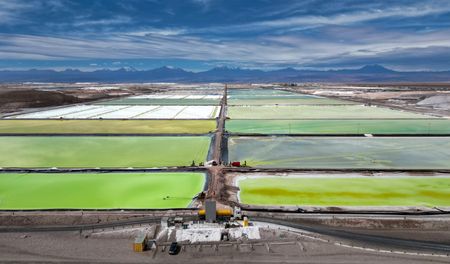
(Reuters) -Chile’s SQM, the world’s second-largest lithium producer, saw more than $1 billion wiped from its market value on Thursday as investors reacted to a third quarter profit hammered by sliding prices of the key battery metal.

SQM’s Santiago-listed shares had lost around 8% by early afternoon trading, accounting for some 1 trillion Chilean pesos ($1.13 billion), a day after the company said its net income had more than halved from a year earlier.

In a conference with analysts, executives said they would not slow output, and instead continue producing lithium at maximum capacity and building up warehouse inventories, though sales volumes could be limited in line with market indices.

“The idea is to be prepared when inventories return to the normal level and customer purchases are reactivated,” said SQM’s lithium vice-president Carlos Diaz.

Prices for lithium, an ultralight metal used for electric vehicle (EV) batteries, have dropped more than 60% on fears of softening global demand for EVs. They hit a two-year low this month.

Nevertheless, SQM executives said they expect EV demand to remain resilient in the long-term.

SQM’s senior commercial vice-president for lithium Felipe Smith attributed lower prices to softer EV demand outside China coupled with high component supplies causing excess inventories to accumulate across the whole battery supply chain.

Smith said SQM could contract its sales volumes in line with market indices, adding the firm had also entered into several new long-term index-linked supply deals.

Chile is looking to boost state control over its lithium industry with state miner Codelco leading talks with private miners such as SQM.

The talks cover areas such as how lithium production will be run on the Atacama salt flats, taking into account relations with local communities and environmental sustainability.

“We both agreed that having a sustainable operation in the long-term is the most important target,” SQM Chief Executive Ricardo Ramos said of the talks with Codelco over the Atacama development, adding that he did not expect significant production growth there.

($1 = 882.4700 Chilean pesos)

(Reporting by Sarah Morland; Editing by Valentine Hilaire and Jane Merriman, Kirsten Donovan)

Categories
Resource Stocks

Panama Orders Halt to New Mining Projects as Street Protests Grow

By Valentine Hilaire

(Reuters) -Panama will reject all new mining projects, the president said on Friday, as his government defends a controversial contract extending operations for two decades at a major copper mine that has sparked growing protests demanding its cancellation.

President Laurentino Cortizo announced that the new mining restrictions will apply to both future mining projects as well as those currently seeking permits.

“All of them will be rejected,” he wrote in a post on X. “This ban will go into effect from today.”

The abrupt mining pause comes barely a week after Cortizo hailed the revised contract that allows the local unit of Canada’s First Quantum to continue operating its lucrative Cobre Panama project.

The extended First Quantum concession for the sprawling open-pit mine guarantees state coffers at least $375 million annually while allowing it to operate for at least 20 more years, with the possibility of further extensions.

Thousands of protesters have taken to the streets to criticize the deal, as well as the mine’s environmental costs, and demand its withdrawal.

Earlier on Friday, Economy Minister Hector Alexander echoed Cortizo’s support for the contract.

“Panama is a mining country,” Alexander told Reuters, arguing that without the mine, the country’s economy would barely grow this year, versus the robust 6% growth the government estimates.

The Cobre Panama mine alone accounts for nearly 5% of Panama’s economy.

Also on Friday, Panama’s top court agreed to consider a second lawsuit challenging the contract.

In recent days, protesters have erected road blockades to pressure authorities, which also led to the suspension of classes nationwide earlier this week.

In an interview, Edison Broce, a lawmaker who opposes the contract, predicted that politicians who support it will be punished in elections next year.

He urged Cortizo and his government to heed the protesters.

(Reporting by Valentine Hilaire; Editing by Christian Plumb, Marguerita Choy and Raju Gopalakrishnan)

Categories
Resource Stocks

Vietnam Arrests Rare Earth Industry Officials, Casting Shadow Over Plans to Rival China

By Khanh Vu and Francesco Guarascio

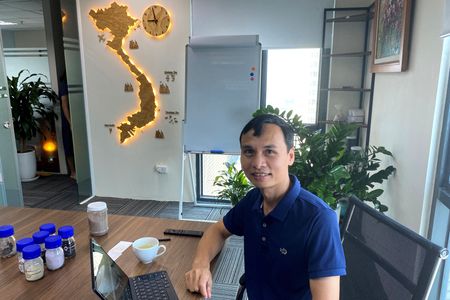
HANOI (Reuters) -Police in Vietnam have arrested six people accused of violating mining regulations, including the chairman of a company at the forefront of a drive to create a rare earth industry that could challenge China’s dominance of the sector.

Vietnam’s government is planning to auction new mining concessions for rare earths later this year, and officials from at least one company, Vietnam Rare Earth JSC (VTRE), that had been due to bid were among those arrested.

VTRE’s chairman, Luu Anh Tuan, was accused of forging value added tax receipts in trading rare earths with Thai Duong Group, which operates a mine in the northern Vietnamese province of Yen Bai, the Ministry of Public Security said on Friday.

Calls to Tuan went unanswered on Friday. VTRE’s office in Hanoi has been shut for days, one person at the building said.

VTRE has partnered with Australian mining companies Australian Strategic Materials (ASM) and Blackstone Minerals LTD, which were not named in the Vietnamese authorities’ investigation.

Blackstone said in September that it had agreed to partner with VTRE to win concessions at the country’s biggest mine, Dong Pao in Lai Chau province. A Blackstone executive had told Reuters its investment in the project would amount to about $100 million should it win the concession.

ASM signed a binding agreement in April with VTRE for the purchase of 100 tons of processed rare earths this year, and committed to negotiating a longer-term supply deal.

Neither Blackstone or ASM responded to a request for comment on whether their agreements with VTRE would be affected by the arrest of its chairman.

Blackstone shares fell more than 8% on Friday, while ASM shares value remained stable. The reason for the fall in Blackstone shares was unclear.

Vietnam has the second-largest deposits of the critical minerals – used in making electric cars and wind turbines – after China, according to United States Geological Survey estimates.

Last month, Reuters reported details of the Southeast Asian nation’s ambitious plans to boost its rare earth industry, raising annual output to 60,000 tons of rare earths oxides by the end of this decade from 4,300 tons in 2022.

ILLEGAL SALES

The chairman of Thai Duong Group, Doan Van Huan, was also arrested, accused of making 632 billion dong ($25.80 million) from illegal sales of ore extracted from the mine his company operated in Yen Bai province.

Police temporarily seized 13,715 tons of rare earths ores in a raid on Thai Duong’s premises, the ministry statement said.

Calls to Thai Duong Group went unanswered on Friday.

The government statement did not clarify what made the sales illegal, but a person with direct knowledge of the matter said that the Yen Bai mine raw ores had been exported to China, as the domestic refining costs for those ores were unprofitable.

Under Vietnamese rules, export of raw ores is largely restricted, as the country wants to boost its refining capacity.

The authorities have also intensified a clampdown on illegal rare earth mining from neglected or abandoned pits in recent months.

(Reporting by Khanh Vu and Francesco Guarascio; Editing by Ed Klamann, Martin Petty, Tony Munroe, Kay Johnson and Simon Cameron-Moore)

Categories
Resource Stocks

Indonesia Proposes Critical Minerals Trade Deal with U.S.

JAKARTA (Reuters) – Indonesia has asked the United States to begin talks on a trade deal for critical minerals so that exports from the Southeast Asian country can be covered under the U.S. Inflation Reduction Act, an Indonesian ministry said on Thursday.

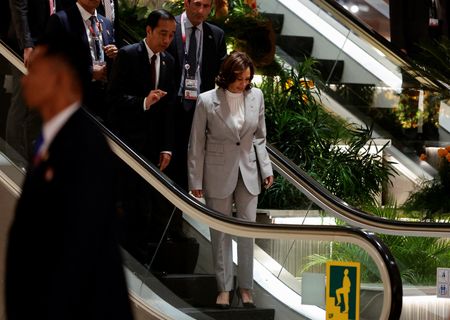
The request was made when Indonesian President Joko Widodo met with U.S. Vice President Kamala Harris on the sidelines of meetings hosted by the Association of Southeast Asian Nations (ASEAN) in Jakarta on Wednesday.

Under guidelines for the U.S. law issued in March, Washington has required that a certain amount of critical minerals in electric vehicle (EV) batteries be produced or assembled in North America or a free trade partner, for EVs sold in the United States to be eligible for tax credits.

Indonesia does not have a free trade agreement with the United States, but the resource-rich country has ambitions to become a major player in the manufacturing of EVs and their batteries, leveraging its vast nickel reserves.

“Indonesia is a producer and holder of the world’s biggest nickel reserves amounting to 21 million metric tons, so Indonesia can become a supplier for … batteries and EVs in the U.S.,” Jokowi, as the president is popularly known, was quoted as saying by the Indonesian ministry of economic affairs.

“Indonesia invites the U.S. to discuss the formation of the Critical Mineral Agreement,” Jokowi added.

The president also hoped that Indonesia’s involvement in the U.S.-led Indo-Pacific Economic Framework (IPEF) could allow its mineral exports to be recognized for “green subsidies” under the inflation act, according to the ministry’s statement.

The plan to propose a limited free trade deal with the United States was first brought up in April by senior Indonesian minister Luhut Pandjaitan, who said Jakarta wanted to offer Washington an agreement akin to the March deal between Japan and the Western power for EV battery minerals.

Harris, during the opening speech of the bilateral meeting, said she would continue to work with Indonesia to build supply chains that included “critical minerals required to expand our clean energy economies” and to boost trade between the two countries through IPEF.

(Reporting by Gayatri Suroyo; Editing by Kanupriya Kapoor)

Categories
Resource Stocks

Peru’s Minsur to Invest at Least $2 Billion as It Expands Copper, Tin Operations

LIMA (Reuters) -Peruvian miner Minsur has announced an investment of at least $2 billion in five years as it expands its copper and tin operations, an executive told Reuters on Thursday.

Minsur is set to invest around $543 million in an underground project in Justa mine, which is owned by the firm and Chilean mining company Copec, Minsur corporate affairs executive Gonzalo Quijandria said in a phone interview with Reuters.

Another $381 million will be invested to expand the processing plant and to improve the Justa mine camp, which began operations in 2021, Quijandria said.

The mine produced 126,036 fine metric tons of copper last year and was the world’s seventh most productive copper mine, according to official data.

Peru is the world’s No. 2 copper producer.

Minsur also operates the only mine in Peru for tin, a relatively rare element, and produces about 9% of this metal globally, according to the company.

Regarding such a production, Quijandria said Minsur plans to invest $462 million in its tin production line and another $100 million in tin exploration projects in the country.

“They are sustaining investments that include new tailings dams in the San Rafael mine and improvements in the Pisco smelter,” he said.

Minsur also plans to invest some $342 million in the modernization of its polymetallic producer Minera Raura.

Earlier on Thursday, Peru’s ministry provided a different breakdown of figures from the company, and Reuters did not receive an immediate response to a query about the discrepancy.

The announcement followed a meeting between Minsur CEO Juan Luis Kruger and Peru’s energy and mines minister, Oscar Vera.

The Mina Justa Subterranea project will be the second largest and most modern underground mine in Peru,” the ministry said in a statement, adding that Minsur expects to present the first permits for the project in the first months of next year, with production expected to start in 2027.

(Reporting by Marco Aquino; Editing by Brendan O’Boyle, Paul Simao and Leslie Adler)

Categories
Resource Stocks

Indonesian Nickel Smelters Turn to Philippines for Ore as Local Supply Tightens

By Mai Nguyen and Siyi Liu

(Reuters) – Nickel smelters in top producer Indonesia are making rare purchases of ore from the Philippines to ease tight supplies, people familiar with the matter said, upending trade flows of the raw material and pushing up costs across the supply chain.

Jakarta recently delayed the issuing of mining quotas and suspended operations at a key site of state miner Aneka Tambang (Antam) after an investigation into corrupt practices in issuing mining allowances.

While mining at other sites continues and Indonesia, which accounts for half of global mined supply, has said there is no shortage of ore, prices have risen about 8% this week, following a 10% surge a week earlier, local buyers say.

Some firms are now buying ore from neighboring Philippines, the world’s No. 2 supplier, in the event that new mining quotas are further delayed, said three smelter managers, two nickel traders and a Chinese analyst.

All declined to be identified because they were not permitted to disclose the trade information publicly.

“(We) started imports from this month. It is economical,” said an official at a major smelter in Indonesia.

The person did not specify how much the smelter is buying but said the purchases are of low-grade limonite ore.

Indonesian miners will prioritize high-grade ore for their limited production quotas, the person added.

Indonesia imported 53,864 metric tons of nickel ore in the first half of 2023, up from 22,503 tons for all of 2022, Indonesian trade data showed.

But imports from the Philippines only started in May, and all arrived at Morowali port in a huge nickel processing park run partly by Chinese nickel giant Tsingshan Group, the Indonesian data showed.

Tsingshan did not respond to a call and email seeking comment.

Volumes in the first half from the Philippines were less than 1,000 tons in nickel content compared to Indonesia’s 1.6 million tons mined last year, data from the Indonesian government and the International Nickel Study Group (INSG) showed.

“The ore from the Philippines is generally lower grade than Indonesian material which will push operating costs higher due to lower production from same tonnage of ore,” said Wood Mackenzie analyst Andrew Mitchell.

“But the ore is cheaper by comparison with domestic ore currently and so this will offset some of the rising costs,” Mitchell said.

Indonesia exported much of its ore before a 2020 ban halted all shipments and attracted billions of dollars worth of investment in nickel smelting, mostly from Chinese companies.

Imports from the Philippines could rise to 100,000 tons for July and August combined because of the supply tightness, according to Chinese consultancy Mysteel.

The Philippines mined 360,000 tons of nickel in ore in 2022, or 11% of global supplies, according to INSG.

Rising demand for ore from the Philippines is also pushing up prices in China, as buyers stock up due to tighter Indonesian supplies and ahead of the rainy season in the Philippines starting in October, said a Chinese trader.

Philippines 1.3% grade ore landed at China’s Lianyun port surged 20.6% in the past month to $41 a ton, the highest since March, Mysteel data showed.

(Reporting by Mai Nguyen in Hanoi, Siyi Liu in Beijing, Fransiska Nangoy in Jakarta, Enrico dela Cruz in Manila and Beijing Newsroom; Editing by Dominique Patton and Kim Coghill)

Categories
Resource Stocks

Barrick beats quarterly profit estimates on higher gold prices

(Reuters) – Barrick Gold Corp beat analysts’ expectations for second-quarter profit on Tuesday, as the Canadian gold miner benefited from higher prices of the precious metal.

Average prices of gold during the reported quarter rose 4.3% compared to last year, nearly touching an all-time high in May as U.S. banking concerns accelerated a rush to the safe-haven asset.

The company’s average realized gold prices stood at $1,972 per ounce, up from $1,861 per ounce a year earlier.

Meanwhile, all-in sustaining costs (AISC) for gold, a key industry metric that reflects total expenses associated with production, rose to $1,355 per ounce from $1,212 per ounce in the year-ago quarter.

Miners have been hurting from sticky inflation and high fuel prices after Russia’s invasion of Ukraine, along with labor shortages in the United States.

The Toronto-based miner posted adjusted earnings of 19 cents per share for the quarter ended June 30, while analysts on average had expected 17 cents, according to Refinitiv IBES.

(Reporting by Arshreet Singh; Editing by Shailesh Kuber)

Categories
Resource Stocks

China gallium, germanium export curbs kick in; wait for permits starts

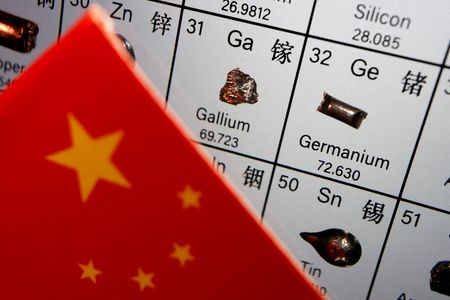
BEIJING (Reuters) -China’s export controls on some gallium and germanium products take effect on Tuesday, with traders braced for a drop in international supply in August and September while exporters sort out newly required permits.

China, the world’s top supplier of the two minor metals used to make semiconductors, announced restrictions on the exports of eight gallium and six germanium products in early July, citing national security reasons.

From Tuesday, exporters of these products need to apply for export licenses for dual-use items and technologies – those with potential military as well as civil applications, according to China’s Ministry of Commerce.

They can submit applications only from Aug. 1, four traders said. Two of the sources told Reuters they are still preparing the necessary documents and are likely to file their applications in the coming week.

The Ministry of Commerce did not immediately respond to a Reuters request for comment.

It typically takes about two months to obtain such licenses, the traders and two producers said. It was unclear how many licenses would be issued, or whether their numbers would be limited, they added.

Stockpiles outside China, which could last for two to three months, will need to be tapped while traders await Beijing’s export permit approvals, said Willis Thomas, a consultant at London-based consultancy CRU.

At the same time, the export restrictions are expected to result in a growing surplus of the products in China.

Offer prices for gallium ingot at Rotterdam jumped 43.4% to $370 per kg last week, against $258 per kg in late June.

Offers for germanium ingot at Rotterdam rose 9.1% to $1,473 per kg last week, from $1,350 per kg one month earlier, according to the China Nonferrous Metals Industry Association.

CRU’s Thomas said he expects prices to rise and stay supported over the coming months before cooling by the end of the year, as China’s exports and overseas supply are expected to improve.

Chinese exports of wrought germanium and germanium products in the first half totalled 27,825 kg, up 75.5% from a year earlier, customs data showed. Exports of wrought gallium and gallium products totalled 17,565 kg, down 53.5%.

(Reporting by Beijing Newsroom and Andrew Hayley in Beijing; Editing by Florence Tan, Jason Neely and Jan Harvey)