Categories
Resource Stocks

Analysts mark down copper forecasts as output ramps up: Reuters poll

By Eric Onstad and Ananya Bajpai

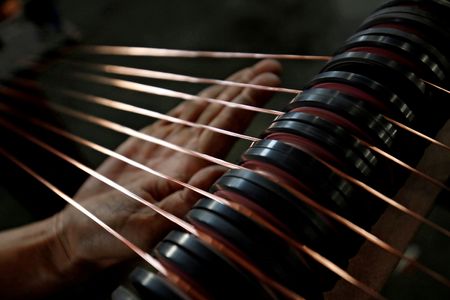
LONDON/BENGALURU (Reuters) – Analysts have pared price forecasts for copper and other industrial metals as supply expands while demand in top metals consumer China remains muted, a Reuters poll showed.

Copper prices have been range-bound in recent months after a January slide from their highest in more than seven months and a May rebound from a slump below $8,000 a metric ton.

Upbeat sentiment on the post-pandemic reopening of China propelled gains early in the year, but investors later dumped industrial metals after tepid economic progress by the world’s second-biggest economy.

“Copper is heading into a soft patch as mine supplies ramp up. Chinese demand is not strong enough yet to stop prices from falling back,” said Dan Smith, head of research at Amalgamated Metal Trading.

For the first five months of the year, the global market was in a surplus of 287,000 metric tons, having been in a 74,000 ton deficit in the same period last year, the International Copper Study Group said.

The cash copper contract on the London Metal Exchange (LME) is expected to average $8,450 a metric ton in the fourth quarter, a median forecast of 26 analysts showed.

That is 7% weaker than the forecast in the previous quarterly poll and 1.5% down from Wednesday’s closing price of $8,577.25.

Analysts forecast a copper surplus this year of 111,000 metric tons, with oversupply rising to 188,000 tons next year.

ALUMINIUM RAMPS UP IN YUNNAN

Prices for aluminum were supported early in the year by cuts to output in China’s southwestern Yunnan province after reduced hydropower capacity triggered curbs on power usage, helping to lift prices to a seven-month peak in January.

However, the power curbs have now been relaxed and smelters in Yunnan have begun to ramp up production, an analyst who visited the region told Reuters this month.

“Resuming output in Yunnan province during this summer will definitely put pressure on the aluminum price,” said independent analyst Goran Djukanovic.

LME cash aluminium is expected to average $2,308 a metric ton in the fourth quarter, down 8% from the previous poll’s forecast.

Analysts expect a market deficit this year of 191,750 metric tons, dropping to 66,000 tons in 2024.

HIGHER-GRADE NICKEL

Nickel prices, meanwhile, have registered the heaviest losses among LME metals this year, sliding 27% largely because of rising output in top producer Indonesia.

The Asian country mainly produces nickel pig iron (NPI), which has lower nickel content than refined nickel, but Chinese companies in Indonesia are converting NPI furnaces to produce higher-grade metal.

“Against the backdrop of continued robust Indonesian production, which should to some extent also translate into higher class 1 nickel supply, we do see downside potential for the nickel price,” said Thu Lan Nguyen at Commerzbank.

The main use for nickel is in stainless steel, but the metal’s biggest growth area is for electric vehicle batteries.

Analysts expect LME cash nickel prices to average $20,000 a metric ton in the fourth quarter, down 11% from the previous poll.

They expect the global nickel market to show a surplus of 199,000 metric tons this year and 150,000 tons in 2024.

(Reporting by Eric Onstad in London and Ananya Bajpai in Bengaluru; Editing by David Goodman)
Categories
Resource Stocks

Smaller Miners’ Hunger for Cash Grows as Copper Prices Fall, Sparking Merger Bets

By Divya Rajagopal and Melanie Burton

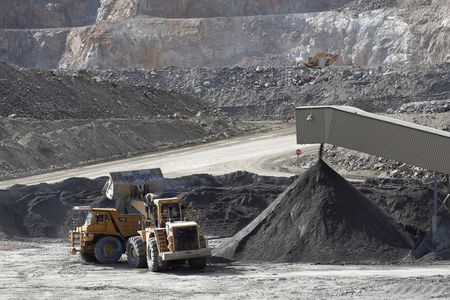
TORONTO/SYDNEY – A fall in copper prices is having an outsized impact on small and mid-sized miners, forcing many to cut output, and some are now open to raising funds from new investors to ride out the current downtrend, several company executives told Reuters.

Copper is set to play a crucial role in the transition to a greener economy and cashed-up bigger miners are seeking assets with longer mine life and high-quality grade ore to meet the growing demand for the red metal.

Depressed prices for the red metal due to global economic growth concerns, however, are forcing some small-to-mid sized companies to cut back exploration budgets and other expenses. But that may not be sufficient for them to survive and the current scenario may pave the way for more M&A in the sector, company executives and analysts say.

So far this year, some $22 billion worth of copper M&A has been launched, according to Reuters calculations, including Toronto-based Hudbay Minerals’ $439 million bid for Copper Mountain, Lundin Mining’s purchase of Japan’s JX Nippon Mining and Metals stake in Caserone mines in Chile, and Newmont Corp’s planned acquisition of gold and copper miner Newcrest for $18 billion.

Copper M&A more than doubled in 2002 to $14.24 billion from the previous year, according to an S&P Intelligence report.

The M&A theme is expected to continue as it is extremely difficult to develop new copper mines, Stuart McDonald, CEO of Vancouver-based Taseko Mines, told Reuters in June.

Taseko is exploring funding proposals to bring in additional liquidity to expand its copper project in Arizona, McDonald said, adding there are significant challenges to permitting new mines across the world.

“So the large miners are saying it is difficult to build new supply, so let’s just buy companies,” McDonald said.

Copper prices have been gradually losing steam since hitting their strongest levels in over seven months in January when optimism abounded about the reopening of China. On Friday, the three-month copper on the London Metal Exchange dropped by 0.6% to $8,436 per metric ton.

DEARTH OF LARGE MINES

Chinese research firm Antaike has predicted that global copper prices are set to fall to $7,000 per tonne or $3.18 per pound in the second half of this year due to lack of solid demand growth in the world’s second biggest economy.

“There are high cost companies that would go out of business if the copper prices fall below $3.50,” Hudbay Minerals CEO Peter Kukielski told Reuters earlier this month.

The lower copper price presents M&A opportunities for Hudbay, Kukielski said, but it will also get “squeezed” if the price of copper falls below $3.50.

With lack of large mines up for grabs, he is expecting that large miners will be looking to expand their production by acquiring smaller mines. Hudbay is also open to entertaining M&A offers at a right price.

In Canada, mines of junior producer Minto Metals also presents an M&A opportunity. Backed by investors such as Japan’s Sumitomo Corp, Minto Metals ceased operations abruptly in May over increased costs in running its mine in the Yukon, according to the company filings.

The Yukon government, which has taken control of the mine, told Reuters there are still significant copper reserves associated with the claims held by the company.

“It is possible that a creditor will make an application to court for the appointment of a receiver to manage Minto’s assets, which could potentially include a sale of the mine,” it added.

An analyst report by Royal Bank of Canada published in June has identified potential acquisition targets, which include Hudbay, First Quantum Minerals, Ivanhoe Mines, and Capstone Copper. First Quantum, Ivanhoe, Capstone did not offer an immediate comment.

First Quantum rejected an informal takeover offer from Barrick Gold, Bloomberg News reported last month. Barrick at that time said, it does not comment on market speculation.

In Australia, Queensland-based copper miner AIC Mines has cut back on some spending given current copper prices, which are now below its March production costs, Managing Director Aaron Colleran said.

“The recent weakness in the copper price has meant that we have curtailed some small discretionary capital spend but it has not impacted our longer term goals in any way,” Colleran added.

AIC had raised A$30 million $20 million) equity in February to expand its copper production.

David Lennox, a mining analyst with Sydney-based private wealth management Fat Prophets, said it will be a problem if the copper price falls further and stays down for longer. “Then it’s a matter of how much cash have you got.”

“For a little pure play producer, they generally don’t have the financial or balance sheet strength to last very long.”

($1 = 1.4865 Australian dollars)

(Reporting by Divya Rajagopal in Toronto and Melanie Burton in Melbourne; Editing by Denny Thomas and Marguerita Choy)

Categories
Resource Stocks

Gold Miner Newmont Misses Profit Estimates on Mining Disruptions, Higher Costs

(Reuters) -Newmont missed Wall Street estimates for second-quarter profit as lower production and higher costs hurt, sending shares of the world’s largest gold miner down nearly 5% in premarket trading on Thursday.

Since early June, Newmont’s operations at its Penasquito mine in Mexico has remained suspended in response to a labor strike notice, hurting output.

Newmont later last month told Reuters that it has declared a force majeure, unforeseeable circumstances that prevent from meeting contract obligations, on deliveries of some metal products from the Mexican mine.

The company withdrew its annual outlook for the mine on Thursday and said it could not estimate when the strike in the country would be resolved.

Wildfires in Quebec had also temporarily halted operations at its Eleonore mine in June.

Denver, Colorado-based Newmont said attributable gold production fell 17.3% to 1.24 million ounces in the quarter.

The company expects production to be higher in the second half of the year, with improving costs seen through the remainder of the year.

Its all-in sustaining cost (AISC) for gold, a key industry metric that reflects total expenses associated with production, rose nearly 23% to $1,472 per ounce in the quarter.

On an adjusted basis, Newmont posted a net income of 33 cents per share for the quarter ended June 30, compared with analysts’ average estimate of 44 cents per share, according to Refinitiv data.

Newmont, which is in the process of acquiring Australia’s Newcrest Mining, said it remains on track to achieve its full-year targets.

(Reporting by Sourasis Bose in Bengaluru; Editing by Savio D’Souza and Shilpi Majumdar)

Categories
Resource Stocks

Factbox-Where are germanium and gallium produced, what are they used for?

(Reuters) – China said on Monday it will impose export restrictions from Aug. 1 on some gallium and germanium products, metals used in computer chips and other products, to protect national security interests.

Here are some facts about gallium and germanium:

WHERE IS GERMANIUM FOUND?

Germanium ores are rare and most germanium is a by-product of zinc production and from coal fly ash.

China produces around 60% of the world’s germanium, according to European industry association Critical Raw Materials Alliance (CRMA), with the rest coming from Canada, Finland, Russia and the United States.

China exported 43.7 metric tons of unwrought and wrought germanium last year, according to Chinese customs.

Roughly $39 million worth of germanium was consumed last year, up 10% from 2021, according to the U.S. Geological Survey (USGS).

WHAT ABOUT GALLIUM?

Gallium is found in trace amounts in zinc ores and in bauxite, and gallium metal is produced when processing bauxite to make aluminium. Around 80% is produced in China, according to the CRMA.

Gallium is used to make gallium arsenide for use in electronics. Only a few companies – one in Europe and the rest in Japan and China – can make it at the required purity, says the CRMA.

China exported 94 metric tons of gallium in 2022, up 25% on the prior year, according to Chinese customs.

U.S. imports of gallium metal and gallium arsenide (GaAs) wafers in 2022 were worth about $3 million and $200 million, respectively, according to USGS.

According to USGS, high-purity refined gallium production last year was estimated at about 290,000 kgs, a 16% increase from 250,000 kgs in 2021.

WHO ELSE PRODUCES THESE METALS?

Small amounts of gallium – around 10 metric tons in 2021 – are produced by Japan, Russia and South Korea, according to USGS.

Germany and Kazakhstan also produced it in the past. After prices rallied in 2020 and 2021, Germany announced that it would restart primary gallium production.

Canada’s Teck Resources is the biggest germanium producer in North America, extracting the material from its Trail smelter in British Columbia.

U.S.-based Indium Corporation also produces germanium, while Belgium’s Umicore makes both germanium and gallium.

WHAT ARE THEY USED FOR?

The metals are used in high-speed computer chips and in the defense and renewable energy sectors.

Germanium is key to fiber optic cables and also used in high-speed computer chips and plastics as well as infrared radiation.

The metal and its oxides are used in military applications like night-vision devices as well as satellite imagery sensors.

It is also important for low-carbon technologies such as solar cells.

Semiconductor wafers made with gallium arsenide rather than silicon can operate at higher frequencies and are heat resistant, according to U.S. company Wafer World.

They also produce less noise than silicon devices, especially at high operating frequencies, making them useful in radars and radio communication devices, satellites and LEDs, Wafer World says.

SUBSTITUTES?

In some applications, gallium in arsenide wafers can be replaced by silicon or indium, according to USGS.

“Silicon can be a less-expensive substitute for germanium in certain electronic applications,” according to USGS.

“Zinc selenide and germanium glass substitute for germanium metal in infrared applications systems, but often at the expense of performance.”

HOW MUCH DO THEY COST?

Gallium at 99.99% purity in China was assessed at 1,775 yuan ($245) a kg on Monday, up 5.97% from the previous session and the highest since May 16, Shanghai Metal Exchange data on Refinitiv Eikon showed.

China’s germanium ingot price was last at 9,150 yuan ($1,264) per kg on Monday, Shanghai Metal Exchange data on Refinitiv Eikon showed.

IS THERE A PRECEDENT?

In 2010, China restricted export quotas of rare earths to Japan following a territorial dispute between the countries, sending prices of rare earths soaring and Japan scrambling to find other sources of supply. Beijing said at the time the curbs were based on environmental concerns.

Rare earth magnets are used in wind turbines, electric vehicles and defense applications like laser guided missiles.

China has hinted at various times that it could crimp rare earths exports, including in recent years.

($1 = 7.2374 yuan)

(Reporting by Dominique Patton, Mai Nguyen, Melanie Burton, Beijing newsroom and Pratima Desai; Editing by Tom Hogue, Himani Sarkar, Catherine Evans and David Evans)

Categories
Resource Stocks

Chile’s Codelco Must Kick-Start Lithium Industry While Reviving Copper Output

By Fabian Cambero

SANTIAGO (Reuters) – Chilean President Gabriel Boric, seeking to expand the country’s long-stalled lithium industry, has tasked state-owned Codelco, the world’s largest copper producer, to lead the charge of developing the white metal needed for electric vehicle batteries.

Chile is already the world’s No. 2 producer of lithium after Australia. But demand is exploding worldwide as automakers gear up to churn out electric vehicles to cut greenhouse gas emissions. The country sits on top of the world’s largest known deposits of lithium and Boric’s announcement in April gave Codelco responsibility for negotiating deals with new companies as well as current lithium miners Albemarle and SQM.

The goal is to get the companies to enter voluntary state-controlled partnership before their existing contracts expire. At the same time, Codelco wants to boost its output of copper which has slumped to its lowest in a quarter-century.

Some analysts have questioned whether the copper company with no experience as a lithium miner can tackle both challenges at once. But industry insiders told Reuters Codelco will probably focus its own resources on copper while negotiating contracts for lithium operations and letting other miners do the work.

“It could be Codelco only contributes capital,” said one of the sources with knowledge of executive decision making, a strategy which could see the state firm hold a majority stake in future projects but leave operations to private partners.

Chile could end up recreating the model Indonesia used with Freeport-McMoRan, where the firm gave up majority control to the state but remained the operator, a former Codelco senior executive said.

“Codelco can resolve the lithium issue with relatively few people,” added the person, who asked not to be named due to the sensitivity of the ongoing talks. “Codelco may have 51% but I don’t think it will be the operator.”

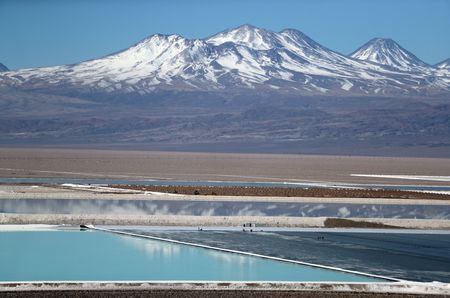
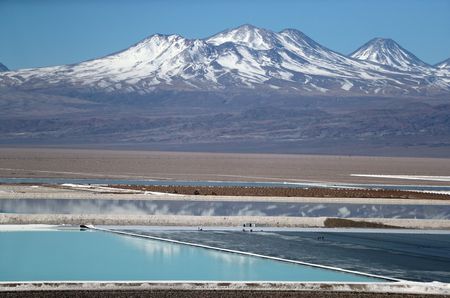
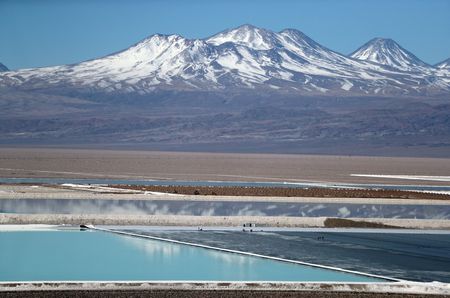
Lithium, evaporated from brine ponds in Chile’s high-altitude salt flats, is coveted by Tesla, BMW and every other global car maker. It is also sought by governments from Berlin to Beijing, that need it to power the shift to renewable energy.

Two Codelco sources with knowledge of resource planning and strategy said the lithium units were being run by compact teams and there was no plan for major hiring as talks with SQM and Albemarle moved forward.

The sources said the lithium strategy was being led by executives including Jaime San Martin, manager of new business development, known by some within Codelco as “lithium man”. Finance VP Alejandro Rivera is also closely involved.

BALANCING COPPER AND LITHIUM

Codelco Chairman Maximo Pacheco told Reuters that while the firm had set up two lithium subsidiaries Salares de Chile and Minera Tarar, it would first see how talks went before making any recruitment drives.

“Based on that and the progress of the negotiations we’re having to build these public-private alliances, we’re going to define the organization of human and capital resources,” he said on the sidelines of an event near capital Santiago.

Codelco has already started talks with SQM, whose existing lithium contract expires in 2030. Albemarle has said it is waiting to begin negotiations until closer to its contract’s expiration date in 2043.

Pacheco and other executives said lithium plans would not weigh on copper, but outside experts were skeptical.

Juan Carlos Guajardo, head of consultancy Plusmining, said building up Codelco’s lithium expertise from almost zero would nonetheless take up resources.

“The agreements will require high involvement of top management as they are strategic decisions,” Guajardo said. “But I think lithium is an excellent opportunity for Codelco to help them navigate their very difficult copper situation.”

Codelco must also revive production of the red metal that has flagged to a 25-year low. Challenges keep mounting as the Andre Sougarret, the company’s CEO, suddenly resigned last Tuesday, citing “complexities” within the company.

(Reporting by Fabian Andrés Cambero; Editing by Alexander Villegas, Adam Jourdan and David Gregorio)

Categories
Resource Stocks

In China’s Lithium Hub, Mining Boom Comes at a Cost

By Siyi Liu and Dominique Patton

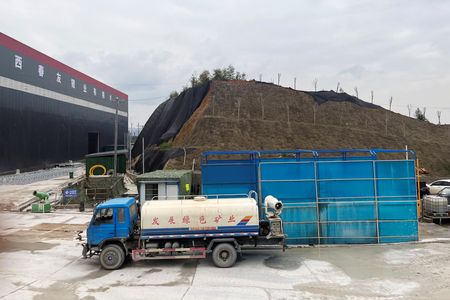
YICHUN, China (Reuters) – Down a steep dirt road from the Baishi Huashan lithium mine in southern China, trucks laden with silvery grey ore rumble towards a cluster of smelters in the valley below that have sprung up to cash in on the electric vehicle battery boom.

The city of Yichun, China’s most prospective region for lithium, is ground zero in the country’s push to cut its reliance on imports of the metal for its battery industry, which makes three-quarters of the world’s lithium-ion batteries.

Mining the metal from a rock called lepidolite, Yichun aims to quadruple its output to about 350,000 metric tons of lithium carbonate equivalent (LCE) by 2025, or as much as the world’s top exporter Australia produced last year.

However, with much higher production costs than other Chinese mining regions, Yichun is the most vulnerable to the recent global fall in lithium prices, raising questions about how it will meet its target.

At the same time, concern is growing about the environmental impact of extracting lithium ore from lepidolite, which has already led Yichun authorities to shut some plants, further challenging the country’s drive for self-reliance.

Monthly output in Yichun has fallen by about a third after China moved to rein in a chaotic rush into the sector, while Beijing also slashed EV subsidies, which hit lithium demand and hammered prices.

“Many investments in Yichun are now at risk after prices fell this year,” said Yang Yaohua, an analyst at Guosen Futures.

With global lithium demand forecast to grow 76% to 1.57 million metric tons LCE between 2022 and 2025, according to Australian bank Macquarie, and China dependent on imports for 55% of its lithium, Beijing wants to boost domestic output.

Yichun, a city of 5 million people surrounded by forest-covered mountains rich with lepidolite, is leading that push.

By the end of last year, 202 companies, including battery giants CATL and Gotion High Tech, had invested in the city’s smelters and mines, according to Yichun’s website.

COST CHALLENGE

For battery materials makers, Yichun’s location is its main attraction. Its mines are more accessible than the brine lakes on China’s western plateaus and the spodumene rock in southwestern Sichuan province.

To draw investment, the city has rolled out a raft of sweeteners in recent years, targeting 500,000 metric tons a year of lithium carbonate production from lepidolite and other sources.

It has supported mine development by taking stakes in mining companies to help battery materials makers that do not have mines overseas like those owned by China’s top lithium producers Ganfeng Lithium and Tianqi Lithium.

By comparison, development in other lithium-rich regions is far behind.

“There are very few battery precursor makers in Qinghai, and the brine lake production in Qinghai and Tibet plateau areas can be very limited during extremely cold winter weather,” said Arena Yang, a Shanghai-based battery metals analyst at CRU.

However, Yichun faces a big cost disadvantage. Separating lithium from lepidolite can cost as much as 100,000 yuan per metric ton, compared to 40,000-50,000 yuan for brine and 50,000-60,000 yuan for spodumene, analysts said.

The cost difference was manageable until lithium prices plunged after Beijing cut EV subsidies this year.

“The higher costs are concerning, especially if lithium prices remain on a downtrend,” said Yang, the Guosen analyst.

He sees lithium prices falling to 100,000 yuan as soon as next year from 320,000 yuan currently because of a looming global surplus.

‘NATURAL RESOURCES CHAOS’

Further dimming the outlook for lepidolite, environmental damage is a growing concern.

Along the road to the Baishi mine, red banners implore: “Unite to crack down on natural resources chaos”.

Lepidolite extraction and smelting produces toxic by-products like thallium and tantalum that cause severe water pollution, said Wu Wei, an assistant professor at Xiamen University.

Yichun authorities have already found toxic substances in the Jin River, according to media reports.

Eric Norris, president of Energy Storage at the world’s top lithium miner Albemarle Corp, said miners in the U.S. would never be allowed to do the kind of processing seen in China for lepidolite.

“It comes at a huge environmental cost,” Norris told Reuters in an interview.

In December, Yongxing Special Materials Technology said production at a subsidiary’s plant in Yichun was suspended for 10 days while authorities investigated abnormal water quality found in the Jin River.

Around the same time, Chinese media outlet The Paper said Yongxing’s plant was among four Yichun factories that suspended output after high levels of thallium were found in water samples from the river, a main source of water supply in the area.

Reuters has not independently confirmed the pollution incidents. Yongxing did not respond to emailed questions. Yichun government’s news department did not answer several calls. Jiangxi provincial government’s news department did not respond to a request for comment.

By 2025, if Yichun reached its target of 500,000 metric tons a year of lithium carbonate output, it would produce about 10 million tons of tailings, said Lv Jun, director of Yichun’s lithium battery new energy industry development center.

That would be more than ten times the current tailings handling capacity in Yichun, said Ma Jun, director at the Institute of Public & Environmental Affairs (IPE), a non-profit organisation in Beijing, citing public information.

“Previously, local environmental supervision was not strict. As it gets stricter now, lithium resources in Yichun will lose their competitiveness with the higher costs for environmental protection,” Ma said.

For now, many companies are forging ahead, while seeking better control over costs,” said Vicky Zhao, senior analyst at Fastmarkets. But questions linger over Yichun’s ambitions.

UBS analysts see China’s supply of lithium from lepidolite tripling to 280,000 metric tons, or 13% of global supply, between 2022 and 2025, well short of Yichun’s target.

“Unless lepidolite producers find a way to solve the environment and costs issues via technology innovation and industry upgrade, it will remain a second choice to spodumene,” said Li Qi, an analyst at British consultancy Benchmark Mineral Intelligence.

($1 = 7.1418 Chinese yuan renminbi)

(Reporting by Siyi Liu and Dominique Patton; Additional reporting by Beijing Newsroom and Ernest Scheyder in Houston; Editing by Tony Munroe and Sonali Paul)

Categories
Resource Stocks

Mining lags on female C-suite, board representation

By Clara Denina and Helen Reid

LONDON (Reuters) – Mining firms lag far behind other sectors on female representation in top leadership, data released on Tuesday showed.

S&P Global Commodity Insights’ figures highlight the industry’s struggle to improve gender equity, with women filling just 12.1% of the highest-ranking executive positions across more than 2,000 publicly-listed miners globally as of April, a rise of only 1.6 percentage points from October 2021.

Women currently hold 14% of all mining executive positions and 12.3% of board roles, the data showed. This compares to a female representation of 42.7% in senior and leadership roles globally across sectors, according to the World Economic Forum.

“Change takes time, and progress may vary across different industries and regions,” said Barbara Dischinger, director of London-based International Women in Mining.

Dischinger said barriers slowing the pace of expected improvement include implicit biases in selection and promotion processes and a lack of role models, mentoring and sponsorship.

Executive and boardroom diversity has become a focus for many policymakers and investors who say a broader range of experience improves decision-making and corporate culture.

Despite mining CEOs saying gender diversity is a priority and setting ambitious goals, progress remains slow and patchy.

The share of female senior managers at Anglo American was stable at 29% in 2022 from a year earlier, versus a goal of 33% by 2023, while the proportion of female senior leaders at Rio Tinto was 28.3% last year, a 0.9 percentage point rise from 2021, their annual reports show.

“If we do not address challenges relating to Diversity, Equity and Inclusion (DEI), there will be far-reaching implications for the industry’s ability to attract and retain the talent needed,” said Rohitesh Dhawan, CEO of the International Council of Mining and Minerals.

“We have an obligation to eradicate discrimination, harassment, and assault of any kind in our workplaces,” he said.

An independent report commissioned by Rio’s management and published in 2022 found 28.2% of women working in the company reported experiencing sexual harassment at work.

Fund manager abrdn said in February it had engaged with some of the largest mining companies it holds shares in after “incidents of unacceptable workplace behaviours”.

“What we want is for mining companies’ rigorous health and safety standards to be expanded to include employees’ psychological wellbeing and potential risk of harassment,” said Andrew Mason, abrdn head of active ownership.

“Companies need to show they have those measures in place to attract diverse employees.”

(Reporting by Clara Denina and Helen Reid; Editing by Alexander Smith)

Categories
Resource Stocks

South African Gold Miner AngloGold Switching to U.S. Listing

By Nelson Banya and Felix Njini

(Reuters) -Gold miner AngloGold Ashanti will move its primary listing to New York from Johannesburg in a bid to access a deeper pool of investors and reduce risks associated with South Africa, it said on Friday.

The company has shifted its focus to more lucrative mines in Ghana, Tanzania, the Democratic Republic of Congo as well as Australia and the Americas as mining in South Africa becomes more difficult and costly due to geological challenges posed by mining some of the world’s deepest gold deposits.

AngloGold, whose forerunner was founded by industrialist Ernest Oppenheimmer a century ago, completed the sale of its South African mines in 2020. The company will also move its corporate base to the United Kingdom, but will maintain the South African office.

“There are strategic reasons why we did this. By far the largest pool of gold capital is in the U.S and it was clear that a secondary listing incorporating South Africa was restricting access to that pool of capital,” CEO Alberto Calderon told Reuters in an interview.

He added that two-thirds of AngloGold stock volumes were already being traded in New York, where the company has listed depository receipts.

“We have outgrown South Africa,” he said, adding that a primary listing in the United States was aligned to its development of four greenfield projects in Nevada, which will take AngloGold’s annual output close to 3 million ounces.

Calderon said rating agencies linked AngloGold’s credit rating to that of South Africa, which is struggling with severe power cuts that are souring investor sentiment in Africa’s most industrialised economy.

Shares in Anglogold, which plans to keep a secondary listing in Johannesburg and another in Ghana, were down 5.8% with analysts citing disappointment with its first-quarter results reported earlier and outlook for 2024, which shows marginal growth on 2023.

“The fall in share price today in my opinion is primarily being driven by the weaker operational data for Q1/23 and 2024 outlook,” said BMO analyst Raj Ray, adding the guidance for next year was “lighter on production and higher on costs”.

SHAREHOLDERS TO VOTE ON PLANNED MOVE

The plan to move the primary listing will be put to a shareholders’ vote and requires at least 75% support from investors, Calderon said on a conference call.

Responding to Reuters questions, state-owned asset manager Public Investment Corporation (PIC), which is AngolGold’s single largest shareholder with a 15.73% stake, said investors “will continue to be able to invest locally”. It did not directly answer queries on whether it will vote for the move.

Arnold Van Graan, analyst at Nedbank Group, said the move was unlikely to lead to an immediate re-rating of AngloGold’s valuation.

“This move should, however, benefit the company in the longer term if its full asset potential initiative delivers operational improvements and the company continues to meet its operational and cost guidance,” Van Graan said in a note to clients.

($1 = 18.3161 rand)

(Reporting by Nelson Banya and Felix Njini; editing by David Goodman, Jason Neely and Emelia Sithole-Matarise)

Categories
Resource Stocks

Barrick Beats Quarterly Profit Estimates on Higher Prices

(Reuters) – Canadian miner Barrick Gold Corp beat Wall Street expectations for first-quarter profit on Wednesday, as higher prices of the metal outweighed a decline in production.

Average prices of gold rose 7.8% and peaked over the $2,000-mark during the reported quarter on its appeal as a safe-haven asset following a banking crisis and fears of a potential recession.

The company’s average realized gold prices stood at $1,902 per ounce, compared with $1,876 per ounce a year earlier.

Barrick’s first-quarter gold production fell to 952,000 ounces from 990,000 ounces a year earlier. Its copper production stood at 88 million pounds, down from 101 million pounds a year earlier.

The miner took a hit as harsh winter impacted its northern Nevada operations and annual maintenance weighed on output at its Goldstrike mine.

The Toronto-based miner posted adjusted earnings of 14 cents per share for the quarter ended March 31, compared with analysts’ average estimate of 11 cents, according to Refinitiv IBES data.

(Reporting by Ankit Kumar; Editing by Shilpi Majumdar)

Categories
Resource Stocks

Chile’s Lithium Takeover Plan Faces Technical, Political Challenges

By Fabian Cambero

SANTIAGO (Reuters) -While Chile’s plan to take control of its lithium industry has caused global shockwaves, state-led production of the metal used to make electric vehicle batteries is seen by analysts as likely years away given technical and political challenges.

President Gabriel Boric last week said he would move to gradually nationalize the country’s lithium industry, which holds the world’s largest reserves of the metal, in a bid to boost Chile’s economy.

The plan relies on negotiations with lithium producers, public-private partnerships with technology companies, tense negotiations with political rivals, and the creation of a national lithium company, all of which could take years to accomplish, analysts said.

Chile’s divided Congress, for example, has already stonewalled much of Boric’s progressive agenda, and the government would need support from opposition parties.

“We need projects to be developed as soon as possible if we want Chile to benefit from this (lithium) boom,” said Daniela Desormeaux, director of Chile’s Center for Copper Studies (Cesco), adding that creating the national lithium company is “the most complicated” element of the plan since it requires legislative support.

Economy Minister Nicolas Grau told Reuters earlier in the week that the government wanted to start negotiations with current producers by mid-year and have an agreement before the end of Boric’s term in 2026.

Full cooperation from existing lithium producers Albemarle Corp and SQM is unlikely, with Albemarle already signaling it will keep its contract unchanged until it expires 2043.

“The contract itself is not going to change,” Albemarle’s Chile Manager Ignacio Mehech told reporters after a meeting with Corfo, Chile’s state development office that it currently holds its lithium contract with.

“State participation, according to what Corfo told us, will be discussed later when the contract is about to expire and therefore from now until 2043 our counterpart will continue to be Corfo.”

SQM on Wednesday signaled that it was ready to start talks with the government soon.

Furthermore, new requirements for unproven extraction techniques and long environmental regulatory review times could “act as a brake on the development of lithium projects at a time when the lithium ‘moment’ is widely seen as right now,” said Nicholas Watson, from consultancy Teneo.

“Even if the entity is authorized, it will take time to establish it as a fully resourced and viable outfit that can partner effectively with private firms,” said Watson, referring to a state lithium company.

CODELCO’S ROLE

Chile’s state-run Codelco, the largest copper producer in the world, plays a key role in Boric’s lithium plan although it has no experience in producing the white metal.

Despite some concerns that lithium production could distract Codelco from its core copper focus, Grau said the government has “faith in Codelco’s abilities.” He did not rule out Codelco being the operator in future public-private partnerships.

Getting a cohesive plan together soon matters could become more political as the country faces presidential elections in two years.

“If negotiations drag out, the 2025 electoral cycle will begin to play a larger role as some candidates could offer a different vision for the country’s lithium,” according to a report from the Eurasia consultancy.

WAIT AND SEE

Chile was the world’s largest lithium producer until Australia overtook it in 2017. A JPMorgan report noted that Argentina’s burgeoning lithium industry, which has tended to embrace private producers, could overtake Chile in 2028.

“For now, it remains uncertain whether Chile will be able to organize its lithium industry towards considerable growth in terms of production and industry value,” said Johann Tan, a commodities analyst at Fitch Solutions.

Despite Chile’s leading role in global lithium production, “the effort to assert state control over strategic projects” could enhance the role of Australia and Argentina “which have demonstrated greater regulatory certainty and fewer risks of resource nationalism,” the Eurasia report read.

The report noted that Argentina currently has more lithium projects in the pipeline than any other country in the world.

SQM and Albemarle, the only two companies that currently extract lithium in Chile, both held preliminary meetings with the country’s state development office this week to discuss the government’s plan.

SQM said it would need an additional $2 billion to meet its environmental sustainability goals, which it said also align with the government’s lithium strategy. Albemarle has said it needs new water sources to expand in Chile’s Atacama salt flat, noting a desalination project was awaiting permits and construction.

The government is seeking a controlling stake in all public-private partnerships in the Atacama salt flat, but when asked if private companies will be in charge of decision making or if the state will have the final say, the economy minister said it would depend on negotiations.

“In the Atacama salt flat, the answers to those questions will be answered little by little as negotiations progress,” Grau said.

Outside the Atacama, the government said it would take a controlling stake in “strategic” salt flats, but has yet to define that also.

When asked which salt flats are strategic, Grau said “there still isn’t enough information, but of course that will exist when private companies participate.”

Several companies have already begun exploration in Chile’s Maricunga salt flat south of the Atacama. Grau added that “it’s reasonable to leave space” for how the specifics of each public-private partnership will work depending on the value of each project.

“Maybe Albemarle or SQM can negotiate a shareholders agreement that could work,” said Juan Carlos Guajardo, head of Plusmining consulting in Santiago, but added he finds it hard to imagine that smaller companies would want to provide capital for projects on which the state makes the final decisions.

(Reporting by Fabián Andrés Cambero and Ashitha Shivaprasad; Editing by Alexander Villegas, Ernest Scheyder and Marguerita Choy)