Categories
Resource Stocks

Chile’s Lithium Nationalism Policy Highlights Innovative Mining Technology

By Ernest Scheyder

SANTIAGO (Reuters) -Chilean President Gabriel Boric’s plan to nationalize his country’s immense lithium industry is putting the spotlight on an emerging crop of filtration technologies aimed at revolutionizing how the metal is produced for the electric vehicle industry. In a national prime time address, Boric said last Thursday a new state-owned company would work to slash the environmental impacts of lithium production by shifting away from evaporation ponds, traditionally used to remove the metal from brine, in favor of direct lithium extraction (DLE).

While neighboring Bolivia, as well as General Motors Co, Rio Tinto Ltd and other companies, have made their own DLE bets, Boric’s move represents the biggest vote of confidence to date in the commercially unproven suite of technologies given plans to deploy it across Chile’s vast lithium reserves, the world’s largest.

“This is the best chance we have at transitioning to a sustainable and developed economy,” said Boric, a leftist 37-year-old elected in late 2021. DLE technologies are designed to extract the metal from salty brines in Chile’s Atacama Desert and elsewhere in the world using filters, membranes, ceramic beads or other equipment that can typically be housed in a small warehouse. While multiple companies are working to develop competing versions, the broad promise of DLE is a boost to global lithium production with a footprint far smaller than open-pit mines and evaporation ponds often are the size of multiple football fields and unpopular with local communities. Many DLE technologies use lots of potable water and electricity. None have yet to work independently at commercial scale. If Chile could help one or more DLE technology succeed, it would cement the country’s dominant role in the global lithium and EV industries for decades to come.

“The devil is in the details, but it’s a great opportunity for technological innovation of brine processing, either way,” Chris Berry, an independent lithium industry consultant, said of Boric’s plan.

SQM and Albemarle Corp, Chile’s two existing lithium producers, use evaporation ponds to produce the metal. Both are studying DLE, though neither have deployed it. Livent Corp uses a variation of DLE technology in Argentina alongside evaporation ponds. “Now that regulatory bodies are forcing the issue, it’s only going to speed up the innovation and commercialization,” said Teague Egan, CEO of privately held EnergyX, which is building a DLE test facility in northern Chile and has a development project with GM.

The goal for Boric and the DLE industry is to extract lithium from brine and reinject what is left back underground, in a closed loop process that does not affect water tables. “Boric recognizes you can’t just evaporate all the water and wreck the geological structures,” said John Burba, who helped pioneer one DLE technology in the 1970s and is now CEO of International Battery Metals Ltd, which builds portable DLE plants. Lake Resources NL, Vulcan Energy Resources Ltd, Renault SA, Stellantis NV are also supporting DLE projects. Lake Resources is working with Bill Gates-backed Lilac Solutions Inc to deploy Lilac’s DLE technology in Argentina. Lilac also plans to install a DLE test facility in Chile in coming weeks, said CEO Dave Snydacker.

“DLE is a great way for Chile to expand production in an environmentally friendly and scalable way,” said Snydacker.

Several prominent short sellers in recent years have alleged that DLE technologies from Lilac and Standard Lithium Ltd do not work, charges the companies have strongly denied.

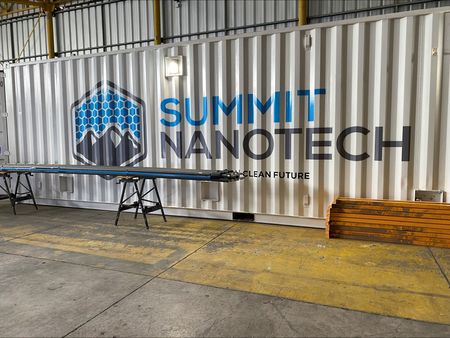
In Chile, DLE companies see a business opportunity despite the nationalization plans given that Boric’s new state lithium company is expected to need technical support. “Nationalization or not, they’ll require technology,” said Amanda Sanregret of privately held Summit Nanotech Corp, which earlier this month opened a Santiago office and DLE test facility.

(Reporting by Ernest Scheyder; Editing by Richard Chang)

Categories
Resource Stocks

Glencore raises pressure on Teck Resources with promise of sweeter bid

By Clara Denina and Yadarisa Shabong

LONDON (Reuters) -Glencore has told Teck Resources shareholders it is willing to improve its $22.5 billion takeover offer, raising pressure on the Canadian miner to ditch a restructuring plan and sit down at the negotiating table.

In an open letter on Wednesday, Glencore said it would consider taking the offer to Teck’s shareholders directly if the board failed to engage.

The Swiss miner and trader made its all-share offer as Teck’s own plan to spin off its metallurgical coal business and focus on copper and zinc nears an April 26 vote.

The bid is the latest in a mounting wave of mining industry buyout offers fueled by growing demand for copper and other metals critical to the green energy transition.

Glencore Chief Executive Gary Nagle flew to Canada to meet shareholders last Thursday after revising the unsolicited bid to include up to $8.2 billion in cash.

Teck’s board rejected it as too low, adding it would unnecessarily expose shareholders to a large thermal coal business and an unwanted oil trading unit.

“Glencore has never stated that its proposal is ‘best and final’ and that it is not willing to make changes and improvement,” Nagle said in the letter.

“With engagement, we could improve our proposal’s terms and value, which would be in the best interests of all Teck shareholders.”

Glencore’s plan would combine and spin off its thermal coal unit and Teck’s steelmaking coal business.

Teck’s management on Tuesday estimated that after its proposed restructuring, shares in the metals business could trade at C$100 ($74.67) or higher, about 55% above the group’s closing price on Tuesday.

Teck did not respond immediately to an emailed request for comment.

Glencore’s initial bid was made privately on March 26 and represented a 20% premium to that day’s closing price.

JP Morgan analysts this week said that Glencore could pay as much as $27.2 billion.

Jefferies analyst Chris LaFemina on Wednesday said that, with no other offer on the table, a deal with Glencore after a bump of at least 10% in the proposed exchange ratio was preferable to an internal restructuring by Teck.

Ben Cleary, portfolio manager at Tribeca Global Natural Resources Fund, told Reuters: “The vote (on Teck’s restructuring plan) is highly likely to go through without an official bump in terms (from Glencore).”

The Vancouver-based miner operates under a dual-class structure and needs approval from two thirds of shareholders on both sides for the restructuring.

Canada’s Keevil family owns the majority of ‘A’ class of shares, which have more voting power than the numerous ‘B’ class shares held by institutions.

Teck has said it would explore a corporate transaction or partnership after its restructuring. Sources close to the matter say Teck has had approaches from more than six mining companies interested in its prized metals business.

(Reporting by Clara Denina and Yadarisa ShabongEditing by David Goodman and Mark Potter)

Categories
Resource Stocks

Canada Seeks to Rival China as a Key Global Supplier of Critical Minerals

By Yuka Obayashi and Katya Golubkova

SAPPORO, Japan (Reuters) -Canada is ready to become a reliable provider of critical minerals to its international allies including Japan, a senior official said, as the Group of Seven (G7) countries deem such minerals essential for climate goals and energy security.

Canada has signed a joint action plan with the United States to advance secure supply chains for critical minerals and has similar critical minerals cooperation agreements with Japan and the European Union.

“We view this resource has been very strategic, not only from an economic point of view, but also from a security point of view,” Canada’s minister of environment and climate change Steven Guilbeault told Reuters in Japan where he will take part in a G7 ministerial meeting on climate, energy and environment.

The April 15-16 meeting in Sapporo, part of Japan’s G7 presidency this year, will discuss the growing importance of critical minerals for the clean energy transition and the need to prevent economic and security risks caused by vulnerable supply chains and monopolization, among other topics, the latest draft communique seen by Reuters showed.

China dominates the market for critical minerals used to make electric vehicle batteries, central to developed nation goals to decarbonize, and Russia – which invaded Ukraine last year – is also a major player.

Last year, Canada asked three Chinese companies to sell their stakes in Toronto-listed lithium explorers following a national security review.

Guilbeault said this was for “strategic security reasons”. 

“We have a lot of those critical minerals, we have almost all of them in Canada with a few exceptions. We can become a reliable provider of these resources or products for our international allies like Japan, for example,” he said.

FOSSIL FUELS AND COAL POWER PLANTS

The main battle among G7 environment and energy ministers this year is focused on whether investments in fossil fuels, in particular liquefied natural gas (LNG), can continue and how long coal-fired power plants should continue to operate.

Energy-poor Japan wants to keep LNG as a transition fuel to cleaner energy for at least 10-15 years and to co-fire ammonia with coal at its thermal power plants.

Climate activists content that approach helps extend the life of coal power plants and supports big corporations rather than decarbonisation.

Canada’s position is that phasing out coal is one of the most effective ways to fight climate change and there are a lot of alternatives to coal-fired electricity, Guilbeault said.

“So it’s a message that we are conveying to all of our peers whether it’s Japan, China or India… We are very much aware that any new large investment in fossil fuels infrastructure will be with us for many, many years,” he said.

“It doesn’t mean that there won’t be any more fossil fuel investment. But they have to be very limited and we have to make sure they are in line with our climate change commitment, not just for 2030, but for 2050 to be net zero.”

(Reporting by Katya Golubkova and Yuka Obayashi; editing by Jason Neely)

Categories
Asia Business Economy Environment Europe Politics and Trading Resource Stocks Technology US

Yellen says EV battery mineral trade pacts can likely bypass Congress

By David Lawder

BENGALURU (Reuters) – U.S. Treasury Secretary Yellen said on Friday that she expects that future limited free trade agreements focused on battery minerals with the European Union and other trusted allies would not need approval from Congress.

Yellen told reporters on the sidelines of a G20 finance meeting in India that such agreements, which would be aimed at granting automakers based in Europe, Japan and other countries access to new U.S. tax credits for electric vehicles, would also likely include high labor standards and export control provisions to ensure secure supply chains.

Such mineral pacts are one potential way to address European Union’s complaints that its automakers are shut out of the $7,500 per vehicle tax credits in the climate-focused Inflation Reduction Act, which it argues will suck electric vehicle investments away from Europe.

The law specified that the tax credits were only available to North American-assembled vehicles that meet certain local battery production and mineral extraction processing standards.

Countries with U.S. free trade agreements can also access the credits, and this is a provision that the Biden administration hopes to exploit by negotiating limited trade deals focused on battery minerals.

The Treasury already is allowing leased electric vehicles to qualify under commercial EV tax credit rules, a move that Yellen said would cover most vehicles for now. Over time, she said she hoped that trade agreements would allow more sold vehicles to qualify over time.

“It would be an agreement that we think would not require the agreement of Congress,” she said adding that Congress intended “a kind of friend-shoring approach” for critical minerals to reduce reliance on China.

“I think the word ‘free trade areas’ was meant to mean reliable friends and partners with whom we can feel we have secure supply chains so we feel this is fully the intent of Congress and we’ll be able to negotiate such agreements,” Yellen said.

The Treasury in March is due to put out guidance on the sourcing of battery minerals and Yellen said this will include guidance on free trade areas that can qualify.

The Treasury already has said that it will qualify existing comprehensive free trade pacts Australia, Bahrain, Canada, Chile, Colombia, Costa Rica, Dominican Republic, El Salvador, Guatemala, Honduras, Israel, Jordan, South Korea, Mexico, Morocco, Nicaragua, Oman, Panama, Peru and Singapore.

Yellen said that the United States and Europe were getting closer to reaching understandings over the U.S. green energy subsidies, and said Washington will not try to stop Europe from enacting competing subsidies.

“We’ve been very clear with Europe that this is not a subsidy war,” Yellen said. “We’re not trying to steal jobs. This is our climate plan.”

(Reporting by David Lawder. Editing by Jane Merriman and Tomasz Janowski)

tagreuters.com2023binary_LYNXMPEJ1N0IF-VIEWIMAGE

Categories
Resource Stocks

Minera Alamos acquires equipment to ramp up Mexican operation

Minera Alamos acquires equipment to ramp up Mexican operation
(Image courtesy of Minera Alamos).

Minera Alamos (TSXV: MAI) is already planning for the possible growth of its Santana gold project in northwestern Mexico.

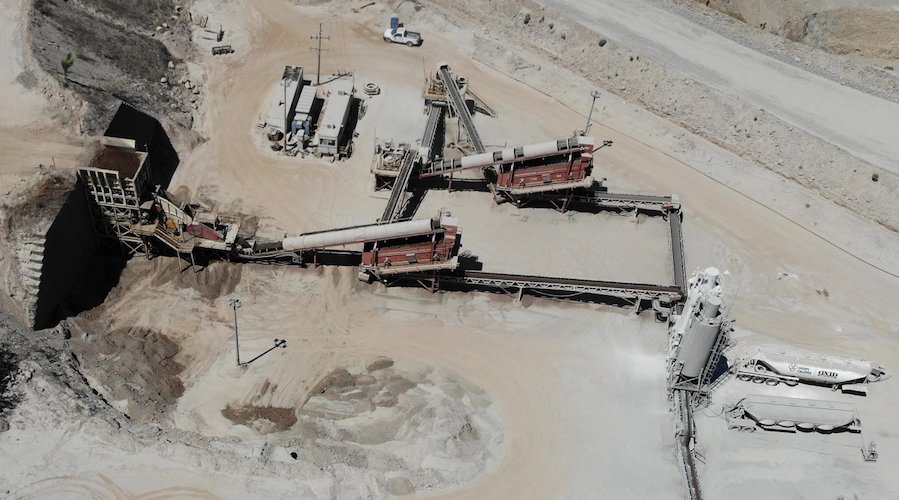
In a press release, the company announced that it has entered into a $1.2-million equipment purchase agreement with Mako Mining, Marlin Gold Mining and Oro Gold de Mexico to acquire a complete crushing, screening and agglomeration system.

Located in Sonora, Santana is an open-pit, heap-leach development permitted project with test mining and processing recently completed

“This agreement leverages the financial flexibility provided by our relationship with Osisko Gold Royalties to take advantage of a unique opportunity that presented itself and that will significantly reduce longer-term capital and operating costs for the development of the Santana project,” Darren Koningen, Minera Alamos CEO, said in a media statement. “The acquisition for this excellent collection of equipment is a small fraction of the original purchase cost and underscores our philosophy of finding innovative ways to build our projects with some of the industry’s lowest capital intensity.”

The 300-tph crushing system was originally installed at Mako’s La Trinidad gold heap leach operation and was in commercial service for a relatively short period until it was shut down in 2019.

Alamos said it is planning to start initial operations at Santana using contractor portable crushing equipment until optimal crushing strategies are better understood.

In the miner’s view, the new system will allow it to transition to a larger capacity crushing operation capable of accommodating future plans for significant increases in the production profile at Santana as the overall scale of the project increases through ongoing exploration.

“Such a move towards an in-house (non-contractor) crushing system will be significantly less costly as a result of the purchase of the system and is expected to yield significant savings in crushing unit costs,” Koningen said.

Categories
Resource Stocks

RNC identifies new structure at Higginsville

Stripping overburden at Higginsville. Credit: RNC Minerals

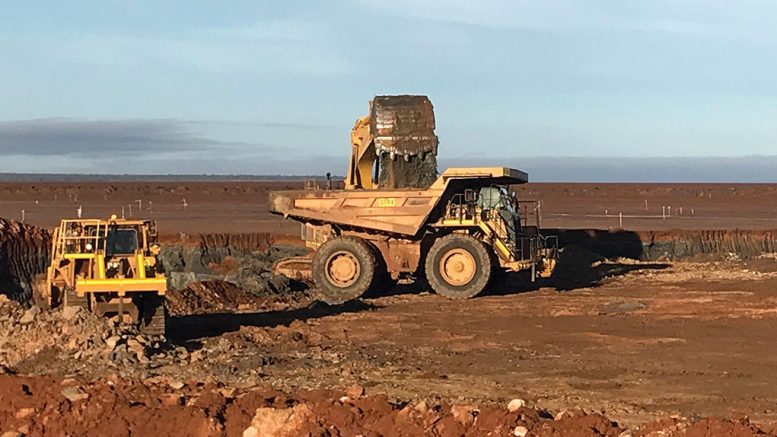
A recent gravity survey completed at RNC Minerals’ Higginsville gold operation (HGO) has delineated a 5-km long prospective structure located north of the HGO mill. This structure appears to run sub-parallel to the major regional shears which control the gold distribution in the region.

“Although early-stage, our interpretation of the potential size of this new structure is an exciting development for our HGO-focused exploration activities,” Paul Huet, the company’s chairman and CEO said in a release. “With the Morgan Stanley royalty recently renegotiated in December 2019, it now makes sense to explore these and many other areas across the Higginsville tenement package which holds strong potential for new discoveries.”

RNC plans to complete follow-up reverse circulation drilling this year to test this new structure.

In addition, the company has announced that it has received government approvals for Stage 2 of the Baloo open pit at HGO. Mining of Stage 1 is expected to be completed in June. RNC expects to mine Baloo in conjunction with additional open pits within the Higginsville holdings; mining at the Fairplay North pit has started with ongoing drilling to define a production pipeline.

In December, RNC announced that it had restructured a royalty on the property, to a 2% net smelter return (NSR), from a 1.75% NSR and a 50% participation payment on the difference between the realized gold price and a legacy rate of A$1,340 per oz. previously. The first 10,000 ounces sold in a year remain subject to a 1.75% NSR plus a reduced participation payment of 27.5% on the gold price differential.

In June, RNC completed the $35 million HGO acquisition which added a 1.4-million-t/a operating mill to its portfolio. The company also holds the Beta Hunt underground mine which is within trucking distance of the HGO mill.

This year’s production guidance stands at 90,000 oz. to 95,000 oz. of gold at all-in sustaining costs of $1,050 to $1,200 per oz.

(This article first appeared in the Canadian Mining Journal)

Categories
Resource Stocks

Mine planning: From strategy to operation to optimization

By Micah Nehring

Image: Atlas Copco

While mine planners need to design and implement plans that are safe and environmentally sustainable, the biggest factor in the success of a mining operation — what will ultimately determine whether it will proceed through feasibility studies and onto construction and development — is the level of potential profitability.

The drive to exploit a mineral resource such that it adds as much value as possible to the market requires a continual update of the mine plan and the rapid implementation of any value-adding opportunities as they arise.

As commodity price assumptions change, the strategic mine plan should be updated accordingly

The basis for determining this value is embedded in the strategic mine planning process. As inputs, the mine planning process should include non-controllable variables while seeking to leverage the controllable variables to generate maximum value across the life of a mining project.

The non-renewable nature of a mineral resource extraction project calls for a unique aspect to the analysis that is unlike those used in traditional industries.

As orebody knowledge improves, technical and operational parameters and conditions are better understood. And as commodity price assumptions change, the strategic mine plan should be updated accordingly.

EduMine offers a range of online courses that delve into each of the key controllable technical levers for valuation creation as part of the strategic mine planning process and offer key insights into how the operation may gain additional value.

The first of these levers, including Mining Method Selection, Process Route Selection and Scale of Operation levers are discussed in Mine Planning 1 – Strategy.

The Sequence and Scheduling process and the development of a Cut-off Grade Policy are presented in Mine Planning 2 – Operations.

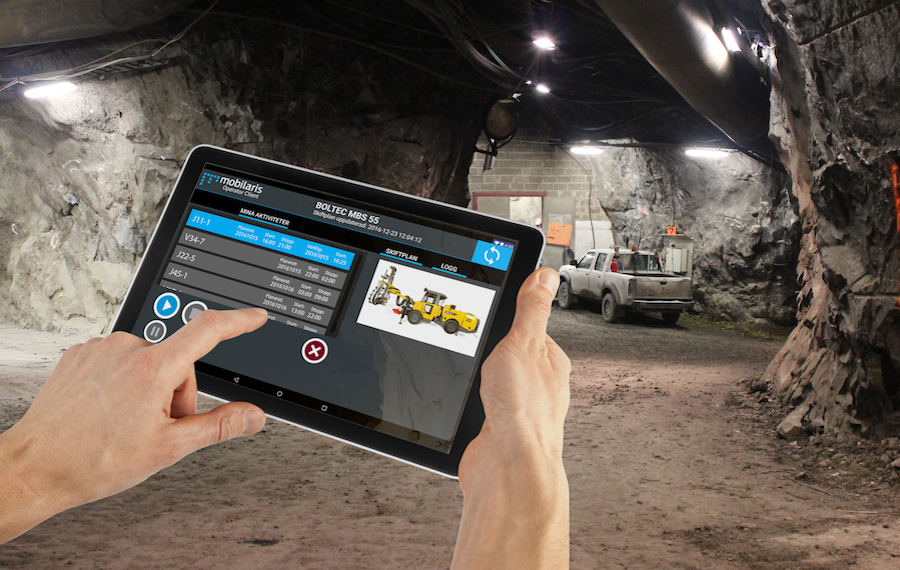
Finally, the Mine Planning 3 – Optimization course outlines common optimization algorithms that have been adopted, as well as some programming techniques that may be used to computerize planning processes.

Categories
Resource Stocks

Gold price: India suffers demand shock

By Frik Els

Gold price: India suffers demand shock
Pricey weddings as gold hits record highs in local currency in 2019.

Global gold demand in the second half of 2019 showed robust growth, largely on the back of investor appetite for physically-backed exchange traded funds, according to a Refinitiv GFMS report released on Wednesday.

However, jewellery, coin and and bar demand dropped around the world, Refinitiv reported.

Retail investment, which is the sum of physical bar investment and all coins, plunged by 17% in the second half of 2019, with a year‐on‐year drop, recorded in both bar investment and coin demand. In the jewellery sector, fabrication demand declined by 17% worldwide in H2. 

Nowhere was the pullback in the retail sector more evident than in India, where imports reached only 219 tonnes during the second half of the year, a decrease of 44%.

As a result of the slowdown, many ‘Karigars’ (artisans) lost their jobs

The third quarter saw supply for domestic consumption plunge by 86% to a mere 21 tonnes. GFMS said that while Q3 is usually a quiet month because the period is not generally considered part of the wedding season and there are fewer festivals, weakness last year was “unprecedented”:

Domestic consumption in Q3 nosedived on two accounts – a rise in import duty, combined with a rise in the gold price in local currency terms.

High volatility also created confusion in the minds of the consumers.

While demand returned in November, a traditional Indian gold gift giving period, the spike in the dollar price due to the US-Iran conflict caused another drop off.

The decline in retail demand saw jewellery fabrication in the country decrease by 36% in H2, compared to the same period in 2018, to an estimated 217 tonnes.

GFMS said during its regular field research, the researcher observed that small to medium manufacturers in semi-urban areas were surviving by only making jewellery out of scrap.

Aggregators used to bring old jewellery to these manufacturers to be processed and as a result of the slowdown, many ‘Karigars’ (artisans) lost their jobs.

Categories
Resource Stocks

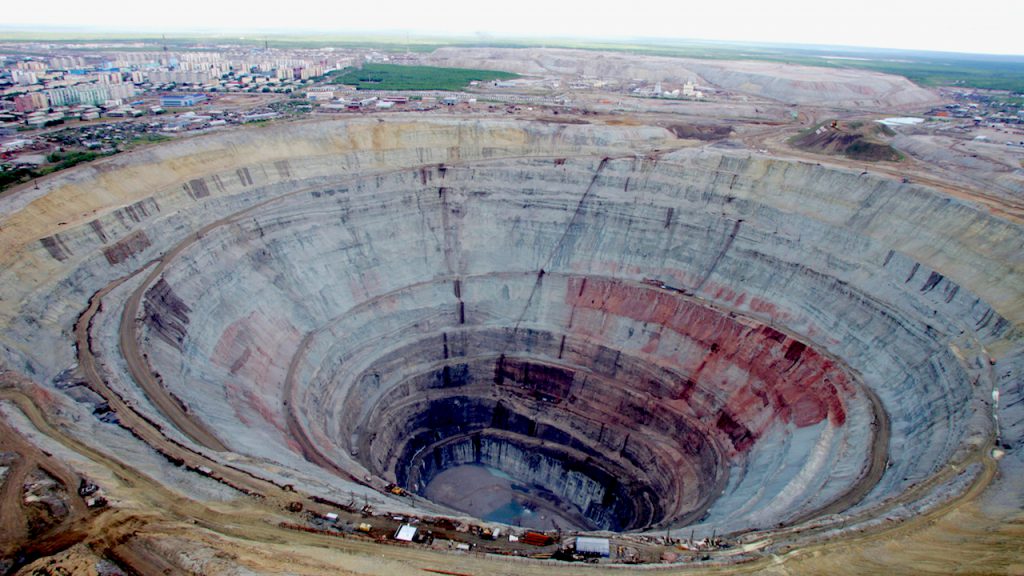
Alrosa would reopen Mir diamond mine in 2024

Alrosa would reopen Mir diamond mine in 2024
The closed open-pit at the Mir mine in the city of Mirny, Yakutia.
(Image courtesy of Alrosa.)

Russia’s Alrosa (MCX:ALRS), the world’s top diamond producer by output in carats, plans to resume operations at its Mir mine, which has been shuttered since 2017, with work on the project set to start in 2024, local authorities have said.

The underground diamond mine, which accounted for about 9% of Alrosa’s output before operations were suspended, flooded when water poured into a shaft from an open-pit mine above it, killing eight people.

The mine, which accounted for about 9% of Alrosa’s output before operations were suspended, has been shuttered since 2017 due to flooding.

Its former manager, Alexey Burkser, was found dead in a pre-trial detention centre in October, a day after he was arrested on suspicion of violating safety rules. Authorities said there were indications that his death had been a suicide.

The governor of Yakutia, where the mine is located, said on Wednesday that restoration of Mir would “definitely take place”. Aysen Nikolaev’s comments contrasts with several previous statements from both Alrosa and regional authorities indicating the reopening of the mine was under study.

Last year, Alrosa said determining the viability of resuming operations at Mir required deep level exploration — down to -1,300 metres — to confirm the mine’s reserves and will cost about $32 million (RUB2 billion).

“If the decision is made that restoring the underground mine is worthwhile,” the state-owned company said at the time, “construction would take six to eight years, based on initial estimates.”

Last week, Alrosa began test drilling at the site to determine how feasible the full resumptions of operations is. Such work is expected to take one to two years.

With files from Reuters.

Categories
Resource Stocks

Nova Scotia miners to hand cash to kids who can prove industry ‘rocks’

Make a 1-3 minute video OR a 30 second commercial about any aspect of mining or quarrying and have a chance to win C$750. (Image courtesy of MANS.)

The Mining Association of Nova Scotia (MANS) is once again calling junior high and high school students of the Atlantic Canadian province to participate in a video contest that aims to highlight why mining works.

Now in its sixth year, the Mining Rocks! competition encourages young Nova Scotians to produce short videos about mining and quarrying and gives them the chance of winning C$750 in five different categories, with C$500 going to the runner-up.

Mi’kmaq students living anywhere in Nova Scotia can enter a new category this year: Best Mi’kmaq video. Just like in the others, videos in this group can be about anything related to mining, minerals and geology that students find interesting. Entries can be in English or Mi’kmaq (with English subtitles so the judges can judge them fairly).

Students can upload their videos to the MANS website until February 23 at 11:59pm. A panel of judges, who are mainly independent of the industry, will pick the winners for the Best Junior High School Video, Best High School Video, Best Comedy, Best Mi’kmaq and Best 30-Second Commercial.

The judging panel includes general manager at Eskasoni First Nations, Steve Parsons and MINING.COM editor Cecilia Jamasmie, among other community representatives.

Public voting for the People’s Choice Award can do so from March 1 to April 1.