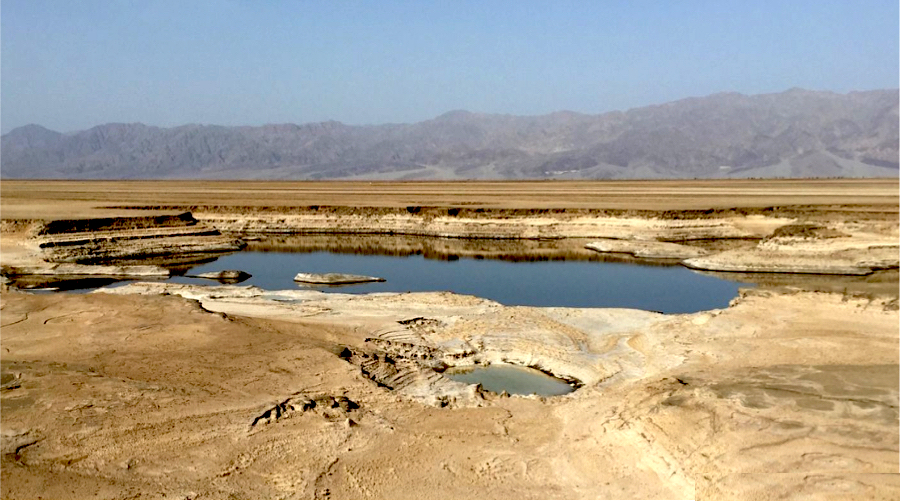
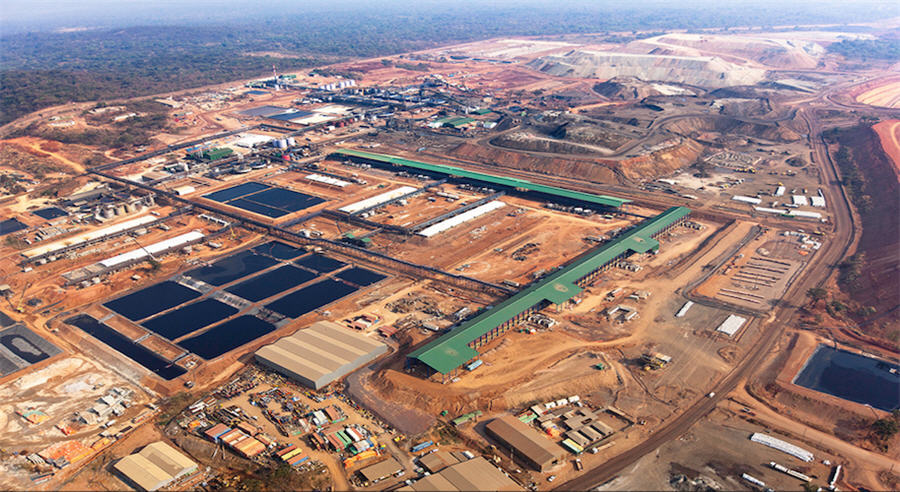
The Colluli project is located in a semi-desert agro-ecological zone, of which most of the land is barren and of little use to communities and wildlife. (Image courtesy of Danakali.)
Australia’s Danakali (ASX, LON:DNK) has kicked off the first phase of development of its world-class Colluli potash project in Eritrea, Africa, by selecting the team in charge of Engineering, Procurement and Construction Management (EPCM) process.
The Perth-based miner said it expected to begin Phase 2 in mid-February, which will be followed by geotechnical investigation works that is set to start in March.
Danakali is working with consultancy DRA Global and multinational professional services company Turner and Townsend to review the project front-end engineering design. This includes developing project systems, project controls and progress measurement monitoring, it said.
Colluli has the potential to produce 944,000 tonnes of sop, a premium grade fertilizer, over its 200-year plus mine-life.
The team has also begun project management activities and mobilized its own engineering group for the process plant, associated infrastructure and Water Intake Area (WITA) design.
Colluli, a 50:50 joint venture between Danakali and the Eritrean National Mining Corporation (ENAMCO), has been called “a game changer” for Eritrea’s economy, as it’s expected to become one of the world’s most significant and lowest cost sources of sulphate of potash (SOP), a premium grade fertilizer.
“The government will benefit from the longer-term development of the project, and the expected significant boost to royalties, taxation and exports, and from jobs and skills and economic development of the region,” chief executive, Niels Wage told MINING.COM last year.
The development of the Colluli potash projects coincides with the move towards diplomatic relations between the once feuding countries of Eritrea and Ethiopia, which officially declared peace in July last year.
Welcome boost
A United Nations report published last year suggested that Colluli could significantly boost the economy of Eritrea, a country that, until last year, was on the UN’s sanctions list.
The document estimated that Colluli would contribute 3% of the country’s GDP by 2021 and 50% of the nation’s exports by 2030, while providing 10,000 direct and indirect local jobs.
It also identified how the mine could help Eritrea advance its sustainable development agenda, which are 13 priority Sustainable Development Goals (SDGs). These include: no poverty, zero hunger, quality education, gender equality, clean water and sanitation, sustainable economic growth and decent work, industry, innovation and infrastructure, reduced inequalities, climate action, peace, justice and strong institutions and partnerships for the SDGs.
In the initial phase of operation, Wage said, Colluli would produce more than 472,000 tonnes a year of SOP. Annual output could rise to almost 944,000 tonnes if Danakali decides to go ahead with a second phase of development, as the project has a possible 200-year plus mine-life.
The asset has the potential to produce other fertilizer products, such as Sulphate of Potash Magnesium (SOP-M), muriate of potash (MOP) and gypsum, along with rock salt. There is also potential for kieserite and mag chloride to be commercialized with minimal further processing required.
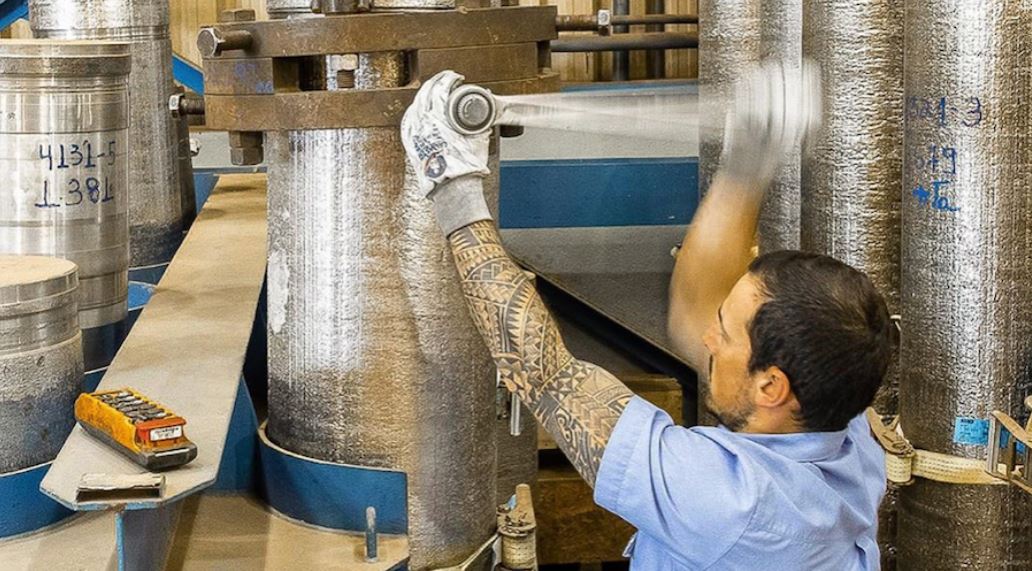
Manufacturing advanced materials for the Battery Market (Image courtesy of Johnson Matthey)
Many in the battery raw materials market were likely happy to see the back of 2019, as it was a year characterized largely by falling prices and disappointing performances from both the EV and consumer electronics sectors, research firm Wood Mackenzie said in a research note Monday.
But interest around electrification shows no signs of slowing. The value chain of a new ‘green’ automotive industry is being built, from mines and refineries through to cell and pack manufacturing, Wood Mackenzie said.
While it’s still early days, investments and deals made in the coming months will be critical to EV adoption potential over the next decade.
Five things to watch in 2020, according to Wood Mackenzie:
1. Key EV markets to start growing again
In 2019, the world’s largest EV market contracted. According to the Chinese Automotive Manufacturers Association, NEV sales reached 1.206 million last year, around 4% lower than in 2018 and 20% lower than China’s target for the year. In the US, the reduction was equally noteworthy at around 10% y-o-y. A sluggish global automotive sector and changing subsidies were certainly contributing factors nevertheless its clear that EVs are not yet ready to stand on their own feet.
This year, several major automakers are launching ‘mass-market’ EVs on dedicated platforms, aimed at breaking down range and cost barriers. While Wood Mackenzie expects substantial quantities of these to trickle into the market in the second half of the year, annual passenger EV sales are likely to remain below 3 million. China’s move to postpone the complete removal of NEV subsidies this year will support EV sales but also highlights just how sensitive the EV market still is to subsidies and incentives.
2. Bigger and better batteries
Cobalt prices soared in 2018 and the push towards high-nickel, low-cobalt batteries was accelerated. Last year, China commenced the first large-scale production of NMC 811 cells to be used in the automotive sector. This year, Wood Mackenzie expects only a handful of EV models outside of China to opt for the high energy density technology until the safety challenges are fully resolved. Within China, 2020 could be the year that LFP chemistries get a comeback as significant energy density improvements make LFP a much more viable option.
Range anxiety continues to deter many consumers from purchasing EVs, with long ranges the preserve of high-end, luxury cars. Automakers are not unaware of this and nearly every new model boasts a bigger battery offering more miles per charge. Wood Mackenzie expects this trend to continue through the short term. As with most EVs, the first configurations to be sold are the highest specification models, typically using the largest battery pack. The average pack size over the next few years could be boosted as these specifications are front-loaded into the market.
3. Lithium – another poor year
Not even lithium producers are anticipating a rebound in the lithium market this year. Compared to many bullish demand expectations, 2019 was particularly weak, and excess in the market pushed prices downwards. Nearly every lithium reference price fell by at least 30% and reported sales prices followed the same trend. Wood Mackenzie forecasts price declines to extend over the next twelve months. A temporary lull in the market might be exactly what is needed for the LME to launch its new lithium contract this year. The contract is not going to be welcomed by all lithium players; however, Wood Mac believes it is a step forward to increasing the transparency in lithium pricing.
Nearly every lithium reference price fell by at least 30% and reported sales prices followed the same trend
Oversupply was the common theme over 2019 and despite several closures and expansion cut-backs, Wood Mac analysts do not expect any tightness through the short term. The hard-rock producers have demonstrated how quickly spodumene concentrate can be brought online, but a greater level of discipline is now required for 2020. Some higher cost producers will feel the pressure this year as spodumene prices fail to recover. The economics of new projects now look less attractive and junior miners will increasingly have to emphasise their green credentials and strategic locations, something the battery and EV space is being heavily scrutinised on.
As for the brines, 2019 supply growth was higher than in 2018. The same will be required again this year for brines to keep their share of the market. Low prices might not weigh as heavily on the brine producers, typically sitting at the bottom of the cost curve and having produced at these levels before. The ramp-up of South American brines will most likely be slower than guidance with water rights and technical challenges still key issues.
4. Cobalt – can we fill the gap?
Last year, DRC mined cobalt output contracted as the industry contended with both the slowdown in demand from EVs and electronics, but also ‘indigestion’ after the huge supply response in 2018 that had overstocked the supply chain. Weaker fundamentals naturally impacted price levels, with the LME cash price averaging $33,290/t ($15.1/lb) for the year. This weak pricing environment, and higher operating costs led industry-leader Glencore to place its Mutanda mine on care and maintenance from late last year. With Mutanda currently the largest cobalt producing mine in the world, the company has left quite a large gap to fill. Wood Mackenzie says it be done– but with risks.
Mutanda’s suspension will place more of a burden on Glencore’s other DRC operation, Katanga. Katanga has been dealing with quality issues related to uranium content over the last year, yet interim solutions appear to be bearing fruit. Wood Mackenzie analysts estimate around 5 kt of cobalt in hydroxide may have been exported last year, versus production of 14kt. Glencore is currently targeting production of 27 kt of cobalt in hydroxide in 2020 from Katanga – with export levels dependent on the continued successful implementation of de-bottlenecking schemes.
Aside from Glencore, the most likely source of ‘replacement’ tonnes is ERG. Its Metalkol RTR plant got off to a slow start last year – dealing with both quality issues and the poor market. We estimate exports of just around 3.4 kt in 2019, versus capacity of ~14 ktpa. Yet RTR will need to at least double shipments in 2020 if we are to avoid a large deficit. Other major players such as CMOC’s Tenke Fungurume look unlikely to be able to materially increase output, while new supply from Chengtun and the recently started Deziwa operation will also be required to meet demand growth.
Wood Mackenzie’s base case view is that mined output returns to 2018 levels. Analysts do have a notional deficit of some 2 kt forecast this year, Wood Mackenzie expects this is necessary to further draw down the stocks that have accumulated through the cobalt value chain. The firm believes price risk is on the upside this year should the ‘major producers’ fail to ramp up, and higher prices are required to incentive higher-cost supply into the market.
5. Graphite – after the Balama drama
While key ‘battery metals’ like lithium and cobalt have suffered from the slowdown in EV sales in the all-important Chinese market, for the likes of graphite – a 1 million tonne plus industry primarily driven by the steel sector – the fundamentals are more complex. In the natural flake market, last year saw a steady ramp up in exports from Syrah Resources’ Balama mine in Mozambique. This gradually overwhelmed the previously insulated Chinese flake market and eroded price levels as the year progressed. The extent of the oversupply eventually saw Syrah trim its own output in the final quarter, and its guidance for 2020 for 120-150 kt.
As 2020 gets underway, there are many questions associated with the flake market. To start, does the natural graphite industry even need a mine as large as Balama right now – which at full capacity (350 ktpa) would be larger than current global consumption of natural graphite in batteries? And is there a future for the other flake graphite projects looking to move into production in this environment – particularly given a seeming resurgence in interest in synthetic graphite?
Medium-term demand prospects for graphite remain strong, Wood Mackenzie says, with disruptive technologies like silicon or even lithium metal-based anodes unlikely to dampen growth anytime soon. However, with this fledgling sector already overwhelmed with supply, 2020 looks likely to be another challenging year. With margins being squeezed, and an increasing focus on sustainability encouraging ex-China sourcing, many graphite miners, including Syrah, will continue to move down the value chain towards high-purity spherical graphite.
The gold price jumped to fresh near 7-year highs on Monday as worries about the spread of the coronavirus spurred investors to seek safe haven assets and global stock markets plummeted.
February gold futures, the most active contract with nearly 40m ounces traded on the day, was set to close above $1,580 an ounce on the Comex market in New York.
It would be the highest closing price since 9 April 2013 although on an intra-day basis gold briefly traded above $1,600 an ounce a fortnight ago when investors also sought out less risky investments following the killing of an Iranian general in a US drone strike.
Bloomberg reports as concerns about the impact of coronavirus mount, holdings in exchange-traded funds backed by physical gold climbed to within 25 tonnes of the record set in November.
Gold ETFs and similar products had $19.2 billion or 400 tonnes of net inflows in 2019 after holdings rebounded in December, according to World Gold Council data. In the fourth quarter, ETF holdings reached an all-time high of 2,900 tonnes.
The new strain of the coronavirus, which originated in Wuhan in central China, has infected almost 3,000 people and killed 82, prompting Beijing to extend new year holidays to February 2nd.
Gold still cheap relative to stocks
Even after today’s sharp correction in US equities on an historical basis gold is still a cheap asset to own.
Today, you need just over two ounces to buy the market. The ratio of the gold price and the S&P index of the 500 largest stocks in the US was the same in September 2007 when an ounce of gold could be picked up for less than $600.
Click here for more on the relative value of gold and stocks.
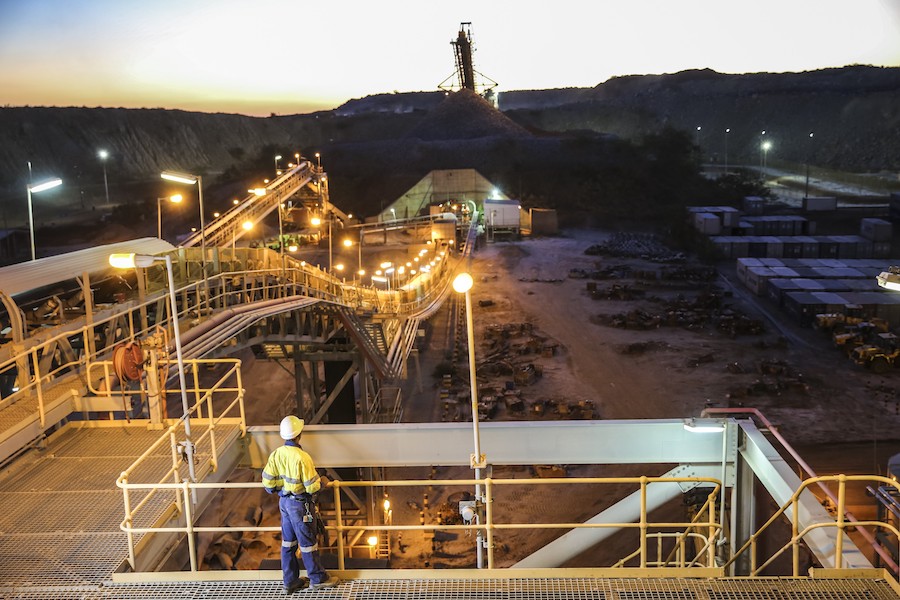
North Mara, Buzwagi (pictured here) and Bulyanhulu mines, are now owned 84% by Barrick and 16% by the Tanzania government. (Image courtesy of Acacia Mining.)
Canada’s Barrick Gold (TSX: ABX) (NYSE: GOLD) and Tanzania inked a deal on Friday that grants the African nation stakes in the three gold mines the company operates there, ending a long-running tax dispute and setting a template for negotiations with other firms.
The ceremony comes three months after both parties reached an agreement in which Barrick accepted to pay $300 million to settle outstanding tax and other disputes. The deal also include the lifting of a concentrate export ban and the sharing of future economic benefits from the miner’s operations in the country on a 50-50 basis.
It also ratifies the creation of Twiga Minerals Corporation, a company jointly owned by Barrick and the Tanzanian government, which will oversee the management of the Toronto-based miner’s local operations.
North Mara, Buzwagi and Bulyanhulu mines, which Barrick acquired through the takeover of Acacia Mining in September last year, are now owned 84% by the gold giant and 16% by the East African nation.
Chief executive, Mark Bistrow, said on state TV he was happy that Barrick’s “long safari” in Tanzania had ended well. Safari means “journey” in Swahili.
Casting himself as a “Zulu boy” born in Zululand, Bristow called the pact signed today “historical”.
“Many people said your criticism will chase away investors … what it’s done is challenge the mining industry and all of us to embark on something where we win together or lose together,” he said.
Following today’s ceremony, Barrick and Tanzania will continue to work on implementing other aspects of the signed deal. In particular, the gold miner plans to partner with the University of Dar es Salaam and commit up to $10 million in funding over a 10-year period for training and skills development in the mining industry.
Barrick said it would also earmark up to $40 million to upgrade the road between Bulyanhulu and Mwanza, as well as constructing a housing compound and related infrastructure.
Barrick, the world’s No. 2 gold miner, is forging ahead with plans to sell about $1.5 billion in assets by the end of 2020. At the same time, it’s looking to buy more top-tier gold projects, in Canada and elsewhere, and invest in copper assets.
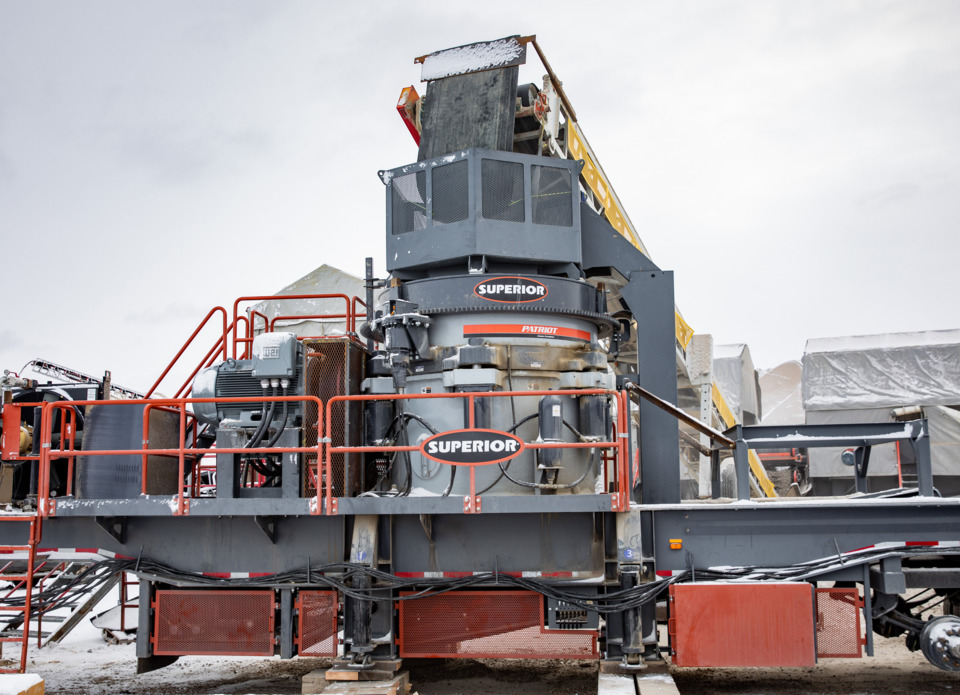
P500 Patriot Cone Crusher Credit: Superior Industries
Superior Industries, a US-based manufacturer and supplier of bulk material processing and handling systems, will add a new model to its line of Patriot Cone Crushers at CONEXPO-CON/AGG 2020 in March. It’s one of a dozen new products the company will introduce during the Las Vegas trade show.
The P500 model Patriot Cone Crusher is engineered to operate most effectively at 500 hp. (350 kW). Other specifications unique to the P500 include a head diameter of 59 in. (1,500 milimetres), maximum feed opening of 13.5 in. (343 milimetres) and closed side settings of 3/8 in. to 2 in. (10 milimetres to 50 milimetres).
Notable features of the P500 model cone crusher include:
Inverted or reverse design of tramp relief cylinders which ensures that the hydraulic seals are not exposed to contamination during operation.
Tramp relief system with fewer accumulators for less maintenance. An automatic pressure relief valve means additional protection.
Universal crushing chamber design requires no major, time-consuming change-outs when transitioning from secondary to tertiary applications.
If loss of clamping pressure occurs, counterclockwise countershaft rotation causes the crusher to open rather than turn down.
Superior manufactures its full line of Patriot Cone Crushers in 200, 300, 400, 500 and 600 hp. models. Each purchase comes with a lifetime warranty to protect the cone’s major components including the adjustment ring, bowl, eccentric, head, mainframe and main shaft.
Superior Industries at CONEXPO-CON/AGG 2020
Superior will launch a dozen new products for crushing, screening, washing and conveying applications. Displayed equipment will include the brand new Sentry Horizontal Shaft Impact crusher, Fusion Modular Platform, belt drive Valor Vertical Shaft Impact crusher, bolted model Liberty Jaw Crusher, Alliance Low Water Washer and Portable Spirit Wash Plant. Additionally, aftermarket solutions will be displayed alongside a multimedia experience showcasing several turnkey projects completed by the company’s construction management division.
Superior engineers and manufactures bulk material processing and handling equipment and components. The manufacturer supplies bulk crushing, screening, washing and conveying systems and related parts for the aggregates, mining, bulk terminals, agriculture, power and biomass industries.
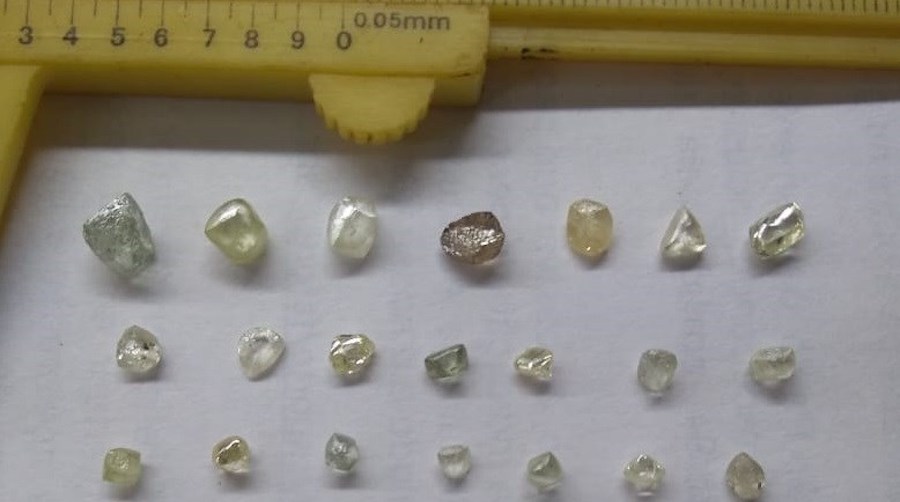
Diamonds recovered at Pindaíba. (Image courtesy of Brazil Minerals).
Brazil Minerals (OTC PINK: BMIX) announced that its Pindaíba diamond operation in the eastern state of Minas Gerais has been producing a considerable amount of gem-quality stones.
In a press release, the miner said that the diamonds recovered locally that have been cut and polished, and later graded and certified at the Gemological Institute of America, had an average Rappaport valuation of $3,250 per carat.
Pindaíba is a storied area that has had thousands of diamond prospectors in the past
The gems’ highest colour grade was E and their best clarity was VVS1. Most of them, however, graded F-G for colour and VVS2-VS2 for clarity and weighed between 0.4 and 2.0 carats.
According to Brazil Minerals, the best diamond production runs have come from excavated areas located at the edge of the licensed perimeter for mining and close to the local waterway.
“For alluvial gold production, the difference in yield between the two extremes of the licensed perimeter has been up to eighteen-fold,” the media brief states.
Given these results, the company said it is focusing on moving its operations towards the mining areas with the most attractive concentrations.
Glencore suspended operations at the Mutanda copper and cobalt mine at the end of 2019. (Image courtesy of Glencore.)
As we look to 2020, copper is faced with a finely balanced market. For now, positive investor sentiment around copper’s fundamentals is supporting higher prices, Metals and mining research and consultancy group Wood Mackenzie said in a research note Wednesday.
Stronger demand growth is underpinned by new semis capacity, while mine supply growth will be reliant on additions from both projects and existing mines.
Meanwhile, the recent approval of new copper scrap re-categorisation standards in China could yet determine the mix of copper raw material imports into the country and influence global scrap dynamics, said Wood Mackenzie.
These fundamental factors, in addition to the strong geopolitical headwinds across the global landscape, will no doubt lead to another year of volatile prices. In the absence of a major economic downturn, copper’s supportive fundamentals should keep price risk skewed to the upside, said the firm.
Eleni Joannides, Wood Mackenzie Principal Analyst, sees five key themes to watch in the global copper market in 2020.
Copper prices – fundamentals vs sentiment
Policies and politics that will drive copper demand
The global scrap dynamics will shift – response to changes in Chinese scrap policies on imports
Lower TC/RCs could push some smelters below breakeven
Mine supply looks set to return to growth
“During 2019, copper prices were largely determined by US-China trade-related news rather than copper’s own fundamentals. It was not until the US-China Phase 1 trade deal was agreed in December that there was a shift in sentiment,”Joannides said.
“As we look to 2020, the risk is that wider factors will once again influence price. The geopolitical issues that have surfaced since the start of the year could derail the rally that emerged in December 2019. On the other hand, further progress in resolving trade disputes will likely encourage a faster than anticipated recovery in demand and underpin prices,” Joannides added.
“This year, we are forecasting that positive mine supply growth of 1.3% — after disruptions — will be offset by a recovery in demand. The resulting draw down in total cathode stocks by year-end should be positive for prices.”
Wood Mackenzie said differing incentive approaches to renewable technologies will lead to varied impacts on copper demand in 2020.
The recent approval of new copper scrap re-categorisation standards in China could yet determine the mix of copper raw material imports into the country
“Contributions to copper demand from electromobility and renewable energy will be a long-term story. However, in 2020, electric vehicles (EVs), wind and solar projects will see a range of incentives accelerate, stop and reverse. In some cases, this will be a drag on the development of projects. In other cases, however, a possible front-loading of projects ahead of further subsidy removal could emerge.
“The Chinese government recently announced that it has no plans to further reduce the subsidy on EVs in 2020. We believe the decision to keep the subsidy will help to support EV sales, production and related copper demand in 2020.
“This change in approach to EVs in China is in line with developments in other regions. In Europe, the likes of Germany and Norway continue to ramp up EV-related incentives, supporting copper consumption in the region. In consultation with German automakers, the so-called “Environmental Bonus” incentive has been raised to a maximum of €6,000 for battery EVs priced up to €40,000. In the US, some States have extended subsidy offerings, while others are introducing similar incentive programs.
A tight concentrate market in 2019 forced TC/RCs to their lowest level in six years. The 2020 benchmark was set at $62/t & 6.2c/lb – a 23% decrease
“In the renewable markets, the Chinese government plans to end the subsidy on newly approved onshore and offshore wind projects in 2021 and 2022, respectively. In the US, tax incentives for new solar power installations have started to wind down this year and the subsidy on wind power generation will also begin to decrease next year. As a result, we believe that demand for copper will be brought forward in both China and the US in 2020, as developers rush to install new capacity ahead of these changes,” said Joannides.
A shift in global scrap dynamics could occur in response to changes in Chinese scrap policies, Wood Mackenzie warns.
“The Chinese government recently approved new standards, beginning in July 2020, that will re-categorise some copper scrap as “renewable copper material,” Joannides said.
“The new threshold for copper content of imported copper scrap has been set at 97% and 56% for brass scrap. This threshold is noticeably above the average copper content for copper and brass scrap imported in 2019. Nevertheless, the copper industry in China has shown optimism towards scrap imports this year.
“Given that most of the examination will be done by visual inspection at ports, it is widely believed that implementation of the new standards will leave some room for scrap slightly below the threshold to be imported. However, the risk is that if Chinese Customs implement the new standards strictly, according to the guidelines, scrap processors will need to make additional efforts to meet the requirements. This means that China will be not be able to source as much scrap from the external market this year.
“In addition to the changes in scrap-related policies in China, rising costs to upgrade scrap ahead of export to China will likely incentivise more secondary consumption capability to be built in scrap generating and/or processing countries. We have already seen early examples of this around the world. It remains to be seen if this will be the start of a trend, which would not only have implications for scrap volumes available for China but also the requirement for concentrate, blister/anode and copper cathode,” said Joannides.
Partly driven by new project delivery, mine supply is expected to return to growth. Wood Mackenzie’s base case is for mine supply to reach 21Mt in 2020 – after applying a 5% disruption allowance. Notably, approximately 40% of the additional production capability will be a result of a net increase in output at operating mines.
“Projects that started in 2019 will support higher production as they ramp-up to full capability in the year ahead. Similarly, the increase of brownfield expansions and extensions will contribute a significant amount of supply growth. New projects that are scheduled to start during 2020 will also play their part,” added Joannides.
“Glencore’s Mutanda mine in the DR Congo will be the largest planned decline in production in 2020. This accounts for 100 kt less mined copper supply year-on year.”
As with previous years, Wood Mackenzie expects a considerable amount of copper supply to be lost from unexpected disruptions. In addition to unforeseen operational and weather-related issues, social and political factors are central to supply risk.
“Approximately 40% of total disruptions recorded for 2019 were located at mines in the African Copperbelt. The environment in both cases appears more stable now, however. The initial upheaval brought about by tax and mining code changes in Zambia and DR Congo, respectively, has subsided as the mining industry comes to terms with changes to the operating environment.
“The more immediate issue facing Zambia now is power supply, with water levels in the country’s hydro-electric dams critically low,” said Joannides.
Lower treatment charges (TC) and refining charges (RC) could push some copper smelters below breakeven, according to Wood Mackenzie.
“A tight concentrate market in 2019 forced TC/RCs to their lowest level in six years. The 2020 benchmark was set at $62/t & 6.2c/lb – a 23% decrease on the 2019 benchmark and the fifth year of falling treatment charges.
“Our latest concentrate balance implies a deficit for 2020, with the addition of primary smelter capability outpacing growth in mine supply.
Joannides said with a lower annual TC/RC benchmark and very weak acid prices, some smelters in China are precariously close to breakeven. Therefore, smelter economics will have a bearing on the amount of available capacity in 2020.
“Outside China, aside from a continuing strike at Asarco’s Hayden smelter in the US, smelter stoppages are limited to planned maintenance so far. Smelting capacity in Chile is reaching full capability following the environmental refurbishments in 2019,” said Joannides.
Based on the Companhia Brasileira de Metalurgia e Mineração’s $10-million investment for R&D on the use of niobium in EV batteries, Roskill issued a report on the company’s prospects and those of the niobium market.
“With a global market share close to 80%, CBMM is now looking to develop new applications for niobium in order to secure new sources of revenues in the face of weakening steel markets; it sees EV batteries as one possible alternative,” the document states.
According to the analyst, the market for niobium in batteries could possibly reach 5kt of ferro-niobium equivalent (3kt of contained Nb) by the middle of the next decade.
CBMM owns the Araxá niobium deposit, which is carbonatite-hosted and consists of primary ore (1.5% Nb2O5) in the core, and residual material (2.5-3% Nb2O5)
Another potential growth market is that of nanocrystalline niobium, currently estimated at 2kt of ferro-niobium equivalent (1.2kt).
“These new applications are still very small when compared to CBMM’s total production capacity of 100ktpy ferro-niobium (60ktpy contained Nb),” Roskill says. “Growth in these markets depends on the progress of technological developments and the economics of commercial-scale ramp-up.”
The consultancy reports that CBMM is planning to expand its production capacity to 150ktpy ferro-niobium in Q4 2020 (90ktpy contained Nb), justified by sustainable demand growth coming from the steel industry.
The group is also considering further expansion to 225ktpy ferro-niobium (135ktpy Nb).
“No doubt, this incremental investment will depend on the future development of the steel industry in China, but it will also depend on whether CBMM’s expectations for new niobium applications materialise,” the document reads.
Sunday Lake platinum group metals project, Ontario. Image courtesy of Transition Metals Corp.
Impala Platinum (Implats) has resumed drilling at the Sunday Lake platinum-palladium (PGM) property in Ontario following the completion of its acquisition of North American Palladium (NAP) last month.
Implats currently holds a 75% interest in the Sunday Lake project. Canada’s Transition Metals (TSXV: XTM) serves as the property generator and holds a 25% free-carried interest through to the completion of a feasibility study.
According to Transition Metals, Implats plans to drill 5,400 metres in four holes to test for high-grade platinum group metal mineralization associated with the ‘Big Red’ anomaly identified from geophysical surveys completed in 2018. Last year, drilling of this anomaly returned “significant” mineralization, including 41.20 metres at 5.51 g/t platinum, palladium and gold.
“The Sunday Lake property is a key project for Transition Metals with results thus far outlining significant continuous and thick intervals of platinum and palladium mineralization across an area which is now 1,500 metres by 900 metres in size,” Transition Metals CEO and president Scott McLean stated in a press release.
The Sunday Lake property is located 30 kilometres north of Thunder Bay and represents one in a series of mafic-ultramafic intrusions interpreted to be Proterozoic in age and related to the emerging Mid-Continental Rift nickel-copper-PGM camp. Recent discoveries in the district include Panoramic Resources’ Thunder Bay North project in Ontario, Lundin Mining’s Eagle mine in Michigan and Rio Tinto’s Tamarack deposit in Minnesota.
To date a total of 29,343 metres have been completed on the property targeting sulphide mineralization associated with the basal Marginal zone.
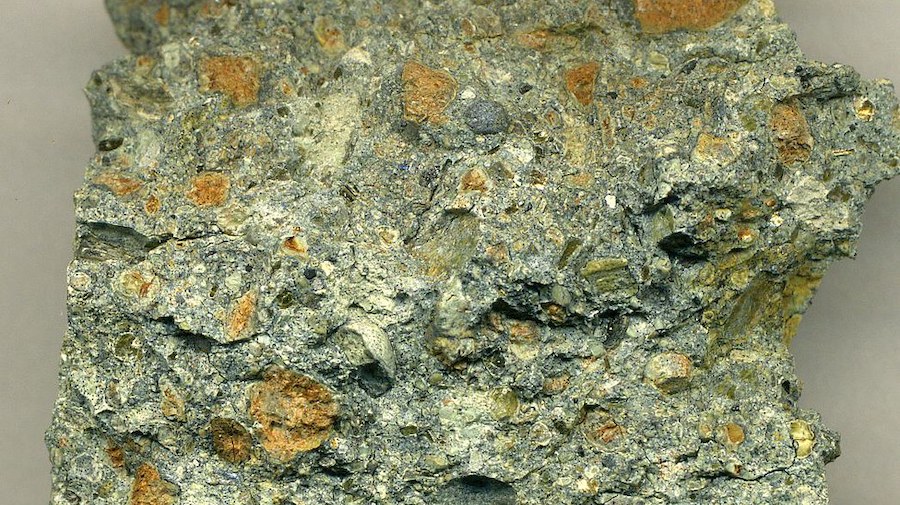
Kimberlite. (Reference image by James St. John, Flickr).
RJK Explorations (TSXV: RJX.A) joined forces with Eagle Geosciences of Rouyn-Noranda, Quebec, to deploy their new kimberlite identification technique at the miner’s Bishop Nipissing diamond project.
This identification method uses algorithms based on geophysical signatures of known diamondiferous kimberlites within the Temiskaming Rift Valley. Among those kimberlite pipes are the 95.1 and 95.2 pipes located approximately 20 kilometres north of RJK’s diamond exploration claims.
RJK is searching for the source of the Nipissing Diamond
“The Eagle kimberlite identification technology is a new tool that complements our multi-disciplinary approach facilitating the target selection process and cost efficiency of kimberlite exploration,” Peter Hubacheck, RJK’s project manager, said in a media statement. “The initial findings of the technology seem promising and if it proves successful in identifying diamondiferous kimberlite pipes, then we intend to apply this new method on all our staked and optioned land claims.”
Hubacheck explained that Eagle Geosciences has identified a cluster of pipe-like structures, with very similar physical signatures to the existing diamondiferous kimberlites to the north, located on RJK’s optioned land claims in the Lorrain Township.
“These are considered priority drill targets for the company and will be tested during the upcoming winter drilling program,” the executive said.
Manage Consent
To provide the best experiences, we use technologies like cookies to store and/or access device information. Consenting to these technologies will allow us to process data such as browsing behavior or unique IDs on this site. Not consenting or withdrawing consent, may adversely affect certain features and functions.
Functional
Always active
The technical storage or access is strictly necessary for the legitimate purpose of enabling the use of a specific service explicitly requested by the subscriber or user, or for the sole purpose of carrying out the transmission of a communication over an electronic communications network.
Preferences
The technical storage or access is necessary for the legitimate purpose of storing preferences that are not requested by the subscriber or user.
Statistics
The technical storage or access that is used exclusively for statistical purposes.The technical storage or access that is used exclusively for anonymous statistical purposes. Without a subpoena, voluntary compliance on the part of your Internet Service Provider, or additional records from a third party, information stored or retrieved for this purpose alone cannot usually be used to identify you.
Marketing
The technical storage or access is required to create user profiles to send advertising, or to track the user on a website or across several websites for similar marketing purposes.