Categories
Resource Stocks

Five iron ore trends to watch in 2020 – report

MINING.com Editor

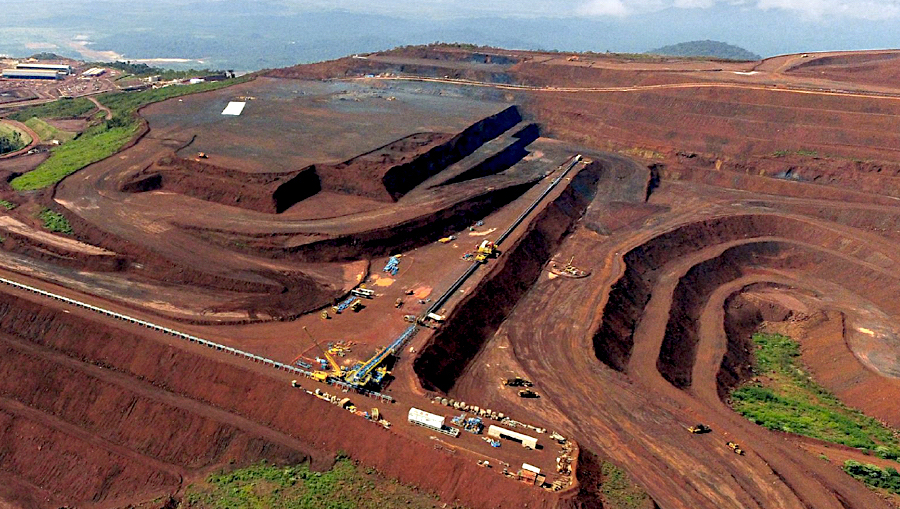
Vale’s massive S11D iron ore mine in Pará, Brazil. Photo by José Rodrigo Zermiani, Vale.

Metals and mining research and consultancy group Wood Mackenzie has identified five trends that will impact the iron ore industry.

Slower demand growth, especially in China, and a decent recovery in seaborne supply will continue to feature prominently in the iron ore industry in 2020, Wood Mac said in a research note. Prices are predicted to fall, with annual average price forecast for 2020 at $80/ tonne.

Vale – starting to give back some of what it took away in 2019

In 2020, Vale could once again be the biggest swing factor for iron ore, but this time in the opposite direction.

 “Wood Mackenzie forecasts an accelerated recovery in shipments from Q1-20, resulting in a 30 million tonnes (Mt) rise in seaborne exports from Vale in CY 2020. In other words, half of last year’s losses will be recovered in just one year,” Research director Paul Gray said in a media release.

Looking further ahead, Vale’s previous peak production (385 Mt in 2018) could be achieved as soon as 2021, pending extreme weather conditions and consequential supply chain disruptions. This is to the credit of the rapid repair and recovery program underway at the company’s key hubs in Minas Gerais.

Chinese iron ore production – how sustainable as prices fall?

Chinese iron ore production increased by approximately 30 Mt in 2019 in response to strong domestic demand and tight seaborne supply. In 2020, Wood Mackenzie forecasts a decent recovery in seaborne supply.

Chinese concentrate production will remain broadly stable in 2020 with no significant displacement occurring until 2021, Wood Mackenzie predicts.  

“There is more upside than downside risk to our Chinese iron ore production forecast for 2020. In H2-19 we saw how resilient Chinese domestic production (and price) has become due to falling seaborne prices. This trend will likely persist through 2020 as further productivity and efficiency gains are realized,” Senior manager Ming He said.

“The trend towards higher pellet rates in the blast furnace burden and installation of more efficient pelletising capacity within China should also support demand for domestic concentrate used as pellet feed,” He added.

The downside risk to production from increasingly stringent safety and environmental protection policies has also diminished now that mine operators have upgraded equipment and improved the technical efficiency of beneficiation.

An Indian supply-side surprise?

Indian imports could rise to 12 Mt in 2020. To reduce reliance on expensive imports, either exports need to fall by a further 10 Mt or domestic production needs to rise by the equivalent tonnage.

 “A key point to watch in 2020 is India’s ability and willingness to boost domestic production in response to stronger demand and wide spreads between domestic and seaborne pricing. Look out for higher supply from NMDC (additional 3 Mt capacity at Kumaraswamy mines), an additional 3-4 Mt from JSW, plus SAIL’s enhanced ability to fill any shortages now that the government-owned producer is permitted to sell 25% of production in the open market,” Principal analyst Sandeep Kalia said.

The mine lease auction process for 18 working mines (with capacity to produce approximately 80 million tonnes per year (Mtpy)) is scheduled for completion by end-February. The results of which will provide a good indication of potential production shortfalls. 

Premiums and penalties – where next?

The past two years have been a roller-coaster ride for iron ore grade price spreads and impurity penalties – notably silica and alumina differentials. 

 “In 2020 we forecast a modest recovery in the 65/62 spread (spread between the 65% Fe index and the 62% Fe index), from an annual average of 12% in 2019 to 14% in 2020. However, with steel prices likely to remain under pressure and iron ore prices currently trading above our forecast, there is risk of further steel margin compression, limiting the scope for higher premiums for high grade ore,” Gray said.

“We are also firm believers in the long run trend towards steel mills consuming more high-grade ore at the expense of low-grade ore, but this can come at a cost of rising alumina in blast furnace slag – too much alumina increases slag viscosity, significantly reducing blast furnace permeability which negatively impacts fuel rate and overall productivity. Watch out for rising alumina penalties and falling silica penalties,” Gray added.

Will Simandou take off?

Simandou’s new owners, the Chinese-backed consortium SMB-Winning, announced last year that the mine has capacity to produce over 100 Mtpy of high-grade iron ore, and is expected to commence production in 2025.

 “A project of this scale in this location (Guinea) will almost certainly take more than five years to reach fruition.  But more importantly, we think the market will struggle to absorb the additional supply, and it will be a challenge to earn sufficient return on investment,” Gray said.

“However, key consortium partner China Hongqiao (Weiqiao) Group has significant influence and investments in Guinea. Ultimately, this could come down to a strategic desire for China to reduce reliance on imported iron ore from Australia and Brazil while increasing captive ownership of iron ore resources in a country where China already has considerable influence,” Gray added.
Categories
Resource Stocks

De Beers mulls expanding pilot scheme to sell ethically sourced diamonds

By Cecilia Jamasmie

De Beers mulls expanding pilot scheme to sell ethically sourced diamonds
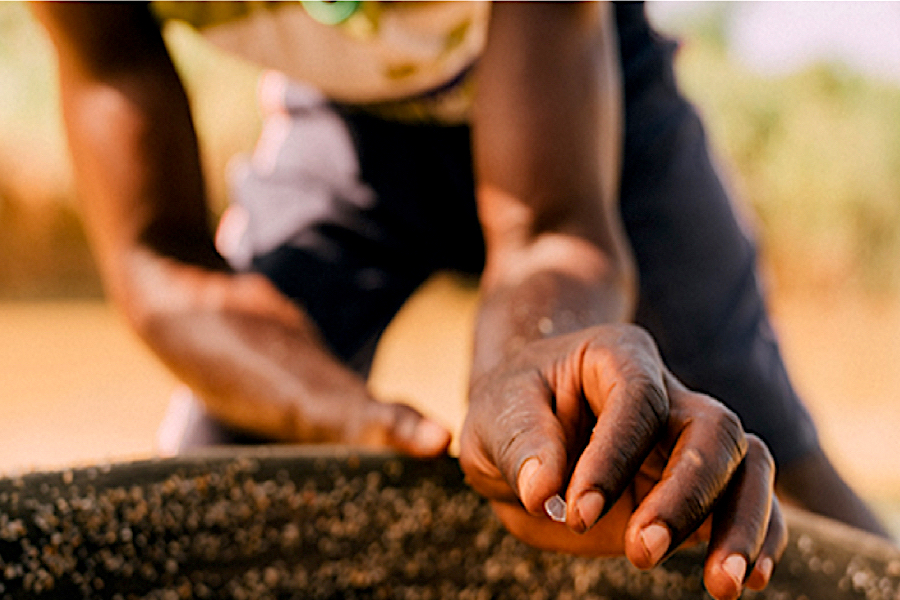
GemFair supports the formalization of the artisanal and small-scale mining (ASM) sector by raising standards and opening up a new source of ethical diamond supply.
(Image courtesy of De Beers Group.)

Anglo American’s De Beers could soon expand a pilot program launched two years ago that aims to remove conflict diamonds from the market by tracing the route of precious stones dug up by small miners in Sierra Leone.

In its first formal progress report on its “GemFair Way”, the world’s largest rough diamond producer by value says there are now 92 sites participating in the initiative, up from the 16 sites at launch, in April 2018.

Feriel Zerouki, industry relations and ethical initiatives at De Beers Group, as well as GemFair’s general manager, says that while these are still early days and the company continues to refine its approach, he’s seen significant progress.

“Ultimately, GemFair is focused on improving the standards — and thereby the reputation — of the ASM sector”


Feriel Zerouki, industry relations and ethical initiatives at De Beers Group. | GemFair’s general manager

Together with recruiting new mine sites, the program has opened offices in both Koidu and Freetown, and developed a set of publicly available ASM standards to ensure a best practice approach for responsible sourcing.

He attributes the success partly to the fact that GemFair is the first program of its kind to work directly with artisanal and small-scale miners (ASM).

“Ultimately, GemFair is focused on improving the standards – and thereby the reputation – of the ASM sector, and enhancing prospects for those who work in it,” he says.

The scheme is based on a digital solution to ensure the traceability of all diamonds mined by members. The toolkit contains an application and dedicated tablet that creates a digital record of each diamond found using GPS locations and QR-codes.

Artisanal mining accounts for only 20% of global diamond production, but carries a tainted reputation that has damaged consumer confidence for almost 20 years.

Between 1991 and 2002, the district of Kono, in Sierra Leone, was at the centre of the “blood diamond” trade that funded the country’s brutal civil war as rebel groups exchanged gems for weapons.

De Beers mulls expanding pilot scheme to sell ethically sourced diamonds
GemFair Way’s steps. (Taken from The GemFair Way 2019.)

Despite the establishment of the Kimberley Process in 2003, aimed at removing from the supply chain the conflict diamonds (those mined in an area of armed conflict and traded illicitly to finance the fighting), experts say trafficking of precious rocks is still ongoing.

According to Canada-based Centre for Research on Globalization (CRG) about one-fifth of diamonds on the global market in value terms are still a significant source of funding for regimes accused of committing crimes and human rights violations.

De Beers sells its diamonds mostly to authorized buyers at a series of so-called “sights” in Botswana, Namibia and South Africa. Then, they are usually sent to be polished or cut before ending up with retailers.

Categories
Resource Stocks

Fresh high for iron ore price as Chinese steel breaks records

By Frik Els

Fresh high for iron ore price as Chinese steel breaks records
Steel industry future so bright I gotta wear shades. Image:junrong / Shutterstock.com

Benchmark iron ore prices climbed on Friday after economic data showed the country’s steelmakers produced just shy of 1 billion tonnes, the second record-breaking year in a row.

The Chinese import price of 62% Fe content ore advanced to $97.58 per dry metric tonne according to Fastmarkets MB, a 6-month high and up 6% since the start of the year.

China produces more crude steel than the rest of the world combined reaching 996.3 million tonnes in 2019, up 8.3% over the prior year according to government figures. During December steelmakers churned out on average 2.7m tonnes per day, 12% higher than December 2018.

Production of steel products in China grew by nearly 10% from a year earlier to 1.2 billion tonnes in 2019. The China Iron and Steel Association said last week it expects domestic demand for steel to grow modestly in 2020 to roughly 890m tonnes.

Vale tailings suspension

Iron ore was also lifted by news Vale halted tailings operations at the 1.2m tonnes per year Esperança mine for safety reason.

The price of iron ore is up 30% following a dam burst at Vale’s Brumadinho operations in Brazil in January 2019 that killed nearly 300 people. In response, the world no 1 producer initially suspended 93m tonnes of output.

Iron ore peaked in July last year just shy of $126 a tonne, the highest since January 2014, but declined over the summer months as fears of a shortage on the seaborne market receded.

However, the Rio de Janeiro-based company managed to bring much of that capacity back online and ended the year with only around a 5% drop in output to an estimated 310m tonnes. Rio Tinto, set to overtake Vale as the world’s top iron ore miner, reported a 3% drop in annual output yesterday.

Imports top 1 billion tonnes

Chinese imports of the steelmaking raw material topped 1 billion tonnes for the third year in a row as Beijing’s efforts to stimulate the economy pays off.

China’s iron ore purchases in December totalled 101.3m tonnes, up nearly 12% from July and 17% from last year customs data showed, marking the highest level of imports since September 2018.

Full year iron ore imports was the second best on record at 1.069 billion tonnes, up 0.5% from last year and within shouting distance of 2017’s record 1.075 billion tonnes.Toggle panel: Review Box Contents

Categories
Resource Stocks

American Battery Metals signs LOI for Elk gold project, stock up 16%

By Jackson Chen

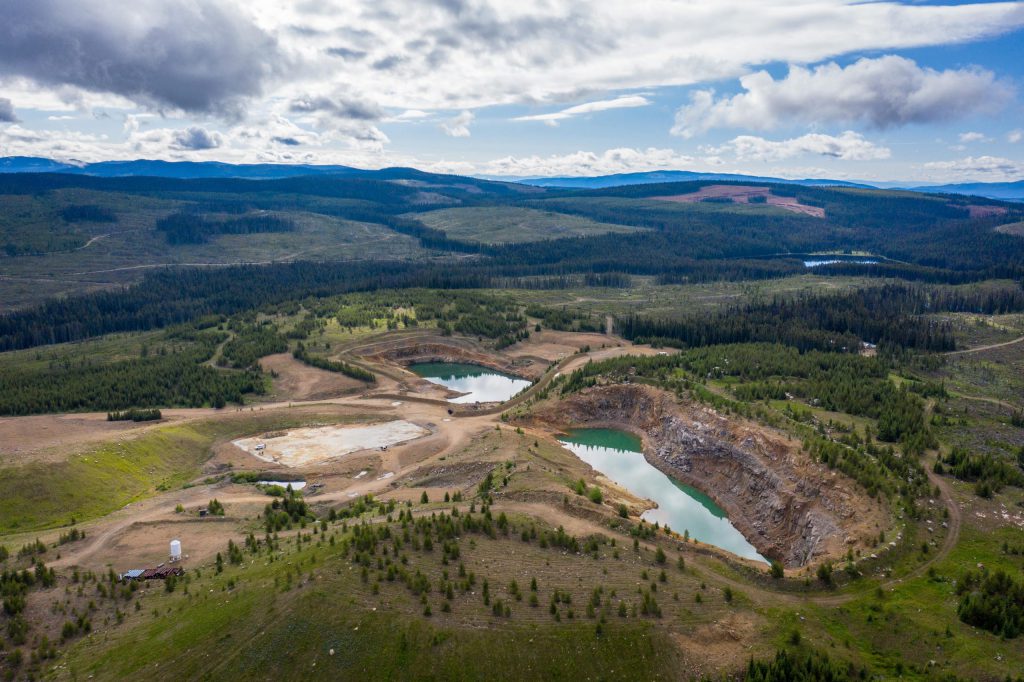
The Elk project is located approximately 45 km southeast of Merritt and 59 km west of Kelowna in British Columbia. Credit: Bayshore Minerals Inc.

American Battery Metals Corp. (CSE: ABC) has entered into a non-binding letter of intent to acquire Bayshore Minerals Inc., a private exploration and development company that owns the Elk gold project located in south-central British Columbia.

The Elk project is host to an NI 43-101 compliant resource estimate comprising 442,600 ounces of gold in the measured and indicated categories as well as 88,000 ounces of gold in the inferred category.

The property is located within the Similkameen mining division and consists of 27 contiguous mineral claims and one mining lease covering 16,566 hectares.

The Elk project is host to an NI 43-101 compliant resource estimate comprising 442,600 ounces of gold in the measured and indicated categories as well as 88,000 ounces of gold in the inferred category

Currently the Elk project has a ‘small mines’ permit under the care and maintenance provision, has bonding in place for an exploration permit, and an effluent discharge permit. Bayshore has been focused on reactivating and expanding the scope of the mine permit for a much larger operation.

“The Elk gold project is known as a high-grade gold gold deposit that has been the subject of significant expenditures including over 125,000 metres of drilling property wide, over 110,00 metres of which forms the basis confirming the project’s high-grade resource estimate,” Jeremy Poirier, president and CEO of American Battery Metals said in a media release.

“Given the extensive exploration and development to date, we see the potential for near-term production coincident with the recent macro events which supports an improving gold market.”

Under the terms of the LOI, American Battery Metals would issue approximately 27 million shares in exchange for all the issued and outstanding shares of Bayshore. Completion of the transaction is expected in the first quarter.

Shares of American Battery Metals surged by 16% on the CSE at midday Friday. The company’s market capitalization stands at C$10.81 million.

Categories
Resource Stocks

Rio’s Kennecott copper problems to last a year

Frik Els

Rio Tinto lifts force majeure at Kennecott copper mine
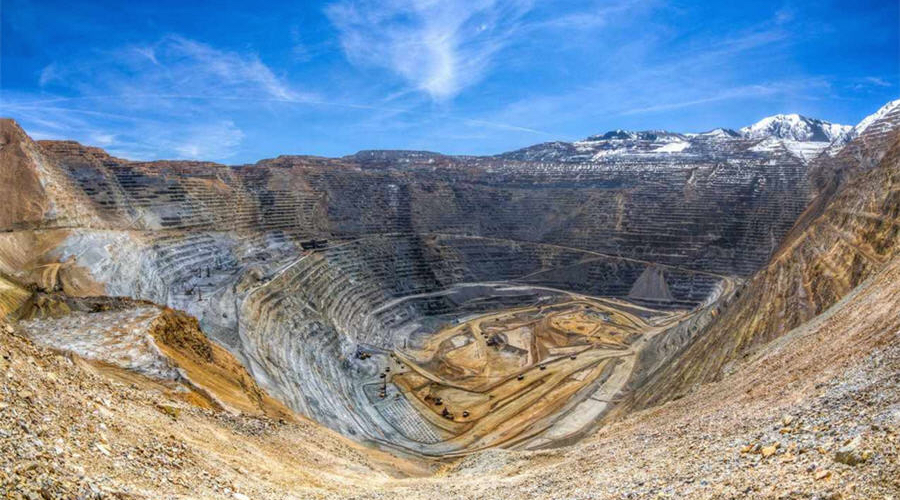
Kennecott mine. (Image: Kennecott Rio Tinto.)

Rio Tinto mined 557,400 tonnes of copper in 2019, a 5% drop over the year before due to lower grades, which the Anglo-Australian giant could only partially offset with higher throughput.

All the major copper producers are plagued by aging mines and falling grades, but Rio’s Kennecott operations in Utah have become a real headache for the company.

Rio blames the sharp fourth-quarter output drop of 9% to 138.7kt on the mine and says higher grades will only be accessed by the end of 2020, resulting from the first phase of its south wall pushback project.

In December, Rio announced it is spending $1.5 billion to expand Kennecott to extend the life of the more-than 100-year-old open-pit mine near Salt Lake City from 2026 through to 2032. Kennecott accounts for nearly a fifth of US copper production.

Rio upped its spending on exploration by 28% to $624m last year, mainly on the back of work done at its Resolution copper project in Arizona, partly owned by BHP.

Categories
Resource Stocks

Scotgold looks for new targets as it readies to open Scotland’s first commercial gold mine

By Cecilia Jamasmie

Scotgold looks for new targets as it readies to open Scotland’s first commercial gold mine
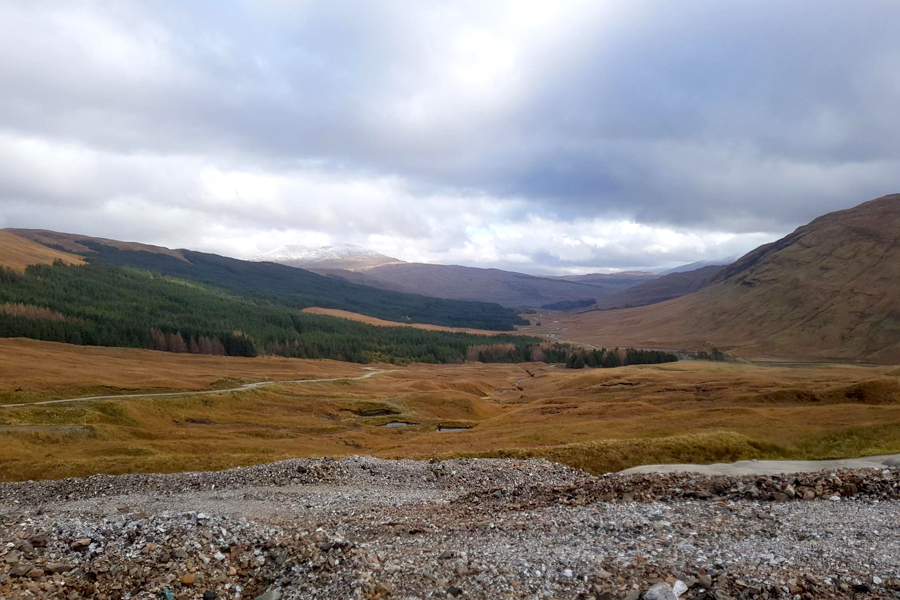
First gold production at Cononish is expected by the end of February 2020.
(Image courtesy of Scotgold)

Scotgold Resources (LON: SGZ), the company aiming to open Scotland’s first commercial gold and silver mine in Cononish, is seeking its next big discovery by stepping up sediment and soil sampling programs across the Grampian project, in the Scottish Highlands.

“Although our prime focus continues to be the development of the Cononish mine, our exploration activities continue to build an exciting portfolio of anomalies which will form the basis for potential future drilling programs in the years to come,” chief executive Richard Gray said in a statement.

The company, which is close to declare commercial production at Cononish, has been working to reopen the abandoned gold mine near Tyndrum for almost 13 years. The hope, Gray told FT.com, is that the project proves the viability of precious metal extraction in Scotland.

Chief executive, Richard Gray, expects to see a “mini gold rush” in the Scottish Highlands in coming years.

“It sounds a bit presumptuous and grandiose, but we do see this as being the start of a gold mining industry in Scotland,” Gray told FT.com. “I think there will be a sort of mini gold rush, potentially, in the years to come.” 

While gold panning has a long history in Scotland, investor worries and opposition from environmentalists have botched attempt to take the activity to an industrial level.

Scotland has survived green activists’ disapproval, mainly focused on the scale of the tailing that will be left behind, scoring a major win in early 2018. At the time, it received initial approval for Cononish, about 80 km (50 miles) north of Glasgow.

The asset produced its first gold in August 2016, following the launch of an ore processing trial. After the local authorities gave the project their blessing, the company began building a large-scale operation.

Now Scotgold is about to start producing at its underground mine with an initial output capacity of 23,500 ounces of gold annually, for up to 17 years.

The company expects to process around 3,000 tonnes of ore per month in the first phase, which it says will double in phase two.

As many as 52 jobs could be created during production, and the firm has offered nearly £500,000 (about $612K) in payments to support the local community of Tyndrum.

The small village is currently a local tourist destination, known mostly for being at a junction of major transport routes.

Categories
Resource Stocks

Rising civil unrest the latest threat to miners

By Cecilia Jamasmie

Rising civil unrest the latest threat to miners
A 3% hike in metro fares in Chile sparked what has become a far broader rebellion against inequality. (Image courtesy of Hugo Morales | Wikimedia Commons.)

Global miners will have to get ready to deal with the increasing threat from civil unrest, following last year’s succession of dramatic — and in several cases unforeseen — social explosions in almost 50 countries, including highly popular mining jurisdictions such as Chile, Mali, Guinea, Congo and Zimbabwe.

According to risk consultancy Verisk Maplecroft’s quarterly civil unrest index, released on Thursday, turmoil will linger in 2020, as most nations experiencing ongoing bursts of public discontent lack the tools and ability to handle them.

The experts foresee as many as 75 countries having to deal with soaring public rage over a variety of topics, including economic inequality and political roguery during the next six months.

Other jurisdictions, such as Hong Kong and Chile, which saw the greatest increases in risk over the last year, are unlikely to improve over the next two years, Verisk Maplecroft’s predicts.

Courtesy of Verisk Maplecroft | Political Risk Outlook 2020.

As a result, the number of extremely risky countries in the Civil Unrest Index jumped by 66.7%; from 12 in 2019 to 20 by early 2020.

An ‘extreme risk’ rating in the index, which measures the risks to business, reflects the highest possible threat of transport disruption, damage to company assets and physical risks to employees from violent unrest. Most sectors, ranging across mining, energy, tourism, retail and financial services, have felt the impacts over the past year.

The resulting disruption to business, national economies and investment worldwide has totalled in the billions of US dollars, the consultancy says, citing Chile as an example. The first month of unrest in the copper-rich country caused an estimated $4.6 billion worth of infrastructure damage, and cost the Chilean economy around $3 billion, or 1.1% of its GDP, Verisk Maplecroft notes.

Courtesy of Verisk Maplecroft | Political Risk Outlook 2020.

The consultancy detected that a deterioration in some risk factors could serve as an early warning sign in certain jurisdictions. Out of the 11 elements considered in the Civil Unrest Index, subsidy cuts were the single biggest indicator that the risk of civil unrest was growing in Chile, Lebanon and Zimbabwe.

Inflation and the weakening of mechanisms that allow the channelling of discontent before it erupts into unrest also played a role, Verisk Maplecroft says, particularly in Chile, Hong Kong and Zimbabwe.

With protests continuing to rage across the globe, the consultancy expects both the intensity of civil unrest, as well as the total number of countries experiencing disruption, to rise over the coming year.

Categories
Resource Stocks

Titan wins bid for Core Gold, takes majority stake

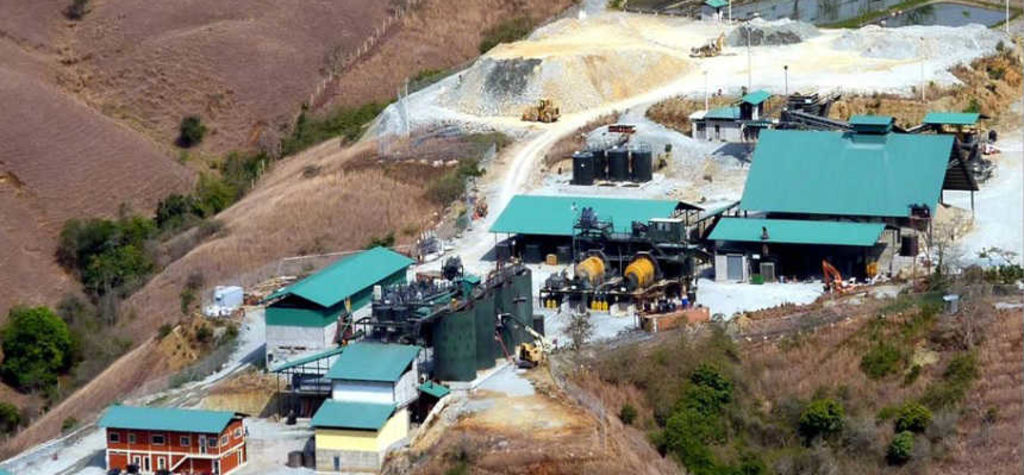
Vista Gold Plant grinding circuit in Peru. Image by Titan Minerals

Australia’s Titan Minerals (ASX: TTM) announced on Wednesday that the company has been successful in its offer to purchase all issued and outstanding common shares of Vancouver-based Core Gold (TSXV: CGLD) to create an emerging Latin America-focused gold miner.

Last year, Titan launched a takeover bid for Core Gold, offering its shareholders 2.5 fully paid Titan shares for each Core Gold share held, valuing the Canadian takeover target’s shares at C$0.42 each. The Australian company later increased its offer to 3.1 shares, valuing Core Gold at C$0.52 per share.

At the end of its takeover offer period on January 14, approximately 85.52 million Core Gold shares (excluding those owned or controlled by Titan) — representing 54.2% of those issued and outstanding — were tendered to Titan under the terms of the offer. This would bring Titan’s total shareholding in Core Gold to 56.7%.

All of the conditions of the offer have now been satisfied or waived by Titan. The company says it will immediately take up the Core Gold shares that have been tendered to date and pay for the shares taken up as soon as possible.

Titan has also extended the deadline shareholders of Core Gold have to tender their shares under the offer to January 27.

Meanwhile, both companies have confirmed that the British Columbia Securities Commission had dismissed a compliant filed by two Core Gold shareholders alleging a number of misrepresentations in the materials filed by Titan as part of its takeover bid.

Categories
Resource Stocks

Iron price rallies as China imports leap to over 1 billion tonnes

By Frik Els

Iron price jumps as China imports hit 15-month high
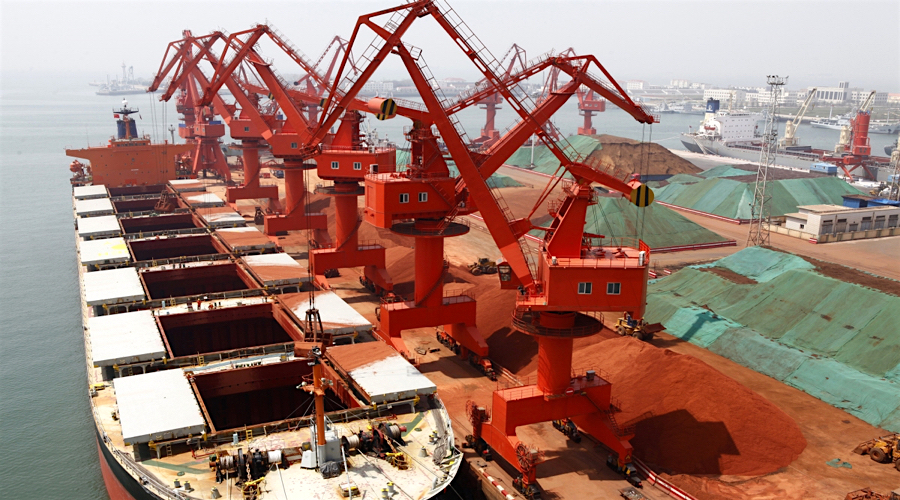
(Image courtesy of China’s Port of Qingdao Authority)

Benchmark iron ore prices climbed on Tuesday after trade data showed Chinese imports of the steelmaking raw material topped 1 billion tonnes for the third year in a row as Beijing’s efforts to stimulate the economy pays off.

The Chinese import price of 62% Fe content ore was pegged at $97.03 per dry metric tonne according to Fastmarkets MB, a more than 4-month high. Iron ore prices averaged $91.85 in December.

China’s iron ore purchases in December totalled 101.3m tonnes, up nearly 12% from July and 17% from last year customs data showed, marking the highest level of imports since September 2018.

Iron price rallies as China imports leap to over 1 billion tonnes

Full year iron ore imports was the second best on record at 1.069 billion tonnes, up 0.5% from last year and within shouting distance of 2017’s record 1.075 billion tonnes.

Iron ore peaked in July last year just shy of $126 a tonne, the highest since January 2014, but declined over the summer months as fears of a shortage on the seaborne market receded.

The price of iron ore is up 30% following a dam burst at Vale’s Brumadinho operations in Brazil in January 2019 that killed nearly 300 people. In response, the world no 1 producer initially suspended 93m tonnes of output.

However, the Rio de Janeiro-based company managed to bring much of that capacity back online and ended the year with only around a 5% drop in output to an estimated 310m tonnes.

Before the disaster Vale was flagging strong growth with a medium term target of roughly 400m tonnes in annual production thanks to its $14 billion S11D project that on its own adds 95m tonnes in new capacity.

Categories
Resource Stocks

Continental Gold shareholders urged to back Zijin’s $1bn takeover deal

By Cecilia Jamasmie

Continental Gold shareholders urged to back Zijin’s $1bn takeover deal
The Buriticá gold project encompasses an aggregate area of 75,023 hectares in the Antioquia Department in north-western Colombia. (Image courtesy of Continental Gold.)

Canada’s Continental Gold (TSX:CNL) said on Tuesday that independent proxy advisory firms ISS and Glass Lewis have urged the Canadian miner’s shareholders to vote in favor of the takeover offer from Zijin Mining, China’s No.1 gold producer.

Zijin in December agreed to buy the Toronto-based miner for C$1.3 billion ($1bn) to gain access to Continental’s flagship Buritica gold project, in Colombia.

The asset, in north-western Colombia, has measured and indicated gold reserves of 165.47 tonnes and an inferred reserve of 187.24 tonnes.

Zijin is offering C$5.50 a share in cash to secure Continental’s flagship Buritica gold project, in Colombia.

Expected to begin operations this year, the mine will churn out 250,000 ounces of gold per annum on average over a 14-year productive life, boosting Zijin’s gold reserves to more than 2,000 tonnes.

Institutional Shareholder Services (ISS) and Glass Lewis highlighted the C$5.5 per-share-offer represented a significant premium to Continental’s shares value — 29% to be exact. They also referred to favourable market reaction as factors supporting their recommendations.

The Chinese gold, copper and zinc miner has been expanding its footprint by acquiring assets from Africa to Australia.

In November, Zijin announced it was buying partner Freeport McMoran’s copper-gold assets in Serbia for up to $390 million, substantially boosting its resources of both metals.

In 2018, it spent $1.26bn for a 63% in Serbia’s largest copper mining and smelting complex RTB Bor.

It also trumped Lundin Mining’s (TSX:LUN) earlier hostile bid for Canada’s Nevsun Resources, gaining access to yet another Serbian asset — the Timok copper and gold project. With the move, it also secured ownership of the Vancouver-based miner’s flagship operation, the Bisha copper-zinc mine in Eritrea.

Continental’s shareholders will meet on January 28 in Toronto to consider the transaction.